Democratic Party News: Shapiro Faults Biden, Trump on Israel
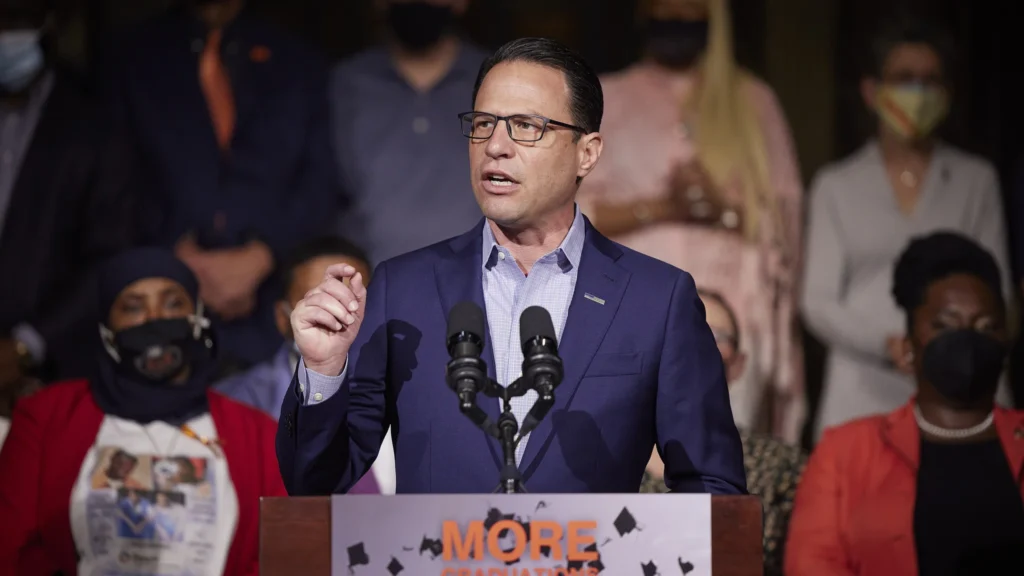
In the latest democratic party news, Pennsylvania Governor Josh Shapiro has broken with two presidents at once. In an interview with The Wall Street Journal on Tuesday, Shapiro said that neither former President Joe Biden nor President Donald Trump did enough to restrain Israeli Prime Minister Benjamin Netanyahu during the war in Gaza, and he argued that Washington should have used its leverage over American weapons far more forcefully. It was the bluntest criticism of Netanyahu yet from a Democrat widely mentioned as a possible 2028 presidential contender, and it landed as the party begins the fractious argument over foreign policy that will shape its next primary.
Shapiro, who won re-election in Pennsylvania by 22 percentage points earlier this month, has spent the weeks since the midterm elections 2026 laying out a foreign policy vision in public, first in a speech at the University of Pennsylvania and now in the most detailed interview of his career. The interview covered Israel, the war in Iran, Ukraine, Russia, China, and the Republicans he expects to face in 2028. On Israel, the message was personal: Shapiro is Jewish, has spoken openly about the importance of his faith, and has spent his career defending Israel's right to exist and to defend itself. That is what made his verdict on its prime minister so striking.
Trump Netanyahu News: A Failed Leader on a Dangerous, Dark Path
Shapiro's criticism of Netanyahu was direct and unsparing. "Netanyahu is a failed leader," he told the Journal. "He's led Israel down a dangerous, dark, isolated path." It was a line aimed at the man, not the country, and Shapiro spent much of the interview drawing exactly that distinction. He said Israel was justified in responding to the October 7, 2023, terrorist attacks that triggered the Gaza war, but he argued that the way Israel carried out its response undermined both Israel and the United States in the region. The conduct of the campaign, in his telling, damaged Israel's standing in the world and America's credibility with it.
The core of his argument was about leverage. The United States supplies Israel with weapons, and Shapiro said both of the last two presidents failed to attach real conditions to that supply. "I don't think that either the current president or President Biden used the leverage of the United States of America effectively to make sure that the weapons were being used in ways that comport with American values," he said. It was a criticism that cut both ways: Biden, who supported Israel through most of the war while pressing Netanyahu privately, and Trump, who has given Netanyahu wide latitude. Shapiro's point was that neither man made American support conditional on how the war was fought.
Shapiro proposed a different arrangement. Israel should keep the ability to buy defensive weapons, he said, but with clear rules attached. "Israel should have the ability, as our other allies do, to purchase defensive weapons, weapons that come with very clear guidance on how and when they can be used," he told the Journal. The distinction between defensive and offensive weapons runs through everything he said about Israel: defensive systems that protect Israeli civilians would remain available, while offensive weapons, and the way they are used, would face conditions and scrutiny that neither Biden nor Trump imposed.
The timing matters. The interview came five days after Shapiro delivered a major foreign policy address at the University of Pennsylvania, at a conference hosted by the Atlantic Council and NATO, in which he called Trump "profoundly and pathetically weak" on the world stage. The Journal interview turned that general argument into specific positions, and the Israel position was the most specific of all.
Democratic Party News: Ending Decades of Military Aid, Keeping Defensive Sales
In a separate interview with PBS, Shapiro went further: he said he supports ending the decades-old arrangement under which Israel receives direct American military aid, while insisting that Israel must still be able to buy the weapons it needs to defend itself against Iran, Hamas, and the Houthis. The two interviews together sketch a position that is neither the establishment line nor the progressive one.
That middle position is where the politics get complicated. More than 100 House Democrats voted in July for a measure seeking to eliminate military financing for Israel. The amendment failed, but the vote showed how far the party has moved: a growing share of Democratic voters and elected officials want significant restrictions on American military assistance to Israel, while establishment Democrats still favor maintaining close security ties. Shapiro is trying to walk that line, and his biography is part of the argument. He has supported Israel's right to exist and to defend itself throughout his career, and he has advocated a two-state solution while rejecting arguments that deny Israel's legitimacy. His criticism of Netanyahu, then, is framed as a defense of Israel's long-term interests against its current leader, not as a break with the country itself. It is the same distinction he drew in the interview: support for Israel's security is not the same as support for the decisions of its current government.
Whether the distinction holds in a primary campaign is an open question. Progressives may say it does not go far enough, since Shapiro is not advocating an end to the security partnership itself. Pro-Israel Democrats may say it goes too far, since ending decades of military aid would be a historic break with a policy every president since the 1970s has maintained.
The debate is not abstract. The war in Gaza has divided the Democratic Party more than any foreign policy issue in a generation, and the 2028 primary is expected to be one of the most divided races in recent years. Shapiro's interview was, in the Journal's own framing, the sounding of a starting gun on that debate. He has not announced a presidential run, but he is now the Democrat who has said the most about where the party should go on the issue that divides it most.
Pete Hegseth News: Fire the War Secretary and End the Iran War
In iran war news, Shapiro's criticism of the administration did not stop at Israel. He said Trump must bring the war in Iran to an end, and he called for Defense Secretary Pete Hegseth to be removed from his position, accusing the administration of entering the conflict without a coherent strategy for ending it. "Trump decided to go it alone," he said. "Didn't explain to the American people why he was doing it, and clearly, he and Hegseth and Vance have no idea how to get out."
The Senate rejected a war powers resolution aimed at limiting the president's military authority on November 19, by a vote of 48 to 51, leaving Trump free to order strikes without new congressional restraint. Trump has said he is leaning toward resuming large-scale strikes against Iran after the New Year if diplomatic talks fail. Shapiro's answer is to use the tools the new Congress will have, including spending authority and the War Powers Act, to force an end to the fighting and stronger oversight.
The call to fire Hegseth puts Shapiro on the side of a campaign that has been running in both parties for months: that the Iran war was launched without a plan for what comes after, and that the administration's handling of it has left American forces exposed and American allies uncertain. The line about Hegseth and Vance having "no idea how to get out" was the sharpest personal criticism in the interview outside of the Netanyahu passage.
Ukraine War News: More Help for Kyiv, and a Warning on Russia
On Ukraine, Shapiro's position was the mirror image of his position on Iran. Where he wants the war in the Middle East ended, he wants the war in Europe fought harder, with American help. He called for a substantial increase in American assistance to Kyiv, including more intelligence sharing and more weapons cooperation, and for a negotiated settlement that does not reward Russian aggression. "Share intelligence," he said. "Share the weaponry, and help negotiate an end to this war that doesn't give Russia what they want."
Pennsylvania has one of the country's largest Ukrainian-American diasporas, giving the conflict particular significance in his home state. But his argument was framed in terms of American interests: allies who doubt American staying power in Ukraine will doubt it everywhere else, and adversaries who see American hesitation in Europe will test it elsewhere.
Shapiro also described Trump's dealings with Russia as "an embarrassment to our country," and he returned to the theme at the Atlantic Council event in Philadelphia on Friday, where he accused Trump of weakening Ukraine's position while treating Putin too favorably. "Trump actively worked to undermine Zelensky, and he has actively worked to coddle Putin," he said at that event. The contrast with the administration's course is sharp: Trump has pursued negotiations with Russian President Vladimir Putin while maintaining some American military and intelligence support for Kyiv, and he has repeatedly criticized Ukrainian President Volodymyr Zelensky. Shapiro's answer is to reverse the drift: resume critical military assistance, impose tough sanctions on Moscow, and negotiate from a position of strength rather than concession.
JD Vance News and Marco Rubio News: The Stink of Donald Trump
Shapiro also took a swing at the two Republicans most often mentioned as possible presidential candidates in 2028, Vice President JD Vance and Secretary of State Marco Rubio, arguing that their association with Trump would be hard to shake. "They both have the stink of Donald Trump on them," Shapiro said. "It's real hard to wash clean of that." It was the most memorable line of the interview, aimed squarely at the general election: the people who carried out the administration's policies cannot credibly present themselves as a fresh start.
On China, Shapiro urged the administration to impose tighter restrictions on advanced semiconductor exports in the wake of the Nvidia controversy, in which the chipmaker's chief executive resigned and was then reinstated after pressure from the White House. The episode has dominated business news for two weeks, with Nvidia's shares falling sharply and its credit rating placed on downgrade watch.
The Vance and Rubio line also matters because both men have been central to the administration's foreign policy. Vance has been the public face of the Iran war's defense and the administration's skepticism toward Ukraine aid. Rubio, as secretary of state and national security adviser, has run the Cuba pressure campaign and the negotiations with Russia. Shapiro's argument is that both men own the record they helped create, and no amount of distance in 2028 will erase it.
Midterm Elections 2026: The 22-Point Win Behind the 2028 Buzz
None of this would matter as much if Shapiro had not just won re-election by 22 percentage points, defeating Republican State Treasurer Stacy Garrity with 60.6 percent of the vote in a state that swung for Trump in 2024, while helping Democrats win both chambers of the Pennsylvania state legislature. It was one of the strongest performances by any Democrat in the midterm elections 2026, and it is the reason his name comes up first whenever the 2028 field is discussed.
Shapiro has not declared his intentions. He told the Washington Examiner in Denver earlier this month that he and his family have not decided on his political future, and he has said he will not talk about 2028 while he is still governing Pennsylvania. But his growing willingness to weigh in on national and international issues is fueling speculation that he could seek the Democratic nomination, and the Journal interview was the clearest sign yet that he is building the foreign policy record a presidential campaign would need. The 2026 midterms gave him the platform. The interview gave him the positions.
The speculation is not only about Shapiro. With both parties facing open tickets in 2028, the question of who is leading in the polls right now has no settled answer this far out, and no serious polling of the Democratic field has yet produced a clear front-runner. What the early maneuvering has produced, instead, is a debate about what the party should stand for, and Shapiro is now the Democrat who has said the most about it. His speech at Penn laid out the vision. His interview filled in the details.
Shapiro's record in Pennsylvania is the foundation of that platform. He has been governor since January 17, 2023, after serving as attorney general from 2017 to 2023, and his second term begins on January 19, 2027. He will spend it governing one of the most important battlegrounds in American politics, and speaking as the governor of the state that decided the last presidential election, and may decide the next one.
What Happens Next: A Foreign Policy Primary
The new Congress takes its seats on January 3, with Democrats in control of both chambers, and the first test of Shapiro's priority list will come quickly: end the war in Iran, resume military assistance to Ukraine, impose tough sanctions on Russia, and act as a check on the administration's strikes and tariffs. Shapiro has now put his name to those demands in public, and that makes them part of the record the 2028 primary will judge.
The foreign policy debate inside the Democratic Party is only beginning. Shapiro's interview opened it, and the responses from his rivals, declared and undeclared, will shape it. The question is whether the party wants a candidate who breaks with Biden on Israel, attacks Trump on Iran and Russia, and promises to rebuild the alliances the last two years have damaged. Shapiro has now answered that question for himself. The rest of the party will have to answer it too.
Source: The Wall Street Journal