Marco Rubio News: Trump Doubles Down on Cuba After Midterms
In the latest Marco Rubio news from Washington, the secretary of state has become the central figure in a question that has followed President Donald Trump through the midterm elections and out the other side: what happens next with Cuba. The midterm elections 2026 delivered a sweeping defeat for the president's party, with Democrats winning control of both the House and the Senate, and the new Congress will take its seats on January 3 with New York Representative Hakeem Jeffries set to become speaker. Yet nothing in the result has softened the administration's line toward Havana. The 2026 midterms were supposed to be a verdict on the president's foreign adventures, including the war with Iran and the pressure campaign against Cuba. Instead, the weeks since the vote have shown a president doubling down on both, with Rubio as the instrument of the Cuba effort and the man most likely to benefit from it, or to be blamed for it, in the contest to succeed Trump.
Trump has been blunt about the defeat, telling allies and reporters that he was not on the ballot and blaming the party's performance on other factors. The argument has not settled the blame debate inside the Republican Party, and it has not changed the Cuba policy either: unrelenting economic pressure, a secretary of state who owns the file personally, and a president who has put his remaining time in office behind forcing fundamental change on the island.
White House News: A Defeat That Did Not Change the Cuba Goal
The persistence of the Cuba policy after the 2026 midterms is striking because so much else in Washington is about to change. Democrats will run both chambers from January, and the president will spend the final two years of his term negotiating with a Congress controlled by the opposition, starting with the spending bills, another debt ceiling increase, and the health care fight. In that crowded landscape, Cuba might have been expected to slip down the agenda. It has not.
On the Monday after the election, the president predicted that Cuba would fall soon. "Cuba is falling. It's a failing nation," he said, adding that he imagined it would fall fairly soon and that the United States would help the island "on a humanitarian basis" once it did. Three days later, Trump went further than he ever had before. Speaking by telephone to conservative radio host Hugh Hewitt on Thursday, November 12, he said he wanted to "get Cuba done" before he leaves office in January 2029, and when Hewitt asked directly whether he was considering freeing the island through military intervention, the president answered that he "would certainly consider that." It was the first time he had attached a timeline to the idea, and the first time he had kept the option of force open in the same breath.
The shift in tone from September to November tells its own story. In late September, the president told reporters he expected a deal with Havana and said he did not think the military would be needed, but Cuba's foreign minister said in June that the talks had produced "no progress." By November, the expectation of a deal had given way to a prediction of collapse and a deadline with force on the table: a president who has concluded that pressure alone is not moving fast enough.
Marco Rubio News: The Secretary of State at the Centre of the Cuba Effort
If there is a single figure at the centre of the administration's Cuba policy, it is Marco Rubio, and Trump made that plain in the Hewitt interview. "We have a very good, talented guy for Cuba named Marco," the president said, noting that Rubio's parents were born in Cuba. "Marco Rubio, his parents are from Cuba as you probably know. And he would love to do that." It was a public delegation of the file to the one member of the cabinet whose personal history is bound up with the island. Rubio's parents emigrated from Cuba before the revolution, and he has been one of the most consistent voices in American politics calling for pressure on the government in Havana.
Rubio's role goes well beyond the State Department. He serves as secretary of state and as national security adviser, and he has also held spells as the acting head of the National Archives and as the acting administrator of USAID. The accumulation of jobs has made him the butt of jokes online, where he has been depicted in a string of invented roles, and colleagues call him the administration's "secretary of everything." The label captures something real: when a foreign policy question reaches the president's desk, Rubio is usually the person who has already worked on it.
On Cuba, Rubio has moved on more than one track at once: sanctions and designations from the State Department, and outreach to Cubans themselves. In late October, Rubio posted on X that those who seek positive change on the island should seize the moment, writing: "To those who seek to create positive change in Cuba – now is the time. The disappointment of failed promises, corruption, and the privileged lives of only a few; seize this opportunity to create the change you desire through a discrete partnership with the CIA." Moments after the post, the CIA published a video in Spanish with step-by-step directions on how to contact the spy agency securely.
The same week brought a sharper edge at the United Nations. The Trump administration ejected a Cuban diplomat, the first secretary of the island's delegation, after a shouting match on the floor of the General Assembly hall between the United States ambassador to the UN, Mike Waltz, and the Cuban foreign minister, Bruno Rodriguez Parrilla. Rubio signed the paperwork, and a State Department spokesperson said the individual had left the country. Hours later, the General Assembly overwhelmingly passed its annual resolution condemning the longstanding American embargo against Cuba, with 130 votes in favour, 17 against and 25 abstentions.
Rubio's prominence has now spilled into the contest to succeed Trump. With both parties facing open tickets in 2028, CNN reported that some Republicans are quietly thinking about how to nudge the secretary of state into the presidential race, seeing him as the best hope of heading off another punishing verdict on the Trump presidency in two years' time. The speculation gathered pace after Vice President JD Vance, the presumed front-runner, made a clumsy bid to distance himself from the Iran war on the morning after the midterm elections. Rubio insists he will not talk about 2028, but he has stopped repeating his earlier line about not running if Vance does. In Republican Party news, that is the development strategists are watching most closely.
The Oil Blockade and the Crisis on the Island
Cuba is a nation of about 11 million people, sitting just 90 miles off the Florida coast. Its economy was already in trouble before the current pressure campaign began, weighed down by a centralised system that has struggled to produce enough food, fuel and foreign currency for years. The loss of Venezuelan oil removed the last reliable external lifeline. Nationwide blackouts have become routine, the power grid has collapsed repeatedly, and fuel and food shortages have deepened into a humanitarian crisis that the administration's critics say punishes ordinary Cubans more than it pressures their government.
The campaign has two pillars, tightened steadily through 2026. The first is fuel. Venezuela had been Cuba's principal external energy supplier since 2000, and Venezuelan crude still met about 40 percent of the island's energy needs in 2025. That supply stopped in January, when the United States seized Venezuela's president, Nicolas Maduro, and halted Venezuelan oil shipments to the island. The second pillar is money: a widening net of sanctions designed to cut Havana off from the revenue and shipping it needs to keep its economy running.
The legal architecture was assembled in stages. On January 29, 2026, Trump signed an executive order declaring Cuba an "unusual and extraordinary threat" and a national emergency, authorising additional tariffs on goods imported into the United States from any country that sells or provides oil to Cuba. On May 1, he signed a second order expanding sanctions to cover foreign companies and financial institutions doing business with the Cuban government. The most recent designations, announced on November 5, targeted ten people and entities tied to the Cuban government, the military and the oil industry. Washington has also sanctioned Cuba's state oil company, President Miguel Diaz-Canel himself, and relatives of former President Raul Castro.
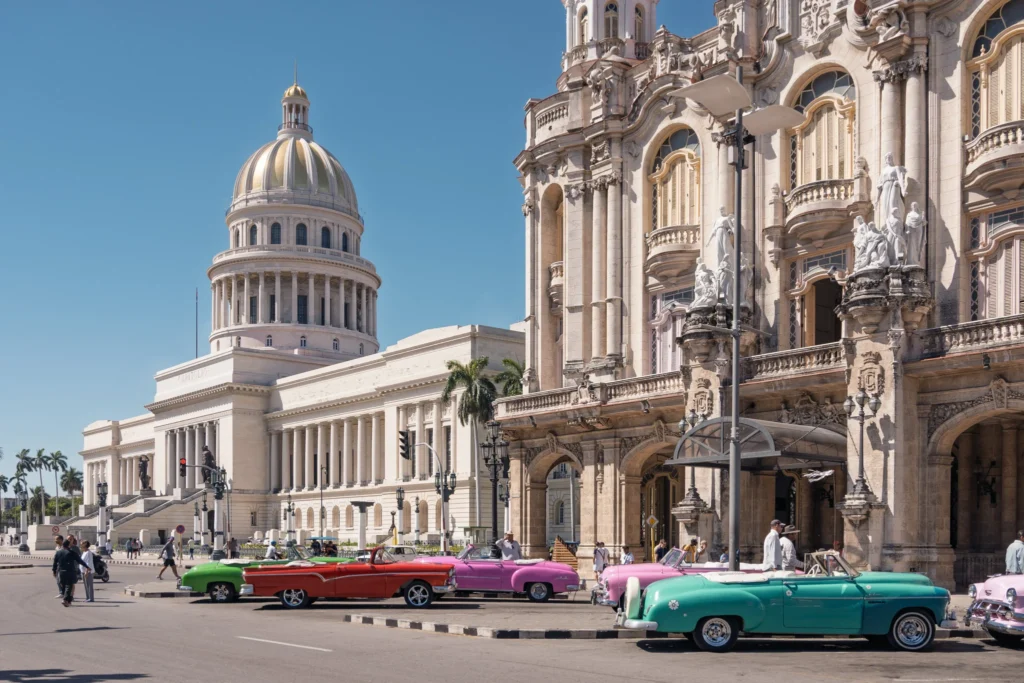
The clearest picture of the crisis on the ground came this week from Havana itself. CNN International correspondent Patrick Oppmann reported from the Cuban capital on the administration's renewed hardline policy following the midterm elections, describing it as one of the president's most ambitious foreign policy initiatives. The report showed streets piled with trash, classic cars moving through a city short of fuel, and neighbourhoods enduring rolling blackouts lasting days. One man told the camera that he buys a litre of cooking oil and has no money left. The Cubans Oppmann spoke to were sceptical of the threats of military intervention, with one dismissing the talk as a lie, yet many said they had lost faith in their own government while still favouring dialogue over a military strike of the kind discussed in connection with Venezuela. The report also showed official Cuban military footage released on November 14, of troops training in the jungle. The Cuban government says it wants dialogue, but it is preparing for confrontation.
Iran War News: The Other War Shaping the Cuba Decision
For all the force of Trump's words, analysts who have studied the Cuba file closely say a military campaign is unlikely, at least for now. In Iran war news, the conflict that has dominated the administration's foreign policy is the first constraint: hostilities in the Middle East make opening a completely new, unauthorised front in Cuba both operationally implausible and politically explosive. Trump has said he would not hesitate to resume strikes on Iran if Tehran attacked American allies or ships. A president just rebuked by voters, in part over a foreign war, would be taking an extraordinary political gamble by starting another one ninety miles from Florida.
The second constraint is practical. The administration has not identified a Cuban equivalent of Venezuela's Delcy Rodriguez, the figure Washington was able to compel to do its bidding after the operation that removed Maduro. Without someone inside the Cuban system to hand power to, an operation would have to build a transition from scratch, and Rubio's public appeal for a discreet partnership with the CIA made that gap plain. One name floated as a possible interlocutor is Raul Guillermo Rodriguez Castro, the grandson and close confidant of Raul Castro, who has signalled a willingness to negotiate with Trump. But a willingness to talk is not the same as an ability to deliver a transition.
The third constraint is risk. Efforts to destabilise Cuba's power structure through targeted strikes could trigger a migration event just off American shores, introduce civil unrest unknown on an island with no serious weapons, drug or organised crime problem, and invite criminal outfits to gain a foothold in the vacuum. The Pentagon's posture underlines the gap between rhetoric and readiness: in March, the head of United States Southern Command told senators that American troops were not rehearsing for an invasion of Cuba, and no new statement from the Pentagon has followed the Hewitt interview.
Democratic Party News: What the New Congress Can and Cannot Do
In Democratic Party news, the new Congress is expected to challenge the Cuba policy, but its room to act is narrow. Some Democrats will try to revoke the national emergency underpinning the oil blockade, withhold funds for unauthorised military action, or introduce legislation to lift the embargo entirely. Those efforts face an uphill battle, and the push to rein in escalation faces resistance from Democratic leadership as well, not least from pro-embargo Florida Democrats such as Representatives Debbie Wasserman-Schultz and Jared Moskowitz.
The Cuban government has shown no sign of conceding. Diaz-Canel remains in place, the Communist Party remains in control, and the island's leadership has said repeatedly that it will resist. The talks between the two sides produced no progress by June, and there has been no public indication of a breakthrough since. Havana's strategy is to wait, betting that politics will eventually compel Trump to turn his attention elsewhere. Analysts say that hope is probably misplaced. The most likely course, according to analysts, is not invasion but intensification: more sanctions, more covert planning, and limited humanitarian channels, with the pressure maintained while a new war is avoided.
What Happens Next: Sanctions, Covert Channels and 2028
The markers to watch are practical ones. Any change in the posture of United States Southern Command, any new round of sanctions designations, any statement from the Pentagon or from Rubio himself, and any response from Havana will show whether the president's words are being translated into action. So will the state of Cuba's power grid and fuel supply, the most immediate measure of how much pressure the blockade is exerting.
The political calendar matters too. Trump has less than three years left in office, and the deadline he set for himself is the end of his term. The new Congress takes its seats on January 3, and the first test of divided government will come quickly, in the spending bills and the debt ceiling and the health care fight. Cuba will be one front among many, but it is the front where the president has staked his name most personally. In US politics, the Cuba question has always been about more than the island itself, and that is truer now than it has been in decades.
What the Hewitt interview removed was ambiguity about the president's ambition. He wants Cuba done, he wants it done before he leaves, and he is willing to consider force to make it happen. What the weeks since the midterms have added is a second question, layered on top of the first: whether the man he has put in charge of the file, Marco Rubio, is running the Cuba policy, running for president, or both at once. The answer will shape not only the fate of an island ninety miles from Florida, but the shape of the Republican Party's future. The rest, for now, is a question of what follows the words.
Source: CNN