Economy News: Black Friday Shoppers Stock Up on Essentials
Thanksgiving Day brought the start of the biggest shopping weekend of the American year, and the first economy news from the season is a surprise: the carts filling up on Black Friday 2026 hold flat-screen televisions and Lego sets for under the Christmas tree, but they also hold shampoo, T-shirts, toiletries and pet supplies. Shoppers are using the deepest discounts of the year to stock their cupboards as well as to buy gifts. Artificial intelligence tools that compare prices and build shopping lists are steering the spending, while rising costs, including price pressures the Associated Press linked to the U.S. war with Iran, decide how far each dollar goes.
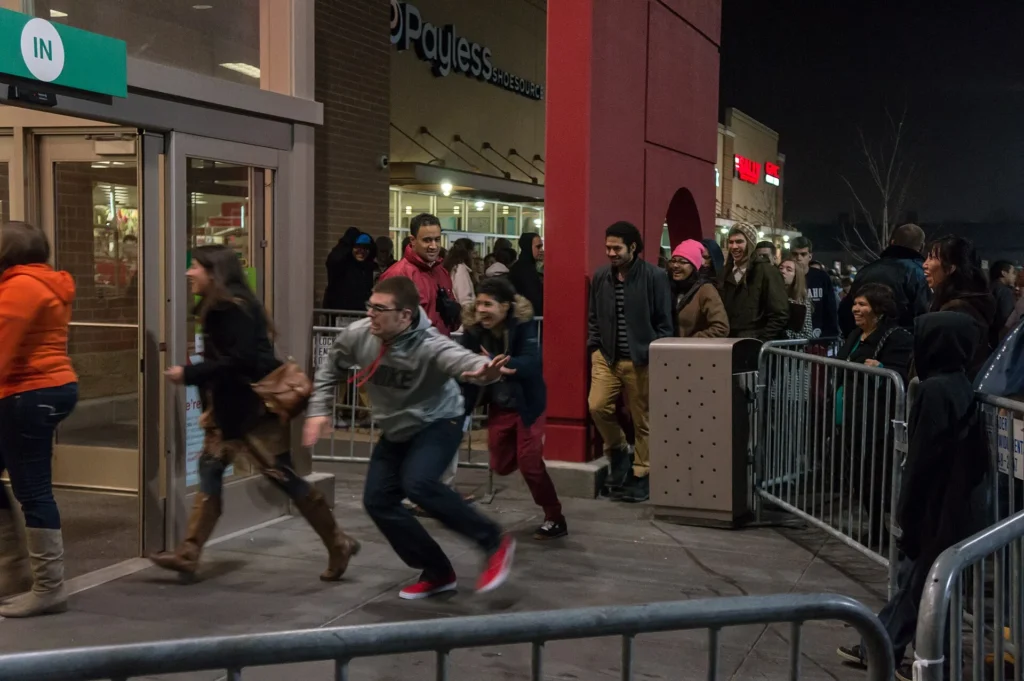
Black Friday has long been the day the retail industry measures its year against, but the event has changed shape. Brands and stores have promoted steep discounts online and in their shops for most of the month, so the day once treated as the unofficial starting gun for holiday shopping now feels more like the final stretch of a long campaign. It is still the biggest single day of the year for people walking through store doors.
Economy News: Online Spending Beats Expectations So Far
The early numbers suggest the season is holding up better than many forecasters feared. According to Adobe Digital Insights, the research arm of the technology company Adobe, American consumers spent 82.5 billion dollars online between November 1 and November 22, a rise of 9.1 percent on the same three weeks a year earlier. Adobe now expects online sales for the full holiday season, which runs through December 31, to grow by 6.7 percent and reach 275.1 billion dollars. The business news for retailers, in other words, is better than the gloomy consumer mood of recent months had suggested.
The broader picture is even bigger. The National Retail Federation, the industry's main trade body, has forecast that shoppers in the United States will spend 1.01 trillion dollars in stores and online across November and December, an increase of 4.1 percent on last year. About half of that growth, the federation estimated, will come from higher prices rather than from people buying more things. The consultancy Bain and Company put the season's total slightly higher, at 1.016 trillion dollars. However the final figure lands, the season is on course to pass the trillion-dollar mark for the first time.
Analysts and economists will watch the five days from Thanksgiving Day to Cyber Monday with particular care, because that stretch has become the season's most reliable early signal for household spending power and retailers' prospects into the new year. Adobe expects Cyber Monday, on November 30, to be the biggest online shopping day of the season, with more than 15 billion dollars forecast to be spent online, up 6.2 percent on last year. Black Friday itself is expected to be the second-biggest online day, at 12.9 billion dollars, up 9.2 percent. Consumer confidence, lackluster for much of the year, jumped this month as gasoline prices continued a steady decline, giving households a little more breathing room at exactly the moment the heaviest spending begins.
Personal Finance News: Shoppers Use Discounts to Stock Up on Essentials
The most striking change in what people are buying is the rise of the everyday item. Buying something for yourself while shopping for others is already an established habit, but the expansion of Black Friday into a multiweek event has given shoppers a new reason to fill their cupboards during the sales. Adobe's data shows how far that shift has gone: online sales of personal hygiene products were 40 percent higher between November 1 and November 22 than the October average, household cleaning products jumped 33 percent, and clothing basics rose 27 percent.
Vivek Pandya, the director of digital insights at Adobe, summed up the change. "Usually, when you think of holiday shopping, it's premium handbags and jewelry and those types of items, but we're fast seeing shoppers also use this season to stock up on the essentials," he said. The holiday sales are increasingly being used as a household budgeting tool, a way to buy months' worth of necessities at a discount. For personal finance news watchers, that is the story of the season.
The discounts on the everyday are substantial. Salesforce, the technology company that tracks digital spending across a wide range of retailers, including grocery stores, said the deepest holiday discounts are expected on clothing, home goods, and health and beauty products. Health and beauty products were expected to average 33 percent off between the Tuesday before Thanksgiving and the Monday after it. Caila Schwartz, a retail and consumer insights leader at Salesforce, put it plainly: "It's not just a moment where shoppers are buying gifts. They're also buying things that they need, and so that's going to help drive up a lot of the spend."
The pattern shows up in the Deloitte 2026 Black Friday-Cyber Monday survey. Clothing and accessories lead expected purchases at 76 percent, followed by electronics at 58 percent and toys and hobbies at 57 percent. The survey found 51 percent of shoppers plan to buy something for themselves, though expected self-gift spending has fallen to 208 dollars from 240 dollars last year. Half of all shoppers say they have already experienced higher holiday prices, and households earning under 50,000 dollars a year have raised their planned weekend budgets by 17 percent, to 433 dollars, while households earning 100,000 to 199,000 dollars have trimmed theirs by 7 percent. Forty percent plan to use buy now, pay later services to spread the cost.
Inflation Report: Higher Prices Shape Every Cart
No account of this holiday season makes sense without the inflation report behind it. Prices have been rising for long enough that they now shape almost every decision a shopper makes, from whether to buy early to whether to buy at all. The latest cpi inflation data put September's reading at 3.7 percent, and the cost of living has remained one of the defining pressures on household budgets. The National Retail Federation's estimate that about half of this season's expected 4.1 percent sales growth will come from higher prices rather than greater volumes is the clearest illustration: the tills will ring louder this year in part because everything in the basket costs more.
Yet the picture is more mixed than a single inflation figure suggests. Retailers have broadly held the line on prices instead of pushing through large increases across the board, and the discounts they offer have been large enough to persuade customers to shop earlier. Salesforce reported that discounts in November are 8 percent bigger than a year ago, and that seasonal promotions have pushed average selling prices of physical merchandise 1 percent below last November's level. Schwartz noted the contrast with recent years, saying that "in the last several years, a lot of the sales gains have been from higher prices. This is not what we are seeing this year." The discounts are doing real work this season, rather than merely offsetting increases, and shoppers have responded by adding 2 percent more items to their online carts between October 1 and November 18 compared with a year ago.
Trade policy is part of the cost story too. The tariffs impact on prices is one of the pressures analysts cite when they explain why households have become so sensitive to price tags, alongside rising energy and shipping costs, and the United States has announced a fresh round of duties on trading partners this week. Foot traffic data adds another dimension: Americans are visiting stores less often this season, according to Sensormatic Solutions, which tracks activity at physical stores, and their purchases appear more intentional than impulse-driven when they do go.
AI Shopping Tools Steer Spending — and Bigger Baskets
If higher prices are one force shaping this season, artificial intelligence is the other, and its influence is growing fast. Consumers are using AI-assisted tools to compare products and prices, particularly as inflation and the cost of filling a tank have made them more attuned to price tags, according to Adobe's Pandya. Traffic to online retail sites from links in AI-powered tools has more than doubled this month compared with November 2025, Adobe reported, a surge that shows how quickly shoppers have folded the new tools into an old ritual.
The retailers themselves are seeing the effect in the size of the orders. Walmart chief executive John Furner told analysts during an earnings call this month that customers who used Sparky, the retailer's AI shopping assistant, spent 40 percent more per order on average than shoppers who did not use the tool. Amazon chief executive Andy Jassy told analysts last month that shoppers in the United States who use its AI assistant Alexa spend 50 percent more than those who do not. The two figures, from the two largest retailers in the country, tell the same story: shoppers who let an AI assistant help them find what they want, compare options and complete the purchase tend to buy more, not less.
The trend extends beyond the big platforms. Adobe forecasts that sales arriving through AI channels will grow by as much as 130 percent year on year across November and December. Deloitte's survey found the same pattern from the shopper's side: respondents who use both social media and generative AI in their shopping, about 46 percent of those surveyed, plan to spend 765 dollars on average over the Black Friday weekend, 61 percent more than the 476 dollars planned by shoppers who use neither. AI assistants take on much of that work, comparing options across retailers and flagging the best deal, which may be why the season's early numbers have beaten expectations despite the gloomier mood.
Gas Prices Today: Falling Fuel Costs Lift Confidence
One piece of good news has arrived at just the right moment. Consumer confidence jumped this month as gasoline prices continued a steady decline, giving households a small but meaningful break in the cost of getting around. Gas prices today are lower than they were through much of the year, and for families who drive to work, to school and to the shops, that saving is felt every week. A cheaper tank leaves a little more for the holiday list, and in a season of careful spending, a little more is enough to matter.
The improvement in confidence has not made shoppers careless. The season's defining mood is watchfulness: people are spending, but they are spending on purpose. The foot traffic data from Sensormatic Solutions shows fewer visits and more deliberate purchases, and the online data shows the same discipline in a different form, with shoppers using AI tools to compare prices before committing. Grant Gustafson, Sensormatic's head of retail consulting and analytics, said the day itself has lost none of its pull. "Black Friday is still the day for in-store shopping," he said, and the company's tracking supports him: despite the month of early deals and the growth of online shopping, Black Friday remains the biggest day of the year for retail foot traffic.
The balance between online and in-store spending reflects that split. Deloitte's survey found that 61 percent of the Black Friday weekend budget is expected to be spent online and 39 percent in stores. Online retailers are the top destination at 71 percent, followed by mass merchants at 68 percent. Yet the physical store still has a role the internet cannot replace: 54 percent of shoppers said the best deals on Black Friday itself are found in stores, and 67 percent of those who shop in person said they would bring someone along. For many families, Black Friday remains a shared outing as much as a shopping trip.
What Happens Next: Cyber Monday and the Rest of the Season
The five-day stretch that began on Thanksgiving Day ends on Cyber Monday, November 30, and the days between now and then will set the tone for the rest of the year. Thanksgiving Day and Black Friday itself may still hold the biggest discounts of the season, according to analysts. Retailers offered deals earlier this year than ever before, with some starting before Halloween, but Adobe's Pandya said the best prices are still likely to land on Thanksgiving and Black Friday. Discounts on TVs are expected to average 23 percent on Friday, compared with 11 percent during the first 22 days of the month.
Cyber Monday, the technology-focused finale of the weekend, is expected to be the largest online shopping day of the season, with more than 15 billion dollars forecast to be spent online. The early signs are promising: participation is at a ten-year high, with 87 percent of shoppers planning to take part in the Black Friday to Cyber Monday period, up from 82 percent last year, and the average planned spend is holding steady at 624 dollars. Gen Z shoppers are the most enthusiastic of all, with 94 percent planning to shop and average planned spending rising to 752 dollars from 609 dollars a year ago. If the pattern holds, it will be remembered as the year the holiday sale became a household budgeting event, AI assistants moved from novelty to routine, and shoppers kept spending through higher prices wherever the price was fair.
For now, the carts keep filling: televisions and Lego sets for the tree, shampoo and pet food for the cupboard, all bought a little earlier and a little more carefully than before. Black Friday 2026 is not the frenzy it once was, but something quieter: shoppers using every tool at their disposal to make the season's money go as far as it can.
Source: AP News