Iran War News: Houthis Claim Rabigh Refinery Strike
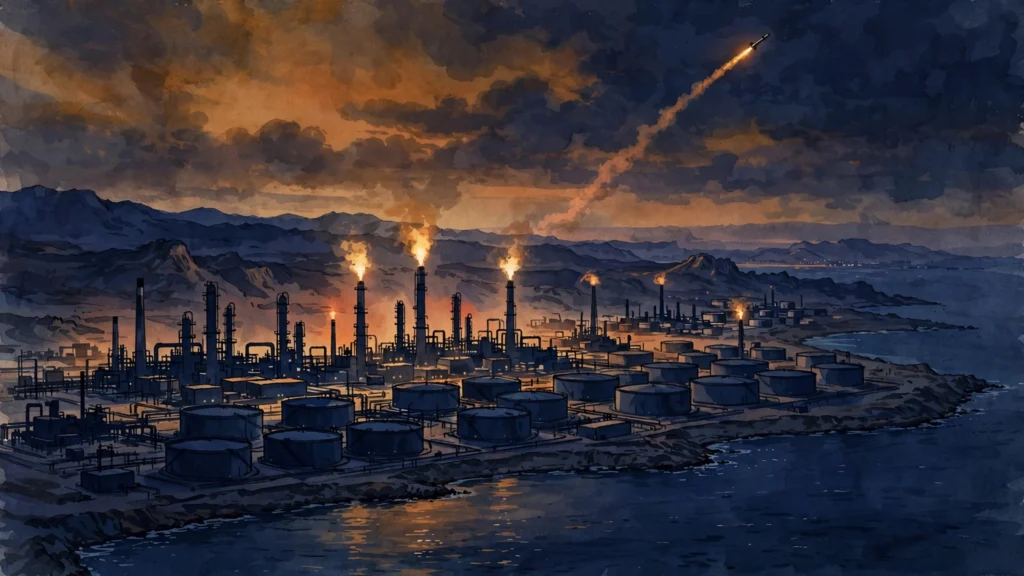
The iran war news out of the Gulf on Sunday carried a new claim from Yemen's Houthis, the Iran-aligned armed group that has been attacking Saudi Arabia for months. The Houthis said they had carried out an operation targeting Saudi Arabia's Rabigh oil refinery on the kingdom's western Red Sea coast, and they said they had achieved a direct hit. There was no indication of what damage had been inflicted, and the Saudi authorities did not immediately comment. The claim arrived on the same day President Donald Trump warned that the United States could launch new strikes against Iran next year, and it added a fresh target to a campaign of attacks on Saudi energy infrastructure that Riyadh has repeatedly refused to confirm.
Rabigh is not a minor target. It is home to Petro Rabigh, a major integrated oil refining and petrochemical complex developed by Saudi Aramco and Japan's Sumitomo Chemical, located about 165 kilometers north of Jeddah on the Red Sea coast, with access to deep-water export facilities. A successful strike there would matter for the kingdom's fuel supplies and for the world's oil markets, and the claim traveled fast even though nothing about it has been independently verified.
The Rabigh Claim: What the Houthis Said
The Houthis said on Sunday that they had carried out an operation targeting the Rabigh refinery, according to Reuters, which reported the claim the same day. The group said it had achieved a direct hit, but there was no indication of what damage had been inflicted, and the Saudi authorities did not immediately comment. The brevity of the announcement was itself typical of the campaign: a claim of a strike, a claim of success, and no evidence offered to support either.
The choice of target was not random. Rabigh sits on the Red Sea coast, the same coastline the Houthis threatened on Friday when they said they would attack Saudi Arabia's Red Sea ports and warned everyone nearby to stay away. The refinery is part of the kingdom's energy backbone, and it sits on the export route that has become more important this year as Iran has shut the Strait of Hormuz to much of its own traffic.
It was not the first time the group has named Rabigh. In late October, the Houthis claimed a ballistic missile strike on the same complex, part of a volley of six claimed attacks that also included the Ras Tanura refinery, an Aramco facility at Abqaiq, airports in Riyadh and Dammam, and a military headquarters in Najran. Saudi Arabia confirmed none of those claims either. The October volley and the Sunday claim form a pattern: Rabigh is a target the Houthis return to, and each claim is made without evidence that can be checked. The repetition does not make the latest claim true, but it does make it part of a sustained effort to convince the world, and the oil market, that no Saudi energy asset is safe.
The pattern of unverified claims is the reason the reporting around them is so careful. Reuters, which first reported the Sunday claim, noted that the Houthis have repeatedly claimed attacks on Saudi energy infrastructure in recent months, including the East-West oil pipeline and refineries in Jazan in the south and Ras Tanura in the Eastern Province, and that Saudi authorities have not confirmed any attacks on refineries.
Oil Prices Today: Markets Fall as Attacks Limit Losses
The oil market's reaction on Monday showed how the claims are priced even when they cannot be verified. Brent crude futures fell 28 cents, or 0.30 percent, to 92.29 dollars a barrel by 0216 GMT, and United States West Texas Intermediate futures fell 15 cents, or 0.18 percent, to 83.26 dollars a barrel, according to Reuters. Brent had declined 4 percent last week and WTI 5 percent, and the Monday fall was driven by a selloff in wider financial markets, where concerns about the ability of the artificial intelligence sector to boost economic growth spilled over into commodities.
But the fighting limited the losses. Reuters reported that the continuing attacks on Gulf shipping kept a floor under prices, and that over the weekend multiple attacks on shipping in the Gulf and near the Strait of Hormuz were reported. The Houthi claim about the Rabigh refinery was part of that same weekend of attacks, and the market read it as one more reason not to sell oil too far down.
Iran War News: A Campaign That Has Run Since July
The Rabigh claim is the latest in a campaign that has been running since July, when the wider American-Israeli war with Iran began. The renewed fighting has seen the Houthis seize territory from Yemen's internationally recognized government and step up missile and drone attacks on Saudi airports and energy infrastructure. Saudi Arabia has answered with intensified airstrikes against Houthi positions in support of its Yemeni allies. The war in Yemen, which had been frozen for years, is now moving again, and the Houthis are using it to put pressure on Riyadh and on Washington at the same time.
The Houthis have attacked Saudi Arabia daily since November 7, targeting military installations, airports and energy infrastructure, according to the Long War Journal. The airports have been hit hardest and most often. Riyadh's King Khalid International Airport has been the most heavily targeted: the Houthis first said they targeted it on September 19, then claimed attacks there on eight days in October and six days in November. Saudi authorities acknowledged at least four attacks there in the week starting October 5, and said one person was killed on October 7, three on October 8, thirteen on October 10 and one on October 11. Dammam airport, in the energy-rich Eastern Province, has also been hit repeatedly.
The oil targets have been just as persistent. The East-West Pipeline, which links Saudi Arabia's oil-producing areas in the Gulf to the Red Sea, was shut down on September 11 after what Saudi authorities said was a drone attack by pro-Iranian militias in Iraq, not the Houthis. The Houthis later claimed responsibility for several attacks on the pipeline, which has become particularly important this year as an alternative export route since Iran shut the Strait of Hormuz. On November 13, Yahya Saree claimed a drone attack on Riyadh's airport and a pumping station along the pipeline, and said two ballistic missiles had struck Saudi forces in the Al-Tuwal area of southwestern Jazan. The Houthis have also claimed strikes on refineries at Jazan, Ras Tanura and near Riyadh. Saudi authorities have not confirmed any attacks on refineries, and many Houthi claims of damage and casualties could not be independently verified.
Trump News: The Warning Behind the Claim
The Rabigh claim arrived on the same day President Trump warned that the United States could launch new strikes against Iran next year, and the two developments are connected. The Houthis are Iran's allies, and their campaign against Saudi Arabia is part of the pressure Tehran is applying on Washington to accept its terms. Trump has said he is leaning toward resuming strikes on Iran after the New Year if the two countries fail to reach an agreement, and he has warned that any Iranian vessel that tries to break through the American naval blockade will be destroyed. The warning was delivered in an interview with Fox News on Sunday, and it was followed later the same day by a Truth Social post in which the president said Iran had launched more drones and missiles in the past week than at any time in over a year.
The president's message was aimed at Tehran, but it was also aimed at the Houthis and at the Gulf states that host American bases. The United States is maintaining a naval blockade of Iranian ports, and the aircraft carrier Theodore Roosevelt has been operating in the theatre since November 15. The blockade is enforced every day, and the question is whether either side escalates it. The Houthis' claim about Rabigh is, in that light, a test of the same kind: a demonstration that the group can reach into the kingdom's energy heartland, and a reminder that the war is not confined to the waters of the Gulf.
The diplomacy behind the deadline has produced little visible progress. The talks between Washington and Tehran continue only indirectly, with messages passing between the two sides rather than face-to-face meetings. Trump has described the Iranian negotiators as "professional tap dancers," and he has said the other side has grown more aggressive since the American elections.
The pressure on Tehran is also economic, and the calendar on that front may be shorter than the one Trump set for the strikes. Kpler, the commodity-data firm, projects that Iran's crude and condensate export revenue will reach zero by mid-December, a first in the country's history, with losses running at between 200 million and 250 million dollars a day. If that projection holds, Iran's deadline arrives before Washington's, which may explain why Tehran has begun to talk openly about testing the blockade by force, and why its allies in Yemen are stepping up their attacks on Saudi Arabia.
What Happens Next
The first question is whether the Rabigh claim will be confirmed or denied. Saudi Arabia has not commented, and the kingdom's practice through this campaign has been to say little about attacks on its energy infrastructure, confirming interceptions and casualties while staying silent on damage to refineries and pipelines. If Riyadh confirms a strike, the oil market will move sharply. If it stays silent, the claim will join the long list of Houthi announcements that were never verified, and the market will treat it as one more unverified warning. Either way, the Houthis will keep claiming, because the claims themselves move prices and force Riyadh to spend on air defense.
The second question is what the United States does in January. The president has said he will decide whether to resume strikes if no agreement has been reached, and the new Congress takes its seats on January 3, days after that deadline. Any decision on new strikes will be taken in the first days of a divided government, with a Republican president and a Democratic Congress, and with the politics of war and peace fought out in public from the first week of the new session. The Senate's rejection of a war powers resolution on November 19, by 48 votes to 51, leaves the president's military authority intact, so Congress has no new lever to stop him.
The third question is whether the Houthi campaign escalates further. The group has said it will attack Saudi Arabia's Red Sea ports, and it has now claimed a direct hit on a major refinery. The Senate is also due to vote as soon as the week of November 30 on whether to block the administration's proposed nuclear power pact with Saudi Arabia, a deal the Houthi attacks have already thrown into doubt.
Stay with TrendSignal for the latest Donald Trump news and fresh US news every day.
Source: Reuters