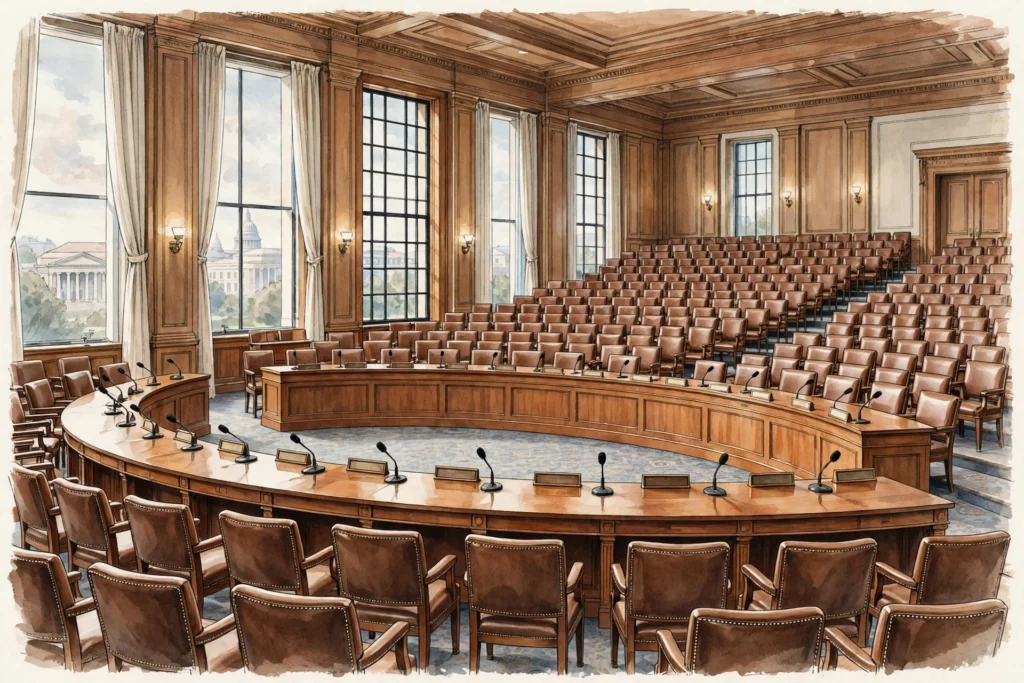
FDA News: Trump’s Pick Faces Uncertain Senate Vote
The latest FDA news out of Capitol Hill is that President Donald Trump's pick to lead the Food and Drug Administration faces an uncertain Senate committee vote next week, with the chairman of the panel that must advance her nomination still refusing to say whether he will support her. The Senate Health, Education, Labor and Pensions Committee, known as the HELP Committee, has scheduled a vote for November 18 on Dr. Heidi Overton's nomination to run the agency. With only days to go, the chairman, Senator Bill Cassidy of Louisiana, has said he remains undecided, and several of his fellow Republicans have declined to commit as well.
The arithmetic is unforgiving. Overton needs 11 votes in the 21-member committee to advance to the full Senate, and Republicans hold only a one-vote advantage on the panel. If every Democrat votes against her, a single Republican defection would be enough to sink the nomination. That is why the silence from Cassidy, a physician who chairs the committee, has become the central fact of the confirmation fight, and why the White House is now working against a clock that runs out on January 3, when Democrats take control of the Senate.
The stakes reach well beyond a personnel decision. The FDA commissioner leads the agency that licenses vaccines, reviews their safety data, and approves changes to how vaccines are made and labeled. Those decisions shape what a pediatrician can offer at a child's next checkup, and they sit at the center of two of the most politically charged questions in American health policy: the drive to scale back childhood vaccination recommendations, and the agency's forthcoming safety review of the abortion pill mifepristone. With measles cases at their highest level in more than three decades, the vote on November 18 will be watched far beyond Washington.
Cassidy underlined that uncertainty himself on Sunday, telling CBS News' "Face the Nation" that he still had questions about Overton and could not say how the committee would vote. Asked by the moderator, Margaret Brennan, whether Overton would clear his panel, he answered: "I don't know that." He said he had been "working the phones all week," speaking with Overton and with four or five Republican colleagues, and that he still could not predict the outcome. The appearance, two days before the vote, made clear that the White House has not yet secured the support of the chairman whose panel must advance the nomination.
FDA News: Cassidy's Objections to Overton
Cassidy's doubts about Overton are not new, and they have been public since the day Trump announced her nomination. On August 19, the day the nomination was announced, Cassidy wrote on social media that he had strong concerns about the choice, starting with Overton's lack of experience managing a large organization at an agency already facing staffing and morale problems. He then turned to vaccines, writing that her role in the administration's vaccine executive order raised questions about her commitment to sound science and children's health, and that this alone was almost disqualifying.
The wording matters. Cassidy said "almost," not that she was disqualified, and he has left himself room to be persuaded. But he has not moved. At her confirmation hearing, he told Overton he would not vote for her if she could not say clearly that Trump was wrong about the measles, mumps, and rubella vaccine, known as MMR. In a post on Wednesday, Cassidy said he remained undecided after several frank conversations with Overton and with Jim O'Neill, Trump's nominee to lead the National Science Foundation, about their visions, their roles, and the lack of trust caused by broken promises and irresponsible decisions from other officials within the administration.
That reference to broken promises was aimed at Health Secretary Robert F. Kennedy Jr. During Overton's hearing, Cassidy reminded her that Kennedy had given him guarantees before his own confirmation that were not kept. "Kennedy gave me guarantees, and he did not keep them," Cassidy said. The remark captured a frustration building among Senate Republicans who backed the administration's health officials on private assurances, only to watch those assurances unravel in public. For Cassidy, the Overton vote is now a test of whether its nominees can be trusted to follow the science rather than the politics.
The timing adds weight to the decision. Cassidy lost his May 16 Republican primary and will leave the Senate in January, which makes the Overton vote one of his last major decisions as chairman. The White House has given no indication that it plans to withdraw the nomination, even as the vote approaches with his support still uncommitted.
Cassidy is not the only Republican the White House needs to win over. Senator Susan Collins of Maine said in a brief interview on Capitol Hill on Thursday that she has not taken a position and needs to get some answers on various things. Senator Lisa Murkowski of Alaska declined to say how she will vote, and Senator Josh Hawley of Missouri is pressing for stronger restrictions on abortion drugs. With the committee's Republicans split between different concerns, and Democrats expected to vote together against the nomination, the White House has almost no margin for error.
Vaccine News: The August Order at the Center of the Fight
The heart of the dispute is an executive order Trump signed on August 10 that calls for fewer universally recommended childhood vaccines, with shots given at separate medical visits and the combined MMR vaccine split into three single-disease shots once such products are available in the United States. Overton, then deputy director of the White House Domestic Policy Council, spoke at the signing and said the order was a response to a court ruling that had stalled the administration's earlier vaccine changes. Her involvement went further: Semafor reported in October that she helped edit and shape the scientific justification used to cut the CDC's childhood recommendations from 17 vaccines to 11 in January, a larger role than emerged during her confirmation hearing.
That record is what Cassidy called almost disqualifying. The FDA commissioner's job is to stand between politics and the science of vaccines, licensing shots only when the evidence supports them and requiring label changes when safety signals appear. Critics argue that a commissioner who helped write the case for cutting childhood vaccine recommendations cannot be trusted to defend them. Supporters counter that Overton is a board-certified physician with a doctorate from Johns Hopkins University who understands both the medicine and the policy, and that her White House experience equips her to run an agency that must constantly navigate political pressure.
There is a practical wrinkle that puts the commissioner at the center of the August order's future. Separate measles, mumps, and rubella vaccines for children are not currently available in the United States, and any new single-disease vaccine would need FDA licensure, putting the commissioner at the center of that process. The November 18 vote does not change vaccine availability, and the combined MMR vaccine remains licensed and available. But whoever leads the FDA will decide how the administration's vaccine agenda is carried out in practice, shot by shot and label by label.
Overton is a board-certified physician and preventive medicine doctor who previously held senior policy roles at the America First Policy Institute, the think tank closely associated with the Trump movement, before joining the White House Domestic Policy Council. If confirmed, she would replace acting commissioner Kyle Diamantas, who has led the agency since Martin Makary resigned in May and is expected to leave the administration at the end of the year.
Senate Confirmation Hearings: What Overton Told the Committee
Overton appeared before the HELP Committee on September 24, and her testimony under oath is now being read closely by every senator who has yet to decide. Cassidy opened by pressing her on the MMR vaccine after Trump had suggested the combined shot could be lethal. "The MMR vaccine is not lethal. It is safe and effective," she said. She called the vaccine the best tool right now in the public health response to the measles outbreak, and she told senators that all vaccines marketed in the United States are safe and effective.
But on the question Cassidy cared about most, she stopped short. When senators from both parties asked whether she would stand up to the president if he asked her to act against the science, she said she would give him her best advice and follow the law governing the commissioner's role, but she did not directly say Trump had been wrong. That was enough to keep her nomination alive, but not enough to win over the chairman, and it left Collins, Murkowski, and others still waiting for the answers they say they need.
The hearing also exposed the second fault line in the nomination: the abortion pill mifepristone. Murkowski joined Democrats in questioning Overton about the drug, which the FDA is reviewing, and about whether political pressure would shape the agency's decisions on access. Overton affirmed the integrity of the FDA's abortion-pill safety review, but she declined to prejudge the agency's ongoing work. Overton had previously criticized the loosening of mifepristone dispensing restrictions, and Hawley is pressing for stronger limits, while Democrats and reproductive health advocates worry the review could be used to restrict access.
The pressure from outside Congress has been intense as well. Americans for Contraception has launched a 500,000 dollar advertising campaign aimed at four Republican senators, pressing them to reject the nomination. The Overton fight has become a proxy battle for the larger war over the administration's health agenda, with vaccine policy, abortion access, and the independence of the FDA all converging on a single committee vote.
CDC News: Measles Cases at Their Highest Since the Early 1990s
The backdrop to the confirmation fight is a measles outbreak that has made the FDA commissioner's vaccine decisions more consequential than they have been in a generation. The CDC had confirmed 5,182 measles cases this year as of November 5, more than double the 2025 total and the highest annual count since the early 1990s. Two doses of the MMR vaccine are about 97 percent effective against measles, which makes the outbreak a story about vaccination rates as much as about the virus itself.
The commissioner's reach extends well beyond approvals. The FDA runs the Vaccine Adverse Event Reporting System together with the CDC, convenes outside advisers before major vaccine decisions, and can require label changes when a safety signal appears. Those tools shape how quickly concerns about a vaccine are confirmed or ruled out. Families with the most at stake include those with infants too young to be fully vaccinated, children with weakened immune systems who depend on others being protected, and households in communities with active outbreaks.
For parents, the November 18 vote is more than a Washington personnel fight, but it does not change anything overnight. Any change to a vaccine's license or label would come through formal FDA action, not a committee vote. The combined MMR vaccine remains licensed and available, and parents can keep children on the schedule their pediatrician recommends. What the vote does decide is who will be making those formal decisions in the months and years ahead, and under what understanding of the science.
The measles numbers also explain why Cassidy, a physician, has made the MMR vaccine the test of Overton's fitness for the job. He has watched the outbreak grow while the administration has moved to scale back the recommendations that keep children protected, and he has said plainly that a commissioner who cannot state that the president was wrong about the combined shot is a commissioner he cannot support. Whether Overton can clear that bar in the days before the vote, or whether the White House can give Cassidy the assurances he needs, will decide whether her nomination survives the committee.
What Happens Next
The committee vote on Wednesday, November 18, is the first hurdle, and it is far from the last. If the panel approves Overton, her nomination goes to the full Senate for a confirmation vote. If the vote fails to reach 11 votes, the nomination could stall, and the White House would have to decide whether to fight for her on the floor or choose another nominee. Even if she survives the committee, she must still win confirmation from the full Senate, where the same divisions over vaccines and abortion would follow her.
Time is the White House's enemy. Republicans are racing to confirm Trump's nominees before the current Congress ends in January, and Democrats, who won control of the Senate in the midterm elections, take power on January 3. If Overton is not confirmed before that date, her nomination would likely be sent back to the White House, forcing Trump to renominate her before a chamber that would be far less hospitable. That deadline is what gives the November 18 vote its urgency, and what makes Cassidy's indecision so consequential.
The days before the vote will be filled with the usual machinery of a confirmation fight: meetings between the nominee and undecided senators, quiet conversations between the White House and the committee, and public pressure from advocacy groups on both sides. Collins and Murkowski will be the focus of that effort, and their questions about vaccines, abortion, and the independence of the FDA will be the ones Overton must answer.
Source: The Washington Post