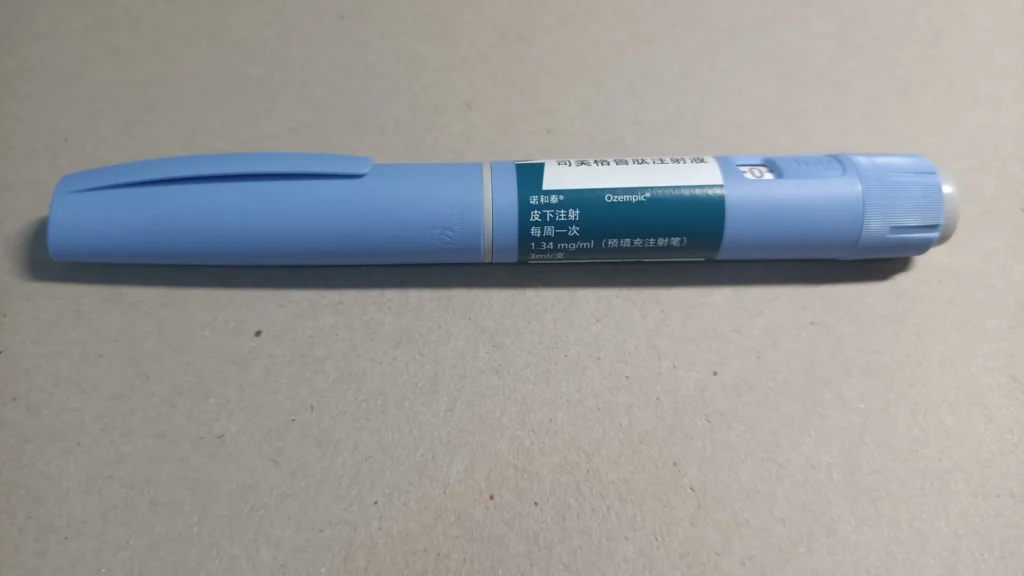
Canada News: Ozempic Warning Over Rare Vision Loss Risk
Health Canada has warned of a very rare but serious risk of sudden vision loss linked to semaglutide, the drug sold as Ozempic, Wegovy and Rybelsus, after completing a safety review that found a possible link between the medicine and a rare eye condition that can cause permanent blindness. The public advisory, published on Wednesday, November 25, applies to all prescription semaglutide drugs sold in Canada, and it advises anyone taking the medicine who experiences sudden vision loss or rapidly worsening eyesight to seek urgent medical attention. The risk is described as very rare, and Health Canada is not advising patients to stop taking semaglutide, but the warning is the most serious safety signal yet for a class of drugs now taken by millions of people around the world.
The condition at the centre of the warning is non-arteritic anterior ischemic optic neuropathy, known as NAION, an eye condition that causes sudden painless vision loss or vision changes due to reduced blood flow to the optic nerve. Health Canada's review found a possible link between semaglutide and NAION, and the regulator is now working with the manufacturers of semaglutide drugs to update their Canadian product monographs to include warnings about the condition. The warning comes after the United States Food and Drug Administration required the same warning to be added to the labels of all GLP-1 drugs on November 9, 2026, and it places Canada among a growing number of countries taking action on the risk.
Ozempic News: What Health Canada Found
Health Canada's safety review began after the department identified several scientific studies suggesting a possible association between semaglutide and NAION, and it examined the evidence in detail before reaching its conclusion. The review looked at 23 reported cases of NAION in people taking semaglutide, including 12 cases reported in Canada and 11 from other countries, and it reviewed 10 published studies on the association. Several of the studies found that people with type 2 diabetes who used semaglutide were about twice as likely to develop NAION as those using other diabetes treatments, although the department stressed that the overall risk remains very rare.
The research is not entirely consistent, and Health Canada was careful to acknowledge that. One 2026 study listed among the review's references, published in the journal Military Medicine, reported a decreased risk of NAION in type 2 diabetes patients taking semaglutide, a finding that runs counter to the other studies. The inconsistency is a reminder that the association, while plausible, is not yet proven, and that the science is still evolving. What the review establishes is a possible link, strong enough to warrant a warning, but not a definitive causal relationship, and the regulator's language reflects that uncertainty.
The advisory covers every prescription semaglutide drug sold in Canada. The current brand names include Ozempic, Rybelsus, Plosbrio, Poviztra and Wegovy, and the current generic names include Apo-semaglutide injection, Aspen-semaglutide, Dr Reddy's Laboratories semaglutide injection, Sandoz semaglutide and Sevmia. The drugs are prescribed to manage type 2 diabetes and for weight management, and they are among the most widely prescribed medicines in Canada. The breadth of the advisory, covering all semaglutide products rather than a single brand, reflects the fact that the risk, if it exists, is linked to the drug itself rather than to any particular formulation.
Health Canada's review focused on semaglutide, but the department is currently assessing the risk of NAION with all other GLP-1 receptor agonist drugs, the wider class of medicines that includes tirzepatide and other drugs used for diabetes and weight loss. The assessment could lead to further warnings, and it reflects the regulator's concern that the risk may not be confined to semaglutide alone. The FDA's November 9 action, which required the warning to be added to the labels of all marketed GLP-1 drugs, was based in part on post-marketing safety reports involving every marketed GLP-1 drug, and Health Canada's assessment may reach a similar conclusion.
What Is NAION and Why It Matters
NAION, non-arteritic anterior ischemic optic neuropathy, is sometimes described as a stroke of the optic nerve, and the description captures the suddenness and the seriousness of the condition. It occurs when blood flow to the optic disc is suddenly reduced, leading to acute hypoperfusion, tissue swelling and damage to the retinal ganglion-cell axons that carry visual information from the eye to the brain. The result is sudden, usually painless vision loss, which can be irreversible, and for which there is currently no treatment that reverses the damage.
NAION is the most common type of optic neuropathy, damage to the optic nerve, in adults over 50 years of age, and it is a significant cause of permanent vision loss. It occurs more commonly in people with diabetes, high blood pressure and high cholesterol, the same conditions that semaglutide is often prescribed to treat, which makes it difficult to separate the risk of the drug from the risk of the underlying disease. The condition typically affects one eye at a time, and the symptoms, when they appear, are distinctive: sudden blurring or cloudiness, loss of vision across part of the visual field, most commonly the lower half, and colours appearing faded. Most people notice the change upon waking, but vision loss can sometimes develop gradually over about two weeks, and some patients also report mild headaches or discomfort around the eye.
There is currently no established treatment that reverses vision loss caused by NAION, and that is what makes the condition so serious. Once the optic nerve is damaged, the vision that is lost cannot be restored, and the patient must learn to live with the impairment. The absence of a treatment is also what makes early detection so important: if NAION is caught early, the drug can be stopped, and the risk to the other eye can be assessed, but the vision already lost cannot be recovered. Health Canada's advice, that anyone experiencing sudden vision loss should seek immediate eye care, reflects that reality, and the urgency of the warning is a measure of how seriously the regulator takes the risk.
What Patients and Doctors Should Do
Health Canada's advice to patients is clear and measured. The department is not advising everyone to stop taking semaglutide. Patients should speak with their doctor about their individual risks before making any changes to their treatment, and they should not stop the medicine on their own. But sudden vision loss, blurred or cloudy vision, or rapidly worsening eyesight while taking semaglutide requires urgent medical attention, and patients should not wait for symptoms to resolve on their own. If NAION is confirmed, Health Canada says the medication may need to be discontinued, and doctors are advised to urgently refer patients reporting sudden vision loss, including partial loss, for an eye examination.
For health care professionals, the guidance is more specific. Health Canada said patients who report sudden vision loss, including partial loss, should be urgently referred for an eye exam, and that semaglutide treatment should be stopped if NAION is confirmed. The department is working with the manufacturers to update the Canadian product monographs for semaglutide drugs to include the NAION warning, and it will notify health care professionals through its Health Product InfoWatch publication. According to the review, NAION warnings have already been added to the Canadian product monographs for most semaglutide products, and the department is working with manufacturers to update the rest.
The timeline of regulatory action shows how the warning has developed. Health Canada had already taken action earlier: in September 2026, the Canadian product monograph for Wegovy was updated to include NAION under warnings and precautions. The FDA's action on November 9, 2026, which required updated warnings and precautions labelling across all GLP-1 drugs, was the next step, and Health Canada's public advisory on November 25, covering all prescription semaglutide drugs in Canada, is the latest. The sequence shows regulators in two countries moving in the same direction, and it suggests that the warning will soon be standard on semaglutide products around the world.
The Rise of Semaglutide and the Weight of the Warning
The warning lands at a moment when semaglutide is one of the most widely used and most discussed medicines in the world. The drug, originally developed for type 2 diabetes, has become a cultural phenomenon as a weight-loss treatment, and its brand names, Ozempic and Wegovy, are now household words. About 11 percent of American adults currently take a GLP-1 drug to lose weight, a new high according to Gallup, and one in five Americans with obesity are on the medication. The drugs have transformed the treatment of diabetes and obesity, and they have made their manufacturers among the most valuable companies in the world.
That scale is what makes the NAION warning so significant. A very rare risk, when applied to millions of patients, can still affect thousands of people, and the absolute numbers matter as much as the relative risk. Health Canada reviewed 23 cases, 12 from Canada and 11 from other countries, and the studies it examined suggested a doubling of the risk in people with type 2 diabetes. Even if the risk is very rare, the number of people taking the drug means that the number of cases will not be trivial, and the fact that the vision loss is permanent makes each case a serious harm.
The warning also comes at a time when the drugs are being used more widely and for longer. The original approvals were for diabetes and for obesity, but the drugs are now being studied and prescribed for a growing range of conditions, and the number of people taking them continues to rise. The longer the drugs are used, and the more people take them, the more important it becomes to understand their risks, and the NAION warning is part of that process. It does not mean the drugs are unsafe, and Health Canada has been careful to say that patients should not stop taking them without talking to their doctor. But it does mean that the picture of the drugs' safety is still being completed, and that patients and doctors need to be aware of a risk that was not recognised when the drugs were first approved.
For the millions of people taking semaglutide, the message is one of vigilance rather than alarm. The risk of NAION is very rare, the benefits of the drug for diabetes and obesity are substantial, and the warning is a reminder to watch for symptoms and to act quickly if they appear. Sudden vision loss, blurring, cloudiness or rapidly worsening eyesight while taking semaglutide should be treated as an emergency, and the sooner it is investigated, the better the chance of limiting the damage. The warning is a small addition to the label of a widely used drug, but for the patients who develop NAION, it could be the difference between losing vision in one eye and losing it in both, and that is why Health Canada has issued it.
The Science Behind the Link: What the Studies Show
The evidence linking semaglutide to NAION comes from a combination of case reports and observational studies, and understanding what the studies do and do not show is important for patients trying to make sense of the warning. Health Canada's review examined 10 published studies, and several of them found that people with type 2 diabetes who used semaglutide were about twice as likely to develop NAION as those using other diabetes treatments. A doubling of risk sounds alarming, but it must be set against the absolute risk, which remains very rare. If the background rate of NAION is low, doubling it still leaves a low risk, and that is the judgment Health Canada has made in describing the risk as very rare.
The studies themselves have limitations, and the review was careful to acknowledge them. Observational studies, which compare people who take a drug with people who do not, can be affected by confounding, the possibility that the people who take the drug differ from those who do not in ways that affect their risk. People who take semaglutide have diabetes, high blood pressure and high cholesterol, all of which are themselves risk factors for NAION, and it is difficult to separate the effect of the drug from the effect of the diseases it treats. The fact that one 2026 study, published in Military Medicine, reported a decreased risk of NAION in type 2 diabetes patients taking semaglutide, is a reminder that the evidence is not uniform, and that more research is needed.
The biological mechanism that might link semaglutide to NAION is plausible but unproven. The drug works by mimicking a hormone that regulates blood sugar and appetite, and it has effects on blood vessels and blood flow that are still being studied. One hypothesis is that the rapid changes in blood sugar and blood pressure that can follow the start of treatment might affect the blood supply to the optic nerve, which is already vulnerable in people with diabetes and vascular disease. Another is that the drug's effect on the eye itself, through changes in the retina or the optic disc, might play a role. These are hypotheses, not established facts, and the research to test them is ongoing.
Source: Health Canada