White House News: Trump Proclaims Thanksgiving 2026
In the latest white house news, President Donald Trump has proclaimed Thursday, November 26, 2026, as a National Day of Thanksgiving, calling on Americans to gather with family and friends, attend places of worship, and offer a prayer of thanks to God for the nation's blessings. The proclamation, issued on Tuesday, November 24, and released through the White House, comes in the 250th anniversary year of American Independence, and the president used it to tie the holiday to the founding of the country, to the faith of the Pilgrims who crossed the Atlantic more than four centuries ago, and to his own promise of a Golden Age of America. It is the formal, official act that marks the holiday each year, and this year's version is among the most sweeping in tone, framing Thanksgiving not only as a day of gratitude but as a statement about what America is and what it should become.
The proclamation matters because it is the one document in which a president speaks to the whole country about the meaning of the holiday, and because it is read aloud, quoted in churches and town halls, and carried in full by newspapers across the country on Thanksgiving morning. This year's text reaches back to the first Thanksgiving feast, to George Washington's first proclamation in 1789, and to Abraham Lincoln's call for a national day of thanks in the middle of the Civil War, and it places the 2026 holiday inside a much longer story. It also looks forward, with the president promising that the spirit of the holiday will carry the country into its next 250 years, and it pays tribute to the men and women of the Armed Forces who are spending the holiday far from home.
Trump News: What the 2026 Proclamation Says
The proclamation opens with the gathering itself, the image of families and friends coming together across the country to celebrate Thanksgiving in the 250th anniversary year of American Independence. "As families and friends gather across our country to celebrate Thanksgiving in this 250th anniversary year of American Independence, we pledge to carry forward the spirit of faith and fellowship that marked the first Thanksgiving feast, and we renew our mission to continue ushering in the Golden Age of America so that every citizen has the opportunity to achieve their American Dream," the president wrote. The sentence carries the two themes that run through the whole document: gratitude for the past, and a promise about the future, with the Golden Age language that has become the signature phrase of this presidency.
The heart of the proclamation is a declaration of faith. "On this blessed day, we celebrate the glorious land that has allowed all people to worship freely and openly since its founding, and we remember that this solemn conviction anchors our national identity: America is — and always will be — one Nation under the eternal providence and goodness of God," Trump wrote. The line is the most quoted passage of the document, and it was carried in full by newspapers on Thanksgiving morning. It is followed by a reflection on the trials the country has endured. "Through every trial and triumph, our trust in Him has strengthened our people and inspired us to carry the flame of liberty forward," the president wrote, tying the holiday to a story of national endurance that runs from the founding through every generation since.
The proclamation also sets out the president's account of the year that has passed. "This year, God has bestowed abundant blessings all across our land and indeed the entire world," it says. "As we give thanks to Him, we continue to advance our Nation through strong leadership and commonsense policy. As a result, the American economy is roaring back, we are making progress on lowering the cost of living, a new era of peace is sweeping around the world, our sovereignty is being swiftly restored, and the American spirit is coming back greater and more powerful than ever before." The passage reads as a summary of the administration's case for itself, delivered in the language of a holiday proclamation, and it is the part of the document that most clearly belongs to this president and this year, rather than to the long tradition of the holiday.
Looking ahead to the country's 250th birthday, the proclamation turns to the giants of American history. "As we prepare to celebrate 250 glorious years of American independence, this Thanksgiving, we summon the faith, resolve, and unflinching fortitude of the giants of American history who came before us. We vow to build a future that echoes their sacrifice. Above all, we offer our endless gratitude to Almighty God for His love, grace, and infinite blessings." The document closes with the formal words that give it legal force. "NOW, THEREFORE, I, DONALD J. TRUMP, President of the United States of America, by virtue of the authority vested in me by the Constitution and the laws of the United States, do hereby proclaim Thursday, November 26, 2026, as a National Day of Thanksgiving. I encourage all Americans to gather in homes and places of worship and offer a prayer of thanks to God for our many blessings." It is signed and dated the twenty-fourth day of November, in the year of our Lord two thousand twenty-six, and of the Independence of the United States of America the two hundred and fifty-first.
White House News: The Pilgrims and the First Thanksgiving
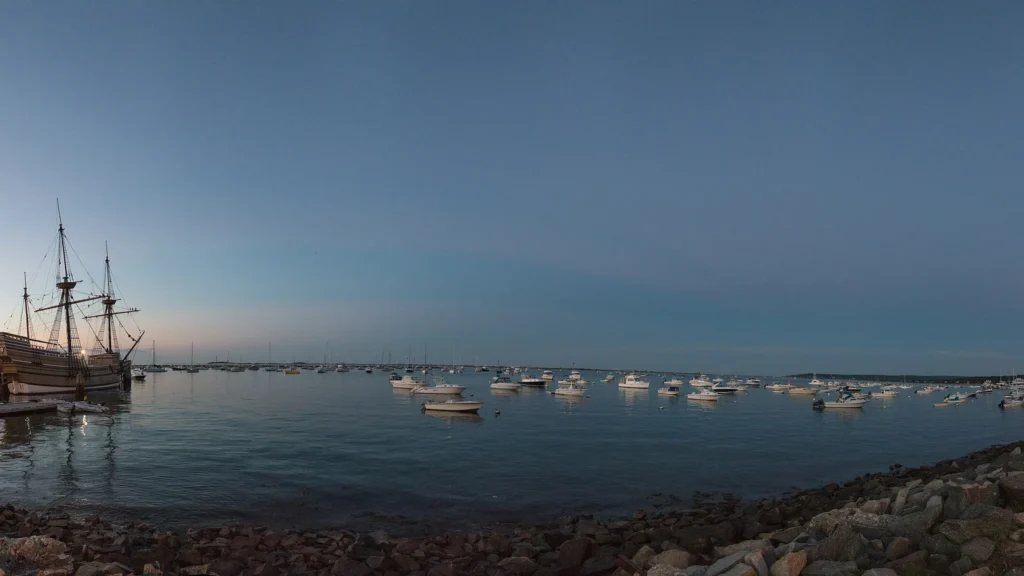
The proclamation spends its longest passage on the Pilgrims, and it is worth reading closely, because it is the part of the document that explains why Thanksgiving matters at all. Trump began with the journey itself, recalling how the Pilgrims arrived in New England aboard the Mayflower in November 1620 after fleeing religious persecution. The 102 passengers endured a difficult crossing of the Atlantic, and the winter that followed was brutal: nearly half of the community died in the first months, struck down by cold, hunger, and disease in a land they did not know. It is a story of suffering that the proclamation does not soften, and it is the foundation for everything that follows.
What saved the survivors, in the proclamation's telling, was faith and fellowship. "Sustained only by their unfailing faith in Jesus Christ and the bonds they formed in caring for one another, this small community persisted with remarkable strength of spirit and laid the foundations for our civilization — forging a friendship with the Wampanoag people, learning to cultivate the land, and gathering a successful harvest in the following autumn," the president wrote. "Filled with gratitude to our Lord for these magnificent blessings, the Pilgrims joined the Wampanoag in a celebration that became the first Thanksgiving." The passage gives the holiday its origin story: a harvest feast shared between English settlers and Native Americans, held in gratitude for survival, and remembered ever since as the first Thanksgiving.
The proclamation then draws a line from that feast to the whole of American history. "From the pilgrims who settled our continent and the patriots who won our independence on the battlefield to the pioneers who tamed the west and the warriors who have preserved our freedom in distant lands, the spirit of gratitude and grit embodied by those who celebrated the first Thanksgiving more than 400 years ago have stood at the very heart of what it means to be an American." It is a sweeping claim, and it is the argument the document makes most forcefully: that gratitude is not a soft sentiment but the quality that built the country, and that the holiday is a reminder of the toughness and the faith that carried the first settlers through their first winter.
The history behind the passage is well known, and it is worth setting out plainly. The Mayflower landed at Plymouth in November 1620, months later than planned, with winter already closing in. The settlers built rough shelters and endured a winter in which disease and exposure killed about half their number. In the spring, they formed a friendship with the Wampanoag people, who taught them to plant corn, fish, and hunt in the new land. The harvest that followed in the autumn of 1621 was good enough to feed the settlement, and the Pilgrims and the Wampanoag shared a feast that lasted several days. That feast, remembered and retold for four centuries, is the first Thanksgiving, and it is the event the president's proclamation asks Americans to remember when they sit down to their own tables this year.
US Politics: Washington, Lincoln and 250 Years of Thanksgiving
The proclamation also places the holiday inside the tradition of presidential proclamations, reaching back to the two presidents who fixed Thanksgiving in the life of the nation. Trump began with George Washington, who established the first National Day of Thanksgiving in 1789, in the first year of the republic. Washington declared that it was the duty of all nations to acknowledge the providence of Almighty God, to obey His will, to be grateful for His benefits, and humbly to implore His protection and favor. It was a declaration that tied the new nation to gratitude from its very first year, and it set the pattern that every president since has followed: a day set aside, by the authority of the presidency, for the whole country to give thanks together.
The second figure in the proclamation is Abraham Lincoln, who called for a national day of Thanksgiving in the middle of the Civil War. Lincoln asked the country to observe a day of Thanksgiving and praise to the beneficent Father who dwells in the heavens, and he did so at the darkest moment in American history, when the nation was torn apart by war and the outcome was far from certain. The proclamation notes that in every generation since, the spirit of reverence, trust, and gratitude that Washington and Lincoln invoked has preserved the American way of life and made the country the strongest, greatest, and most resilient nation the world has ever known. It is a claim that links the holiday to the survival of the republic itself, and it is the reason the proclamation treats Thanksgiving as something older and larger than a single day of feasting.
The holiday's modern form took shape later, when Congress fixed Thanksgiving to the fourth Thursday of November, giving the country a regular date it could plan around and a long weekend that has become one of the great travel periods of the year. The 2026 holiday falls in a year unlike any other in that history, because it is the 250th anniversary year of American Independence. The country declared its independence on July 4, 1776, and the semiquincentennial, the 250th birthday, has been marked all year with celebrations, commemorations, and a year-long program of events. The proclamation ties Thanksgiving directly to that anniversary, asking Americans to see the holiday not only as a family gathering but as part of the national birthday, a moment to measure how far the country has come since the Pilgrims landed and since the founders signed the Declaration.
That framing gives the 2026 proclamation a weight that an ordinary year's text would not carry. The president is not only asking the country to be grateful for the harvest and the year gone by; he is asking it to see itself as part of a story that runs from the Mayflower to the present day, and to carry that story forward into the next 250 years. "This Thanksgiving, we uphold a beloved American tradition older than our Nation itself," the proclamation says. "May we remain steadfast in our mission to restore American greatness, faithful in our devotion to Almighty God, and united in our resolve to preserve His blessings of freedom and prosperity for centuries to come." The sentence is both a prayer and a program, and it is the note on which the document rests its case.
Donald Trump: Faith, Troops and the Golden Age
The proclamation also carries a tribute to the men and women of the Armed Forces, and it is one of the most personal passages in the document. Trump recognized the service members who remain away from home and family during the holiday season, praising their commitment to defending the country and protecting the American people. It is a reminder that while millions of Americans gather at home, thousands of troops are on duty overseas, in bases and on ships far from their own tables, and that the holiday is, for them, a working day. The president and First Lady Melania Trump were expected to call members of the Armed Forces during the day to thank them for their service, a tradition that presidents of both parties have kept, and the first family is spending the holiday in Florida, as it has in recent years.
The tribute fits the proclamation's wider theme, which is that gratitude and service belong together. The Pilgrims, the patriots, the pioneers, and the warriors are presented as a single line of Americans who gave something for the country, and the troops on duty this Thanksgiving are the latest in that line. The proclamation asks the country to remember them not as an abstraction but as people who have chosen to spend the holiday away from their families so that others can spend it at home, and to offer a prayer of thanks for them along with the thanks for food, family, and freedom.
The Golden Age language that runs through the proclamation is the president's own, and it appears in the document's opening and in its account of the year. The promise is that the country is entering a period of renewal, with the economy roaring back, the cost of living coming down, peace spreading, and sovereignty restored, and that Thanksgiving is the moment to take stock of that renewal and to commit to carrying it forward. Whether Americans share that assessment is a matter for the country to judge, and the holiday itself, with its tables and its travel and its gatherings, will give millions of people a chance to measure the claim against their own lives. The proclamation does not argue the point with numbers or with policy; it argues it with the language of gratitude, and it leaves the judgment to the people it addresses.
The faith language, too, is the president's own choice, and it is the most distinctive feature of the document. The proclamation returns again and again to God, to prayer, to providence, and to the conviction that America is one nation under God, and it does so more insistently than most recent proclamations. It is a statement of the president's view of the country's identity, and it is likely to be the part of the document that is most debated, most quoted, and most remembered. The president has made faith a central theme of his public language, and the Thanksgiving proclamation is the fullest expression of that theme in an official document this year.
What Happens Next: Thanksgiving Day 2026
The proclamation takes effect today, and its practical meaning is simple: Americans are invited to gather in their homes and places of worship and to offer a prayer of thanks to God for the many blessings of the republic. The full text of the proclamation is available through the White House Presidential Actions archive, where it sits alongside the other proclamations and executive actions of the year, and it will be read in full in churches and community gatherings across the country. For most Americans, though, the proclamation is not a document to be studied but a backdrop to the day itself, a formal acknowledgment of a holiday that belongs to families rather than to governments.
The day itself is one of the busiest of the year. Millions of Americans have traveled to be with family, and the holiday tables will be set from coast to coast, with the storm that is hitting the East Coast adding a note of difficulty to the journeys of many. Parades and public celebrations are under way in cities across the country, even as some have been changed by the weather, and the holiday's familiar rituals, the turkey, the football games, the long drive home, are being repeated for another year. The proclamation is the official voice of the day, but the day itself belongs to the people who are living it, and the president's words will be judged, as they always are, by how they sound against the noise of a real Thanksgiving.
The 250th anniversary year will continue into next year, and the proclamation's invitation to carry the spirit of the first Thanksgiving forward is likely to be echoed in the celebrations that mark the birthday itself. For now, the document stands as the president's Thanksgiving message to the country: a call to faith, to gratitude, and to national unity, issued on the eve of the holiday, and proclaimed for a single day that the country has kept, in one form or another, for more than four hundred years.
Source: The Waterbury Times