US News Today: Six Family Members Killed in Plane Crash
Six members of two Florida families were killed on Tuesday afternoon when the small plane carrying them home from a fishing trip crashed into the water off the coast of Mississippi, in one of the deadliest private aviation accidents of the year. The victims, from Fort Myers, Florida, included three children, and they were returning from a fishing trip in Louisiana to spend Thanksgiving with the rest of their family when the aircraft plunged from the sky. Divers found all six bodies inside the wreckage of the single-engine Cessna hours after the crash, and federal investigators are now trying to work out why a routine flight home ended in disaster.
The victims were identified by Jackson County Coroner Bruce Lynd Jr. as Brent Stokes, 50, and his son Hunter Stokes, 16; Brent Stokes' sister Arlyn Knox, 43, her husband Michael Knox, 43, and their sons Charles Holden Knox, 12, and Truett Knox, 10. Brent Stokes was piloting the aircraft, according to the coroner. The six were members of two families bound by blood and marriage, travelling together as they had done many times before, and their deaths have devastated a community in southwest Florida that knew them as neighbours, business owners and parents.
In a statement released on Wednesday, the Stokes and Knox families said their loved ones had died doing what they loved. "They died doing what they loved: celebrating the start of a wonderful holiday season with a fishing trip together, before heading home to be with the rest of our family," the statement said. The words, simple and heartbreaking, captured the cruel timing of the crash, which came on the eve of Thanksgiving, the holiday the families had been travelling home to celebrate together.
US News Today: What Happened to the Cessna off Horn Island
The flight began as a fishing trip in southeastern Louisiana, in the marshes and waters around Venice, a place the families knew well. Paradise Outfitters, a company that offers sport fishing charters in Venice, Louisiana, said it had gotten to know the Stokes and Knox families over the years, and the trip was a familiar one, a chance for the two families to spend time together on the water before the holiday. The group had flown to Louisiana for the trip and was flying home to Florida when the crash happened.
According to flight-tracking data, the Cessna departed Triumph Air Field in Buras, Louisiana, at 1:06 a.m. local time on Tuesday and landed at New Orleans' Lakefront Airport at 1:29 p.m. local time. The aircraft then left the airport for Page Field Airport in Fort Myers, Florida, the families' home airport, on the final leg of the journey. It never arrived.
The Federal Aviation Administration lost contact with the single-engine Cessna 210 around 3:45 p.m. local time on Tuesday, and the United States Coast Guard said its watchstanders were notified at about the same time that contact had been lost with the aircraft carrying six people. The plane had been flying from New Orleans to Fort Myers, and about 30 minutes after takeoff, while it was at about 8,800 feet in the air just south of Pascagoula, Mississippi, the aircraft suddenly plunged toward the water. Flight-tracking data from Flightradar24 showed the plane diving at 18,000 feet a minute, more than 200 miles per hour, in the final seconds before the tracking data stopped at around 3:30 p.m. The FAA reported that the aircraft was descending at 10,000 feet per minute when it lost contact, according to local television station WLOX.
The crash site was about two miles northeast of Horn Island, a remote, undeveloped barrier island about 12 nautical miles from Biloxi, Mississippi, that is only accessible by private boat. The plane, a Cessna Centurion 210, came down in the waters of the Mississippi Sound, and the search that followed lasted about four hours. Divers from the Mississippi Department of Marine Resources eventually located the remains of all six individuals within the fuselage of the aircraft, the Coast Guard said in a news release, and the search was concluded on Wednesday, November 25, after the victims were found inside the main body of the plane.
The Families Behind the Headlines
The six people on the plane were not strangers to one another, and they were not strangers to the community they left behind. Brent Stokes, 50, was the president and founder of Stokes Marine Inc., a marine business in southwest Florida. His son Hunter Stokes, 16, was travelling with his father. Brent's sister Arlyn Knox, 43, was the co-founder, with her husband Michael Knox, 43, of Knox Technology, a Southwest Florida information technology company. Their sons, Charles Holden Knox, 12, and Truett Knox, 10, were travelling with their parents. The two families were returning from a fishing trip they had taken together, and they were heading home to Fort Myers to join the rest of their family for the Thanksgiving holiday.
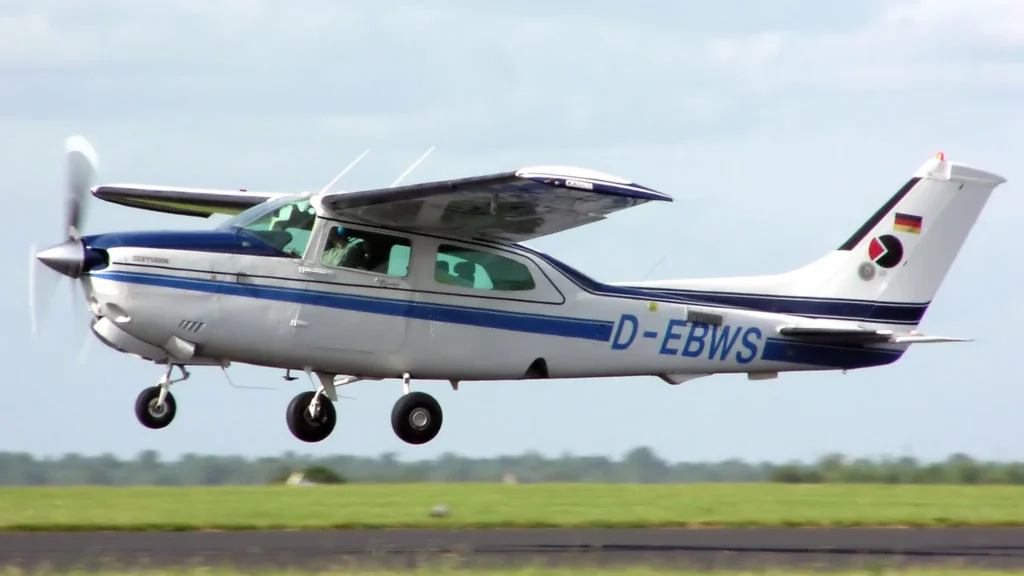
The aircraft was owned by E A B Services, an arts and entertainment business based in Cape Coral, Florida. The company has not commented publicly on the crash, and the relationship between the company and the families has not been detailed in the reporting so far. What is known is that the plane was a Cessna 210, a single-engine, six-seat aircraft of a type that has been in service for decades and is widely used for private and business flying in the United States.
The news reached Fort Myers on Tuesday evening, and by Wednesday the community was in mourning. The families' statement, released through local media, was the first public word from those closest to the victims, and its tone, grief mixed with a determination to remember the trip as the families had experienced it, as a celebration, set the tone for the coverage that followed. The deaths of three children, aged 16, 12 and 10, have made the crash particularly painful, and the fact that it happened on the eve of Thanksgiving, when families across America were gathering, has given it a resonance that extends far beyond Florida and Mississippi.
The Investigation: What the NTSB Will Examine
The National Transportation Safety Board announced on Tuesday evening that it was investigating the crash, posting on X at 9:39 p.m. ET that the agency was looking into an accident involving an aircraft near Horn Island. The NTSB is leading the investigation, according to the Federal Aviation Administration, which will also be assisting in the probe. The agency said its investigators were monitoring recovery efforts and planned to travel to the area to document and examine the aircraft wreckage once recovery operations were complete.
A preliminary report is expected within 30 days of the accident, and a final report that determines a probable cause is expected within two years, according to the reporting on the investigation. That timeline is standard for the NTSB, which conducts painstaking investigations into every fatal aviation accident in the United States, examining the wreckage, the maintenance records, the weather, the pilot's qualifications and history, and the air traffic control recordings before reaching a conclusion.
The central question for investigators will be why the aircraft entered such a steep descent. The flight-tracking data shows the plane at about 8,800 feet, in apparently normal flight, before it suddenly plunged toward the water at a rate that the FAA put at 10,000 feet per minute and Flightradar24 put at 18,000 feet per minute in the final seconds. A descent rate of that kind is far beyond anything a pilot would command in normal flight, and it suggests either a catastrophic mechanical failure, a loss of control, or an emergency that the pilot was unable to recover from. The NTSB will examine the wreckage for signs of structural failure, engine problems or control issues, and it will look at the weather along the route, although there has been no suggestion so far that weather was a factor in the crash.
The NTSB has asked that any witnesses, or anyone with surveillance video or information about the crash, contact the agency at witness@ntsb.gov. The appeal is routine, but it reflects the difficulty of investigating a crash that happened over water, where the wreckage is harder to recover and the physical evidence is more likely to have been damaged by the impact and by immersion. The divers who found the victims inside the fuselage were able to locate the main body of the aircraft, and the recovery of the wreckage will be the next step in the investigation.
Small Plane Safety and the Questions the Crash Raises
The crash is a reminder of the risks of private aviation, a form of transport that millions of Americans use every year and that is, by the numbers, far more dangerous than commercial flying. The Cessna 210 is a workhorse of general aviation, a six-seat, single-engine aircraft that has been flying since the 1960s, and it is the kind of plane that business owners, fishing enthusiasts and families use to travel between small airports across the American South. The flight from New Orleans to Fort Myers, a journey of a few hundred miles over the Gulf Coast, is the kind of trip the aircraft was designed for, and it is a route that private pilots fly every day.
But single-engine aircraft have no backup if the engine fails, and they are more vulnerable to weather, to mechanical problems and to pilot error than the twin-engine jets that carry commercial passengers. The NTSB's statistics show that general aviation accidents kill hundreds of people a year in the United States, and while the overall accident rate has fallen over the decades, the fatality rate for private flying remains far higher than for the airlines. The Horn Island crash, with six people killed in a single aircraft, is a stark example of that risk, and it will inevitably raise questions about the safety of the aircraft, the qualifications of the pilot, and the decisions made on the day.
Those questions will take time to answer. The NTSB's preliminary report, due within 30 days, will set out the basic facts of the flight and the crash, including the aircraft's maintenance history, the pilot's certificates and flight hours, and the weather conditions at the time. The final report, due within two years, will determine the probable cause, and it may make recommendations for changes to regulations, training or aircraft design. For the families, that process will be long and painful, and it will not bring back the six people they lost.
A Thanksgiving That Will Never Be Forgotten
The crash happened on the Tuesday before Thanksgiving, and its timing has given it a particular poignancy. The families were flying home to spend the holiday together, and the trip they had taken, a fishing expedition in Louisiana, was meant to be the start of the holiday season, a last adventure before the gathering at home. Instead, the holiday will now be marked by funerals, and by the absence of six people who should have been at the table.
The Coast Guard's search, which lasted about four hours on Tuesday evening, ended when the divers found the victims inside the fuselage. The recovery operation that followed, and the investigation that is now under way, will continue for weeks and months, but for the families in Fort Myers, the loss is already final. The statement they released on Wednesday, that their loved ones died doing what they loved, was an attempt to find meaning in a senseless event, and it is the way they have chosen to remember the six people they lost.
The crash off Horn Island will be recorded as a statistic in the NTSB's files, one more general aviation accident in a year that has seen too many. But for the community in Fort Myers, for the families who issued that statement, and for everyone who has ever flown home for Thanksgiving, it is something more than a statistic. It is a reminder that the journey home, which millions of Americans make every year without a second thought, can end in tragedy, and that the holiday season, for all its warmth and togetherness, can also bring the worst news a family can receive. The six people who died on Tuesday were returning from a fishing trip, heading home for Thanksgiving, and they never arrived. That is the fact that will stay with their families, and with everyone who reads their story, long after the investigation is over.
Source: CNN