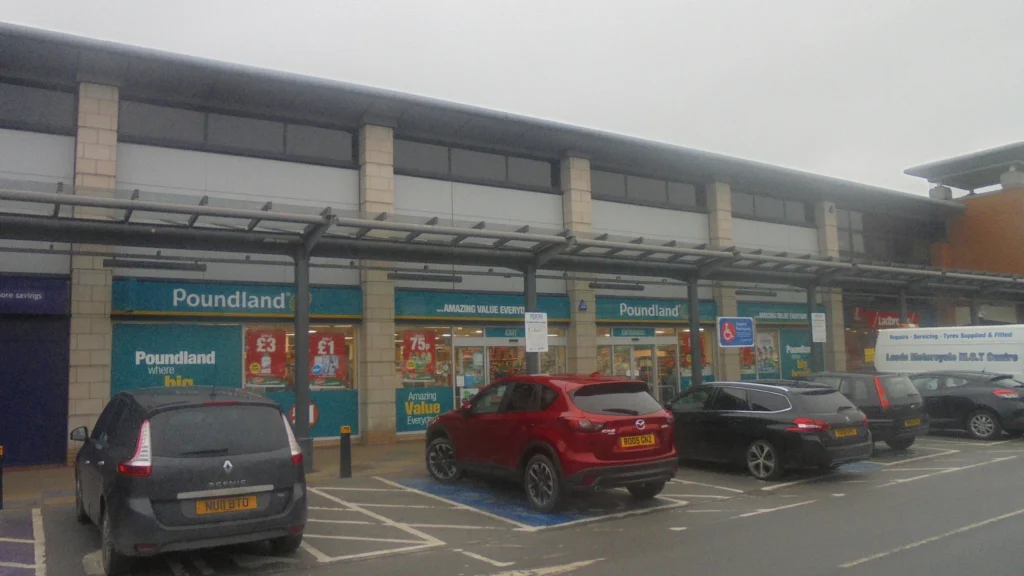
UK News: Poundland Collapses, 11,000 Jobs at Risk
Poundland has collapsed into administration, putting around 11,000 jobs and 600 stores at risk in the run-up to Christmas, after a last-ditch attempt to secure a rescue deal failed. The discount retailer's board took the decision to appoint administrators on Wednesday, November 25, after a three-month sale process failed to secure a solvent takeover of the business, and administrators from the restructuring firm AlixPartners were appointed just hours before a court deadline expired at midnight. The collapse of one of Britain's best-known high street names, weeks before the busiest shopping period of the year, is a stark sign of the pressure facing the country's retailers, and it leaves thousands of workers facing an uncertain Christmas.
The chain, which operates roughly 600 stores across the UK and Ireland, has held urgent talks over the past month to seek a buyer, but it entered insolvency after failing to strike a deal before a key deadline late on Wednesday. Prime Minister Andy Burnham said the retailer is "part of the fabric" of high streets across the country, and that "the news that it has gone into administration just weeks before Christmas will be deeply concerning" for workers and their families. His words captured the mood of a day in which a household name, a fixture of town centres for more than three decades, was handed to administrators.
Layoffs News: How Poundland Reached Administration
Poundland's collapse has been months in the making, and the events of the last few weeks read like a slow-motion crisis. The retailer filed a notice of intention to appoint administrators on October 29, following speculation about its future, a legal step that gave it protection from its creditors while it tried to find a buyer. The notice set a deadline, and the company spent the following month in urgent talks with prospective buyers, for the entire business and for substantial parts of its store estate, without reaching an agreement.
The sticking point, according to reporting on the negotiations, was a £22.5 million shareholder loan that the current owner, Gordon Brothers, inherited when it purchased Poundland from Pepco for a symbolic £1 in June 2025. The loan made a solvent takeover difficult, because any buyer would have had to deal with the debt as well as the business, and the talks with several potential bidders ultimately fell through at the eleventh hour. Gordon Brothers, a US investment firm, had bought the business for £1 early last year and overseen a major overhaul, which included shutting more than 100 shops, but the restructuring was not enough to save it.
The final days were desperate. Restructuring firm AlixPartners had previously been lined up to oversee the administration, while Hilco Capital, a specialist in retail liquidations, had been approached to manage a potential stock clearance operation. The administrators, Clare Kennedy, Daniel Imison and Kevin Wall of AlixPartners, were appointed on Wednesday, and they confirmed that they would continue to pursue "all options including sales of the business and its assets, either in whole or part". They added that Poundland would "continue to trade as those options are examined and all stores and distribution centres remain open at this time".
Poundland's managing director, Barry Williams, told staff in a note seen by The Guardian that the board had "no alternative" but to make the decision, which it was taking with "sincere sadness and regret". The note explained that Gordon Brothers had taken away "all borrowing facilities and access to our bank accounts" at the end of October, leaving the board unable to continue trading as a going concern. "Under these circumstances, it is impossible for the board of directors to see how Poundland can continue to operate as a going concern," Williams wrote, a sentence that marked the end of the company's attempts to trade its way out of trouble.
A High Street Institution Since 1990
Poundland was founded in 1990 by Dave Dodd and Steven Smith, out of the West Midlands city of Walsall, and it expanded quickly into a national chain with more than 600 stores across the United Kingdom and Ireland. As an early player in stores selling low-cost versions of popular grocery, toiletries, home and household cleaning products, it reached a mass audience quickly, and it became a fixture of high streets and shopping centres across the country. The idea was simple: everything for a pound, a proposition that resonated with shoppers looking for value, and that made Poundland one of the most recognisable names in British retail.
The business went through different periods of loss and profit over the years, but it survived where other discounters failed, adapting its model as the pound price point became harder to sustain. The company moved away from its original single-price model, introducing a range of prices, but it kept the name and the reputation for value that had made it famous. In recent years, the business had shown signs of recovery: it went from reporting a loss of £68 million to a profit of £18.1 million between 2025 and 2026, as a more value-driven consumer increasingly looked for affordable options of popular brands. The return to profit made the collapse all the more surprising, and it underlined that the problem was not the trading performance but the debt and the ownership structure that sat behind it.
Gordon Brothers bought the business for £1 in June 2025, a price that reflected the scale of the problems it was taking on, and the firm oversaw a major overhaul that included shutting more than 100 shops. The closures were meant to create a smaller, more viable business, but they were not enough. The £22.5 million shareholder loan, inherited from the Pepco ownership, remained a barrier to any rescue, and when Gordon Brothers withdrew the borrowing facilities and access to the bank accounts at the end of October, the board was left with no way to pay its bills. The notice of intention to appoint administrators, filed on October 29, was the first public sign of how serious the situation had become.
What Happens to the Stores and the Workers
For the 11,000 people who work for Poundland, and for the communities that depend on its stores, the administration is the beginning of a period of deep uncertainty. The administrators have said that all stores and distribution centres remain open at this time, and that the business will continue to trade while they examine their options. That is the standard position in an administration, and it is meant to reassure staff and customers that the shops will not close overnight. But the longer-term picture is bleak, and the expectation in the retail industry is that the business will be broken up, with stores sold off to rival retailers and many jobs lost.
It is likely that the group will be broken up, with retailers such as Tesco and B&M already having expressed interest in buying parts of the company, including individual stores. According to Sky News, B&M, Tesco and Lidl are among the retailers expected to look at individual sites rather than the whole business, cherry-picking the best locations and leaving the rest to close. The administrators have put out a call to "anybody interested in acquiring the business in part or as a whole", but they have also said they are pursuing all options to recoup losses, and that should a buyer not be found, the process could include the closure and liquidation of the physical stores and the sale of the brand.
The timing, weeks before Christmas, makes the situation worse for the workers. Retail is at its busiest in December, and many Poundland staff will have been counting on Christmas work, overtime and the seasonal bonus that helps pay for the holiday. The administration does not mean they will lose their jobs immediately, but it does mean that their employment is now in the hands of administrators whose duty is to the creditors, not to the staff, and whose decisions will be driven by what can be recovered rather than by what is best for the workers. The Prime Minister's words, that the news will be "deeply concerning" for workers and their families, are an understatement of the anxiety that thousands of households are now feeling.
A spokesperson for Gordon Brothers said: "Poundland Limited has entered administration. First and foremost, our thoughts are with Poundland colleagues. We recognise how difficult the continued uncertainty is for them. Efforts to preserve as many jobs and stores as possible will continue, led by the administrators." The statement is the standard form of words in these situations, but it does little to answer the question that matters most to the staff: whether they will still have a job in January.
The Wider Crisis on the British High Street
Poundland's collapse is not an isolated event but part of a wider crisis facing British retail, and its timing, in the same week that the energy price cap was raised by 26 percent and the government published figures showing net migration at its lowest since 1997, underlines how many pressures are converging on the high street at once. Retailers are facing rising costs, from energy bills to wages to business rates, at the same time as consumers are cutting back on spending, squeezed by the cost of living and by the higher prices that tariffs and inflation have brought. The result is a wave of closures and administrations that has been building for years, and Poundland is the latest and largest name to fall.
The discount sector, which might have been expected to benefit from consumers trading down, has not been immune. Poundland's own return to profit in 2025-2026 showed that there was demand for its model, but the debt it carried and the cost of its store estate made it vulnerable in a way that a debt-free business would not have been. The lesson of the collapse is that in retail, as in so much else, the balance sheet matters as much as the trading, and a business can be profitable on the shop floor and still fail because of the debts it owes.
For the high streets that Poundland served, the loss of the chain will be felt in empty units and in the loss of footfall that a large store brings to a shopping centre. Poundland's shops are often anchor tenants in smaller centres, and their closure can trigger a cascade, with neighbouring shops losing customers and landlords losing rent. The administrators' search for buyers for individual stores may save some of them, if Tesco, B&M or Lidl take them on, but a change of fascia does not guarantee that the jobs will be saved, and the workers who lose their positions in a break-up may find that the new owner has no place for them.
The collapse of Poundland, weeks before Christmas, is a reminder that the British high street is still in crisis, and that the household names that have defined it for a generation are not safe. The administrators will now do their work, the stores will trade for as long as they can, and the workers will wait to learn their fate. For the thousands of families who depend on Poundland for their livelihood, and for the millions of shoppers who relied on it for value, the news is a blow that will be felt long after Christmas is over.
The Discounters' Dilemma: Why Value Retail Is Struggling
Poundland's collapse is a warning for the entire discount sector, which might have been expected to thrive as consumers trade down in search of value. The logic seems straightforward: when money is tight, shoppers turn to discounters, and discounters prosper. But the reality is more complicated, because the discounters face the same rising costs as everyone else, and their business model, built on thin margins and high volumes, leaves them less room to absorb those costs than their more expensive rivals.
The pressures are familiar: energy bills that have risen sharply, wages that have been pushed up by increases in the minimum wage, business rates that have not fallen in line with the decline in high street values, and the cost of goods that has risen with inflation and with the tariffs that have disrupted supply chains. For a discounter, which makes its money by selling large volumes at low prices, those cost increases are existential. A supermarket can pass on higher costs by raising prices, because its customers are less price-sensitive. A discounter cannot, because its entire proposition is that it is cheap, and raising prices undermines the reason customers come through the door.
The history of the sector shows how vulnerable it is. Wilko, another much-loved British value retailer, collapsed in 2023, closing hundreds of stores and putting thousands of jobs at risk, and its failure was a warning that even the most established names in discount retail are not safe. Poundland's collapse, three years later, shows that the warning was not heeded, and that the pressures that killed Wilko are still present. The discounters that survive, like B&M and Home Bargains, have done so by diversifying, by moving into new categories and by keeping their costs under tight control, but even they are not immune to the forces that brought down Poundland.
Source: Retail Gazette