Trump News Today: Trump Calls Into C-SPAN Primetime
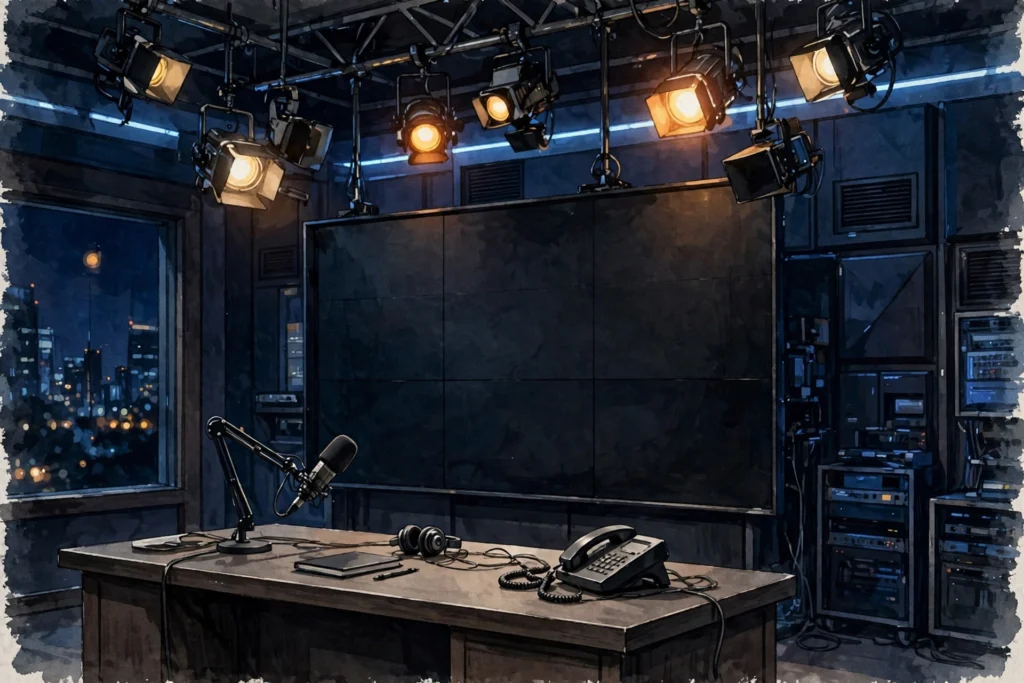
The latest trump news today came not from a rally stage or a prepared speech, but from a telephone line into a television studio. On Monday night, President Donald Trump called in unannounced to the premiere episode of C-SPAN's new weeknight program, Washington Journal Primetime, and spoke live with host Mimi Geerges about immigration, the effort in the House to impeach Defense Secretary Pete Hegseth, and the war in Iran. It was the third unscripted public appearance by the president in less than a week, and the latest in a run of surprise moves since Republicans suffered heavy losses in last week's midterm elections. For a president who has spent much of his second term communicating through social media posts and staged events, the casual phone call to a call-in show was a reminder of an older habit: picking up the phone and talking directly to an audience, with no aides, no teleprompter, and no way to take a question back.
The call also gave the new program exactly the launch it could not have bought. Washington Journal Primetime is C-SPAN's new live weeknight show, built around the network's long-running tradition of letting ordinary viewers phone in and speak their minds. Trump told Geerges that he enjoys watching those call-in programs because they let him hear directly from Americans, a remark that doubled as an explanation for why a sitting president would ring a cable show on its first night. Within hours, clips of the conversation were circulating widely, and the network posted the full exchange online for viewers who had missed it live.
White House News: The Call That Launched a New Show
The premiere of Washington Journal Primetime was already a milestone for C-SPAN before the president dialled in. The network has run its morning Washington Journal for decades, and the new evening edition is designed to bring the same format — viewers calling in to discuss the issues shaping the country with journalists, policy experts, and other guests — to a primetime audience. Trump joined the program about nine and a half minutes into the broadcast, calling in live rather than appearing in the studio, and stayed on the line long enough to work through three of the biggest stories in American politics. That a president would call a viewer call-in show at all is unusual, but for Trump it fits a pattern stretching back decades: long before he entered politics, he was a frequent and eager caller to radio and television programs, and he has often said he prefers the unfiltered format of a live phone call to the choreography of a formal interview.
The call came only days after C-SPAN had been forced to deal with a very different phone-in controversy. The previous Friday, a caller to the network's morning program who identified himself as "John Barron" — a name Trump used as a pseudonym in the 1980s — had fiercely criticised a recent Supreme Court decision on the president's tariff policy, setting off a wave of online speculation that the caller had been Trump himself. C-SPAN moved quickly to shut the speculation down, saying on social media that the caller was not the president, that the call had come from a central Virginia phone number, and that it had arrived while Trump was in a widely covered in-person meeting at the White House with the governors. Monday night's call, by contrast, needed no detective work: the network introduced the caller as the president, the voice was unmistakably his, and the substance of what he said left no doubt about who was on the line.
Immigration News: A Softer Note on Deportations
The most consequential part of the call may prove to be what Trump said about immigration, because it pointed toward a softening of the deportation drive that has defined his second term. Asked about enforcement, the president said his administration had not pursued the deportation of farm workers, hotel workers, and waitresses living in the country illegally as aggressively as it had pursued people with criminal records. "Well, we certainly haven't put the same push on them as we have on the murderers or the drug dealers," he said. "So, we have not put the same pressure obviously — and, you know, we call them the worst of the worst — we haven't put the same pressure on waitresses and farm workers, etc. Not even close."
The remark matters because it draws a public line between two groups that the administration's enforcement campaign has often treated the same way. From the start of the second term, the president's stated priority has been the removal of violent criminals, drug dealers, and gang members. But in practice, the deportation drive has swept far more widely, reaching workplaces, farms, hotels, and restaurants, and drawing criticism from employers and farm groups who warned that the raids were stripping businesses of workers they could not replace. By saying plainly on live television that waitresses and farm workers have not faced the same pressure, Trump appeared to be confirming a distinction his administration has been moving toward for months, and one he had already hinted at the day before.
In a 60 Minutes interview that aired on Sunday, the president acknowledged that his hardline approach to deportations may have been "too tough" on people who have lived in the country for a decade or more, a striking admission from a leader who has made strict enforcement the centrepiece of his domestic agenda. The two statements, taken together, sketch the outlines of a recalibration: enforcement against violent criminals continues at full force, while long-settled workers in agriculture, hospitality, and food service may face a lighter touch. The politics behind the shift are not hard to see. The midterm elections delivered a blunt verdict on the administration's first two years, and the cost of living was a recurring theme of the campaign. A deportation drive that raises prices at the grocery store and empties kitchens and hotel housekeeping departments is a difficult policy to defend when voters are already unhappy about what things cost, and the president's own words on Sunday, in which he linked voter unhappiness to the war and to rising gas prices, suggested he understands the connection.
Pentagon News: Trump Defends Hegseth Against Impeachment
The second subject of the call was the campaign in the House of Representatives to impeach Defense Secretary Pete Hegseth, and here the president's message was one of full-throated defence. Asked whether he would be unhappy if Republican lawmakers voted to remove his Pentagon chief, Trump said he would be disappointed, and he praised Hegseth's record in terms that left no room for doubt. "I'd be disappointed in them. Look, Pete has won two wars. I mean, he's been the head person in two wars. He has General Caine and great people," the president said, referring to the chairman of the Joint Chiefs of Staff. In a separate passage he was even more emphatic: "Pete has won two wars, Venezuela in 48 hours. We have a lot of oil coming. The American companies building tremendous rigs. We won Iran, we wiped out their leaders, their navies. I knocked out their nuclear with B-2 bombers."
The impeachment push is being led by Representative Thomas Massie of Kentucky, a Republican who has become one of the administration's most persistent critics in Congress. Massie reintroduced articles of impeachment against Hegseth on the House floor on Monday, setting out eight articles that accuse the defense secretary of abusing the authority of his office by waging war without congressional authorisation, and of violating the 1973 War Powers Resolution across military operations in Iran, Yemen, and Venezuela. Massie has argued that by engaging in hostilities in Iran for more than 90 days without congressional authorisation, Hegseth is breaking the law and must be held accountable, and he has pointed to Congress's formal resolution directing the United States to withdraw from hostilities as a line the Pentagon has disregarded.
Under the rules of the House, a privileged impeachment resolution of this kind must be taken up within two legislative days, which means the chamber is expected to vote on the measure by Wednesday. That deadline gives the White House only a short window to hold its party together, and the president's public warning on Monday night was plainly aimed at wavering Republicans. The resolution has also drawn support from across the aisle: House Democratic Leader Hakeem Jeffries has endorsed it, accusing Hegseth of abusing his authority and undermining national security. Secretary of State Marco Rubio, speaking to reporters in Paris on the sidelines of a meeting of foreign ministers from the Group of Seven, defended Hegseth against criticism from lawmakers and the media. Hegseth himself has dismissed the impeachment campaign as politically motivated. "It's all about the politics of personal destruction," he has said. "It didn't work against President Trump, and it won't work with me." The coming vote will test that confidence, and it will test whether the president's public backing is enough to keep his own party in line.
Iran War News: "We Won Iran," Trump Tells C-SPAN
On the war in Iran, the president used the C-SPAN call to repeat and sharpen the claim he had made earlier in the day in the White House briefing room: that the United States has already won. "We won Venezuela, and we won Iran," he said, adding that American forces had destroyed Iran's navy, air force, and air defences, wiped out its leaders, and knocked out its nuclear program with B-2 bombers. He said Iran now wants a deal with Washington, and he argued that Tehran presents a different narrative to the public than the one it offers in private. The message was consistent with the position he set out on Monday afternoon, when he described the war as effectively over from a military standpoint and said the United States would hold its current position rather than resume large-scale strikes.
But the president also kept the threat of renewed force very much alive. He said a new attack could be five times larger than the strikes that have already taken place, and that the United States could end the war quickly, depending on how events develop. The warning sits alongside a second claim: that the countries around Iran prefer the current arrangement to a new round of bombing. Trump said he had spoken with the leaders of Qatar, Saudi Arabia, the United Arab Emirates, Bahrain, and Kuwait about how to counter Iran, and that the Gulf states, which Iran has attacked, would rather continue the current approach than see another strike. "Speaking to Qatar, UAE, Saudi and Bahrain, they'd rather do it this way than another hit. I'd like to do it this way too. Iran would like it this way too," he said.
The thread running through both the briefing room appearance and the evening phone call is the same: pressure without a new war, backed by the threat of overwhelming force if the pressure fails. The president has described the non-negotiable condition as Iran never obtaining a nuclear weapon, a point he has said is not open to discussion, and he has said American forces are watching Iran's nuclear sites and will keep acting so that Tehran cannot rebuild its program in the next two years. The Gulf states' backing gives him a regional coalition to point to when he says the current course has support, and the naval blockade the United States has maintained around Iran remains the visible instrument of that pressure. Whether Tehran accepts a deal on Washington's terms, and whether the fragile quiet holds, will be decided in the negotiations that the president says are now under way.
Midterm Elections 2026: A Week of Surprise Appearances
The C-SPAN call was the latest in a string of unexpected public appearances by the president since the midterm elections, a run that has become a story in itself. Less than a week ago, Republicans suffered sweeping losses, with Democrats winning races across the country, including Senate seats in deeply Republican states such as Texas, South Carolina, and Kansas. The day after the balloting, Trump took reporters on a tour of the White House ballroom construction site and even signed a steel beam. The day before the voting began, he used a speech billed as his closing argument for why his party deserved to keep control of Congress to talk instead about his costly and problem-plagued effort to overhaul the Lincoln Memorial's Reflecting Pool. Each appearance has been unscripted, each has caught the press corps off guard, and each has reinforced the sense of a president responding to a bruising defeat by getting out in front of the cameras more, not less.
The most theatrical of the week's surprises came on Monday afternoon, hours before the C-SPAN call. Trump walked into the James Brady Press Briefing Room unannounced, accompanied by UFC chief executive Dana White, setting off a scramble so sudden that aides had no time to place the presidential seal on the podium. A press assistant's urgent instruction over the loudspeaker — "Everyone please take a seat in the briefing room RIGHT NOW" — sent reporters stampeding back to their seats as television technicians plugged in cables and set up microphones. The cause of the bedlam was a joke that had begun two days earlier, when Trump announced on social media on Saturday that he had offered White the job of White House press secretary. White, who had been caught off guard by the announcement while attending a boxing match in London, flew to Washington anyway, and on Monday he briefly played along, bellowing "Who has the first question?" before making clear he wanted no part of the job. "I have zero political aspirations," he said, and when Trump asked him directly whether he would like to be press secretary or "just want to stay with this ridiculous UFC," White answered: "Thank you for the offer. I do not want to be in politics, no."
Trump said he had been having a "very bad press day" and thought suggesting White for the job might be good for a laugh. The joke landed against a serious backdrop: the press secretary's job has been vacant since Karoline Leavitt left in August, and her replacement, Katie Zacharia, lasted less than a week before leaving in mid-October. Trump took questions for about half an hour in the briefing room, covering the midterms, the wars in Iran and Ukraine, the Hegseth impeachment effort, and the controversy surrounding Nvidia chief executive Jensen Huang, before turning the floor back to White. In his first term, Trump was a regular presence in the briefing room; now, nearly halfway through his second term, he takes questions in other places, which made Monday's sudden return to the podium all the more striking.
What Happens Next
The most immediate deadline falls on Wednesday, when the House is expected to take up Massie's impeachment resolution against Hegseth. The vote will show whether the president's public warning on Monday night was enough to keep Republican lawmakers in line, or whether a small band of critics, joined by Democrats, can force the administration into a fight it would rather avoid. The White House will spend the intervening hours working the phones, and the president's own words on C-SPAN — that he would be disappointed in any Republican who voted for impeachment — will hang over every one of those conversations.
The second question is whether the softer line on deportations becomes policy or remains rhetoric. The president has now said twice in two days, first on 60 Minutes and then on C-SPAN, that enforcement has been too tough on long-settled workers, and the farm, hotel, and restaurant industries will be watching the enforcement numbers for proof. If the raids on workplaces slow, the administration will face criticism from supporters who want the drive to continue at full force; if they do not, the president's words will be remembered as a promise unkept. Either way, the C-SPAN call has put the question on the record in the president's own voice. The show itself will now air on weeknights with a presidential phone call as its opening act, and if the past week is any guide, the president's next surprise appearance may come with little more warning than the last one.
Source: CNBC