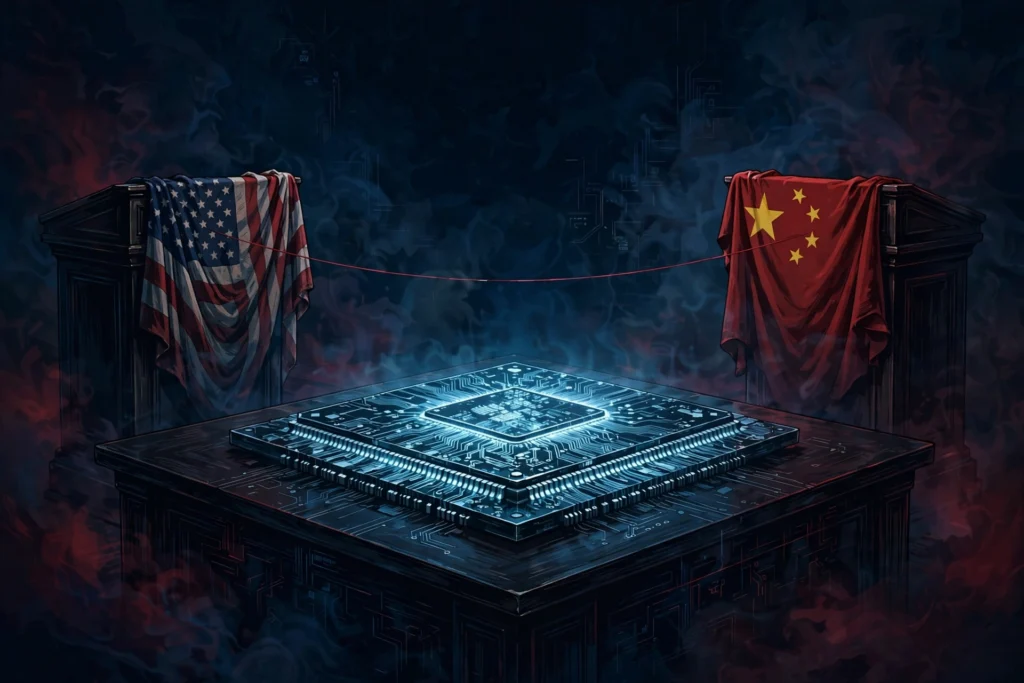
Trump News: Nvidia Spy Scandal Tests China Policy
The latest trump news from Washington is about a spy scandal that has landed in the middle of the president's relationship with China, days before he is due to sit down with Xi Jinping. The central figure is Jensen Huang, chief executive of Nvidia, one of the most valuable companies in the world and one of the president's closest allies in the technology industry. According to reports in the Washington Post, the New York Times and other outlets, Huang had an affair with a woman whom American intelligence believes worked for China, and President Donald Trump was warned about it more than once before the story became public. The president has stood by Huang, said he believes the chief executive knew nothing about the alleged spying, and said he does not plan to raise the matter with Xi. The episode now tests the contradictions inside the administration's approach to Beijing: tough talk about the threat from China on one side, and close ties to the industry at the centre of the rivalry on the other.
The story broke in stages. The New York Times first reported in October that Huang was linked to a woman suspected of working for Chinese intelligence, and that Trump had been briefed but had chosen not to act. On Sunday, November 8, Huang admitted publicly that he had an affair with the woman, Alice Huang, who is not related to him. The same day, Nvidia's board said it would launch an independent investigation. On Monday, November 9, Trump defended the Nvidia chief at the White House. The Washington Post reported on Wednesday that the affair exposes a contradiction at the heart of the president's China policy, just a week before he is expected to meet Xi in Shenzhen.
What the Reports Say About Jensen Huang
Alice Huang is an executive at Megaspeed International, a Singapore-based company. According to the reports, American intelligence believes she worked with one of Beijing's intelligence agencies, and the FBI has been examining her ties to China. Megaspeed also faces claims that it acted as an intermediary, shipping advanced Nvidia computer chips into China in a way that would circumvent American export controls. The New York Times had previously published a photograph of Jensen Huang with Alice Huang in a bar in Taipei in June 2024. Huang has apologised publicly to his wife, his family and his company.
The chip question turns a personal scandal into a national security matter. Nvidia makes the advanced processors that power artificial intelligence, and the United States has spent years restricting the sale of its most powerful chips to China. The Trump administration, however, approved the limited sale of some of those chips to certain Chinese companies, with the United States supposed to receive a 25 per cent cut of each sale. That decision was controversial at the time, and it looks more awkward now that a woman at the centre of the scandal worked for a company accused of moving Nvidia chips into China outside the approved channels. One official briefed on the case told reporters that American officials have been investigating Chinese dealings involving Nvidia for at least two years. The FBI is investigating, Nvidia is conducting its own internal inquiry, and no charges have been announced against either Huang. The allegations against Alice Huang remain allegations, based on intelligence that has not been made public.
Huang is not a peripheral figure in Washington. He is one of a small group of technology billionaires who have shaped the president's hands-off approach to regulating artificial intelligence. He had a prime seat at the president's side at a meeting on AI policy on September 29, and in September he helped craft a pledge signed at the White House in which major AI companies committed to policing themselves rather than accepting government rules. He has championed the administration's low-regulation approach in public, and Nvidia donated 25 million dollars to the president's White House ballroom project. That closeness is now part of the story, because it raises the question of how much access a man at the centre of a counterintelligence investigation has enjoyed inside the administration.
The White House Account: What Trump Knew and When
The most awkward part of the story for the White House is the timeline. According to the Washington Post, the president was warned about Huang at least twice before the affair became public. In May, when Trump travelled to China, Secretary of State Marco Rubio warned him that the United States had obtained intelligence showing that Huang was having an affair with a woman believed to be a Chinese spy. Rubio delivered the message aboard Air Force One, shortly before a stop in Anchorage, where Huang boarded the plane as a last-minute addition to the trip. The briefing was first reported by the New York Times.
On Monday, Trump denied to reporters that he had been aware of the situation at the time of the May trip. He resisted being pinned down when reporters asked him when he had first been told that Huang was having an affair with a woman whom American intelligence had evidence was a Chinese spy. He said he did not remember being briefed about the case a year ago, as reports have said, and he said he did not know about the allegations when he invited Huang to accompany him on the trip earlier this year. But he declined to say when he was first informed, and the gap between the reported warnings and the president's account has become a central question in the white house news cycle in Washington.
What Trump did say on Monday was unambiguous in its support for Huang. He told reporters that he had spoken to the Nvidia chief that day. "He said he had absolutely no idea that the person in question was a spy. I asked him that question. Did you have any idea that she was a spy? He said, I had no idea that she was a spy, and I really believe him," the president said. He added that he thought Huang was an honourable man who had built a great American company, and that he felt very confident the chief executive would be in good shape. He had already defended Huang on Sunday, calling him an honourable guy. The president also said the FBI was investigating the matter, but he predicted that Jensen Huang would come out of it just fine.
The Trump Administration's China Contradiction
The scandal matters beyond the fate of one executive because it exposes the competing priorities that have defined the Trump administration's policy toward China. Throughout his second term, the president has repeatedly warned that the United States cannot afford to fall behind China in the race for artificial intelligence, and he has invoked the threat from Beijing to justify his opposition to regulation of the rapidly advancing technology. The argument is that American companies need freedom to move fast, and that rules imposed in Washington would hand an advantage to a rival that does not play by the same rules. Huang has been one of the most effective messengers for that argument inside the White House.
At the same time, the president has pursued a fragile diplomatic thaw with Xi, whom he habitually describes as his friend, and he has approved commercial arrangements, including the limited chip sales, that sit uneasily with the warnings about Beijing's ambitions. The Washington Post's analysis put the tension plainly: the president's warnings about Beijing's technological ambitions have collided with his close relationships with American technology executives and his desire to preserve a diplomatic opening with Xi. The affair brings those two strands together in a single uncomfortable episode, because the man the president trusted to advise him on AI policy was, according to American intelligence, the target of a foreign intelligence effort.
The contradiction is also visible in the trade picture. The administration has kept tariffs on Chinese goods at the centre of its economic policy, and the Treasury Secretary, Scott Bessent, was calling this week for balanced trade with Beijing, a reminder that trump tariffs remain a live part of the relationship. But the chip sales and the personal diplomacy tell a different story about how the relationship works in practice. The president wants leverage over China, and he also wants a deal with Xi. He wants American technology to dominate, and he also wants the men who run those companies at his side. The spy scandal forces those aims into the open at the worst possible moment, days before a summit meant to showcase the relationship.
Donald Trump, Xi Jinping and the Shenzhen Summit
The timing is what makes the story hard for the White House to contain. Trump is expected to meet Xi in Shenzhen next week, and the president has said he does not plan to raise the spying allegations with the Chinese leader during the summit. He has also left open the possibility that Huang could accompany him on the trip, the same role the chief executive played in May when he boarded Air Force One at Anchorage. So far, the president has backed Huang and signalled that he will not allow the episode to derail the summit, or Xi's planned visit next month to the meeting of the leaders of the world's largest economies.
China has dismissed the allegations outright. The Chinese Foreign Ministry said on Monday that the so-called Chinese spy allegation was unsubstantiated and nothing but an attempt to smear Beijing. A ministry spokesman, Guo Jiakun, told reporters that the claim was purely groundless speculation and an attempt to malign China. Singapore's government has also denied an earlier report in the Wall Street Journal that its officials had separately investigated Alice Huang's ties to China. The denials leave the story in a familiar place: American intelligence believes one thing, Beijing says the opposite, and the public is left to weigh the claims without seeing the underlying evidence.
The summit will be watched for any sign that the scandal has changed the dynamic between the two leaders. The two sides have been negotiating over trade, technology and the wider rivalry, and the meeting in Shenzhen was expected to be a moment for both men to show that the relationship could be managed. If Trump raises the matter with Xi after all, it would signal that the intelligence has forced his hand. If he does not, his critics will say he chose the summit over the security question. Either way, the affair will be part of the backdrop, and the presence or absence of Huang on the trip will be read as a signal in itself.
The FBI Investigation and the Gang of Eight
While the president was defending Huang in public, his senior officials were briefing Congress in private. On Monday, administration officials met with the group of top lawmakers charged with overseeing the nation's intelligence agencies, known as the Gang of Eight, to discuss the intelligence surrounding Huang's affair. The meeting had initially been meant to focus on the war in Iran, which began on February 28, but the spy scandal took over the agenda. The director of national intelligence, Jay Clayton, and the director of the CIA, John Ratcliffe, were seen on Capitol Hill as the officials huddled with lawmakers for more than an hour. It was the latest chapter in the fbi news story that has been building quietly for a year.
The briefing came nearly a year after federal agents first raised worries with lawmakers that Alice Huang might be feeding information to China. According to people familiar with the matter, agents informed some lawmakers roughly a year ago that they suspected Huang was the target of a foreign intelligence effort, citing his close relationship with Alice Huang, a Chinese citizen who represented a data centre company. That history raises its own questions: if the FBI warned lawmakers a year ago, and the secretary of state warned the president in May, why was so little done, and why was Huang still travelling with the president and advising him on AI policy in September? Those questions are now being asked by the same lawmakers who received the briefings, and they will not go away simply because the president has said he believes his friend.
US Politics After the Midterms: What Happens Next
The scandal also arrives at a moment of political transition in Washington. Voters handed Democrats control of both chambers of Congress in the midterm elections on November 3, and the new Congress takes power in January. Democrats have promised aggressive oversight, and the intelligence committees will have their own questions about the Huang case, including when the president was warned, what he did with the information, and whether the administration's relationship with Nvidia affected its handling of the affair. The Gang of Eight briefing on Monday was only the beginning of that scrutiny, and the new Congress will have subpoena power behind its questions. It is the kind of developing politics news story that will run for weeks.
For the White House, the immediate problem is the summit. The president has decided to press ahead with the meeting in Shenzhen, to keep Huang close, and to treat the scandal as a distraction rather than a crisis. That is a gamble. If the FBI investigation or Nvidia's independent inquiry produces new findings, the president's public defence of Huang will be revisited. If Congress demands the underlying intelligence, the timeline of warnings will be examined in detail. The president's instinct has always been to stand by his allies and to dismiss stories he does not like. That instinct has served him before, but it has never been tested against a counterintelligence case involving the chief executive of the company at the centre of the AI race.
For Huang, the weeks ahead will be defined by the two investigations and by the public apology he has already made. His company is one of the most valuable in the world, and its chips are at the centre of the contest between the United States and China. His standing with the president appears intact for now, but his standing with lawmakers, with his board and with the public will depend on what the inquiries find. The affair is a personal matter. The alleged spying is not. The difference between the two is what the investigations must establish, and it is what will decide whether this story ends as an embarrassment or as a scandal with lasting consequences for the administration, for Nvidia and for the relationship between Washington and Beijing.
Source: The Washington Post