Trump News: Kim Meeting Odds Rise at APEC
The trump news out of Washington on Monday carried a sudden change of direction: the odds of President Donald Trump meeting North Korean leader Kim Jong Un on the sidelines of this week's Asia-Pacific Economic Cooperation summit have gone up, and the shift came from an unexpected place. Russia's Interfax news agency reported that the Kremlin had said a meeting between Kim and Russian President Vladimir Putin was possible if the North Korean leader attended the summit in Shenzhen, China. That single remark, from a government that rarely speaks loosely about Kim's movements, was enough to move the betting markets and to change the conversation among analysts who follow North Korea.
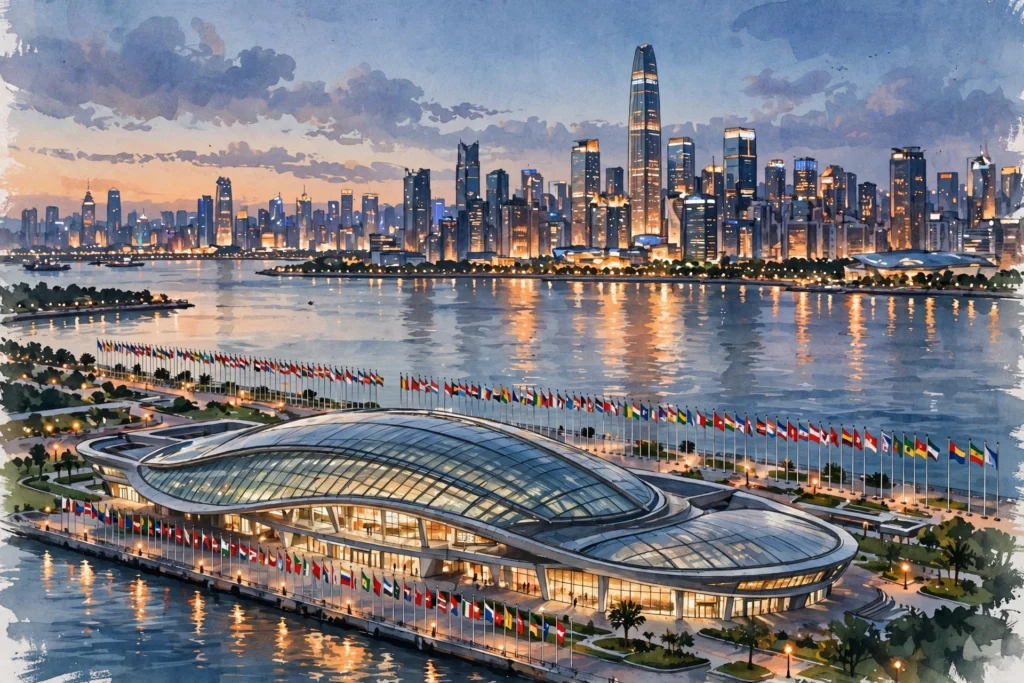
Trump has been saying for months that he wants to meet Kim again, and on Monday he added fresh fuel of his own. Asked by reporters whether a meeting could take place in China this week, the president said it might happen. He added that Kim's presence at the summit was ultimately up to Chinese President Xi Jinping, the host of the gathering. The APEC leaders' meeting runs on November 18 and 19 in Shenzhen, and the window for a meeting, if one is going to happen at all, is now measured in hours rather than weeks.
The change in mood is striking because it reverses the direction of travel of only a few days ago. As recently as last week, officials in Seoul were saying they saw little possibility of North Korea taking part in any event connected to the summit, and American and South Korean officials had described the chances as low. Analysts had pointed out that previously discussed meetings between the two leaders had never actually taken place. The Kremlin's statement has not settled the question, but it has given the optimists a reason to believe something is being arranged behind the scenes.
The Kremlin Statement That Shifted the Bets
The development that changed the calculation came in a report by Interfax, quoting the Kremlin as saying that Putin could meet Kim if the North Korean leader attended this week's APEC summit in Shenzhen. On its face, the remark was about a meeting between two other leaders. In practice, analysts read it as a signal about Kim's movements, because Moscow would have little reason to talk publicly about a Putin-Kim encounter unless it expected Kim to be in Shenzhen in the first place. If Kim travels to China for the summit, he would be in the same place at the same time as Trump, and a meeting between the two would become a live possibility rather than a distant hope.
Sydney Seiler, a former United States national intelligence officer for North Korea who now works at the Center for Strategic and International Studies, put the point bluntly. The Kremlin would not have made the remark, he said, unless it was certain that Kim was going to attend. He added that he was fairly confident something was already underway. That is a strong claim from a man who spent years inside the American intelligence community watching North Korea, and it carries weight precisely because it goes beyond the usual caution of analysts who follow the country. Seiler was not predicting a deal or even a formal summit. He was saying that the machinery of a meeting appeared to be moving.
The betting markets moved in the same direction. The odds of Trump and Kim meeting before the end of the year rose to 18 percent on Polymarket, the prediction market, up 13 percentage points in the space of a single day. That is still a long way from a likely outcome, and prediction markets measure what traders think rather than what will happen. But the size and speed of the move matter: it followed directly on Trump's remarks to reporters on Monday.
What Trump Said on Monday
Trump's own words on Monday were brief, and that is part of why they have been read so closely. Asked about the possibility of meeting Kim during the APEC summit, he said it might happen in China this week. In a separate exchange, he said of Kim's attendance that he may come, that he did not know, and that the decision was up to President Xi. The president has a long record of speaking warmly about Kim and about their personal relationship, and he has repeatedly said he wants to meet the North Korean leader again. What was new on Monday was the timing: the remarks came on the day he left Washington for Asia, with the summit only two days away.
The president's approach to Kim has always been personal. He has described their relationship in warm terms throughout his second term, and in August he said he planned to meet Kim within the year. That remark set off the first round of speculation about a meeting on the sidelines of APEC. Trump has also referred to North Korea as a nuclear power, a form of words that allies in the region and in the West have refused to use, because it carries an implication that the world has accepted something it has spent decades refusing to accept.
For Trump, the appeal of a meeting is not hard to see. A face-to-face encounter with Kim would be a dramatic moment at the end of a difficult few weeks at home, and it would put his personal diplomacy at the center of the trip. The president is already scheduled to hold bilateral talks with Xi in Shenzhen and to take part in a historic three-way meeting with Xi and Putin. The risk is that a meeting that produces nothing could look like a concession, and that a meeting held on Kim's terms could hand the North Korean leader exactly what he wants without giving anything back.
The White House has not said whether any preparations for a meeting are underway, and neither China nor North Korea has confirmed anything. China's Foreign Ministry, the North Korean embassy in Beijing, and APEC itself did not immediately respond to requests for comment. That silence is normal for all three, and it tells us little on its own. What it does mean is that the public record, for now, consists of Trump's remarks, the Kremlin's statement, and the reading of those remarks by analysts and by the markets.
The Signs Analysts Are Reading
John Delury, a professor at the Hopkins-Nanjing Center who studies North Korea, pointed to the accumulation of small signals. There have been these little signs, he said, and if Kim goes to Shenzhen, he is going to talk to Donald Trump. Kim does not travel to multilateral gatherings casually: his last appearance at one was in September of last year, when he attended a military parade in Beijing alongside more than two dozen national leaders, including Putin, travelling there in an armoured train. For a leader who guards his movements as closely as Kim does, a trip to Shenzhen would be a major undertaking, and it would be strange to make it without a purpose.
Other analysts have read the same signals and reached a different conclusion, and their caution is worth taking seriously. There is little sign that China is making preparations for Kim to travel, according to a person familiar with the situation, and Trump made similar comments before he left for an APEC meeting in South Korea last year without a meeting resulting. The history of this story is a history of near misses. Meetings have been discussed, hinted at, and expected, and then they have not happened. That record is the main reason American and South Korean officials have continued to describe the chances as low, even as the odds have moved upward.
Pyongyang's Demands and the Nuclear Question
Behind the question of whether the two men will meet lies a harder question about what a meeting would be for. Trump's interest in renewed engagement with Kim comes seven years after their last summit ended without agreement over curtailing North Korea's nuclear weapons and sanctions relief. Since then, North Korea has repeatedly signalled that it is unwilling to resume discussions unless the goal of denuclearisation is taken off the agenda. That is a position the United States and its allies have refused to accept, and it is the central obstacle to any renewed dialogue.
Seiler said a meeting would likely be more symbolic than substantive, but symbolism is itself part of what Kim wants: a meeting could be a step toward North Korea being recognised internationally as a nuclear state. It is not going to happen overnight, he said, but eventually Kim hopes to wear down the world to accept North Korea as a nuclear power. For Trump, the value would be simpler: the meeting itself, and the chance to build the relationship.
The stakes are high for the countries watching from the sidelines. South Korean President Lee Jae Myung has said he hopes Trump can persuade Kim to resume dialogue, and South Korea's Unification Ministry said it had nothing to confirm when asked about Kim's possible trip to Shenzhen. Japan's Prime Minister Sanae Takaichi has repeatedly sought a summit of her own with Kim to resolve the long-running issue of Japanese nationals abducted by North Korea in the 1970s and 1980s, and Pyongyang has rebuffed Tokyo's approaches.
The Skeptics' Case
Not everyone is convinced, and the sceptical case deserves a fair hearing. Kim Dong-yup, a professor at Kyungnam University's Far East Institute, argued that there was nothing for Kim to gain by going to Shenzhen except photograph opportunities. Even if the Americans offered to remove sanctions, he said, sanctions are already not working, so the offer would be worth little. Why would Kim go, he asked, and open himself up to potential uncertainty? Kim's position at home does not depend on a meeting with Trump, and a meeting that went badly could cost him more than staying away.
Kim Dong-yup also offered a different reading of the Kremlin's remarks. The comments, he said, were less about American-North Korean relations and more about showing that Russia still has influence over North Korea. Moscow has its own reasons for wanting to be seen as a broker in the region, and talking up a possible Putin-Kim meeting is a cheap way of doing it. On this reading, the Kremlin's statement is not a signal about Kim's travel plans at all. It is a message aimed at Washington and at the wider world, and it should be read as Russian positioning rather than as news about North Korea.
The sceptics also point to the calendar. A meeting of this kind normally takes months of preparation, and there has been no public sign of it. The summit is a two-day gathering with a tightly choreographed schedule and almost no room for improvisation. There is also the memory of last year, when Trump made similar comments before the APEC meeting in South Korea and nothing came of them.
What Happens Next in Shenzhen
The answer will come quickly. The APEC leaders' meeting opens on Wednesday, November 18, and runs through Thursday, November 19. If Kim is going to attend, the signs will be visible in the hours before the summit begins: North Korean state media would be expected to announce his participation, as it did before the Beijing parade last year, and the movements of aircraft and delegations would be watched closely. If no such signs appear, the speculation will fade as fast as it rose, and the summit will proceed as a gathering of the 21 APEC economies without the extra drama.
If Kim does come, the questions will multiply just as fast. Would the meeting be a brief encounter on the sidelines or a formal sitting? Would Trump raise the nuclear question, and would Kim engage with it? None of these questions has an answer yet, and none will have one until the leaders are actually in the same city.
What is certain is that the trip is already one of the most consequential of Trump's second term. The president will hold bilateral talks with Xi, take part in a three-way meeting with Xi and Putin, and attend the summit of the world's largest economies at a moment of tension over trade, technology, and security. If Kim does come, it will become something else entirely: the revival of one of the most unusual personal relationships in modern diplomacy, and a test of whether two leaders who have not met in seven years can find anything new to say to each other.
Source: Reuters