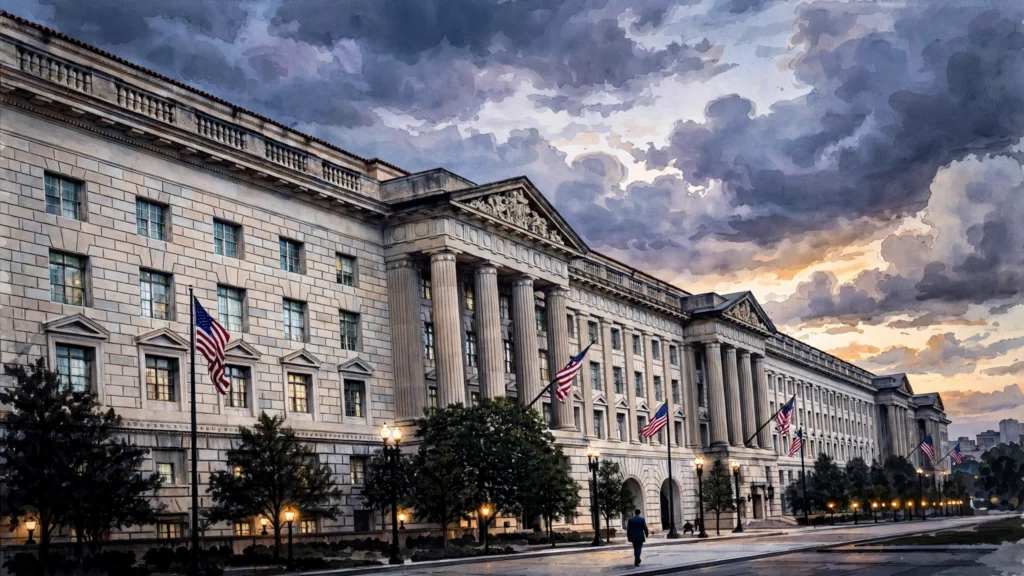
Trump Cabinet: Howard Lutnick, the Ultimate Survivor
In the latest trump cabinet drama from Washington, Commerce Secretary Howard Lutnick is still standing. That fact alone has become one of the more remarkable stories of President Donald Trump's second term. Lutnick has clashed with some of the most powerful figures in the administration, drawn sharp criticism from Republican senators, and come close to losing his job at least once. Yet he remains in place, protected above all by a friendship with the president that goes back more than twenty years. A new report from The Wall Street Journal describes Lutnick as the ultimate survivor of the Trump administration, a man whose staying power frustrates his rivals and puzzles even some of his allies.
The report lands at a moment of change inside the White House. Earlier this month, Trump announced that his chief of staff, Susie Wiles, was leaving her post. Wiles had kept Lutnick on a tight leash for months, and people familiar with his comments say she wanted advance notice before he spoke publicly about policy. With her departure, Lutnick appeared energized. He told associates that he was not going anywhere, and he seemed liberated by the change at the top of the White House staff.
Trump Cabinet: "I'm Not Going Anywhere"
The clearest sign of Lutnick's confidence came in the days after Wiles's departure was announced. According to people familiar with his comments, Lutnick told associates plainly that he was not going anywhere. The remark captured a mood that those around him had noticed for some time. Wiles had wanted a heads-up before Lutnick talked publicly about policy issues, and the two had been at odds for months. With her gone, Lutnick seemed to feel that a constraint had been lifted.
Lutnick's own history with Trump helps explain why the president has stuck with him through every storm. Both men are New Yorkers, and they have been friends for more than twenty years. They share a similar brash style, and Lutnick is one of the few economic officials in the administration who tends to enable the president's impulses rather than trying to restrain them. Senator Thom Tillis, the retiring North Carolina Republican who has often clashed with Trump, put it bluntly. He said that one thing he found both admirable and vexing about the president was his loyalty to past friends, and he added that he thought Lutnick needed to be replaced with somebody who could perform better for the president.
The Epstein Visit That Nearly Ended It
The closest Lutnick came to losing his job, according to the Journal's reporting, was earlier this year, after he acknowledged that he had visited the late sex offender Jeffrey Epstein at his private island. Trump was close to ousting Lutnick over the admission, according to people familiar with the matter. The episode was a reminder of how politically toxic any connection to Epstein has become, and of how quickly a cabinet career can unravel when such a connection surfaces.
What saved Lutnick, the report says, was money. Lutnick, a billionaire and the former chairman of the Wall Street firm Cantor Fitzgerald, made a 25 million dollar donation to Trump's presidential library, and Trump stopped talking about replacing him, according to the people familiar with the matter. The donation had been reported earlier in the book "Regime Change." The sequence of events, as described by the Journal's sources, is striking: a cabinet secretary on the edge of dismissal, a large donation to the president's library, and then silence about his future.
Chip Smuggling and the Bessent Feud
The most sustained criticism of Lutnick has come over his handling of export controls, the rules that are supposed to keep advanced American artificial intelligence chips out of China. Senator Tom Cotton, the Arkansas Republican who chairs the Senate intelligence panel, told the Journal in an interview that Lutnick had repeatedly ignored warnings that American AI chips were being smuggled to China. It was a direct and public rebuke from one of the most senior Republicans in the Senate, and it went to the heart of Lutnick's responsibilities as commerce secretary.
The Commerce Department, which Lutnick leads, has faced scrutiny over whether it has been too lax in enforcing the rules that keep advanced chips out of China, with critics saying it moved too slowly to address loopholes in the export controls. The issue has become a fault line inside the administration. Treasury Secretary Scott Bessent has accused Lutnick of failing to act against Megaspeed, a Singapore-based company suspected of diverting Nvidia's advanced chips to China despite months of warnings from national security officials. The disagreement reflects a deeper divide over whether the economic deals and friendly relations Trump has pursued with Beijing are worth the national security risks that some senior American officials believe they could create for decades.
Trump, for his part, has defended Lutnick more than once. At a press conference at the White House on Friday, he praised his commerce secretary, saying he believed Lutnick was doing a very good job, and a White House official said the president maintains complete confidence in him. On Monday, as he travelled to Asia, the president appeared to defend his commerce secretary again, suggesting that delaying restrictions may have helped to avoid a confrontation with China. He said he understood both sides of the argument and would make a decision. It was a characteristic Trump move: keeping both factions in play, refusing to settle the argument, and leaving the final call to himself. For Lutnick, it was another reprieve. For his critics, it was another sign that the president would not be moved against a friend.
Off the Books: Lutnick's Late-Night Access
One reason Lutnick has been so hard to dislodge is that his access to the president goes beyond the formal channels of government. According to officials familiar with the matter, Lutnick sometimes meets Trump at the White House for off-the-books meetings after staff have gone home for the night. Trump sometimes gives Lutnick directives at these one-on-one meetings, without the knowledge of the president's other top advisers, the officials said.
That kind of access is power in any White House. A cabinet secretary who can walk into the Oval Office late at night, alone with the president, does not need the permission of the chief of staff or the blessing of his colleagues. The president has told aides that he likes keeping Lutnick around as a foil, and that he values the fight Lutnick brings to policy debates. In an administration full of strong personalities, Lutnick is one of the loudest voices in the room, and Trump appears to enjoy the argument.
From Cantor Fitzgerald to the Cabinet
Lutnick's path to the cabinet began on Wall Street. Born on July 14, 1961, on Long Island, New York, he graduated from Haverford College in 1983 with a degree in economics and joined Cantor Fitzgerald the same year, under the mentorship of the firm's founder, B. Gerald Cantor. He rose fast, becoming president and chief executive at just 29 years old in 1991, and chairman in 1996. He built the firm into a major force in bond trading and invested heavily in electronic trading technology.
His life was transformed on September 11, 2001, when terrorists attacked the World Trade Center, where Cantor Fitzgerald had its headquarters. The firm lost 658 of its 960 New York-based employees, including Lutnick's brother Gary and his best friend. Lutnick himself survived only because he had taken his five-year-old son to his first day of kindergarten that morning instead of going to the office. In the days after the attacks, he became one of the public faces of the tragedy, and he launched the Cantor Fitzgerald Relief Fund, which donated 180 million dollars to the families of the employees who died.
Lutnick's politics shifted over the years. He moved from the Democratic Party to the Republican Party and formed close ties with Trump. In 2024, he co-chaired the Trump-Vance transition team, offering financial insight and support for key economic policies, including tariffs and investment in domestic industry. On November 19, 2024, President-elect Trump nominated him to be secretary of Commerce, placing him at the head of a federal agency with responsibilities ranging from economic data collection to trade enforcement, industrial funding, and climate monitoring. He was sworn in on February 21, 2025, after the Senate confirmed him in a 51 to 45 vote.
As commerce secretary, Lutnick has been at the center of the administration's economic agenda. He led the initiative for the American government to invest 9 billion dollars in Intel in exchange for a 10 percent stake in the chipmaker, tying the government directly to the future of American semiconductor manufacturing. He has toured factories with technology executives, including a visit to a Texas plant with Apple chief executive Tim Cook, where the company showed off a new manufacturing school and an assembly line set to produce Mac Mini computers.
What Happens Next for Lutnick
Trump's own position will decide the matter. The president has defended Lutnick in public, praised his work, and kept him close. But Trump is also famously changeable, and the history of his administrations is full of officials who enjoyed his confidence until, suddenly, they did not. The departure of Wiles removes one of Lutnick's main internal critics, and his good relationship with Miller gives him a new ally at the top of the staff. For now, the balance of forces favors the survivor.
What is certain is that Lutnick will remain a central figure in the administration's biggest fights. The decisions on export controls, on tariffs, and on the government's role in American industry all run through his department. As long as Trump values loyalty and combativeness as much as he appears to, the commerce secretary's place in the cabinet looks secure. In a White House where so many have come and gone, Howard Lutnick has outlasted them all, and he has made it clear that he intends to keep doing so.
Source: The Wall Street Journal