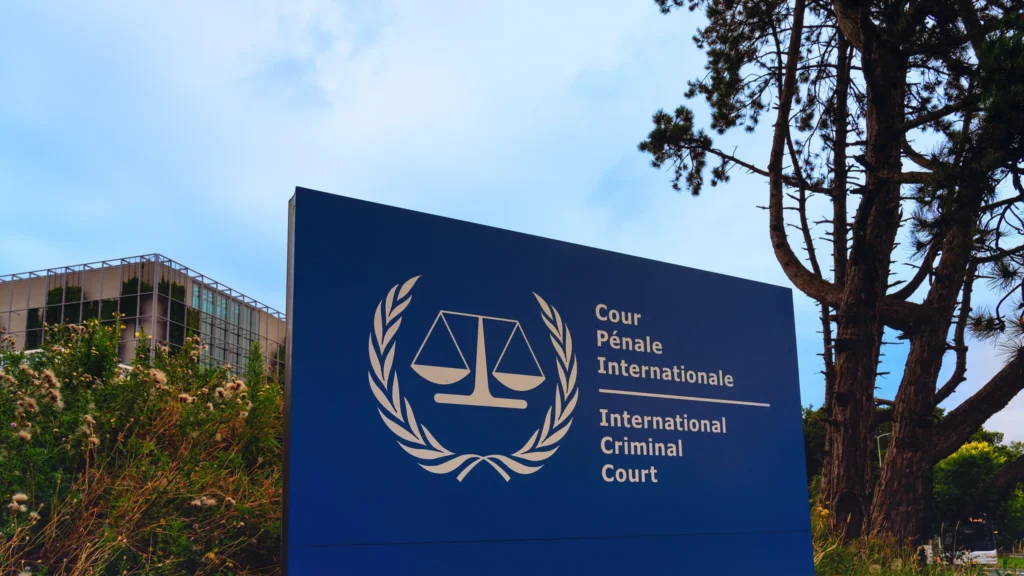
Trump Administration Sanctions the Entire ICC
The Trump administration has taken its confrontation with the International Criminal Court to a place no American government has gone before, placing the court itself on the United States sanctions list. On October 9, the State Department designated the Hague-based institution under the sanctions program created by President Donald Trump's February 2025 executive order, and the Treasury Department's Office of Foreign Assets Control added the court to its Specially Designated Nationals and Blocked Persons list, the same list used against terrorist organizations, drug cartels and proliferators of weapons of mass destruction. The move caps a campaign that began with sanctions against a single prosecutor and, in the space of twenty months, has grown into an effort to cut an international court off from the banks, vendors and services it needs to function.
The escalation has drawn a sharp rebuke from eight American allies, who jointly condemned the decision, and it has opened a new front in a federal court in New York, where a judge has already blocked part of the sanctions order on free speech grounds. The administration says the court has asserted jurisdiction it does not have over Americans and their allies. The court's defenders say the sanctions are an attack on the idea that the law can constrain power at all.
Secretary of State Marco Rubio announced the latest step in blunt terms. "We will ban transactions with this rogue court, cutting off their resources and crippling its ability to operate against us," Rubio said, adding a warning that has defined the campaign: "Either the ICC will end its threats, or we will end the ICC." The court, for its part, has said the designation follows sanctions against thirteen of its officials. The designation does not immediately shut off every American service the court uses, because the Treasury issued four general licenses alongside it. But its practical impact will depend on those licenses, on how banks and technology companies interpret them, and on whether the courts allow the order to stand.
Trump Administration: From One Prosecutor to the Whole Court
The story of the Trump administration's campaign against the court is the story of a steady escalation, each step broader than the last. It began in February 2025, when President Trump signed Executive Order 14203, which authorized the secretary of state to impose sanctions on foreign persons who engage in or materially assist ICC efforts to investigate, arrest, detain or prosecute American citizens and nationals of allies that have not consented to the court's jurisdiction. The order's annex named a single person: ICC Prosecutor Karim Khan. At the time, it looked like a targeted response to two proceedings the administration objected to: the court's investigation into alleged crimes by American personnel in Afghanistan, and its investigation in Palestine, which had produced arrest warrants for Israeli Prime Minister Benjamin Netanyahu and former Defense Minister Yoav Gallant.
Over the following eighteen months, Rubio designated thirteen more individuals and three organizations under the order's authority. In mid-2025, six ICC judges and two deputy prosecutors were added to the list. Then came United Nations Special Rapporteur Francesca Albanese, sanctioned for recommending that the court issue the Netanyahu and Gallant warrants and investigate certain American companies. Three Palestinian human rights organizations, Al-Haq, Al Mezan and the Palestinian Centre for Human Rights, were designated for engaging in ICC efforts against Israeli nationals. Two more judges were added in December 2025. And in August 2026, the campaign reached the top of the court itself, when its president, Judge Tomoko Akane of Japan, was designated together with Abdoulaye Seye of the Office of the Prosecutor.
By the time the court itself was designated on October 9, the sanctions had already touched nine of the court's eighteen judges, three of its prosecutors, its president and a senior trial attorney. Sanctioning individuals is one thing. Sanctioning the institution is another, because it targets the court's ability to operate at all.
Trump Executive Orders: What Executive Order 14203 Does
To understand what the designation means in practice, it helps to understand what the executive order does. Trump executive orders in this area rest on the International Emergency Economic Powers Act, the National Emergencies Act and section 212(f) of the Immigration and Nationality Act. Executive Order 14203, signed on February 6, 2025, declares that the ICC has, without a legitimate basis, asserted jurisdiction over and opened preliminary investigations concerning personnel of the United States and certain of its allies, including Israel. It notes that the court issued arrest warrants for Netanyahu and Gallant, and it observes that neither the United States nor Israel is a party to the Rome Statute or a member of the ICC. The president determined that any effort by the court to investigate, arrest, detain or prosecute protected persons constitutes an unusual and extraordinary threat to the national security and foreign policy of the United States, and declared a national emergency.
The order blocks the property and interests in property of the persons listed in its annex, or persons subsequently designated under the order, and broadly prohibits American persons from dealing with blocked persons. The order authorizes the secretary of state to make those designations. Once a person or entity is on the list, all of its property and interests in property that are in the United States, or in the possession or control of American persons, are blocked, and American persons are generally barred from dealing with it unless a license or exemption applies. Violators face civil penalties and, for willful violations, criminal prosecution carrying up to twenty years in prison and fines of up to one million dollars.
The October 9 designation was accompanied by four general licenses from the Treasury Department's Office of Foreign Assets Control. The most important, General License 13, authorizes transactions necessary to maintain or wind down ICC operations, contracts and agreements through 12:01 a.m. Eastern time on April 7, 2027. The other licenses cover telecommunications and enterprise software, pension payments and the detention of specified individuals. The State Department explained that the 180-day license is intended to provide time for states that are parties to the Rome Statute to demonstrate meaningful progress on diplomatic and legal resolutions that address fundamental American concerns about the court, and that it can be adjusted in response to the success or failure of such efforts.
That structure matters because it shows the designation is not an immediate shutdown. The court can keep operating, for now, under the wind-down license. But the license has an expiry date, and once it lapses, every American bank, vendor and service provider outside the remaining general licenses must sever ties with a court that holds defendants, protects witnesses and conducts trials. The designation deepens two weaknesses the court already has: it depends on states to arrest suspects, and many already refuse to execute its warrants, and it lacks stable funding. The American designation exposes anyone who cooperates with the court to sanctions, and cuts the court off from the financial and technical services it needs to operate.
White House News: Rubio's Campaign to "Dismantle" the Court
The white house news around the campaign has been driven by Rubio, who has made the confrontation with the court one of the defining projects of his time as secretary of state. In July, he announced a campaign to dismantle the court, a word that left little doubt about the administration's ambitions. The campaign has been presented as a defense of American sovereignty and of allies, above all Israel, against a court the administration regards as illegitimate. The court's arrest warrants for Netanyahu and Gallant, issued in November 2024 over alleged war crimes and crimes against humanity including starvation as a method of warfare, are the immediate trigger for the American response, and the administration has made clear that it regards the warrants as an attack on a close ally.
The administration's case is that the court lacks jurisdiction. Neither the United States nor Israel is a party to the Rome Statute, the treaty that created the court, and the executive order argues that the court consequently has no authority over their personnel. The current confrontation centers heavily on the court's cases involving Israel's war in Gaza. But the order also reaches back to the court's investigation into alleged crimes by American personnel in Afghanistan, a proceeding that has long angered Washington, and the dispute over American troops is at the heart of the confrontation. In December 2025, a top Trump administration official told the news agency Reuters that there was growing concern that the court will turn its attention to the president, to the vice president, to the secretary of war and others, and pursue prosecutions against them, adding that this was unacceptable and that the administration would not allow it to happen. That remark, made months before the court itself was designated, helps explain the timing and the urgency of the campaign: the administration is not only defending past actions in Afghanistan, but trying to prevent future prosecutions of the people at the top of the American government and the American military.
The rebuke was a rare public split between the United States and its closest partners, and it underscored the cost of the campaign: in seeking to protect Americans and Israelis from the court, the administration has put itself at odds with the governments that support the court as a pillar of the international order. The administration has shown no sign of backing down.
The Court Fight in New York
The decisive battle over the sanctions may not be fought in The Hague or in Washington. It may be fought in a federal courthouse in Lower Manhattan, where several lawsuits challenge Executive Order 14203. The most important so far is Democracy for the Arab World Now, Inc. v. Trump, in which the plaintiffs advance two principal theories. First, they argue that the executive order exceeds the president's authority under the International Emergency Economic Powers Act, both because it rests on no qualifying national emergency and because it regulates personal communications and informational materials that the statute exempts from presidential control. Second, they argue that the order's prohibition on providing services to designated persons violates the First Amendment because it bars American persons from engaging in protected speech, including submissions supporting the ICC prosecutor's investigations.
On October 13, Judge Jesse Furman of the Southern District of New York, an appointee under President Barack Obama, granted the plaintiffs' motion for a preliminary injunction in substantial part. He held that the services prohibition is likely unconstitutional as applied to the plaintiffs because it restricts their speech based on its content and fails strict scrutiny, and he enjoined all defendants except President Trump from enforcing the act's civil or criminal penalties against the plaintiffs for the conduct described in their complaint. He declined, however, to declare the order facially unconstitutional, because much of what it prohibits raises no First Amendment concern. A bank, for example, has no First Amendment right to provide financial services to a designated person, while an American advocacy organization does have a First Amendment right to submit legal analysis and other communications to the ICC's Office of the Prosecutor. That reasoning extends naturally to the ICC itself now that the court has been designated.
Judge Furman did not reach the plaintiffs' arguments about the emergency powers act. Their claim that the order rests on no valid national emergency was not part of the motion and remains for the merits stage. Former Ambassadors-at-Large for War Crimes Issues Stephen Rapp and Beth Van Schaack, and former Chief Prosecutors of the Special Court for Sierra Leone David Crane and Brenda Hollis, filed an amicus brief in the companion case, American Friends Service Committee v. Trump, arguing that the order lacks any basis in the emergency powers act. The statute authorizes sanctions only to meet an unusual and extraordinary threat, and they contend that an ICC judicial investigation conducted under a treaty ratified by more than 120 states cannot constitute such a threat, particularly absent any evidence that the sanctioned judges endangered American personnel or interests.
The sanctions also carry a paradox that the court's defenders have highlighted. Cutting the court off from the services it needs to operate could force the release of detainees in its custody, including people accused or convicted of the gravest international crimes. Sanctions that the emergency powers act authorizes only to meet an unusual and extraordinary threat could themselves create one, by freeing the very people the court was created to hold accountable.
What Happens Next
While Judge Furman's ruling protects the plaintiffs' speech, it leaves the order itself, and the October 9 designation of the court, fully in force against everyone else. The decisive question is therefore the one the American court has not yet answered: whether a judicial investigation by an international court can constitute an unusual and extraordinary threat under the emergency powers act at all. If the courts answer no, the entire sanctions regime against the court collapses. If they answer yes, the administration will have established that a single state can cut a treaty-based court off from the banks, software and services it needs to function.
The immediate timeline is set by the Treasury's general licenses. The 180-day wind-down license runs until April 7, 2027, and the State Department has said it can be adjusted in response to the success or failure of diplomatic efforts. That gives the court's supporters among the states that are parties to the Rome Statute a window to demonstrate what the State Department calls meaningful progress on diplomatic and legal resolutions that address fundamental American concerns. What that progress would look like is not defined, and the administration has given no public indication of what concessions it would accept. The license's expiry date creates a deadline, but it is a deadline the administration can move.
For the court itself, the months ahead will be a test of endurance. It must keep its trials running, its witnesses protected and its defendants in custody while its access to American services narrows, and while its president, nine of its eighteen judges and three of its prosecutors remain under American sanctions. It must do so knowing that the government that imposed those sanctions has said, openly, that its goal is to dismantle the court. The campaign that began with a single name on an annex in February 2025 has become the most serious challenge the court has faced since it became operational in 2002. Whether it survives that challenge will depend less on The Hague than on a federal courthouse in Lower Manhattan, and on whether the states that created the court are willing to defend it.
Source: Foreign Policy in Focus