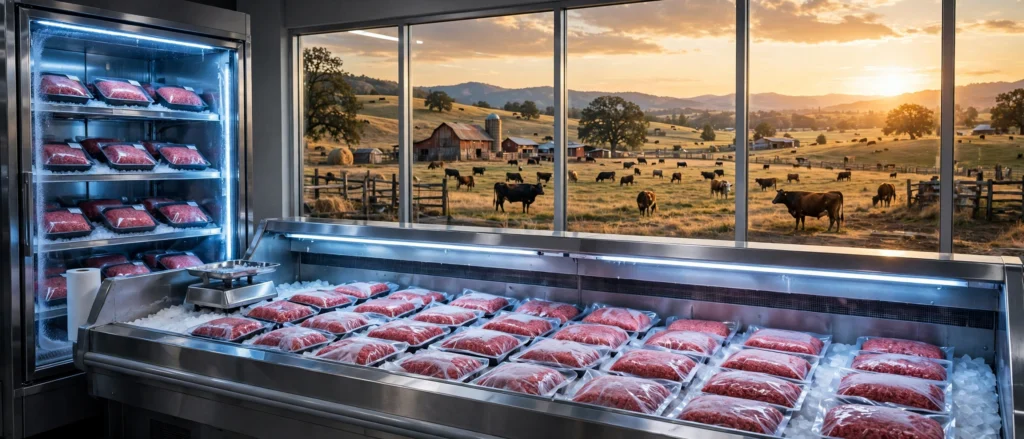
Tariffs Impact on Prices: Beef Import Verdict Is In
The tariffs impact on prices from President Donald Trump's beef import plan can now be measured in full, and the results cut in opposite directions. Three months after the White House opened the door to 300,000 metric tons of foreign beef, shoppers have saved less than two percent on ground beef, while ranchers have lost roughly $320 for every cull cow they sell. The 90-day window that began in September is drawing to a close, and the evidence suggests the experiment delivered pain to producers without the relief it promised consumers.
A second finding sits underneath the price data, and it is the one a new report from the South Dakota Searchlight puts at the center of the story: beef imports had already been rising sharply before Trump acted, because the American cattle herd had been shrinking for years. The plan did not start a trend so much as accelerate one already underway, layering a sudden policy shock on a slow-moving supply crisis, and that distinction explains both why the imports arrived and why they failed to do what the White House said they would.
Tariffs Impact on Prices: The 90-Day Verdict for Shoppers
The plan was announced on August 21, when Trump said on social media that the United States would allow up to 300,000 metric tons of ground beef to be imported over 90 days with no out-of-quota tariff, and that the meat would be sold at 25 percent below current market prices. The formal mechanism was a temporary expansion of the tariff-rate quota for lean beef, effective September 1 and divided into three monthly tranches of 100,000 metric tons. The idea was straightforward: flood the market with cheap lean trimmings, the kind blended into the ground beef most households buy, and watch retail prices fall.
The beef did not arrive in the volumes described. Importers brought in just under 38 percent of the first tranche, about 37,500 metric tons, according to University of Arkansas economist James Mitchell, and only about 30 percent of the next tranche over the following 60 days. Farm Action, the think tank tracking the program, expects the final total to land between one-third and half of the 300,000 tons announced. Because each tranche resets every 30 days, unused capacity simply disappears, so the full volume the president described was never actually attainable.
What reached the shelves barely moved prices. Farm Action's national tracking found ground beef fell from $6.92 a pound to $6.79 in the first 30 days, under two percent, and some regions saw prices rise. The Farm Bureau's survey of 41 grocery stores found prices unchanged in 30 of them, with the average moving only from $7.29 on September 2 to $7.13 on September 23. Wholesale data matched: four weeks after launch, the boxed beef cutout had drifted from $3.70 a pound to $3.66. For a policy sold as a dramatic intervention in the grocery bill, the consumer result was modest at best.
Trump Tariffs and the Record Imports Already Underway
The imports were already climbing for reasons that have little to do with any single White House decision. The United States entered 2026 with about 86.2 million cattle and calves, the smallest herd since the early 1950s and the lowest in 75 years, down from roughly 94.7 million in 2019. Cattle ranches have fallen too, to 732,123 in the 2022 census, down 17 percent from 2017 and part of a decline of more than 450,000 ranches since 1997. Years of drought stripped grasslands across the West and the Plains, feed costs climbed, and the return of the New World screwworm parasite forced a halt to imports of live Mexican cattle, tightening supplies further.
With supplies thin, processors turned abroad. The Agriculture Department projects record beef imports of 5.8 billion pounds in 2026, up six percent from 2025 and 25 percent from 2024, mostly lean trimmings for ground beef. R-CALF USA chief executive Bill Bullard noted when the plan was announced that imports had already hit record levels while retail prices kept climbing and the herd kept shrinking, and Farm Bureau analysts found the same from the supermarket shelf. The United States even lost its place as the world's biggest beef producer to Brazil in 2025, according to government estimates.
The industry's structure helps explain why more imports did not mean cheaper beef. Four companies control roughly 85 percent of the American beef market, according to Farm Action, so the gains from cheaper imported trimmings can be captured in the middle of the supply chain rather than passed to shoppers. Prices had already climbed steeply: ground beef averaged about $6.70 a pound in March 2026, up nearly 21 percent since the inauguration, and retail Choice beef rose from roughly $8.51 in August 2024 to about $10.49 in July 2026. The tariff news cycle treated the import plan as a new lever on those prices, but the underlying shortage had not changed at all.
Economy News: Where the Money Went
If shoppers saw almost nothing, ranchers felt the plan immediately. Farm Action's 60-day analysis found cull cow prices fell nearly 20 percent, about $320 a head on a typical 1,200-pound cow, while meatpackers paid 16.6 percent less for lean beef. The Farm Bureau reported producer losses of $300 to $400 a head. Feeder cattle futures sank 21 percent over a little more than a month from their October 16 high, the day Trump first said his administration was working to lower beef prices, and although futures began rising again in late November, they remained below where they stood before he spoke.
The gap between those two sets of numbers is the heart of the story: ranchers lost roughly a fifth of their cull cows' value, packers paid substantially less for lean beef, and consumers saved under two percent. The difference did not vanish; it stopped in the middle of the supply chain, in the margin between what packers pay and what supermarkets charge. That is why the episode has become a case study in how trade policy aimed at consumer prices can misfire when the market between producer and shopper is highly concentrated.
The broader economy news backdrop raised the stakes. The latest inflation report showed consumer prices up 3.7 percent over the previous year in September, according to the Bureau of Labor Statistics, and beef had become an emblem of the affordability squeeze in the way eggs were during the previous administration. Ground beef is bought weekly by millions of households, so its price is visible in a way abstract inflation figures are not.
Cattle Country Counts the Cost
The backlash from ranching groups was swift and unusually public for a constituency that overwhelmingly backed the president. The National Cattlemen's Beef Association, the industry's largest trade group and a supporter of most of the administration's trade policy, called the plan misguided, and its chief executive, Colin Woodall, said the group could not stand behind the president while he undercut family farmers and ranchers by importing Argentine beef to influence prices. The United States Cattlemen's Association, representing more than 175,000 producers, said the country does not put America first by putting its cattle producers last. Farm Bureau president Zippy Duvall met Trump on September 4, then publicly called on him to roll back the plan on September 24.
Republican lawmakers from cattle states joined in. Senator Mike Rounds of South Dakota, facing a competitive re-election race against independent Brian Bengs in a state Trump won by nearly 30 points in 2024, said on the day of the announcement that the policy was not America First and only harmed ranchers. Senator Deb Fischer of Nebraska said she was extremely disappointed, and Senator Tom Cotton of Arkansas argued that beef prices were too high because the herd was too small, and that below-market imports would only squeeze cattlemen further. Texas Agriculture Commissioner Sid Miller called for a long-term domestic solution, North Dakota Farmers Union president Matt Perdue said the imports would cut what producers receive without lowering consumer prices, and South Dakota Farmers Union president Doug Sombke said ranchers were tired of being ignored. A Montana rancher told reporters the dispute had pushed him to vote for Democrats.
Trump said on social media that he was surprised by the backlash, arguing ranchers were doing well for the first time in decades only because he had put tariffs on incoming cattle, including a 50 percent tariff on Brazil. The administration also removed duties it had imposed over the summer on Brazilian beef and launched an investigation into meatpackers for price manipulation. The Wall Street Journal reported that JBS controlling shareholder Joesley Batista had met Trump in August and asked him to lower tariffs on Brazilian beef, an account Snopes could not independently verify. Representatives Zach Nunn of Iowa and Gabe Vasquez of New Mexico introduced the Banning External Entry of Foreign Beef Act, which would reverse the expansion and require congressional approval for similar increases.
What Happens Next
The 90-day window is now in its final days, and the question is whether the administration extends it, lets it lapse, or reverses course. The first two months point toward letting it end quietly, since the imports neither arrived in the promised volumes nor delivered the promised savings. But the underlying problem has not gone away: the herd is still the smallest in 75 years, beef prices are still near records, and rebuilding takes years of retaining breeding stock rather than sending animals to market, a decision ranchers make only if they trust prices will hold. Texas A&M agricultural economist David Anderson warned when the plan was announced that cheaper imports send producers the opposite signal from the one needed to expand production, and the 60-day data suggests he was right.
For shoppers, the personal finance news is that no quick fix is coming from the import route: the cpi inflation data will keep reflecting tight beef supplies until the herd grows. The gap between rancher losses and consumer savings has given critics a simple line, that the plan taxed producers without rewarding consumers. For the administration, the lesson is sharper. The tariff news that once played well as a promise to lower grocery bills has become, in cattle country, a symbol of a policy that hurt the people who supported the president most. Whether that anger fades or hardens will depend on what replaces the import window and whether cattle prices recover as the final tranche expires. Ranchers are watching the same numbers as everyone else, waiting to see if the next policy treats them as partners in rebuilding the herd rather than as the cost of cheaper ground beef.
Source: South Dakota Searchlight