Tariff News: Trump Tariffs Fail to Cut US Trade Deficit
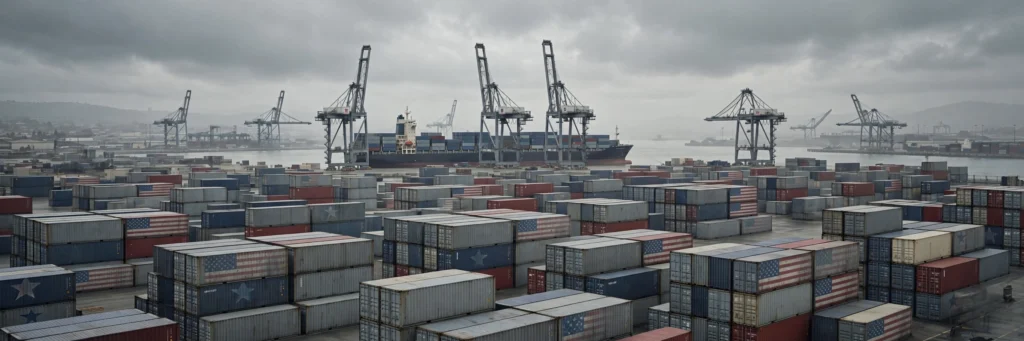
President Donald Trump’s economic agenda has delivered robust growth and strong investment but has failed to reduce the trade deficit, according to a study by the German Economic Institute IW seen by Reuters on Friday, October 30. The finding cuts to the heart of the administration’s trade policy, because shrinking the trade gap was one of the central promises made for the sweeping import tariffs imposed over the past two years. Tariffs, the argument ran, would make foreign goods more expensive, encourage Americans to buy domestic products instead, and push manufacturers to build factories in the United States rather than abroad. According to the IW study, as summarised by Reuters, that chain of effects has not produced the promised result: the goods trade deficit has grown rather than shrunk, even as tariffs have risen to levels not seen in decades.
The report does not present a picture of economic collapse. Its verdict is more complicated, and in some ways more awkward for both supporters and critics of the tariff policy. Growth has remained solid, the study finds, and investment linked to artificial intelligence has been buoyant. But job creation has lagged behind the previous administration, inflation has remained above the Federal Reserve’s 2 percent target, and the effort to bring manufacturing back has so far fallen short. Taken together, the study describes an economy that is growing without delivering on the two specific goals the administration set for its trade policy: a smaller deficit and a larger manufacturing sector. That distinction, between general growth and specific promises kept, is likely to shape how the report is debated in the days ahead.
Tariff News: The Headline Finding
The study’s headline number is stark. The United States goods trade deficit reached $130 billion in August, according to the Reuters summary of the report, exceeding its level two years earlier despite sweeping import tariffs. A goods trade deficit simply means that the value of physical goods imported into the country exceeds the value of goods exported, and a figure of $130 billion for a single month represents an enormous gap between what America buys from the rest of the world and what it sells. That the gap is larger than it was two years ago, after the most aggressive tariff programme in modern American history, is the central fact the IW study asks its readers to confront.
It is worth being precise about what this number does and does not prove on its own. A monthly trade deficit moves for many reasons: the strength of domestic demand, the price of energy, the timing of large shipments, and the decisions of businesses to stockpile goods ahead of expected tariff increases. A single month, even a striking one, is not by itself a complete verdict on a policy. The force of the IW finding comes from the pattern around it. The study presents the August figure not as an isolated spike but as part of a broader record in which tariffs have reshaped where imports come from without reducing how much, in total, the United States imports relative to what it exports. That pattern, if confirmed by the full study when it is published, would suggest that the tariff programme has changed the map of American trade more than it has changed its balance.
The timing of the report also matters. It was seen by Reuters on the Friday before the November 3 midterm elections, a moment when voters are already weighing the economy, prices and jobs. Trade policy rarely decides elections on its own, but the cost of living and the state of manufacturing employment are central election issues, and a study from a respected German economic institute concluding that tariffs have not achieved their stated aims will inevitably be quoted by critics of the administration and contested by its supporters. The Reuters summary carried no immediate response from the White House, and how the administration answers the study, whether by disputing its figures, by arguing that the deficit is the wrong measure of success, or by pointing to longer-term factory investments that have not yet shown up in trade data, will be an important part of the story in the coming days.
A Shifting Map, Not a Smaller Gap
One of the most interesting findings in the study concerns not the size of the deficit but its composition. Trade patterns have shifted, the Reuters summary reports, with the European Union’s share of the deficit falling to 7 percent from 20 percent in August 2024, and China’s share declining to 14 percent from 29 percent over the same period. Those are large movements. They suggest that tariffs have indeed had a powerful effect on which countries sell goods to the United States, pushing down the shares of two of America’s largest trading partners in a relatively short space of time.
What they do not show, on the study’s own account, is a reduction in the overall gap. If imports from the European Union and China fall as a share of the deficit while the total deficit grows, then imports from other countries must be rising to take their place, or American exports must be falling, or both. That is a familiar pattern in trade economics, and it is one that critics of tariffs have long predicted. A tariff on goods from one country does not, by itself, reduce a nation’s total appetite for imported goods, especially when domestic production cannot quickly replace what was previously imported. Instead, buyers often switch to suppliers in countries that face lower tariffs, or they absorb the higher cost and keep buying. The result is a reshuffled map of trade partners with a similar, or even larger, overall shortfall.
This distinction matters for how the public should judge the policy. Supporters of tariffs can fairly point to the falling shares of the European Union and China as evidence that the policy is biting where it was aimed. Critics can fairly reply that a policy sold as shrinking the deficit cannot be judged a success merely because it changed the deficit’s sources. The IW study, as summarised, comes down on the critics’ side of that argument, because its headline conclusion is about the total, not about any single bilateral relationship. The question it leaves open is whether the reshuffling is a transitional phase, with domestic production eventually catching up, or a permanent feature of an economy that consumes more goods than it produces and will therefore import the difference from somewhere, whatever the tariff schedule says.
Economy News: Growth, Jobs and Prices
Beyond trade itself, the study offers a mixed assessment of the wider economy, and that mixed picture is important context for the tariff debate. Gross domestic product growth has remained solid, according to the summary, and investment related to artificial intelligence has been buoyant. Those are genuine strengths. An economy growing solidly, with heavy investment in a transformative technology, is not an economy in crisis, and any account of the tariff era that ignores that growth would be incomplete. The boom in AI-related investment, in data centres, chips and the infrastructure around them, has been one of the defining economic stories of recent years, and it has continued under the current tariff regime.
Against those strengths, the study sets two weaknesses. Job creation has lagged behind the previous administration, and inflation has remained above the Federal Reserve’s 2 percent target. The jobs point goes directly to the promise that tariffs would revive manufacturing employment and create well-paid industrial work. If overall job creation is slower than under the previous administration, that promise looks harder to sustain, even if some individual factories have been announced or expanded. The inflation point connects to the tariffs impact on prices, the question that matters most to households. A tariff is a tax charged on imported goods, and the central dispute in the tariff debate has always been who ultimately bears that cost: the foreign exporter, the importing business, or the consumer at the checkout. The study’s finding that inflation remains above the Fed’s target does not by itself prove that tariffs caused any particular price rise, since energy costs, housing, wages and many other forces also shape inflation, but it does mean that the administration cannot point to falling prices as evidence that tariff costs have been painlessly absorbed.
The combination of solid growth, lagging job creation and above-target inflation is also a reminder that a trade deficit is not the same thing as economic weakness, and that eliminating it is not the same thing as prosperity. A country can run a large trade deficit while growing strongly, if its consumers and businesses are spending confidently and its currency is in demand around the world. Conversely, a country can shrink its deficit during a recession, when collapsing demand cuts imports faster than exports. That is why economists argue about what the deficit means almost as much as they argue about its size. The IW study’s contribution, as presented by Reuters, is not to settle that argument but to test a specific promise: that this tariff programme would reduce the deficit. On that test, it finds, the programme has so far failed.
Manufacturing and Investment: The Reshoring Test
The second specific promise tested by the study concerns manufacturing. Efforts to bring manufacturing back have so far fallen short, the Reuters summary reports, and it offers a striking piece of evidence: foreign direct investment inflows fell 8.2 percent to $248 billion in 2025, 18 percent below the average for the years 2015 to 2024. Foreign direct investment measures money invested by overseas companies in American operations, including factories, and a fall of that size, to a level well below the recent average, is difficult to square with a story of surging global confidence in American manufacturing.
There are, as always, complications. Investment decisions take years to plan and build, and a single year’s inflow figure can be moved by a small number of very large deals. Tariffs could, in principle, encourage domestic investment by American firms even while deterring foreign firms, and the study’s summary does not break down the investment picture in that detail. Supporters of the policy may also argue that the true test is not a single year of foreign investment but the pipeline of factory announcements, construction starts and production capacity that will only show up in trade and employment data over a longer horizon. Those are fair points, and they are reasons to treat the study as an interim report card rather than a final judgment.
Even with those caveats, the investment figure is awkward for the reshoring narrative, because reshoring was presented as a near-term consequence of tariffs, not merely a distant hope. If foreign firms are investing less in the United States at a time when tariffs are supposed to be making American production more attractive, then either the tariffs are not the decisive factor in investment decisions, or other forces, such as uncertainty about tariff rates changing, higher input costs for imported components, or concerns about retaliation in export markets, are outweighing the incentive tariffs were meant to create. Uncertainty is a plausible part of the explanation: businesses deciding where to build a factory that will operate for decades are understandably cautious when the tariff schedule itself has been revised repeatedly and challenged in the courts.
Debt, War and the Wider Bill
The study’s most provocative point, as summarised by Reuters, links trade policy to a much larger question: public debt. The United States-Israeli war against Iran is increasing already high public debt and pushing up interest rates, the summary reports, with creditors questioning whether the United States can sustain its outstanding debt of $40 trillion. That is a claim about the fiscal cost of war, and about market confidence, rather than about tariffs directly, but it belongs in the same report because it bears on the same question of economic sustainability. A government that is borrowing heavily to fund military operations while also reshaping trade through tariffs is asking financial markets to absorb both policies at once, and the study suggests that creditors are beginning to ask hard questions about whether the total burden is sustainable.
It is important to be careful with this part of the summary. The figure of $40 trillion in outstanding debt, and the suggestion that creditors are questioning its sustainability, are presented in the Reuters summary as points from the IW report, and the summary does not quote the report’s underlying analysis or name the creditors in question. Readers should therefore treat this as the study’s argument, not as an independently verified market event, and should wait for the full study before drawing firm conclusions about debt markets. What can be said is that the link between war spending, borrowing costs and trade is a real channel in economics: higher government borrowing can push up interest rates, higher rates raise the cost of mortgages and business investment, and a weaker fiscal position can limit a government’s room to respond to the next shock, whether that shock comes from trade, energy or conflict.
Tariff News: What Happens Next
What happens next will be determined, in part, by how the administration and its critics use this report. The most immediate question is whether the White House disputes the IW figures, offers an alternative measure of success, or argues that the deficit will fall as factory investments mature. Each response would lead the debate in a different direction. A dispute over figures would turn attention to trade statistics themselves, and to which measure, goods only or goods and services combined, best captures the policy’s effect. An argument about longer-term investment would shift the debate to factory construction and employment data over the coming year. An argument that the deficit is the wrong goal altogether would be a more fundamental retreat from the original promise, and would invite the question of why the promise was made in the first place.
A second question is whether the report changes anything in policy. Tariff rates, exemptions and deals with individual trading partners are adjusted regularly, and a study concluding that the overall deficit has not fallen could strengthen the hand of those inside and outside the administration who favour negotiated agreements over blanket tariffs, or who want tariffs targeted more narrowly at specific sectors rather than applied broadly. It could equally have no policy effect at all, if the administration judges that the political value of tariffs, and the revenue they raise, outweighs the economic criticism. The study itself, as summarised, makes no policy recommendation that Reuters reported, and its influence will depend on whether lawmakers, commentators and voters pick it up.
The third question is what the next trade data will show. Monthly deficit figures will continue to arrive, and each release will be read as a fresh test of the IW conclusion. If the deficit narrows in the months ahead, supporters will argue that the study caught the policy mid-transition. If it remains near the August level or grows further, critics will argue that the pattern is confirmed. Either way, the IW study has now set a clear benchmark against which those releases will be judged: a goods deficit of $130 billion in August, larger than two years earlier, after sweeping tariffs. That benchmark, and the reshuffled map of trade partners behind it, will be the starting point for the next round of the argument.
Source: Reuters