Pentagon News: Trump Launches Counter-Drone Safety Plan
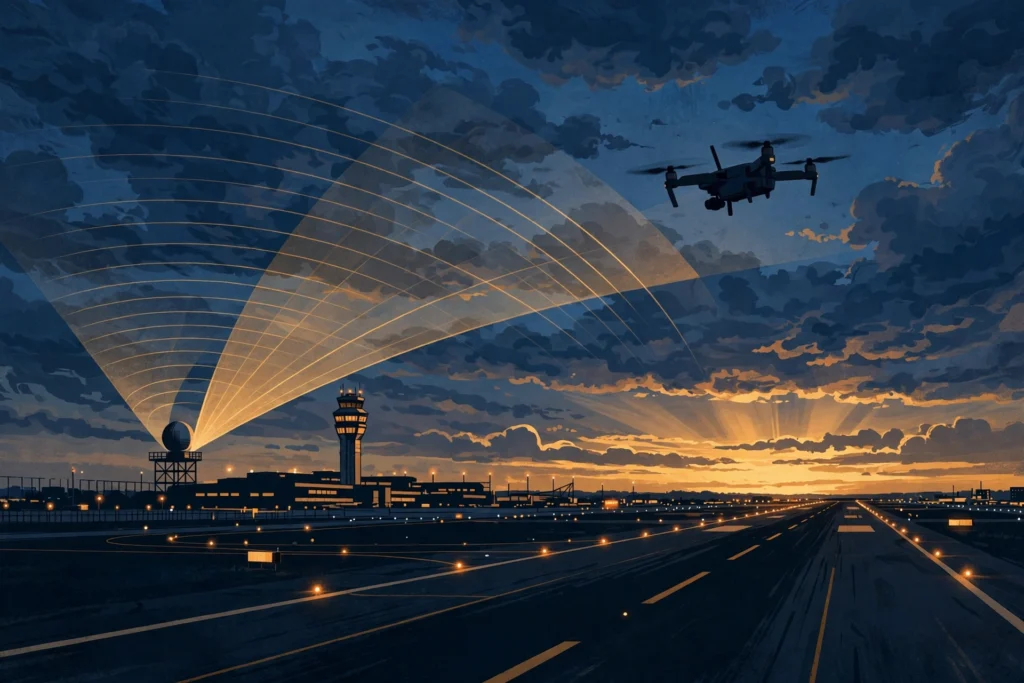
Pentagon news took a decisive turn on Monday, when the Trump administration announced a coordinated federal strategy to confront the growing threat posed by rogue drones over American skies. Five cabinet departments — Transportation, War, Homeland Security, Energy and Justice — unveiled an expanded interagency effort to develop, test and deploy counter-drone technology while keeping civilian aviation safe. The agreement, announced in Washington on November 9, creates a single government-wide process for deciding which systems can detect, track, stop or take control of dangerous or unauthorized unmanned aircraft.
The announcement matters because the threat has moved from the margins of defense planning to the center of it. Drones that once belonged mostly to hobbyists are now cheap, capable and widely available, and they have been used by criminal cartels along the southern border, by plotters targeting public events, and by hostile forces on battlefields abroad. Until now, the federal response has been split across agencies with different authorities. The new agreement is designed to end that fragmentation, under a process led by the White House Task Force to Restore American Airspace Sovereignty.
For the administration, the timing is deliberate. The strategy builds on two operations already underway: a temporary flight restriction that closed the airspace along the southern border to unauthorized drones last month, and a safety assessment of the Pentagon's high-energy laser counter-drone system. Both were presented as proof that advanced defenses can be deployed quickly and safely alongside civilian air traffic. Whether the broader strategy delivers will be judged by how fast new systems reach the field, and by whether American skies are actually safer a year from now.
What the New Counter-Drone Strategy Does
At its core, the agreement gives the agencies a shared set of rules for handling counter-drone technology. The five departments signed a memorandum of understanding that establishes an interagency process to evaluate counter-drone systems and deploy them to protect aviation safety and advance national security. The practical work falls into three parts. First, the agencies will work together on technical requirements for new systems, sharing field-test results and data. Second, the Federal Aviation Administration will review proposed systems quickly and conduct safety risk assessments to make sure the technology does not interfere with aircraft operations or navigation equipment. Third, the agencies will coordinate with the Federal Communications Commission, because many counter-drone systems work by jamming the radio links that control a drone.
The agreement also settles who does what. The FAA will set technical requirements and standards for the safe introduction of new systems, and can supply data showing where a system creates unsafe conditions, along with ways to reduce the risk. If the FAA concludes that more mitigation is needed, it can impose its own protective measures, including restricting airspace. The arrangement gives the defense and security agencies room to move fast, while leaving the aviation safety regulator with the final word.
The scope is deliberately broad, covering the full range of technologies built to defeat drones: systems that detect an incoming drone, track its flight path, stop it in midair, or seize control of it and bring it down safely.
Trump Administration: A Whole-of-Government Approach
The trump administration presented the announcement as a break from the siloed approach of the past. Transportation Secretary Sean Duffy, whose department oversees the FAA, framed the effort as a matter of staying ahead of a threat that is changing fast. "We're taking a proactive, whole-of-government approach to protecting American airspace from emerging 21st century threats," Duffy said. "By bringing all our federal partners together, we can strengthen our ability to combat rogue drone threats and keep the flying public safe."
FAA Administrator Bryan Bedford struck a similar note, but with the regulator's emphasis on safety first. "The safety of our National Airspace System is the Federal Aviation Administration's top priority," Bedford said. "This agreement builds on the work already underway with our federal partners and establishes a consistent process to ensure counter-drone technologies can be used without compromising aviation safety."
War Secretary Pete Hegseth tied the strategy to the president's agenda and to the operations already underway at the border. "Under President Trump's decisive leadership, we are eliminating bureaucratic silos to protect American skies from rogue and hostile unmanned threats," Hegseth said, adding that the department is rapidly fielding cutting-edge capabilities to safeguard the southern border and harden military installations, and that next-generation defenses including high-energy lasers had already been shown to work safely alongside civilian aviation.
Energy Secretary Chris Wright said protecting energy infrastructure is essential to national security, while Homeland Security Secretary Markwayne Mullin said the action would help counter cartel drone threats, protect federal personnel, and strengthen security in the airspace above the border.
Border Security News: The Southern Border Test Case
The border security news behind Monday's announcement is the clearest example of why the administration says the new strategy is needed. On October 16, the Departments of Homeland Security, Transportation and War announced a temporary flight restriction barring unauthorized drone activity along the entire southern border with Mexico. The restriction covers the airspace from the surface up to 400 feet, extending one nautical mile north of the border, and it was set to remain in place for at least a year. Drones that do not comply can be shot down, and their pilots face civil or criminal penalties.
The restriction was aimed squarely at the cartels, which have used drones to scout Border Patrol positions, smuggle drugs and monitor enforcement operations. The FAA issued three temporary flight restriction notices designating the border airspace as national defense airspace, closed to drones without permission from homeland security officials. Waivers are available for emergency services and first responders, and for other operators through Customs and Border Protection.
The border operation also became the testing ground for the Pentagon's most advanced counter-drone weapon. The FAA completed a comprehensive safety assessment of the Department of War's high-energy laser counter-drone system, presented as evidence that directed-energy weapons can be used near civilian airspace without endangering commercial flights. The test case also shows the practical problems: a laser must be aimed precisely, and a jammer could interfere with a passing airliner's navigation equipment.
FBI News: The Summer Plot and the World Cup Seizures
The doj news in Monday's announcement included two disclosures that underlined how close the drone threat has already come to American public life. Attorney General Todd Blanche said that this summer, the FBI arrested five men accused of planning to deploy drones armed with explosives in and around a White House event that attracted thousands of visitors.
FBI Director Kash Patel offered a second example, from one of the largest public events the country has hosted in years. "Under President Trump's leadership, the FBI protected Americans from drone threats at the FIFA World Cup, working side by side with state and local officers trained at our first of its kind National Counter-UAS Training Center — seizing over 700 drones during the World Cup," Patel said. The figure gives a sense of the scale of the problem at major events.
The two cases point to different parts of the same challenge: the White House plot was a law-enforcement problem, solved by investigation and arrest, while the World Cup was a security problem, solved by detection and seizure on a massive scale. The new strategy is meant to cover both, with federal, state and local officers working from the same playbook at major events. What remains unclear is how widely the training has spread beyond the officers who worked the tournament.
Why Drones Became a National Security Priority
To understand why five cabinet departments are now organized around a threat that barely existed a decade ago, it helps to look at how fast the technology has changed. A decade ago, a capable drone cost thousands of dollars and required real skill to fly. Today, a machine that can carry a meaningful payload, fly for half an hour and navigate by satellite costs a few hundred dollars and can be operated by anyone with a smartphone.
The war in Ukraine has been the most visible demonstration of what cheap drones can do. Both sides have used small unmanned aircraft for reconnaissance, for directing artillery fire and for direct attacks, reshaping military thinking around the world. The Pentagon's interest is driven in part by what its planners have watched there: a battlefield where the side that controls the low airspace has a decisive advantage.
At home, the threat has taken different forms. Cartels have flown drones across the southern border to watch Border Patrol movements and to carry drugs. Criminals have used them to smuggle contraband into prisons. And at airports, unauthorized drones have forced runway closures and flight delays. The existing rules, written for manned aircraft, were never designed for machines that can appear without warning and disappear before anyone can respond.
White House News: What Happens Next
The white house news out of Monday's announcement is only the beginning, and the next steps will reveal how much of it is real. The first test is the technology pipeline: the agencies must put actual systems — the lasers, the jammers, the detection networks — through the new evaluation process and show it can approve safe systems quickly and block unsafe ones. The first approvals and rejections will tell the industry whether the new rules are a genuine fast track or another layer of bureaucracy.
The second test is the border. The temporary flight restriction along the southern border runs for at least a year, and its effectiveness will be measured in whether cartel drone activity falls and whether the laser systems deployed there continue to operate safely alongside civilian traffic. The administration has staked a great deal on the claim that the border operation proves the concept, and the data from the coming months will either support that claim or undermine it.
The third test is political. A new Congress takes office in January, with Democrats in control of both chambers after their midterm victories, and the administration's security programs will face a level of oversight they have not faced for two years. The counter-drone strategy, with its mix of military technology, law-enforcement powers and aviation regulation, is exactly the kind of program that will attract scrutiny — over costs, over civil liberties, over the rules for shooting down drones over American soil. For now, the facts are these: five departments have agreed to work together under a single process to evaluate and deploy counter-drone technology without compromising aviation safety. The border restriction is in place, the laser assessment is complete, more than 700 drones were seized at the World Cup, and five men were arrested over the summer for an alleged plot involving explosive-laden drones near the White House.
Source: Federal Aviation Administration