NATO News: Russian Missiles Hit Poland, Trump Says Mistake
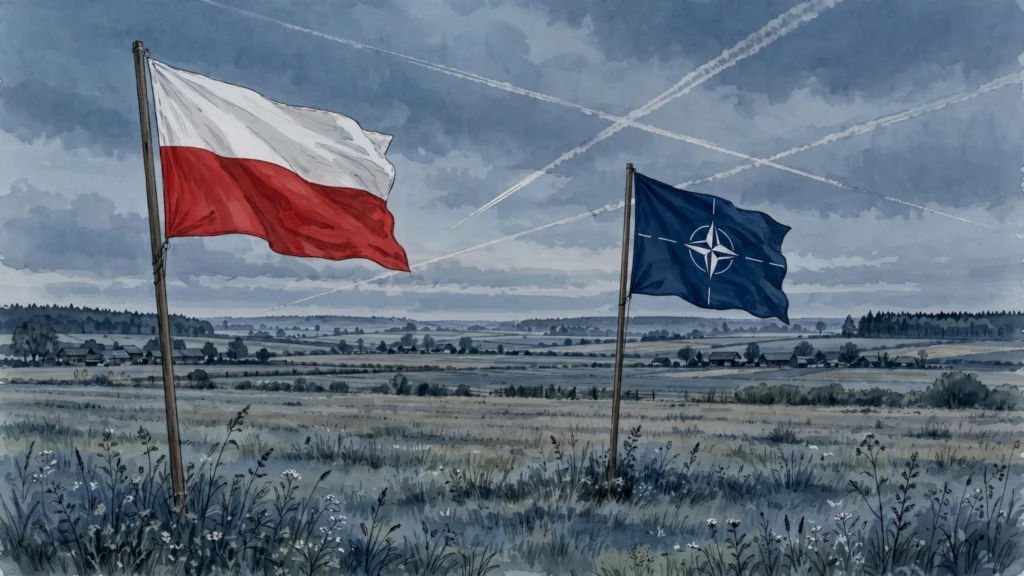
The latest nato news out of Europe is a confrontation that arrived within hours of a presidential dismissal. Poland said on Friday, November 20, that two Russian missiles and a jet-powered drone had come down on its territory during a massive Russian attack on Ukraine, and Warsaw accused Moscow of a deliberate provocation. The disclosure landed a day after President Donald Trump, speaking aboard Air Force One, had described earlier Russian missiles and drones reaching Poland as small and accidental, a characterization the Polish government flatly rejects. NATO fighter jets were scrambled as Polish authorities confirmed the falls, and the alliance's secretary general condemned what he called grave violations of Polish airspace.
The episode has become a test of how the United States and its European allies describe Russian actions that cross NATO borders, and of how much daylight exists between Washington and Warsaw on the question of whether Moscow's incursions are accidents or messages. Trump offered no evidence for his claim that the earlier incursions were mistakes. Poland's prime minister said his government knew for certain that the weapons came from Russia, and that its NATO partners agreed. The Kremlin had not commented on the incident as of Friday.
What Happened in Southeastern Poland
Polish Defense Minister Wladyslaw Kosiniak-Kamysz confirmed on Friday morning that three Russian objects had fallen in the southeast of the country. One, a Russian Kh-101 cruise missile, was confirmed to have landed near the village of Nowy Lipowiec, about 31 miles from the Ukrainian border. A second object, believed to be another missile, was recorded near Rudnik nad Sanem. A third, described as a jet-powered drone, came down near Molodycz.
Polish authorities reported no injuries and no destruction from the falls. One of the objects exploded on impact, according to the prime minister, but the rural locations spared nearby communities. The defense minister said the objects had crossed into Polish airspace during the night, as Russia launched a large missile and drone attack against Ukraine.
The three impact sites sit in a region that has become the front line of the spillover from the war in Ukraine. Southeastern Poland borders western Ukraine, and the area around the falls is home to military installations and training grounds used by Polish and allied forces.
NATO warplanes were scrambled in response to the incursion, a standard alliance reaction when unidentified or hostile aircraft and missiles approach or enter the airspace of a member state. The scramble underlined that the alliance treated the event as a live air-defense matter, not a diplomatic abstraction, even though no one was hurt.
Warsaw Calls It an Intentional Provocation
Poland's government moved quickly to frame the incident as deliberate. Prime Minister Donald Tusk told a televised press conference that everything pointed to the falls not being accidental, and that Warsaw knew for certain the weapons had come from Russia. He said the assessment was shared by Poland's foreign partners and by NATO, and that the pattern did not look like a coincidence.
Tusk described the incident as an intentional provocation by Moscow, and he linked the timing to military exercises taking place in southeastern Poland. The exercises, involving troops from 11 countries under the banner of the Coalition of the Willing, were scheduled for November 20 near Nowa Deba, and the defense minister said he believed it was not accidental that the missiles and the drone landed on the same day the drills were taking place. The exercise, a two-week program that began on November 9, is the first to test the coalition's ability to deploy forces into Ukraine once the war ends, and British troops are among those taking part in the region.
The prime minister also addressed the disagreement with Washington directly. He said Poland would give the United States access to the missile debris and to the sites where the objects fell, and he acknowledged that he did not always agree with the interpretation of the American side on these incidents. The offer of access was a practical step and a diplomatic signal at once: Warsaw is cooperating with the Americans on the evidence, even as it disputes the American president's reading of it.
NATO Secretary General Mark Rutte condemned what he called grave violations of Polish airspace, and he described the incident as clearly dangerous, a consequence of Russia's continuing war against Ukraine. Rutte was due in Warsaw on Saturday, and several European defense ministers were expected in Poland over the weekend, turning the incident into the immediate backdrop for a round of alliance meetings.
Trump: Putin's Missiles Landed 'by Mistake'
Trump's remarks came on Thursday, November 19, aboard Air Force One as he traveled back to Washington from China, where he had attended the Asia-Pacific Economic Cooperation summit in Shenzhen. Speaking to Fox News White House correspondent Aishah Hasnie, the president was asked about a post on X by Prime Minister Tusk, who had criticized the closeness Trump showed toward Russian President Vladimir Putin during their meeting in Shenzhen, where Trump referred to the Russian leader as his friend.
Trump defended the relationship, saying he had known Putin for a long time and could not do anything about the criticism. He then turned to the earlier Russian incursions into Poland, describing them as minor and accidental. He said Putin had been landing drones in Poland and a couple of small missiles, by mistake, and he offered no evidence to support the claim that the incursions were accidental.
The timing matters. Trump's comments were made on November 19, before the missiles and the drone that fell on November 20, so his remarks did not address the latest incident specifically. But the Polish government treated them as a statement of the American position all the same, and the contrast between the president's dismissal and Warsaw's alarm was the story within hours of the new falls being confirmed.
Trump also appeared to confuse Tusk with Polish President Karol Nawrocki during the exchange, a mix-up that drew attention in Poland. Trump had supported Nawrocki during Poland's presidential election.
The remarks were part of a broader pattern in Trump's handling of Putin. At the Shenzhen summit, he had called the Russian president his friend, and after parting ways with him he told European leaders that Putin was ready to pursue peace talks to end the war in Ukraine. According to Bloomberg, Tusk said the message was received very cautiously in the room.
The Night's Wider Barrage on Ukraine
The objects that fell in Poland arrived during a major Russian air attack on Ukraine that Ukrainian President Volodymyr Zelensky described as one of the largest since Russia launched its full-scale invasion in 2022. At least eight people were killed in Ukraine and nearly 30 were injured, according to Zelensky, as Russian missiles and drones struck targets across the country, including Kyiv and Lviv.
The strikes targeted three bridges over the Dnipro River in Kyiv and a station in Lviv, among other sites. The barrage came just hours after Putin vowed retaliation for Ukrainian strikes on the bridge linking Russia to occupied Crimea, and it was the scale of the attack that pushed Russian weapons across the Polish border, whether by design or by overshoot.
The attack on Ukraine was the immediate military context for everything that followed in Poland. Russia's nightly bombardments of Ukrainian cities have repeatedly sent drones and missiles near NATO borders, and the alliance has scrambled jets on previous occasions. What made Friday different was the number of objects, the confirmation that at least one was a cruise missile, and the fact that they fell on the same day as a major allied exercise in the same region.
Ukraine War News: A Pattern of Cross-Border Incidents
The November 20 falls were not the first time Russian weapons have reached Polish territory, and the history is part of why the Polish government's reaction was so firm. Trump himself referred to earlier incidents in his Air Force One remarks, describing drones and missiles that had landed in Poland in the past. The Polish government has treated each of those episodes as a serious matter, even when the objects caused no damage.
A day before the latest incident, it emerged that Poland had foiled a suspected Russian false-flag attack, according to reports, in which saboteurs would have targeted civilians in an operation designed to look like the work of someone else.
Poland has warned for months about increased Russian sabotage activity, and Moscow regards Warsaw as one of the most hostile European governments toward Russia. That history means the Polish government approaches every Russian incursion with the assumption that it may be deliberate, while the American president has approached the same events with the assumption that they are errors. The gap between those two assumptions is the central tension in the alliance's response.
The disagreement is not only about this incident. It reflects a broader difference in how Washington and its European allies assess Putin's intentions, and how much benefit of the doubt the Russian leader should receive. Trump has presented himself as the leader who can manage Putin through personal rapport, while European governments have argued that Putin responds to pressure and deterrence, not to friendship.
What Happens Next: NATO's Response and the Weekend Meetings
The immediate next steps are diplomatic and military. Rutte's visit to Warsaw on Saturday puts the alliance's most senior civilian official in the country at the center of the incident, and the expected arrival of several European defense ministers over the weekend gives Poland a forum to press its case for a firmer alliance response. The British defense secretary was also due in Poland to visit British troops taking part in the exercises.
Poland's offer to give the United States access to the debris and the impact sites is likely to be the first practical test of whether Washington and Warsaw can align on the facts, even if they disagree on the interpretation. American access to the wreckage would allow US analysts to examine the missiles and the drone directly, and to form their own assessment of where they came from and how they got there.
The Kremlin has not commented on the incident, and Moscow's silence leaves open the question of whether the Russians will claim the falls were accidental, deny responsibility, or say nothing at all.
What to watch now is whether the incident changes anything in the alliance's posture. The scrambling of NATO jets was a routine defensive response, but the political response is still taking shape. Tusk has made clear that Poland regards the falls as a provocation, and Rutte has called them grave violations of Polish airspace. The question is whether the alliance as a whole, and the United States in particular, will adopt that language, or whether Trump's characterization of the incursions as mistakes will remain the American position. The answer will shape how the next Russian weapon that crosses a NATO border is received, and how quickly the alliance responds when it does.
Source: The Washington Post