JD Vance News: Trump Pulls Vance Off Iran Talks
President Donald Trump has pulled Vice President JD Vance off the Iran file, declaring that the United States no longer needs a deal with Tehran and ordering his deputy to turn his attention to alleged corruption in Democratic-run cities and states instead. The move, announced in a Truth Social post on Thursday morning, ends — at least for now — the diplomatic track Vance had been leading in the war with Iran, and it marks a sharp break from the president’s own recent suggestions that a settlement was close.
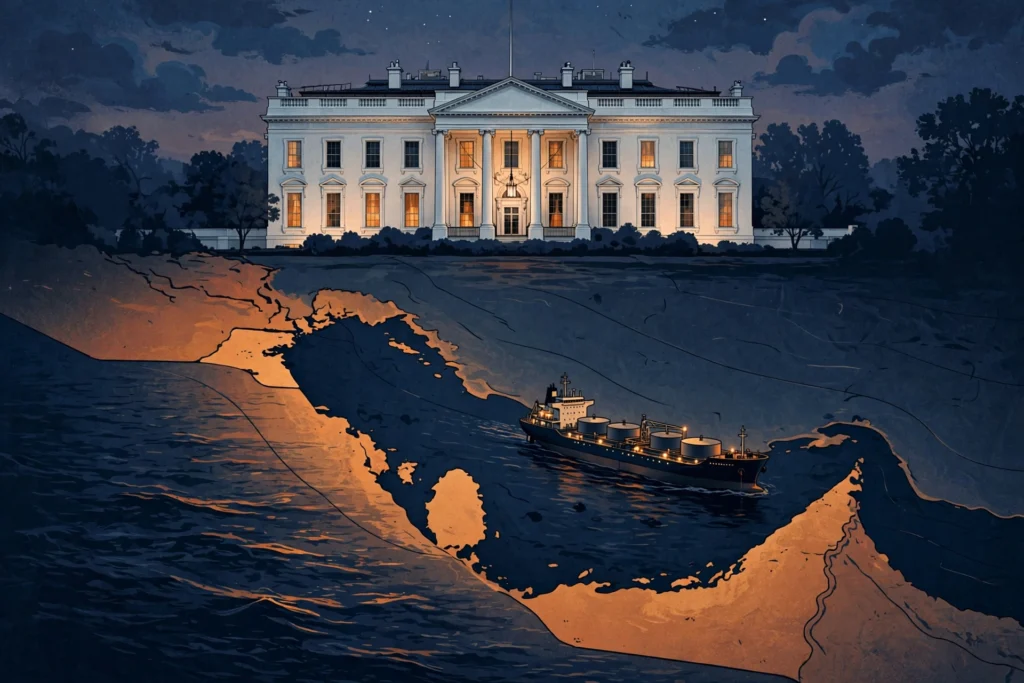
“We don’t need a deal with Iran. Those days have long since passed,” Trump wrote. “We’ve got their money, Hundreds of Billions of Dollars, and we’ve got their Strait!” The reference was to the Strait of Hormuz, the narrow shipping route at the center of the conflict, which American warships have patrolled under a blockade for months.
In the same post, Trump said he had asked Vance to focus “his complete and total attention” on “the Massive Corruption and Crime taking place in Democrat run Cities and States throughout the U.S.” The instruction sidelines the vice president from the main foreign policy challenge of his tenure and injects fresh uncertainty into a war that has already run for most of the year. A White House official said on Thursday that the United States remains in a “very strong position” in its standoff with Tehran, citing the naval blockade and American control of the strait — even as the waterway itself showed fresh signs of strain.
The announcement came in a flurry of early-morning posts in which Trump also threatened to double tariffs on Mexico and attacked Democratic lawmakers. The Iran decision, though, was the most consequential item in the burst of messages: it closes the channel that had been the administration’s main route toward ending a war that began in February, and it reassigns the man who built that channel to a domestic political mission.
JD Vance’s Role in the Iran Talks
JD Vance news has centered on the vice president’s unusual brief for much of this year. He was appointed the lead American negotiator in the war with Iran, and he oversaw the backchannel contacts with Tehran that the administration hoped would produce a settlement. In April, he led a United States delegation to Islamabad for talks aimed at ending the fighting, sitting through a marathon session that ended without any resolution. A memorandum agreed in June paused the war, but it broke down within weeks, and efforts to reach a permanent settlement have stalled ever since.
Vance kept working the file through the autumn. In October, he wrote to Mohsen Rezaei, the hard-line secretary of Iran’s Supreme National Security Council, requesting a meeting. Then, on Wednesday, The Wall Street Journal reported that Vance was considering face-to-face talks with Rezaei as part of a fresh push to end the war. The report landed less than a day before Trump shut the effort down.
Rezaei, for his part, had already pushed back in public. On Tuesday, he said he had no plans to meet Vance and denied that negotiations were under way. His rejection left the proposed meeting in doubt before the president’s post removed it from the table entirely. For now, no meeting between Vance and Rezaei is scheduled, and no new talks are planned.
The vice president’s own views add another layer to the story. According to The New York Times, Vance had privately expressed opposition to going to war with Iran, and he led the negotiations earlier this year even as others in the administration pressed for a harder line. That history makes his removal from the file striking: the official who argued against the war, and who then carried the diplomacy meant to end it, has been told to stop.
Vance’s standing inside the party gives the reassignment a longer shadow. A Reuters/Ipsos poll published this week found that Vance is among the small group of names leading early attention in the 2028 White House race, alongside Secretary of State Marco Rubio and Democrats Jon Ossoff and Pete Buttigieg. Whatever he does next will be watched as a signal of where the administration, and the party’s future, is heading.
Why the Iran War News Shifted So Fast
The Iran war news changed quickly because the president’s own signals had pointed in the opposite direction only days earlier. Trump had recently suggested that a settlement with Tehran was close, and the reports of a possible Vance-Rezaei meeting fed the sense that a new round of diplomacy was taking shape. Thursday’s post reversed that direction in a single message, replacing the prospect of talks with a declaration that talks were unnecessary.
Secretary of State Marco Rubio had sketched the choice facing the president when he spoke to his counterparts from the Group of Seven in Paris on Tuesday. According to an account of that meeting, Rubio said Trump had considered resuming the war or cutting a deal, but had settled instead on strangling the Iranian regime — keeping the economic and military pressure in place rather than trading it away for an agreement. Thursday’s post fits that account: pressure, not negotiation, is the policy.
Yet the president sent mixed signals even on the day he closed the door. Later on Thursday, he conceded in an interview that it would be a “defeat” to walk away with Iran’s current regime still in power. He told reporters that taking military action “doesn’t seem to be a very necessary thing” while maintaining that the United States was “locked and loaded, ready to go.” The combination — no deal, no war, maximum pressure — leaves the administration’s endgame unclear, and it leaves allies and adversaries alike guessing about what comes next.
The timing also reflects the politics of the moment. The decision arrived just days after Republicans suffered heavy losses in the midterm elections on November 3, losing control of both the House and the Senate and suffering widespread defeats amid voter dissatisfaction with Trump’s handling of the economy and the war in Iran. Redirecting the vice president toward alleged corruption in Democratic-run jurisdictions gives the administration a domestic fight to wage while the foreign one sits unresolved.
The Strait of Hormuz and the Price of Pressure
At the heart of the president’s argument is the Strait of Hormuz, the shipping lane through which a large share of the world’s seaborne oil passes. Trump says the United States already holds what it needs: Iranian money, in his telling worth hundreds of billions of dollars, and the strait itself. The American position rests on a naval blockade of Iranian ports and the escorting of tankers through waters Iran has sought to close.
The war began in February, when the United States and Israel launched joint strikes on Iran. Tehran responded by closing the Strait of Hormuz to shipping, a move that sent energy prices spiking around the world. Since then, oil shipments through the waterway have recovered to near prewar levels, but tankers now rely on United States Navy escorts to navigate safely, and the route remains a flashpoint.
Iran has set a high price for returning to talks. Tehran has said it will not come back to the table unless the United States lifts its naval blockade, releases frozen assets, and eases oil sanctions. Rezaei went further this week, saying that for the strait to reopen, Washington must accept seven core Iranian positions, including the lifting of the blockade, the removal of sanctions, reparations for war damage, and an Israeli withdrawal from Lebanon. Iran’s parliament speaker, Mohammad Bagher Ghalibaf, told Al Jazeera on Wednesday that the strait would “never return” to its pre-war status.
The waterway underlined its dangers on Thursday itself. Four oil tankers were hit by explosions in the Strait of Hormuz, Iran’s military said, adding that the vessels had ignored warnings and entered what it considers restricted areas of the strategic waterway. Brent crude held near 96 dollars a barrel as the news spread, a reminder that the conflict still carries a direct cost for energy markets even while the diplomacy stands still.
Midterm Elections 2026 and the Domestic Turn
The order sending Vance after domestic corruption cannot be separated from the midterm elections of 2026. Last week’s vote delivered a rebuke to the administration: Republicans lost both chambers of Congress, and the results were widely read as a verdict on the cost of living and on a war that voters had not signed up for. Trump has answered that rebuke by turning inward, and Vance is the instrument of that turn.
The president named Minnesota, California, and Illinois among the states he wants investigated, and his post directed Vance to devote his “complete and total attention” to the task. The assignment is open-ended: no targets, charges, or timeline were spelled out, and the White House has not explained whether Vance will work through the Justice Department, through Congress, or through public pressure. What is clear is that the vice president’s days will now be spent on a domestic political campaign rather than on the backchannel with Tehran.
The shift also fits a pattern in how Trump uses his platform. His Thursday morning posts moved from the Mexico tariff threat to the Iran decision to attacks on Democratic lawmakers in the space of a few hours, each message setting the day’s agenda on its own. The Vance announcement was the one with the longest consequences, but it arrived as part of a broader effort to change the subject from the midterm losses to the president’s chosen fights.
What Happens Next for the Trump Administration
The immediate question is who, if anyone, now owns the Iran file. The president did not explain whether Vance would continue to take part in any ongoing diplomatic contacts, or whether negotiations would be handled exclusively by other senior administration officials. With no meeting scheduled and no new talks planned, the channel that Vance built — the October letter, the Islamabad trip, the June memorandum — is idle, and there is no public sign of a replacement track.
The pressure campaign, meanwhile, goes on. The naval blockade remains in force, the sanctions stay in place, and the frozen assets remain frozen. Iran’s conditions for returning to talks have not moved, and its officials have hardened their public language rather than softening it. If either side wants to reopen the channel, it will have to do so against the stated positions of both governments.
What to watch in the coming days is whether the mixed signals harden into a settled policy. If the administration keeps the blockade tight while refusing talks, the risk is a slow drift toward another clash in the strait, where tankers, warships, and missile batteries operate in close quarters. If the president’s later remark — that walking away with the current regime in power would be a “defeat” — turns into a new push for a settlement, then Vance’s removal may prove temporary, and the diplomat who built the channel may be asked to rebuild it.
Source: The Washington Post