Iran War News: Trump Keeps Status Quo, No New Strikes
The latest iran war news from Washington marks the clearest turn yet in a conflict that has dragged on for more than eight months. President Donald Trump said on Monday that the war in Iran is, in his words, effectively over from a military standpoint, and that the United States will hold the current position rather than resume large-scale strikes. Speaking during a surprise appearance in the White House briefing room, the president said there was no need for a new round of bombing, even as he insisted that American forces remain ready to act if circumstances change. The message was one of deliberate restraint: the fighting is paused, the pressure stays on, and the door to a deal remains open.
The remarks came hours after Trump met at the White House with the prime minister of Qatar, Sheikh Mohammed bin Abdulrahman Al Thani, whose government has been acting as the main mediator between Washington and Tehran. They also followed a telephone interview with CNN on Sunday in which the president repeatedly said renewed attacks were highly unlikely, provided negotiations made progress and Iran signed what he called a very strong agreement. Taken together, the two days of statements amount to the most definite signal yet that the president intends to wind the war down rather than escalate it, a shift that has already moved oil prices and eased fears of a wider regional conflict.
What Trump Said in the Briefing Room
Trump walked into the White House briefing room unannounced on Monday afternoon, shortly after his meeting with the Qatari leader, and delivered his assessment of the war in blunt terms. He said Iran's military had been effectively finished as a fighting force, and that the United States was simply holding the line it already has. The country had been decapitated, he said, using a word he has applied before to describe the damage done to Iran's military leadership and capabilities. He added that there was positive momentum toward ending the conflict, a phrase that suggested the diplomacy, however slow, was moving in a direction he liked.
The president was careful not to rule out force entirely. He said the military option did not look necessary at this point, but that American forces were locked and loaded and ready to move for any reason that changed. That pairing of reassurance and warning has been a constant in his handling of the war: the strikes are off the table for now, but the capability to resume them is on full display. It is a posture designed to keep pressure on Tehran while giving the negotiations room to work, and to reassure an audience at home that has grown weary of the conflict.
The Gulf Allies Behind the Status Quo
A central part of the president's argument on Monday was that the countries around Iran want the current arrangement to continue. After his meeting with the Qatari prime minister, Trump posted on his Truth Social platform that Qatar, Saudi Arabia, the United Arab Emirates, Bahrain, Kuwait and other countries in the region would prefer the status quo to continue. He framed that preference as support for keeping the naval blockade in place and for the land measures he has described as part of a new operation, writing that the arrangement would continue by land and sea.
The post also restated the one condition Trump has described as non-negotiable: all of the countries involved have agreed that Iran cannot have a nuclear weapon, and that point is not open to discussion. That red line has been the throughline of the administration's position from the start of the war, and the president has said repeatedly that he is looking for a long-term solution on that question, not a temporary pause. The Gulf states' backing gives him a regional coalition to point to when he says the pressure campaign has their support.
The Sunday Interview: 'Highly Unlikely'
The groundwork for Monday's declaration was laid on Sunday, when Trump gave a twenty-minute telephone interview to CNN. In that conversation, he said five separate times that it was highly unlikely he would need to order the United States back to war with Iran, provided there was progress in negotiations over Tehran's nuclear program and the reopening of the Strait of Hormuz. The condition mattered as much as the promise: the president tied his restraint to a deal, and to Iran signing what he called a very strong agreement.
Trump's language in the interview was characteristically forceful. He described Iran as a failing nation, pointed to inflation running at 301 percent, and said the country was withering away financially. He said the United States had hit Iran very hard in the fighting so far, and that it could finish the job if it chose to. But he also said Iran wanted to make a deal badly, and that the most likely outcome was that new military action would simply not be necessary. The repetition was clearly deliberate.
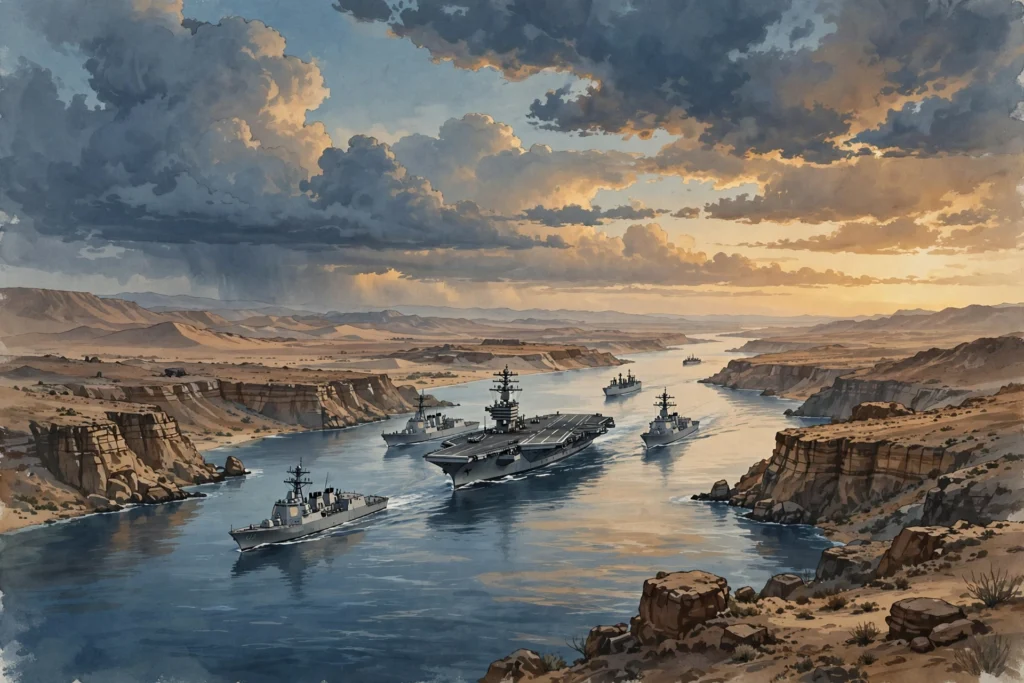
The interview also produced new details about the state of Iran's remaining military capacity. Trump said Iran's air defenses had been destroyed, leaving the country with no anti-aircraft capability to defend against new strikes. He said Tehran retained only about 10 percent of its missile capacity and about 15 percent of its drone capabilities, because much of its factory infrastructure was gone. He also said the United States had three aircraft carriers in the region, fully locked and loaded, and that it had identified infrastructure targets including 38 bridges that could be knocked down within an hour if military action resumed.
Eight Months of War and a $47 Billion Bill
The status-quo declaration lands after a war that has lasted far longer than the president originally promised. Trump began the war against Iran in February, alongside Israel, and said at the time that it would be concluded in a matter of weeks. Instead, the conflict has now run for more than eight months, settling into a stalemate of intermittent strikes and off-and-on mediation, with neither side able to impose a decisive outcome and neither side willing to accept the other's terms. The two nations signed a memorandum of understanding in June, but that document did not end the fighting, and the months since have brought more strikes, more mediation, and more warnings of escalation.
The costs of the war have been substantial. The Pentagon's latest estimate put the cost to the United States military at more than $47 billion as of October 16, covering the deployment of ships, aircraft and troops to the region and the munitions expended in the fighting. The economic effects have reached well beyond the military budget: the conflict caused gasoline prices to spike at home, and it has disrupted shipping through the Strait of Hormuz, the narrow waterway through which a large share of the world's oil passes. American forces have continued to escort ships through the strait, and the administration has said its recent strikes, including operations against targets on Qeshm Island, were aimed at preventing Iranian surface-to-air missiles from hitting American assets in the region.
As recently as last week, the president was warning that the United States could bomb Pickaxe Mountain, the site where Iran's enriched uranium is believed to be buried underground. Then, in his interview with the CBS program 60 Minutes, he said he saw no reason to strike Iran again, arguing that the nuclear material was trapped under thousands of tons of rock. The shift from threatening to bomb the mountain to declaring the material safely buried captures the arc of the last few days: from escalation to restraint, from warnings to a declaration that the war is effectively over.
Oil Prices Fall as Markets Read the Signal
The markets responded quickly to the president's change of tone. Oil prices edged lower on Tuesday, extending losses from the previous day, after Trump said military action against Iran was not necessary at this point. Brent crude futures fell 24 cents, or 0.23 percent, to $92.33 a barrel, while United States West Texas Intermediate futures fell 35 cents, or 0.40 percent, to $86.50 a barrel. The moves were modest in themselves, but they pointed in a clear direction: traders were pricing out the risk of a wider war that would disrupt Middle East supply.
Market watchers said the president's more conciliatory tone since the midterm elections was the main driver of the decline. Attacks on shipping around the Strait of Hormuz have continued, but Reuters reported that they have not escalated in a way that has forced a fresh risk premium into the market, and traders have taken the view that the conflict is contained for now. The oil market's verdict matters because it is one of the fastest barometers of how the world reads American intentions in the Gulf. When prices fall on a president's words, it means the world believes him, at least for the moment.
The Politics at Home
The political backdrop to the status-quo declaration is impossible to ignore. The war has become deeply unpopular at home, and the midterm elections held last week underscored that unpopularity when Republicans suffered significant losses. The president himself acknowledged the political cost in the run-up to the vote, saying he faced a big decision on whether to resume large-scale strikes or pursue a peace agreement. Voter resentment over the war, the cost of the conflict, and the spike in gasoline prices all fed into a result that has reshaped the political landscape and narrowed the administration's room for maneuver.
The politics of the war have also drawn scrutiny in Congress, where the conflict has put the Pentagon's leadership under pressure. The administration's handling of the war, including the cost and the open-ended nature of the commitment, has become a point of contention on Capitol Hill, and the president's decision to step back from escalation can be read as a response to that pressure as much as to the diplomacy. A war that was supposed to last weeks has lasted eight months, and the voters have now had their say on that record.
What Happens Next
The first test of the status quo will be whether the diplomacy produces anything. The president has conditioned his restraint on progress in negotiations and on Iran signing a strong agreement covering its nuclear program and the reopening of the Strait of Hormuz. The talks, mediated by Qatar, have made little progress so far, and the secretary of state has said publicly that he does not see an imminent breakthrough. If the negotiations stall again, the president's conditional promise will be tested, and the question will be whether he treats a lack of progress as a reason to resume strikes or as a reason to keep waiting.
The second test will be on the water. The naval blockade will continue, American ships will continue to escort tankers through the strait, and Iranian attacks on shipping are still occurring. If those attacks escalate, or if an American asset is hit, the president's "locked and loaded" warning will come into play, and the status quo could unravel quickly. The administration has said its recent limited strikes, including at least two against Iran's air defenses in the past week, were responses to exactly that kind of threat, and the pattern suggests limited action will continue even while large-scale strikes are off the table.
Source: The Washington Post