Health Insurance News: Trump Shares ‘TrumpCare’ Plan
The latest health insurance news out of Washington is a social media moment nobody in either party saw coming a month ago. President Donald Trump used his Truth Social account on Saturday to share a proposal from a Democrat who has spent much of the year attacking him: Michigan senator-elect Abdul El-Sayed's plan to guarantee health coverage to every American and call the programme "TrumpCare." The president reposted El-Sayed's message, complete with images of a gold insurance card styled after the administration's own Trump Gold Card, giving the biggest possible platform to an idea his own White House had dismissed days earlier.
El-Sayed, a physician and former public health official who won Michigan's Senate seat in this month's midterm elections, has spent two weeks trying to recruit the president to a cause the president's party has opposed for years: a government-run system covering every American. His tactic has been deliberately flattering. Rather than arguing policy, he has offered Trump the one thing the president has never resisted: putting his name on something big. Until Saturday, the White House had answered with a flat rejection. The president's decision to share the proposal does not change that rejection, but it changes the conversation, and it leaves a question for the new Congress: was this a joke, a troll, or the beginning of a deal?
Truth Social News: What the Gold 'TrumpCare' Card Proposes
The proposal is simple to describe, even if the politics are anything but. El-Sayed wants the United States to guarantee health coverage to every American, from birth to death, through a single government-financed system. It is a version of Medicare for All, the idea championed for years by Senator Bernie Sanders and the progressive wing of the Democratic Party. Under it, most private health insurance would be replaced by public coverage, and Americans would no longer pay premiums, copays, or deductibles to see a doctor or fill a prescription. El-Sayed has said openly the care would not be free in the strict sense, acknowledging it would mean paying somewhat more in taxes, but his argument is that the trade is worth it: no one would go without care because they cannot afford it.
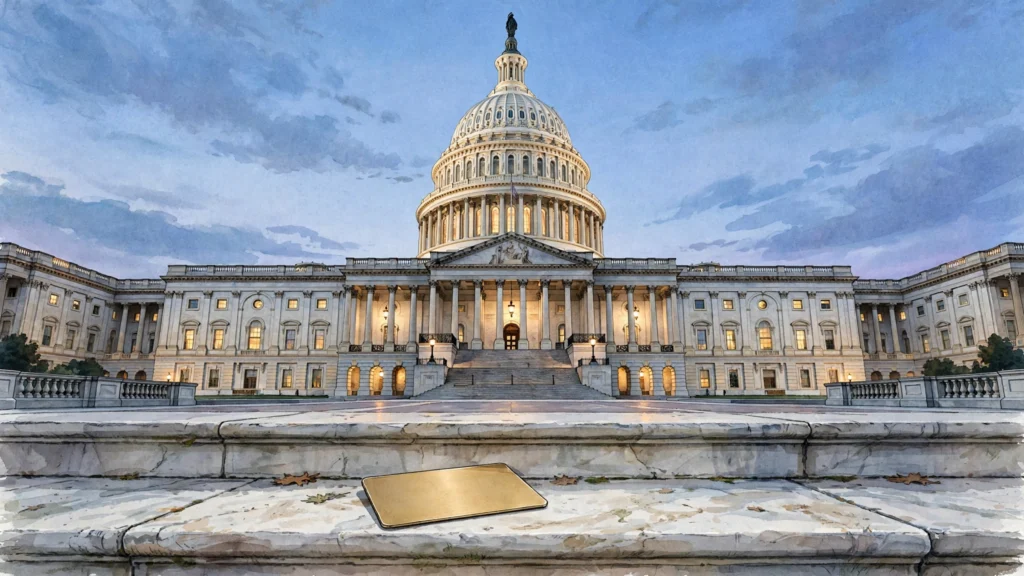
What makes this version different is the packaging. On November 12, El-Sayed posted a message addressed directly to the president, writing that the offer was on the table and asking Trump to guarantee health care for every American, from cradle to grave. The post included images of a gold card labelled "TrumpCare," designed to look like a bank card in a wallet, complete with an eagle emblem and the president's name and signature. The design deliberately echoed the Trump Gold Card, the administration's programme offering fast-tracked American residency to buyers willing to pay one million dollars. El-Sayed's point was visual and immediate: the president already has a gold card for wealthy newcomers, so why not one guaranteeing health care for every American? The post spread fast, and an archive of the president's social media activity records it has been viewed more than 11 million times.
Democratic Party News: A Pitch That Began on November 12
The repost did not come out of nowhere. It was the third step in a short, staged campaign that began on November 12 with the gold card post and continued five days later with a video that was even more direct. In that 16-second clip, posted on November 17, El-Sayed addressed the president by name and opened with an Arabic term of affection, noting that the midterms had been rough for the president's party. Then he made the pitch again: TrumpCare for All, he said, is really popular, people really want health care, and the president could put his name all over it.
The timing mattered as much as the tone. On November 18, Representative Hakeem Jeffries, the Democrat chosen to lead the next House as speaker, told reporters the first thing the new Congress must do is fix a broken health care system, naming lower costs, restored tax credits for people who buy coverage through the Affordable Care Act, and a reversal of cuts to Medicaid funding. Two days later, on November 20, Trump held a news conference and said he was open to working with the Democrats on health care, arguing the result could be better than dealing with his own party alone and that a bipartisan bill would have tremendous Republican support. El-Sayed responded within hours, asking simply whether the president meant TrumpCare for All. The president's repost the following day was the answer, or at least the beginning of one.
White House News: The Rejection That Came First
For all the attention the repost has drawn, the administration's official position has not changed, and it was stated in blunt terms before the president shared anything. On November 17, the same day El-Sayed posted his video, White House spokeswoman Allison Schuster told Fox News Digital the proposal should really be called Medicare for None, arguing a government takeover of health care would destroy access to the life-saving care Americans rely on every day.
The White House also put numbers behind its objection. It pointed to an analysis by the Council of Economic Advisers, the president's own economic advisory body, which estimated that a Medicare for All system would increase the federal budget deficit by approximately 47.4 trillion dollars between 2027 and 2036 if no additional taxes or revenues were raised to pay for it. The same analysis projected the change would move large numbers of Americans out of employer-sponsored insurance into a new government-run system, a shift the administration argues would disrupt coverage most working Americans currently have and value. But the administration has used the figure as its central argument, and the president's repost sits awkwardly against it: a president does not normally amplify a proposal his spokeswoman has just denounced, and he added no comment of his own when he shared it.
Medicare News: What Medicare for All Would Actually Change
To understand why the proposal matters, it helps to understand what it would actually do, because the name on the card is the least important part of it. Medicare for All would replace most of the current patchwork of private insurance, employer plans, and public programmes with a single national system financed by the federal government. Every American would be covered for doctor visits, hospital stays, prescriptions, and other care, without paying a premium to an insurer or a copay at the point of service. The government would pay providers directly, and the private insurance industry as it exists today would largely disappear. Supporters say this would end the situation in which people skip care because of cost or lose coverage when they lose a job. Critics say it would cost far more than its supporters admit and take away plans many Americans are satisfied with.
The debate is not new, and the numbers are genuinely large. The Council of Economic Advisers' estimate of 47.4 trillion dollars in additional deficits over a decade is one of the biggest figures in American public policy. But it also shows why the argument never ends: it measures only the government's new spending, not the money households and employers would stop paying to insurers. There is no bill called TrumpCare, no draft text, and no coalition in Congress behind it. El-Sayed does not take office until January, and many of his colleagues favour more modest changes, such as restoring the Affordable Care Act tax credits and reversing Medicaid cuts, rather than replacing the system entirely.
Midterm Elections 2026: Why Health Care Leads the New Congress
The repost also has to be read in the context of the election that made it possible. In this month's midterm elections, Democrats won significant majorities in both chambers of Congress, taking control of the House of Representatives and the Senate along with several key governorships. The new Congress will be seated on January 3, 2027, and from that day the president will face a legislature controlled by the opposition party for the final two years of his time in the White House. Health care was the issue Democrats campaigned on most, and it is the issue their leaders have put first.
Trump's own remarks this week suggest he understands that. At his November 20 news conference, flanked by Vice President JD Vance, Secretary of State Marco Rubio, and White House Chief of Staff Stephen Miller, he described his veto power as a starting point for negotiation rather than simply a roadblock, and he said Democrats would send him bills and he would veto them until they started asking what changes would be needed to win his signature. He then named health care as the area where a deal might be possible, saying the country could end up with great health care and could end up better than dealing with just the Republicans. The vice president has struck a warmer note too: in a Fox News interview, Vance said that if El-Sayed wanted to make people's lives better, he would find a very much willing partner in the administration. None of this amounts to a negotiation, but taken together, these remarks suggest health care is the one subject where the two sides are at least talking about talking.
What Happens Next
For now, the gold card remains a pitch, not a programme, and the most likely outcome is that nothing concrete follows from a single social media post. El-Sayed takes office in January, and his first months will be spent learning the Senate and deciding how hard to push an idea many colleagues regard as a long-term goal rather than an immediate priority. The White House has already rejected the proposal once, and the president's repost came without any words of endorsement or explanation. But the episode has already changed something: it has given universal coverage a hearing from a president who has spent a decade promising to replace the Affordable Care Act without ever producing a plan of his own. Whether that turns into influence depends on what happens when the new Congress meets in January, when the tax credit and Medicaid fights arrive in earnest, and when the president has to decide whether his talk of a deal was serious. The question El-Sayed keeps asking is the one he put on the gold card: is the offer on the table? The president has now shared the question with millions of his followers. The answer, for the moment, is still unwritten.
Source: Anadolu Ajansı