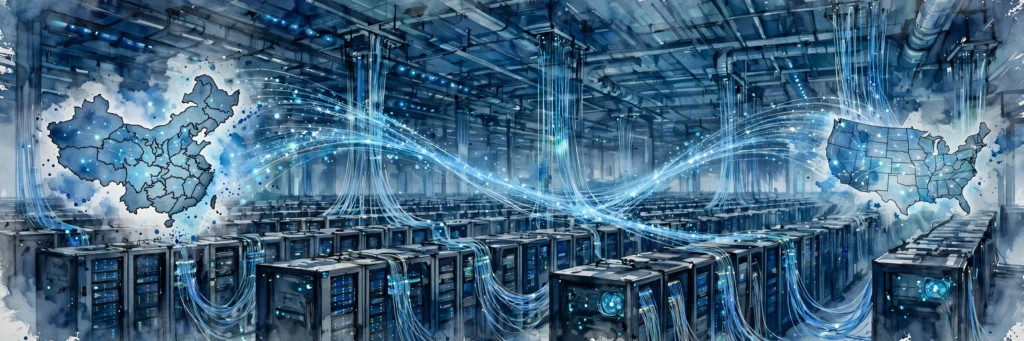
Data Center News: Trump Pushes China Equipment Curb
The Trump administration is pressing ahead with a plan to block imports of Chinese data center equipment, despite a concerted lobbying campaign by Amazon, Google, Meta and other American technology companies, according to a Reuters exclusive published on Tuesday. People briefed on the deliberations said the measure, which would bar new models of Chinese optical transceivers from entering the United States, is moving forward even though the companies warned White House officials that replacing the Chinese hardware could take as long as a decade. The data center news lands at a moment when Washington's approach to Chinese technology is hardening again, driven in part by the scandal engulfing Nvidia and its former chief executive, and it sets up a direct clash between national security hawks in the administration and the companies that build and run the data centers powering America's artificial intelligence boom.
Reuters first reported in August that the Federal Communications Commission was seeking to ban imports of new models of Chinese optical transceivers, the small components that allow data to travel over fiber-optic cables at the speed of light inside data centers. The devices are easy to overlook, but they sit at the heart of every modern data center, shuttling enormous volumes of information between servers, storage systems and the networks that connect them. Without them, the facilities that train AI models, host cloud services and process search queries simply do not work. The FCC's concern, according to people familiar with the matter, is that the components could be used by Beijing to steal data, install malware or disrupt service at American data centers. That is the national security case for the ban, and it is one that China hawks in Washington have been making with growing urgency.
What was not previously known is how hard the American technology industry has fought the measure, or how close it came to being shelved. Amazon, Google, Meta, CoreWeave and Cisco joined Microsoft in a meeting with White House officials earlier this year to argue against the ban, according to two people briefed on the meeting. The executives told the officials that American firms could need up to a decade to comply with any such mandate, because Chinese suppliers dominate the market so completely that there is no ready alternative at the scale the industry needs. The lobbying raised real doubts inside the administration about whether the measure would ever go ahead. But it is moving forward, three additional people familiar with the matter said, speaking on condition of anonymity because the deliberations are private. The FCC, Amazon, Google, Meta, CoreWeave and Cisco did not respond to requests for comment. Microsoft declined to comment. A White House official declined to comment on the lobbying or the measure's progress, but said recent FCC actions barring Chinese technology and other foreign equipment had resulted in billions of dollars of investment in American manufacturing, and thousands of new American jobs.
What the FCC Plan Would Block
The components at the centre of the dispute are optical transceivers, the devices that convert electrical signals into pulses of light and back again so that data can race through fiber-optic cables inside a data center. A single large facility can contain hundreds of thousands of them, and the newest AI data centers, with their dense clusters of graphics processors training the largest models, need the fastest and most advanced versions available. The FCC's proposal would ban imports of new models of Chinese-made transceivers, which would stop the newest Chinese components from entering the American market while leaving existing installations in place. It is a narrower step than a blanket ban on all Chinese equipment, but for an industry that is building data centers at a historic pace, the supply of next-generation components matters enormously.
The national security argument rests on the position these components occupy. Because transceivers sit inside the pathways that carry data between machines, officials worry that compromised hardware could be used to intercept information, plant malicious software or cut off service at a critical moment. China hawks in Washington have argued that the risk is not theoretical, pointing to years of warnings from American intelligence agencies about the dangers of relying on Chinese-made technology in sensitive infrastructure. The same logic has already driven the FCC to bar imports of new models of Chinese drones, robots, power inverters and routers over the past year, a record of action that the White House official cited when defending the approach. Supporters of the ban say data centers, which now hold the computing power behind the country's AI ambitions, are too important to leave exposed to hardware that Beijing could exploit.
The industry's counter-argument is practical rather than political. The companies that operate America's data centers say they cannot simply switch suppliers, because the Chinese firms that make these components have spent years building the scale, the manufacturing capacity and the technical expertise that no American company currently matches. A ban on new models would force them to redesign procurement plans, requalify suppliers and rebuild supply chains, all while they are racing to add capacity for AI workloads that are growing faster than anyone predicted. The executives who met White House officials put a number on that disruption: up to a decade to comply fully.
Why Amazon, Google and Meta Are Pushing Back
The companies lined up against the measure are not minor players. Amazon, Google and Meta operate three of the largest cloud and data center networks in the world, and together with Microsoft they account for a huge share of global spending on data center equipment. CoreWeave, a fast-growing provider of AI computing capacity, and Cisco, one of the biggest makers of networking gear, joined them in the White House meeting, a sign of how broadly the industry's concern runs. These are the companies building the facilities that the Trump administration has championed as the physical foundation of American AI leadership, and they are telling the government that its own security policy could slow that build-out down.
Their warning about a decade-long transition is rooted in the structure of the market. Optical transceivers are a high-volume, low-margin business where scale is everything, and Chinese manufacturers have spent years consolidating their position. The two largest, Eoptolink and Zhongji Innolight, count the top American hyperscalers among their customers, which means the very companies now lobbying against the ban are also among the biggest buyers of the components it would block. Replacing that supply would require American or allied manufacturers to build new factories, hire and train workers, and ramp up production to a scale they have never attempted, all while the demand for the components keeps rising. The companies argue that the ban would raise costs, delay construction and hand an advantage to rivals abroad who face no such restrictions.
The industry also raised a more pointed threat in the White House meeting: retaliation. According to one of the people briefed on the discussions, the American firms warned that China could respond by banning exports of indium phosphide, a critical mineral needed to produce optical transceivers in the United States. The warning captures the awkward reality of the supply chain. Even the components that American companies might build at home depend on materials that China controls, which means a ban designed to reduce dependence on Beijing could, in the short term, make American manufacturers more vulnerable to it. That is the kind of second-order consequence that has made officials hesitate, and it is one reason the measure's fate was in doubt until now.
China Dominates the Market for Optical Transceivers
The numbers explain why the industry is so nervous. China holds roughly two-thirds of the global market for optical transceivers, according to Counterpoint Research, a dominance built on years of investment, aggressive pricing and the sheer scale of Chinese manufacturing. The two leading Chinese firms, Eoptolink and Zhongji Innolight, supply the biggest American technology companies, and Innolight has been added to the Pentagon's list of Chinese military-backed companies, a designation that reflects Washington's view of the links between China's technology sector and its armed forces. For the American companies that buy from them, the relationship is a commercial one, built on price, performance and reliability. For the hawks in Washington, it is a security exposure hiding in plain sight.
American alternatives exist, but they are not yet ready to carry the load. US-based Coherent and Lumentum produce technology that competes with the Chinese firms, but they lack the scale to replace Chinese vendors, according to a report by the Foundation for American Innovation. That gap is the central problem the ban would have to solve. The administration's argument is that cutting off Chinese supply would force investment into American manufacturing, creating the factories and the jobs that the White House official pointed to when defending the FCC's earlier actions. The industry's argument is that the investment would take years to pay off, and that in the meantime, data center construction would slow, costs would rise and the AI build-out that the administration celebrates would stall. Both sides are, in effect, describing the same transition. They disagree about whether the country can afford to make it, and how fast.
The debate also sits inside a larger contest over who controls the hardware of the AI age. Optical transceivers are only one piece of a vast supply chain that runs from rare minerals through semiconductors to the finished data centers, and China holds strong positions in several of those links. The Trump administration's move against transceivers is part of a broader effort to reduce that dependence, but each step creates friction with the companies that actually build the infrastructure.
The Huang Revelations and the Harder Line on China
The push for stronger action comes as revelations about Nvidia's former chief executive, Jensen Huang, have fuelled renewed calls in Washington for a tougher stance against Chinese technology threats. Reports of Huang's affair with an alleged Chinese spy have put the chipmaker, and the flow of American AI technology to China, under a harsh new spotlight. The revelations have added to the pressure on the administration by drawing attention to cases of Nvidia AI chips being smuggled to China that went unaddressed by the Commerce Department, according to Reuters. The scandal has turned what might have been a technical debate about components into a political argument about whether Washington has been tough enough on Beijing, and it has given the hawks inside the administration a powerful new argument.
The timing is significant. On Monday, the Trump administration said it would restrict shipments of advanced chips from companies such as Nvidia to data centers in Southeast Asia, which Chinese companies have used to access computing power to train AI models. The rule identifies Singapore, Thailand, Malaysia, Indonesia and Brazil as countries where advanced chips are at higher risk of being diverted to China, and shares of data center and chip supply chain companies in Southeast Asia tumbled on Tuesday in response. The measure is a separate action from the FCC's transceiver plan, but the two point in the same direction: a tightening web of controls aimed at keeping advanced computing power, and the hardware that supports it, out of Beijing's reach. Together, they suggest that the administration's China policy is moving in a harder direction, even as the president himself has taken a more conciliatory public tone.
Nvidia itself is now at the centre of the storm. The company's board is not considering reinstating Huang as chief executive, according to CNBC, and the chipmaker reports its quarterly earnings after the market closes on Tuesday, its first results since Huang stepped down. The board has also established a new National Security and Export Controls Committee, its first formal compliance overhaul since the resignation, and the Commerce Department has confirmed that it began investigating the alleged diversion of chips through a company called Megaspeed in 2024. For the administration, the Nvidia affair is both a problem and an opportunity: a scandal that embarrasses a flagship American company, and a justification for the tougher measures that the hawks have been pushing all along.
An Administration Split on China
The transceiver ban also exposes a split inside the administration's approach to Beijing. Trump has taken a more dovish approach to China in his second term, as he faces down Beijing's export controls on rare-earth minerals, which underpin technology manufacturing everywhere. The president is due to meet China's leader, Xi Jinping, in Shenzhen, and the administration has been careful not to let technology disputes derail the broader relationship. Rare earths are the leverage Beijing holds over Washington, and Trump has been reluctant to escalate in ways that might provoke a further tightening of those controls. That caution is one reason the transceiver measure was in doubt, and one reason the industry's lobbying found a receptive audience in parts of the White House.
The FCC, however, has been a notable exception to that caution. Over the past year, the commission has successfully barred imports of new models of Chinese drones, robots, power inverters and routers, building a record of action that stands apart from the administration's more conciliatory posture elsewhere. The transceiver ban would extend that record into the heart of the AI infrastructure, and its survival suggests that the security agencies and the hawks have the upper hand on this particular question, whatever the president's broader instincts. It is a pattern familiar from the first Trump administration, where trade hawks and China doves competed for the president's ear, and where the outcome often depended on which faction had the most recent hearing.
The question now is whether the ban survives the next stage of the process. The deliberations are private, and the measure has not yet been formally announced. The companies that lobbied against it have not given up, and the prospect of Chinese retaliation over indium phosphide gives them a strong argument for delay or for a longer transition period. But the momentum has shifted. Three people familiar with the matter told Reuters that the measure is moving forward, and the political climate, hardened by the Nvidia scandal and the new Southeast Asia chip curbs, is more favourable to action than it was even a few months ago.
What Happens Next
The immediate next step is a formal decision from the FCC, which would set out the scope of the ban, the timetable for compliance and any exemptions for existing equipment. The details will matter enormously. A ban that applies only to new models, with a generous transition period, would be disruptive but manageable. A broader ban, or a short deadline, would be far harder for the industry to absorb, and would test the companies' warning that compliance could take a decade. The industry will also be watching for any sign of the retaliation it warned about, and for whether the administration pairs the ban with support for domestic manufacturers such as Coherent and Lumentum, whose ability to scale up will determine whether the policy succeeds or simply raises costs.
Longer term, the transceiver fight is a preview of the decisions the administration will face across the whole technology supply chain. Data centers are only the most visible example of an infrastructure that depends on Chinese manufacturing, and the same arguments, about security on one side and cost and capacity on the other, will recur with every component that Washington considers restricting. The companies that build the AI infrastructure want time and alternatives. The hawks want action before the dependence grows any deeper. The Reuters exclusive suggests that, on this occasion at least, the hawks are winning.
Source: Reuters