Celebrity News: Bill Maher Fires Back at Trump’s Rant
Bill Maher has answered Donald Trump. On Friday night’s edition of Real Time, his HBO talk show, the comedian took on the president’s record-length social media attack against him, joking his way through the grievances one by one while insisting that he was not looking for another full-scale feud. The response, delivered five days after Trump’s post, was the moment the feud’s latest chapter had been building towards ever since the president published his 1,323-word denunciation on Sunday night. In celebrity news terms, it was a classic late-night monologue: a host, a printout, and a list of rebuttals, delivered to an audience that already knew the backstory. But it was also an argument, in jokes and in earnest, that two men who have shared meals at the White House can disagree in public without hating each other.
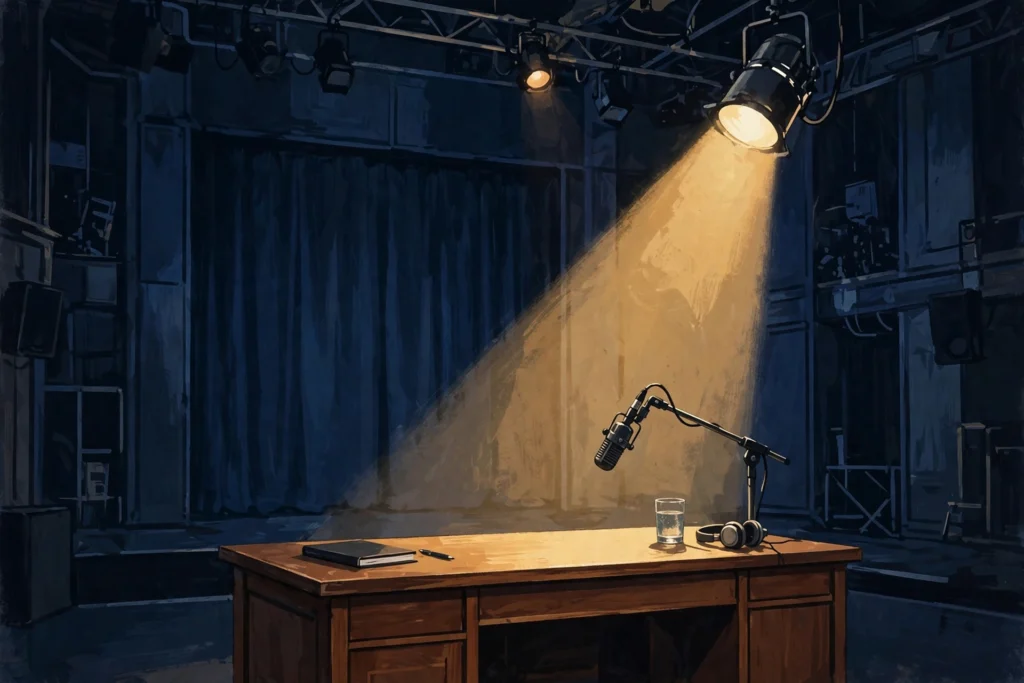
Maher did not ease into the subject. He opened his monologue on Friday, October 30, by holding up the evidence: a three-page printout of the president’s post, which he had brought to the desk to work through. His first guest of the evening was Senator Ted Cruz, and the musician Kid Rock, who helped arrange Maher’s first White House dinner, was also on the show. Before turning to the guests, Maher told Cruz that he was trying not to fight, adding that he could be meaner if he wanted to be. The tone he struck for the rest of the monologue was exactly that: combative in the jokes, conciliatory in the message, and determined to correct the record where he believed the president had got his facts wrong.
Celebrity News: The Friday-Night Answer
The opening joke set the pattern. Maher asked the audience whether they had seen the post the president had sent out, describing it as a thirteen-hundred-word message and calling its length, in effect, a show of strength. It was, by the count of the database that tracks the president’s social media output, the longest post he has ever published out of more than ninety-seven thousand catalogued since 2011, nearly twice as long as his previous record, a seven-hundred-and-twenty-three-word post from May. Maher treated that scale as part of the joke, but it also explained why his response had been so widely anticipated: a post of that length is not a passing insult but an essay, and it demanded an answer.
His best-received lines played on the strangeness of being attacked by a host after accepting his hospitality. Dining at the White House, Maher said, is the opposite of visiting the Cheesecake Factory, because after you leave, they review you. He said the president had gone off on him like Kelly Clarkson in a toy store, a deliberately absurd image that drew on the comedian’s gift for the unexpected comparison. Then came the line that travelled furthest after the show aired, and that gave the night’s coverage its headline. Eating with Trump, Maher said, is like dating Taylor Swift: it is a lot of laughs at the time, but later on they are tearing you a new asshole.
Maher followed the jokes with the serious point he has returned to throughout the row. He said he did not want it to be this way, and explained what he believes the dinners were for: talk, disagreement, and listening, which the president does in person, rather than hatred. Then, he said, he goes back to his job, and the heartaches begin. It was the clearest statement yet of his position, which is that a comedian can accept a president’s invitation, argue with him face to face, and then return to mocking him on television without either act cancelling out the other. The Sunday post suggested the president does not accept that distinction.
TV Show Recaps: Fact-Checking the Rant, Claim by Claim
Maher said at the outset that he would not rebut every one of the post’s thirteen hundred words, but that he did have to address a few of the allegations, and the fact-checking that followed was the most substantive part of the show. He began at the beginning, reading the post’s opening line, which calls him a complete and total loser, and conceding the point with a shrug: the audience could have that one, he said, he would own it.
The first of those concerned Iran. Trump had suggested that Maher did not support disarming Iran, and Maher answered by playing clips of his own earlier remarks in which he had argued exactly the opposite, finishing the compilation with a taunt: so, he asked, am I smart now? The sequence mattered because it went to Maher’s central complaint about the post, which is that the president does not notice what he actually says. Maher has spent years criticising the president on his show, but he has also, at times, agreed with him, and the clips were his evidence that the post had flattened a complicated record into a simple insult. By showing his own words rather than simply asserting them, he turned a denial into a demonstration.
The second rebuttal concerned the telephone. Trump had written that Maher calls him incessantly, and Maher denied it flatly, saying he had never called the president, that the president calls him, and that he would be afraid to call, since the man on the other end is the president and, in Maher’s view, too busy to take such a call. The third concerned the invitation itself. Trump had claimed that Maher invited himself to the White House, and Maher ridiculed the idea, imagining the scene at the door: an announcement that Mr Maher is here, followed by the reply that he is not invited, but that it is the law. The joke landed because nobody walks into the White House uninvited.
Hollywood News: A Feud With a Long History
The row did not begin with the Sunday post. It began, in its latest form, with the Friday edition of Real Time on October 23, Maher’s first episode since dining with the president at the White House on October 15. On that show, Maher had defended his decision to return to the president’s table, telling his critics in blunt terms that he liked the dinners, and explaining that he valued the chance to say face to face the things that critics write in articles the president will never read. He described a president who never lost his temper, never yelled, and never interrupted him during their disagreements, adding that he himself had done the interrupting, and joking that he could not have been treated better if he had been Russian. The episode also featured the former White House press secretary Karoline Leavitt as a guest.
The October 15 dinner was the second time the two men had shared a meal at the White House. The first came in March 2025, arranged with the help of Kid Rock, and it produced a brief thaw that did not survive contact with Maher’s monologue. The second dinner included the sports broadcaster Stephen A. Smith alongside Kid Rock, and Smith described it afterwards as lasting more than four hours, during which the president dodged no questions. Maher repeated that estimate on his show, and it became one of the details Trump seized on in his post, where he insisted the dinner lasted two hours at most, that everybody was happy, that he learned nothing, and that it was a waste of time. The day after the dinner, Trump had struck a very different tone, calling it a great dinner and saying Maher liked him a lot more than people understood. Nine days later, that warmth was gone, replaced by the longest post of his career.
The post itself ranged far beyond the dinner. Trump called Maher a major pothead, a coward and a dumb sleazebag, mocked his low-rated show on what he called equally low-rated HBO, and contrasted it with his own past television success on The Apprentice. He claimed Maher had repeatedly pleaded to appear on Real Time, accused him of dishonesty about the laughter on his programme, and threatened to cut off his supply of Republican guests. He also rejected Maher’s suggestion that he was losing Republican support, citing poll figures that did not survive scrutiny. Buried inside the tirade was also a genuine piece of news, as Trump confirmed reports that he has considered moving the White House press corps out of the workspace it has used for decades, a line that turned a celebrity feud into a story with consequences for the journalists who cover him.
The feud, in truth, stretches back much further than either dinner. Trump once sued Maher over a joke in which the comedian suggested that the then-businessman’s father was an orangutan, a lawsuit that became one of the stranger footnotes of Trump’s pre-political career. The two men have traded insults in public ever since, through Trump’s first presidency, his years out of office, and his return to the White House. Maher apologised on air in August after making an incorrect claim about Trump, a rare concession in a relationship defined by escalation. The second dinner was framed by both sides as a second chance, and for a week it looked as though it might hold. Then came the monologue, then the post, and now the response, and the pattern reasserted itself: a truce that holds until the next television appearance, then collapses in public.
What Happens Next
What happens next will play out on two stages. The first is Maher’s: Real Time airs on Fridays, and his response to the longest post of the president’s career will now be followed, in turn, by whatever the president chooses to say about it, whether on social media or at a rally. Maher has said he is trying not to fight, but he has also shown that he will not let a claim about him stand uncorrected, and the tension between those two positions is likely to produce more monologues of exactly the kind he delivered on Friday: jokes first, fact-check second, and a plea for disagreement without hatred underneath it all. The press corps, meanwhile, will want to know whether his aside about their workspace was a decision in waiting.
For now, the facts are these. Maher answered the post on Friday night, with jokes about the Cheesecake Factory, Kelly Clarkson and Taylor Swift, and with point-by-point rebuttals on Iran, the telephone calls, and the invitation. He conceded the insult, corrected the record, and insisted that he does not want a feud. Whether the president accepts that distinction, or answers with another post, will determine whether this chapter closes here or becomes the next one in a feud that has already lasted more than a decade.
Source: The Hollywood Reporter