Weather News Today: Trump Approves Florida Flood Aid
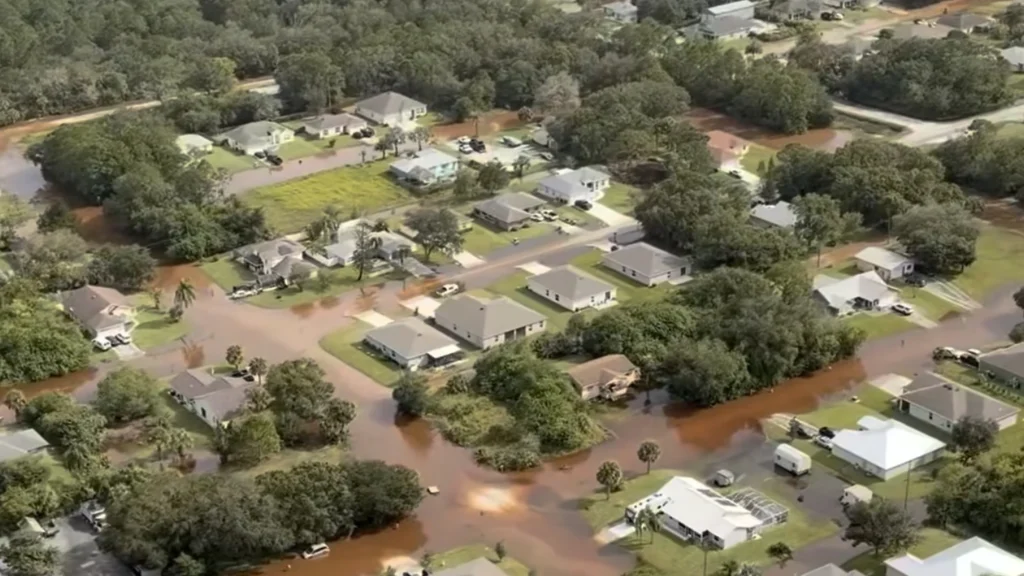
The latest weather news today from Florida is, at last, good news for hundreds of families who have spent November watching the water rise. President Donald Trump has approved a major disaster declaration for the state after the historic fall flooding that swamped homes, closed roads and pushed rivers to record levels across the Florida peninsula. The approval, which came on Tuesday, unlocks federal funding for residents in six counties and for local governments facing the cost of rescue, cleanup and repair. It arrives days before Thanksgiving, when many of the families affected are still out of their homes.
The declaration makes federal funding available for affected people in Palm Beach, Martin, St. Lucie, Okeechobee, Indian River and Brevard counties. Assistance can include grants for temporary housing and home repairs, low-cost loans to cover uninsured property losses, and other programs to help individuals and families recover from the disaster. Federal funding is also available to state, tribal and eligible local governments and certain private nonprofits on a cost-sharing basis for debris removal and emergency protective measures in Palm Beach, Brevard, Hardee, Indian River, Martin and Okeechobee counties, according to the Federal Emergency Management Agency.
Weather News Today: What the Declaration Unlocks
A major disaster declaration is not a blank check, but it opens doors that stay closed without one. The most important is Individual Assistance, which is now available to residents of the six counties named in the declaration. That program provides grants for temporary housing, which can mean rental assistance while a home is uninhabitable, and for home repairs, which can cover the cost of making a damaged house safe to live in again. It also provides low-cost loans through the Small Business Administration for uninsured property losses, which can help a family replace what the flood destroyed and insurance did not cover.
The second part is Public Assistance, which reimburses state and local governments and certain nonprofits for the cost of the emergency itself: debris removal, emergency protective measures, and the repair of public facilities. That funding is provided on a cost-sharing basis, with the federal government covering the larger share. In Palm Beach County alone, officials estimate that $53 million in disaster assistance is needed, with nearly $35 million to help individuals and families and more than $18 million for local governments.
The scale of the need explains why the declaration mattered, and why its timing mattered too. Hundreds of families have lost their homes, cars and belongings, and many face Thanksgiving in shelters, hotels or with relatives. The declaration does not restore what was lost, but it starts the flow of money that makes recovery possible.
Representative Lois Frankel, whose district includes much of Palm Beach County, captured the mood in a statement after the president signed the order. "Hundreds of Florida families have lost their homes, cars, and personal belongings and are facing an especially difficult Thanksgiving. The President's approval of this Major Disaster Declaration is welcome news and will help get our families and small businesses the resources they desperately need to recover and rebuild," she said.
The Letter That Pushed Washington
The road to the declaration began with a letter. On November 9, members of Congress representing Florida wrote to President Trump at the White House, expressing support for Governor Ron DeSantis's request for a major disaster declaration in response to what they called the severe November 2026 fall flooding. The letter described catastrophic rainfall, widespread destructive flooding, severe damage to homes, businesses and infrastructure, road closures, and inundated public facilities across the state. It noted that state and local emergency personnel had conducted water rescues and provided shelter, but it said the geographic scope and severity of the flooding exceeded local capabilities and urgently required supplemental federal assistance.
The letter was signed by a broad cross-section of the delegation, and its bipartisan character was part of its force. The first page was signed by Representatives Brian Mast and Aaron Bean, and the following pages carried the signatures of nearly thirty members, including both of Florida's senators, Rick Scott and Ashley Moody, and members of both parties.
The letter asked for the full range of federal assistance: Individual Assistance for residents, Public Assistance for governments, Direct Federal Assistance, and Hazard Mitigation resources to reduce the risk of future flooding. It was, in effect, the state's congressional delegation speaking with one voice, and it was posted publicly by Representative Cammack on November 25, the day the approval became known. The letter had been written more than two weeks earlier, but it was the public record of the case Florida had made, and it framed the approval as the answer to a request that had been pending since the flooding began.
The timing was closely tied to the president's own movements. Trump arrived in South Florida on Tuesday, November 24, for the Thanksgiving holiday, his 32nd visit to the state in his second term. Hours before his arrival, Representative Frankel and local leaders held an outdoor news conference across the Intracoastal Waterway from Mar-a-Lago, asking him to sign the declaration. Hours after his arrival, he did.
Governor-elect Byron Donalds, who had spoken to the president that morning, thanked him publicly. "I talked to [President Trump] this morning and thanked him for approving this much-needed disaster declaration," Donalds said. "Folks in Florida are hurting right now, this funding will make a real difference as families and businesses get back on their feet following this historic flooding." Representative Mast, who had led the effort behind the letter, added: "GOOD NEWS: [President Trump] has approved the disaster declaration for the 2026 fall flooding. Impacted homeowners can now apply for FEMA assistance at disasterassistance.gov.
Local News Today: How the Flooding Hit Florida's East Coast
The flooding was not a single storm but a sustained period of catastrophic rainfall across the Florida peninsula, beginning earlier in November and continuing in waves. Parts of the east coast received 15 to 20 inches of rain in a matter of days, including areas around Cocoa Beach, and the water had nowhere to go. Rivers rose, streets flooded, and communities that had never expected to need a boat found themselves using one.
The St. Johns River became the symbol of the disaster. Near Cocoa, the river reached nearly 19 feet on Saturday, November 21, surpassing its previous record by almost a foot, according to Governor DeSantis. The governor warned that additional flooding could occur across parts of Florida as communities continued recovering from back-to-back historic flooding events, and he said the river was a major concern for state officials. Flooding inundated communities around Sanford, DeLand and Astor, and it affected areas across Central Florida, prompting rescues and evacuations.
The damage was visible on the roads. State Road 50 in Brevard County and State Road 46 in Seminole County remained underwater days after the rain stopped, cutting off routes thousands of people use every day. The Florida Department of Transportation deployed more than 750 personnel across Central and South Florida for flood assessments and pumping operations. The flooding was spread across the peninsula, from the east coast to the interior, and it hit homes, businesses and public facilities alike.
For the people living through it, the news was a stream of warnings, road closures and rescue reports. In Vero Lake Estates, in Indian River County, streets filled with water in early November. In Palm Beach County, the damage was measured in tens of millions of dollars. In Brevard County, the St. Johns River's record crest threatened homes that had never flooded before. The common thread was the same: water where it did not belong, and no quick way to make it go away.
A Second Storm and a Second Request
The first round of flooding was not the end of it. A second storm brought more rain late in the month, and the water rose again in counties that had barely begun to dry out. Governor DeSantis said the state had submitted a request for a major disaster declaration following the initial flooding, and was collecting damage assessments for an additional request covering the latest flooding, which would cover a broader area because more communities had been affected.
The additional expedited declaration DeSantis requested would cover Seminole, Volusia, Brevard, Flagler, Indian River, Orange, Broward and Putnam counties. Representative-elect Ryan Elijah said the state was continuing to see major flooding in Seminole and Volusia counties from the second storm. The picture is of a disaster that arrived in waves, with each wave widening the area that needed help.
DeSantis spoke about the flooding at a press conference at the West Melbourne Veterans Memorial Complex, alongside Florida State Guard Executive Director Mark Thieme and Florida Division of Emergency Management Executive Director Jared Perdue. He warned that residents should not expect federal assistance to cover all of their damage, but said it could provide some much-needed financial relief. A declaration helps, but it does not make anyone whole: for many families, the gap between what FEMA provides and what they lost will have to be filled by insurance, by savings, or by going without.
The second request is now the next test of the process. The first declaration took about two weeks from the delegation's letter to the president's signature. The second request, covering the counties hit by the second storm, will follow the same path: damage assessments, a formal request from the governor, and a decision from the White House. The officials who pushed for the first declaration are already pushing for the second, and the families in Seminole and Volusia counties are waiting to see whether it comes.
How to Apply for FEMA Help
For residents of the six counties covered by the declaration, the practical question is what to do next, and the answer starts with insurance. Those who sustained losses should first file claims with their insurance providers, and then apply for federal assistance. Applications can be made online at DisasterAssistance.gov, by calling 1-800-621-3362, or by using the FEMA App. Representative Frankel's office has also offered help: residents seeking information can visit her website or call her district office at (561) 998-9045.
The process rewards speed and documentation. Applicants should photograph the damage before cleaning up, keep receipts for emergency spending, and have their insurance information ready. Individual Assistance can cover temporary housing, home repairs and other needs, but it is not a substitute for insurance: the grants are meant to make a home safe and livable, not to restore it to its previous condition. Low-cost loans are available for losses insurance does not cover, and those loans can make the difference between rebuilding and walking away.
For local governments, the process runs through the state's emergency management division, which coordinates with FEMA on Public Assistance. The funding covers debris removal and emergency protective measures on a cost-sharing basis, so the state and local governments will bear part of the cost. Palm Beach County's estimate of $53 million gives a sense of the scale: $35 million for individuals and families, and more than $18 million for local governments. Those numbers will grow as damage assessments continue.
There is also a longer-term question the declaration touches on but does not answer: what to do about the next flood. The delegation's letter asked for Hazard Mitigation resources, meant to reduce the risk of future disasters, which can support elevating homes, improving drainage, and strengthening infrastructure. Florida has faced flooding before, and it will face it again. The mitigation money is the part of the declaration that looks beyond the immediate recovery to the next storm.
What Happens Next
The approval closes one chapter of the November flooding and opens another. The next chapter is the recovery: applications, inspections, grants, repairs and rebuilding, carried out over weeks and months while the water recedes and the damage is counted. For the families in Palm Beach, Martin, St. Lucie, Okeechobee, Indian River and Brevard counties, the declaration means the federal government is now a partner in that recovery. For the families in Seminole, Volusia and the other counties named in the second request, the wait continues.
The timing, days before Thanksgiving, gave the announcement a resonance another date would not have had. Representative Frankel noted that families were facing an especially difficult Thanksgiving. The holiday will still be hard for the families who lost their homes, but the declaration means they will face it with help on the way.
There is also a political dimension worth noting plainly. The letter was signed by members of both parties, the governor who requested the declaration is a Republican, the president who approved it is a Republican, and the representative who held the news conference across the water from Mar-a-Lago is a Democrat. Disaster relief, at its best, works across those lines, because a flood does not check party registration before it fills a living room.
For now, the water is still receding in parts of the state, the St. Johns River is still high, and the damage assessments are still coming in. The declaration is a beginning, not an end. The families who need help should apply, the counties that need reimbursement should document their costs, and the state should keep pressing for the second declaration that covers the counties the second storm hit. The flooding of November 2026 will be measured, in the end, not by the inches of rain or the feet on a river gauge, but by how quickly the people it hurt are able to go home.
Source: Palm Beach Post