Trump News: US Skips COP31 as Fossil Fuels Show Up
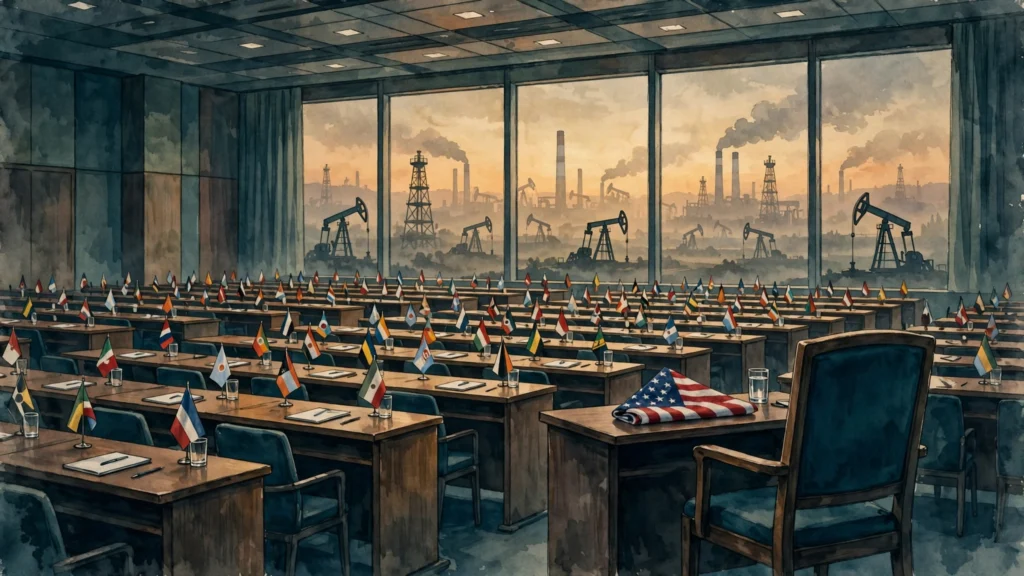
The latest trump news from the year's biggest climate gathering is a study in absence and presence. The United States government sent no delegation to the COP31 climate conference in Antalya, Turkey, for the second year in a row, leaving the American seat empty while nearly 200 other countries argued over the future of fossil fuels. Yet American energy was far from absent: more than 100 companies and groups tied to fossil fuels, including some of the largest oil majors, registered to attend, and banks that finance their operations were among the biggest delegations in the hall.
The talks ran past their scheduled end. The conference was due to close on Friday, November 20, but delegates were still meeting on Saturday, November 21, divided over whether the final agreement should say anything at all about the fossil fuels that drive global warming. A draft released on Thursday had stripped out references to moving away from coal, oil and gas, and several governments said they would rather walk away with no deal than sign one that ignored the issue.
An Empty Chair in Antalya
The American absence was a deliberate choice. When President Trump returned to office in January 2025, one of his first acts was to withdraw the United States from the Paris climate agreement for the second time, repeating the move he made during his first term. The administration then declined to send a federal delegation to the COP30 talks in 2025, and it did the same again this year in Antalya, making the United States the only major economy with no official seat at the table.
The president has repeatedly described climate change as a hoax, and his administration has moved steadily to reverse the climate policies of his predecessors. Funding for clean energy projects has been cut, rules limiting emissions from power plants have been rolled back, and the administration has promoted expanded drilling and production of oil, coal and gas as a matter of energy security and economic strength.
"The United States is focused on common sense, not climate nonsense," White House spokeswoman Taylor Rogers said in a statement during the conference, adding that the administration would keep working with allies to expand access to affordable, reliable and secure energy.
The absence is striking because of the scale of America's footprint in the climate story. China is now the largest annual emitter of greenhouse gases, but the United States is second, and no country in history has emitted more carbon dioxide in total. For decades, American diplomats were central to the climate negotiations, brokering compromises and pressing other governments to accept stronger targets. Their empty chair has changed the dynamics of the room, and it is the richer nations, above all the United States, that developing countries look to for funding to help them adapt to rising seas, harsher heat and more destructive storms.
The Fossil Fuel Fight at the Center of the Talks
The argument that kept negotiators past their deadline was not about whether the climate is changing, but whether the final text would mention the cause. The draft of the summit's main political document, released on Thursday, November 19, dropped explicit references to moving away from fossil fuels and instead stressed clean energy and electrification. For governments that want a strong outcome, that omission was the central problem of the summit.
The European Union's climate commissioner, Wopke Hoekstra, said on Saturday he would rather see the talks end with no agreement than accept a weak one, hardening the standoff as the overtime session wore on. Panama's environment minister, Juan Carlos Navarro, said his country would formally object to any deal with no language on fossil fuels. The divide ran between governments pushing for a clear signal to phase out coal, oil and gas and major producers, led by Saudi Arabia and other oil and gas exporters, that objected to any such language.
The draft did contain one major proposal: an electrification goal raising the share of electricity in total global energy consumption from roughly 21 percent today to 35 percent by 2035. Supporters say it would speed the shift toward cleaner power, but critics note it says nothing about how that electricity is generated, so coal-fired plants could still supply the grid while the headline number improves. A United Nations assessment has warned warming is likely to exceed 1.5 degrees Celsius within a few years, the threshold the Paris Agreement was designed to hold, yet the draft did not name the fuels responsible.
Industry's Footprint: More Than 100 Polluter Delegations
If the American government was absent, American industry was not. A coalition called Kick Big Polluters Out published an analysis on November 13 finding that more than 100 companies and industry associations with records of obstructing climate policy had been granted access to COP31. Sixty were fossil fuel industry groups, and 30 of the top 100 banks that finance fossil fuels were also there, together representing more than 2.2 trillion dollars in fossil fuel financing between 2021 and 2025, nearly 40 percent of the worldwide total in that period.
The numbers tell a story about influence. The polluter delegations outnumbered the delegations of some of the world's most climate-vulnerable nations by wide margins: 100 to 1 against Saint Vincent and the Grenadines, 25 to 1 against Niger, 8 to 1 against the Philippines, and 6 to 1 against Nepal. Among the largest were the International Emissions Trading Association with 29 people, BNP Paribas with 22, HSBC with 19, and Amazon with 12. American companies were prominent, and ExxonMobil was among those with the most obstructive lobbying records identified.
A separate investigation added a sharper edge. Reporting by Drop Site, based on a United Nations participant list and leaked documents reviewed by the Dutch research group SOMO, found at least 41 people from seven companies that took part in a coordinated lobbying campaign against a European climate law were registered for COP31. The campaign, run by an alliance of 11 multinationals calling itself the Competitiveness Roundtable, held 17 coordination meetings between March and August 2025. Its members included Chevron, ExxonMobil, Koch, TotalEnergies, Honeywell, Baker Hughes, Dow, Nyrstar, Enterprise Mobility and JPMorgan Chase.
The law at the center of that campaign was the European Union's Corporate Sustainability Due Diligence Directive, passed in 2024, which required the largest companies operating in Europe to adopt plans to cut emissions in line with the Paris Agreement. By 2026 it had been gutted: a revised version enacted in February removed the climate plan requirement, narrowed coverage to companies with more than 5,000 employees and 1.5 billion euros in sales, and delayed application until July 2029.
The public relations firm Teneo, based in New York, coordinated the roundtable campaign, according to the leaked documents, and it also holds a 3.9 million dollar contract to handle communications for COP31's host, the government of Turkey. Climatologist Michael Mann said the fossil fuel industry had filled the vacuum left by the United States government at the summit. None of the seven companies answered questions about their participation, and attendance alone does not prove lobbying on any specific decision. But the pattern was hard to miss: Trump skipped the talks, and American fossil fuels showed up anyway.
The Other America: 120 State and Local Leaders
There was a second American presence in Antalya, and it told a very different story. More than 120 state and local leaders attended through a coalition called America Is All In, holding discussions on the sidelines and running a pavilion that became one of the busiest spaces at the summit. They held no official seat and took no part in the formal talks, but they were there to argue that American climate action had not stopped with the federal government's withdrawal.
The delegation included 18 Democratic members of Congress, along with governors, mayors and former officials. California Governor Gavin Newsom, widely seen as a potential Democratic presidential candidate in 2028, was among the most prominent faces, with Minnesota Governor Tim Walz, the Democrats' vice presidential candidate in 2024, also attending. Former Vice President Al Gore and former Secretary of State John Kerry were part of the American presence as well.
The lawmakers were not idle. Representative Mike Levin of California said he and his colleagues had attended between 60 and 70 meetings, pressing the case in every room that the United States remained engaged. Representative Jared Huffman of California called the empty American chair a temporary one, saying the administration's approach did not represent what the American people and businesses wanted. Gina McCarthy, the former head of the Environmental Protection Agency who now leads America Is All In, said the delegation hoped to show that progress could continue without the federal government's leadership.
Behind the politics, the state-level record gave the delegation something concrete to point to. Nearly half of American states, representing about 60 percent of the national economy, have committed to reducing emissions in line with the Paris Agreement. A report by America Is All In and the University of Maryland's Center for Global Sustainability found that current state policies, market trends and falling technology costs could cut American carbon emissions by as much as 46 percent below 2005 levels by 2035; the country has already cut them by close to 20 percent.
What Happens Next
The immediate question is what the overtime session produces. Negotiators who stayed into Saturday faced a choice between a deal that says nothing about fossil fuels and no deal at all. The European Union's preference for no deal over a weak one raised the stakes, and Panama's promised formal objection showed the disagreement was not confined to Europe. A close without language on coal, oil and gas would be a defeat for the governments that made the issue the test of the summit; a close with it would be a rare win against the major producers.
For the United States, the longer question is whether the federal absence becomes permanent policy or a two-year interlude. The Democrats in Antalya were explicit that they expect a return: their message was that the United States will come back to the Paris Agreement, and that the current posture is a pause, not a new normal. The elections earlier this month gave that message a boost, and whether the federal government returns to the talks will depend on the outcome of the contest over the country's direction.
The state-level story will continue regardless of what happens in Washington. The policies already in place in American states, the market forces driving down the cost of clean technology, and the falling price of renewable energy are all moving in the same direction, and the report from America Is All In and the University of Maryland suggests they could deliver deep emission cuts even without federal action.
COP31 was supposed to be the conference where the world decided how fast to move away from fossil fuels. Instead it became the conference where the world's largest historical emitter stayed home, its oil companies showed up, and its governors and mayors argued the country had not given up. The final text will show which of those three Americas the rest of the world believes.
Source: Politico