Iran War News: Trump Delays Decision Until 2027
In the latest iran war news, President Donald Trump has pushed any decision on renewed major strikes against Iran into next year, telling Reuters on Thursday that he would return to the question after the beginning of 2027. "Well, I'll talk to you about it after the beginning of the year," Trump said, speaking from his plane as he returned to Washington from his trip to China. "We've got time," he added. The remarks, given in an interview on November 19, extend a timeline the president had previously suggested could come to a head after this month's midterm elections, and they point to a conflict that is now set to run into 2027 whatever happens next. The signal from the White House is that there is no rush — but the signal from the Pentagon is that the military is preparing to stay, with deployment schedules already being stretched into next year.
The delay matters because it reframes the whole shape of the confrontation. For weeks Trump has swung between warnings of escalation and hints that hostilities could be wound down, leaving allies, adversaries and markets guessing which way he would jump. His latest comments settle the immediate question: there will be no quick decision on a fresh round of major strikes. What they do not settle is the bigger one — whether the standoff ends in a deal, in a declaration that the war is over, or in another round of fighting after the new year begins.
Trump News: "We've Got Time" as the Decision Slides Past January 1
The trump news account of the president's thinking comes from three separate interviews he gave on Thursday, all carrying the same message. In the Reuters interview aboard his returning aircraft, Trump said he would discuss the possibility of new strikes after the beginning of the year. In an interview with Fox News that aired the same day, he put it in nearly identical terms: "We'll see what happens after January 1." And in a separate conversation with a reporter for Axios and Israel's News 12, he said plainly: "I'm not rushing to make any decisions on Iran."
The consistency across the three interviews is striking, and it marks a clear shift from where Trump stood only a few weeks ago. In the run-up to the November 3 congressional elections, he repeatedly suggested that Iran would be more willing to strike a deal once the voting was over, and he implied that a decision on the next phase of the conflict could follow soon after. That expectation has now been pushed back by at least two months, and the president's own words suggest he is comfortable with the wait. "We've got time" is not the language of a leader preparing an imminent operation. It is the language of a leader who believes the pressure already in place is doing the work for him.
That belief is central to the administration's current position. Last week, after the Republicans lost both chambers of Congress, the administration said it believes the blockade and economic sanctions against Iran are working, and that sustained economic pressure will eventually force Tehran's hand. The argument is that time is on Washington's side: that Iran's economy is buckling, that its room to manoeuvre is shrinking, and that a deal — or a collapse — will come without the need for another major round of bombing. Whether that reading is right is another question, and it is one that the president's own military planners appear to be hedging against.
Pentagon News: Deployments Extended Into 2027
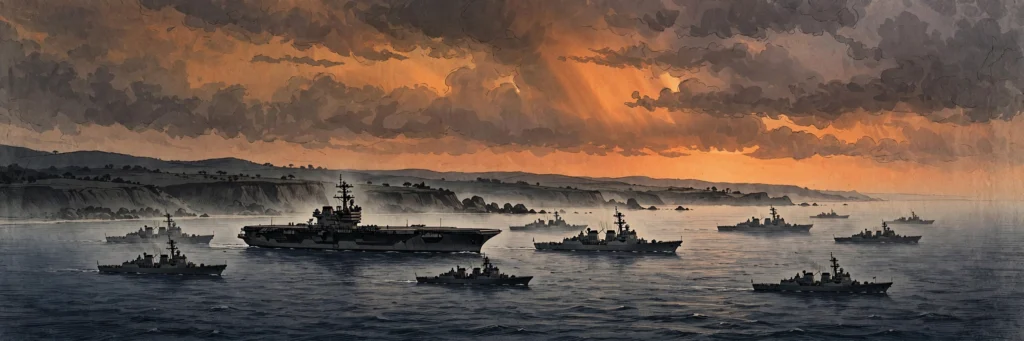
The pentagon news tells a different part of the story, and it runs in the opposite direction from the president's relaxed public tone. According to a Wall Street Journal report, the Pentagon is quietly extending troop deployment timelines across the Middle East, in a sign the conflict could run well into next year regardless of what Trump decides in public. The United States currently maintains around 50,000 troops in the region, including 19 warships, two aircraft carriers and 13 guided missile destroyers, actively engaged in intercepting Iranian missiles, escorting commercial shipping through the Strait of Hormuz, and enforcing a blockade of Iranian ports and coastal areas.
Defense Secretary Pete Hegseth, who promised a quick and decisive campaign when the strikes on Iran began, is now quietly extending deployment schedules for warship crews, air defence units and paratroopers, according to people familiar with the matter cited by the Journal. Army air defence units, whose operational tempo was already among the highest in the joint force even before the war, have seen standard deployment timelines stretch from nine months to twelve, according to Tom Karako, director of the Missile Defense Project at the Center for Strategic and International Studies. The approach is described as part of an open-ended military strategy intended to preserve Trump's options rather than wind the conflict down — a sign the war could drag into 2027.
The military planning goes beyond holding the current line. Last month Trump received briefings on options including intensified airstrikes, deploying ground forces to seize Iranian islands near the strait, and a possible strike on a fortified site known as Pickaxe Mountain, believed to be linked to covert Iranian nuclear activity. Any of those options would require substantial additional military assets, underlining why the Pentagon appears to be planning for an extended commitment whatever the president's public rhetoric suggests. The gap between the two messages — no rush from the president, longer deployments from the Pentagon — is the defining tension of the moment.
White House News: Vance, the Midterms and the Politics of Delay
The white house news around the delay is inseparable from the politics of the midterm elections. The November 3 contests cost the Republicans both chambers of Congress, and the war with Iran was part of the reason. Vice President JD Vance, a possible presidential candidate in 2028, publicly distanced himself from the war, blaming it for the party's political rout. Trump later directed Vance away from Iran diplomatic efforts and told him to focus on domestic matters instead.
Asked by Reuters about the vice president's social media post, Trump was notably forgiving. "JD was fine," he said. "What he said was right. He said that the whole situation is one of the reasons certainly that the election didn't go our way." Trump acknowledged that Iran had played a role in the losses, but he said he would not have changed course. "And the big thing is if you had to do it again, would you do it? And the answer is yes. Because you can't let Iran have a nuclear weapon," he said.
The election result also creates a hard deadline of its own. The Senate, which Republicans control until January 3, again on Thursday rejected a measure aimed at curbing the war — the second time the chamber has turned back an attempt to restrain the president's military campaign. But a new Democratic-controlled Congress takes office in January, and that changes the arithmetic for any decision Trump makes after the new year. Axios reported that the delay could give the blockade and sanctions more time to work, but also noted that Trump may want time to authorise military action before the new Congress is seated. The same reporting cautioned that the president could change his mind at any moment, and that nothing about the new timeline is final.
Trump Administration Weighs the Endgame: Declare the War Over?
Behind the public delay, the trump administration is weighing a much bigger question: whether the war should be declared over at all. According to the Wall Street Journal, Trump has told senior aides he favours declaring an end to the conflict, and has expressed confidence that sustained economic pressure will ultimately force Tehran's hand, either through dismantling its nuclear programme or the collapse of the regime itself. In a social media post, Trump wrote that he believes the United States now holds almost total control of the Strait of Hormuz and that Iran's economy is collapsing.
That private inclination sits uneasily with the Pentagon's extended deployments, and with the pressure coming from Israel. Prime Minister Benjamin Netanyahu has been pushing for action, and Axios reported that Trump is still weighing a joint operation with Israel, even though he called another major round of strikes quite unlikely last week. The tension captures the choice Trump faces: declare the war over and bet everything on economic pressure, or keep the military option alive and risk a new round of fighting in the new year. The decision he has postponed until after January 1 is, in the end, a decision about which of those two paths to take.
The donald trump latest news from the region underlines how unsettled the picture remains. Thursday's joint statement issued after Trump's summit with his Russian and Chinese counterparts did not mention the conflict with Iran at all, even though the three leaders met for the first time in a trilateral format and presented themselves as peacemakers. The omission was conspicuous, and it suggested that whatever was agreed in the room, Iran was not part of it.
The Dirty Bomb Report and the Biological Weapons Claim
The week's other flashpoint came from a CNN report that Iran was planning to detonate a "dirty bomb" in Washington — a device that uses conventional explosives to spread radioactive material. Trump was asked about the report on Fox News, and he appeared to downplay the threat, saying "I don't think so" when asked whether people in the capital should be alarmed.
But he also added a claim of his own, saying there were indications that Iran was "looking at" biological or chemical weapons. "There is indication that Iran is looking at gases, looking at bio, because we've shut them out with the nuclear. Nuclear is much harder. And they're looking at gas and … biological weapons — not nice — and other things," Trump said, without elaborating. Iran's Foreign Ministry responded in a post on X, saying American accusations about Tehran developing chemical and biological weapons were intended to create fear and justify military action. It had earlier in the week called the CNN report "baseless."
The exchange matters because it touches the original justification for the war. Israel, the United States and other Western countries have long accused Iran of seeking nuclear weapons, which Tehran denies. Destroying Iran's nuclear programme was one of Trump's main justifications when he launched strikes against Iran in February alongside Israel. If the nuclear path is now closed, as Trump suggested, and the argument shifts to other weapons, the case for continued military pressure may need to be made all over again — and it may be harder to make to a Congress that will soon be controlled by Democrats.
What Happens Next
The immediate marker is January 1. Trump has said he will return to the question of new strikes after the beginning of the year, and the weeks between now and then will be watched for signs of which way he is leaning. The first test comes on January 3, when the new Congress takes its seats and the president's freedom to act without legislative pushback narrows. If he wants to authorise military action on his own terms, the window for doing so is the handful of weeks before that date.
The military picture will be watched just as closely. The Pentagon's extended deployment schedules are already in motion, and any further movement of carriers, air defence units or munitions into the region would signal that the planning for a new round of strikes is advancing even while the president says there is no rush. The munitions question is live in its own right: a government watchdog assessment reported this week found American stockpiles running low, a finding that could constrain whatever options Trump eventually chooses.
The diplomatic track is the third thing to watch. The blockade and sanctions are the administration's stated bet, and their effect on Tehran will become clearer over the coming weeks. If the economic pressure produces movement — a signal from Tehran, a channel reopening, a concession on the nuclear programme — then the president's "We've got time" may turn out to have been a strategy rather than a shrug. If it does not, the voices pushing for action, in Jerusalem and inside the administration, will grow louder.
For now, the war that Trump once suggested might end soon after the midterm elections is set to continue into 2027, in one form or another. The fighting may pause, the decision may wait, and the president may yet declare the conflict over. But the ships are staying, the deployments are lengthening, and the calendar now points to January — when the decision Trump postponed will finally have to be made.
Source: Time Magazine