Donald Trump Latest News: $1 Coin Bags Go on Sale
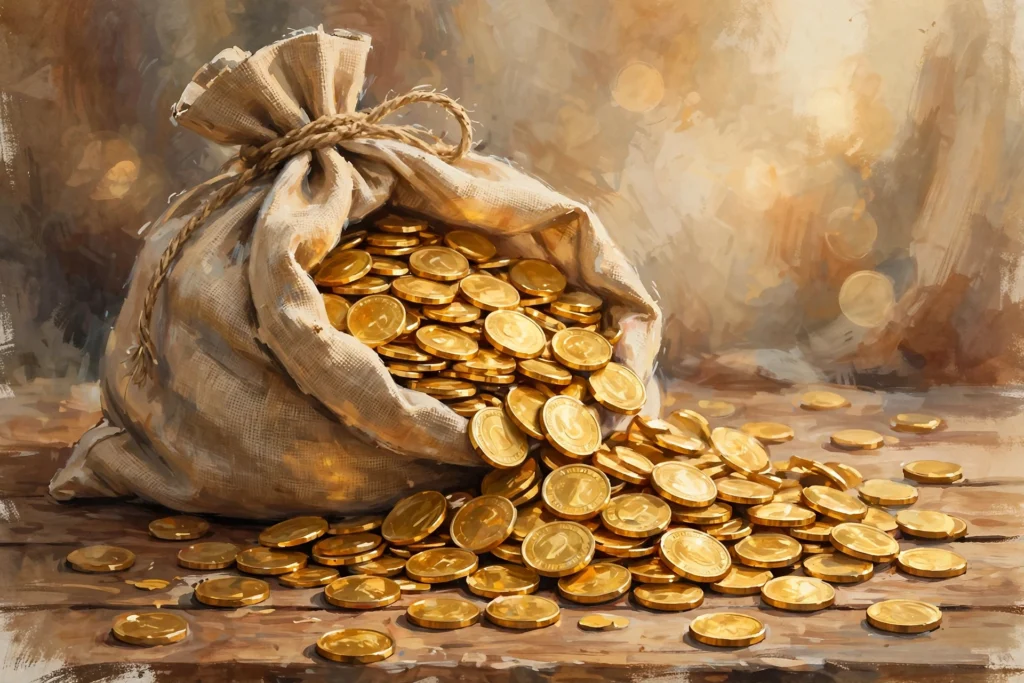
The latest donald trump latest news from the United States Mint comes with a warning about heavy lifting. From noon Eastern time on November 19, collectors will be able to order a 1,000-coin bag of the 2026 Semiquincentennial President Donald J. Trump $1 coin, and each bag weighs approximately 20 pounds. The Mint has set a limit of two bags per order because of the shipping weight, and it will charge an extra 15 dollars to ship one bag and 30 dollars for two. It is the heaviest and most expensive single product the Mint has offered in the coin's short life, and it arrives just as the coin has become one of the most talked-about objects in American collecting.
The question behind the headlines is a simple one: who wants 20 pounds of Trump coins? The answer, judging by the market that has already grown up around the coin, is a lot of people. Since the coin first went on sale on September 2, single examples have been changing hands for two to five dollars, sealed rolls have been listed for around a hundred dollars, and a small number of coins struck on July 4 have been offered for far more. The 1,000-coin bag, priced at 1,350 dollars, is the Mint's biggest bet yet that the demand is real, and it is also the clearest sign of how far a presidential portrait on a dollar coin has travelled from the realm of numismatics into the realm of politics, merchandising and national symbolism.
The coin is not an ordinary commemorative. It is the first United States coin to carry the portrait of a sitting president, it was authorised under a law written for the country's 250th birthday, and it has been controversial from the moment the design was revealed. The Mint's announcement of the 1,000-coin bag brings all of those threads together in a single product: a canvas sack of a thousand golden dollars, weighing as much as a small suitcase, bearing the face of the man who ordered it into existence.
Trump News Today: What the Mint Is Selling
The details of the sale are set out in the Mint's announcement of November 12. Orders for the 2026 Semiquincentennial President Donald J. Trump $1 Coin 1,000-Coin Bag will open on November 19 at noon Eastern time. Because of the shipping weight, there is a limit of two units per order, and every order carries an additional shipping fee on top of the price of the coins themselves: 15 dollars for one bag, 30 dollars for two. The bag is listed under item number 26SQBZ, and a Federal Register notice published on November 9 sets the price at 1,350 dollars and limits the product to 15,100 units.
The arithmetic of the bag is straightforward. It contains 1,000 Philadelphia-struck dollar coins with 1,000 dollars in face value, sold for 1,350 dollars, or 1.35 dollars per coin before shipping, handling and any applicable tax. Each coin weighs 8.10 grams and measures 26.49 millimetres across, with a plain edge, which is how a thousand of them come to weigh about 20 pounds. The Mint says the coins have a circulating finish but have not been put into circulation, which means they are made to the standard of coins intended for everyday use but are sold directly to collectors instead.
The bag is a separate offer from the two products that went on sale on September 2, when the coin was launched. The first was a 25-coin roll priced at 61 dollars, or 2.44 dollars a coin. The second was a 100-coin bag priced at 154.50 dollars, or 1.55 dollars a coin. The 1,000-coin bag is cheaper per coin than either of them, which is the usual logic of buying in bulk, but it requires a buyer to commit 1,350 dollars at once and to find somewhere to put 20 pounds of metal. It is, in every sense, a product for the committed collector, the dealer, or the supporter who wants a thousand of them.
The Mint itself is one of the oldest institutions in the federal government. Congress created it in 1792, and it became part of the Department of the Treasury in 1873. As the nation's sole manufacturer of legal tender coinage, it produces the coins used in everyday trade and commerce, as well as proof, uncirculated and commemorative coins, Congressional Gold Medals, and silver and gold bullion coins. Its numismatic programmes are self-sustaining and operate at no cost to taxpayers, which means the Trump coin, like every other Mint product, is expected to pay for itself.
White House News: The Coin's Design and the Law
The coin's design is a study in American symbolism, and in the controversy that has followed the coin from the start. The obverse, or heads side, features a portrait of President Donald J. Trump with the inscriptions Liberty, In God We Trust, and 1776 to 2026. The design was created by United States Chief Engraver Joseph Menna, and it was inspired by an official White House photograph taken by Daniel Torok. The reverse, or tails side, features the Presidential Seal, showing an eagle holding an olive branch and a bundle of arrows, with a shield on its breast and a banner inscribed E Pluribus Unum in its beak. The shield contains the inscription 250 to honour the Semiquincentennial of the United States, and the additional inscriptions are United States of America and One Dollar. The reverse was designed and sculpted by former Mint Chief Engraver Frank Gasparro.
The coin was authorised by a specific provision of federal law, 31 U.S.C. section 5112(y)(1)(C), and by the Circulating Collectible Coin Redesign Act of 2020, Public Law 116-330. Under those authorities, the Secretary of the Treasury may mint and issue a one-dollar coin for one year beginning January 1, 2026, with designs emblematic of the nation's Semiquincentennial, the 250th anniversary of American independence. The Trump portrait is one of the designs issued under that authority, and it is the first time the law has been used to place a living president on a circulating coin.
That fact has been the centre of the argument about the coin. American law has long barred living former and current presidents from appearing on coins, a rule intended to keep the currency free of personality cults and political favouritism. The administration has pressed ahead anyway, using the semiquincentennial authority as the legal basis, and the coin has become a test case for how far a president can go in putting his own image on the money of the country he leads. Critics have called it self-promotion. Supporters have called it a fitting tribute for the 250th anniversary. The Mint has said nothing about the politics and has simply sold the coins.
The coin is not the only place where the administration has used the Mint to make a statement. A limited-time dime design released for the semiquincentennial, called the Emerging Liberty dime, shows a woman who personifies liberty on the heads side and, on the tails side, a bald eagle holding arrows in its talons for war, but missing the olive branches in its other talons for peace. The omission drew attention because the classic Roosevelt dime it temporarily replaces shows a torch, an olive branch and an oak branch representing liberty, peace and strength, and the new design's missing olive branches seemed especially pointed as the war with Iran entered its third week. The dime was created by the Mint's medallic artist Eric David Custer, and the Roosevelt dime is due to return in 2027.
The same period has seen other decisions about what the Mint will and will not make. The four-year American Women Quarters programme ended last year and was not renewed. The Mint also scrapped plans from the previous administration for commemorative 2026 coin designs that would have depicted advancements in civil and voting rights in American history. Taken together, the decisions paint a picture of a Mint being used, quite deliberately, to express the priorities of the administration in office. As one magazine put it, Trump is turning coins into miniature symbols of his priorities, and the 1,000-coin bag is the largest of those symbols yet.
Top News Stories Today: The Resale Market
For all the politics, the coin is also a commercial product, and its market has been lively since the first day of sales. A single ordinary example of the 2026 Trump one-dollar coin trades for about two to five dollars as of November 2026, against an issue price of 1.55 to 2.44 dollars a coin depending on how it was bought. Sealed rolls of 25 are listed at roughly 100 to 125 dollars, and sealed bags of 100 at roughly 250 to 285 dollars. Those are asking prices rather than completed sales, and the sold data is thin because the coin is barely two months old, but the direction is clear: buyers are paying a premium over the Mint's price, and the premium grows with the size of the sealed package.
The exception that proves the rule is the small number of coins struck on July 4, 2026, with a special privy mark. Only 250,000 of those were struck, and they have become the most sought-after version of the coin. Raw, ungraded examples are listed at about 90 dollars, and graded examples have been offered at 400 to 700 dollars. The original rolls and bags sold in September could include July 4 privy coins, which is one reason sealed packages command a premium: every sealed roll is a lottery ticket for a privy-marked coin inside.
The coin itself is made of manganese brass, the same golden alloy used for the Sacagawea dollar, and it contains no gold, despite its colour. That distinction matters, because there are two very different things sold under the name of a Trump coin. The official coin is struck by the Mint in Philadelphia and says One Dollar on the reverse, around the Presidential Seal with a 250 on the eagle's shield. The other kind is the private medal sold on television, on Facebook and by mail since 2016, layered in 24-karat gold plate and often sold alongside plated thousand-dollar and 250-dollar bills. None of those are money, none of them come from the Mint, and almost none of them contain precious metal. They sell for a few dollars on resale sites when they sell at all, and a coin shop will usually decline them.
The distinction will matter even more on November 19, because the same day the 1,000-coin bags go on sale, the Mint is also due to release a very different product: a 2026-W 250-dollar Trump gold proof, struck in one ounce of .9999 fine gold, with a mintage limit of 75,000. Its Mint price has not yet been posted, but it is expected to be above 5,000 dollars. The gold proof says 250 Dollars and 1 Oz. .9999 Fine Gold, and it is a genuine precious metal coin, unlike the manganese brass dollar. For collectors, the two releases on the same day offer a choice between a 20-pound bag of base metal dollars and a single ounce of gold, and the gold price today will be part of the calculation for anyone weighing the two.
The merchandising around the Trump name extends well beyond the Mint. CNN's Anderson Cooper laughed on air this week while reading through a new batch of Trump family merchandise, including a set of UFC-themed commemorative coins tied to a fight scheduled for June 14 at the White House, the president's 80th birthday and during America's 250th anniversary year. The coins were described as the official gold and silver of UFC 250, and they are being sold for as much as 11,999.99 dollars. The same sales pitch includes a 499-dollar gold-plated Trump phone, which is now finally shipping after long delays. The president has ordered construction of an Octagon on the South Lawn of the White House for the occasion. The coins, the phone and the fight are all part of the same commercial world as the Mint's dollar, and the laughter on air was a measure of how far that world has travelled from ordinary presidential merchandising.
What Happens Next
The immediate date is November 19 at noon Eastern, when orders for the 1,000-coin bag open. The limit of two bags per order and the 15,100-unit cap mean the product could sell out quickly if demand matches the interest shown in the rolls and bags sold in September, or it could sit in the Mint's catalogue for weeks if buyers decide that 20 pounds of coins is more than they want. The shipping charge, the weight and the price will all be part of the calculation, and the resale market will deliver its verdict within days, as sealed bags begin to appear on the secondary market.
What to watch is narrow and specific. The first is whether the bags sell out, and how fast, because the Mint's own sales figures are the most honest measure of demand for the coin. The second is the price of the gold proof when it is posted, and whether it clears its 75,000 limit. The third is the resale market for the ordinary coin, which will show whether the 1,350-dollar bag was a good buy or an expensive way to own a thousand dollars in face value. And the fourth is the legal argument, which has not gone away: whether a court or a future Congress revisits the question of a living president's portrait on the coinage, and what that would mean for the coins already sold.
The bag itself is a fitting emblem of the coin's strange career. It is a thousand dollars in face value, sold for 1,350 dollars, weighing 20 pounds, bearing the portrait of a sitting president, authorised by a law written for a birthday, and argued about as a symbol of everything from national pride to presidential vanity. On November 19, anyone who wants one can buy two.
Source: Fast Company