Iran War News: US Intel Flags Dirty Bomb Plot in DC
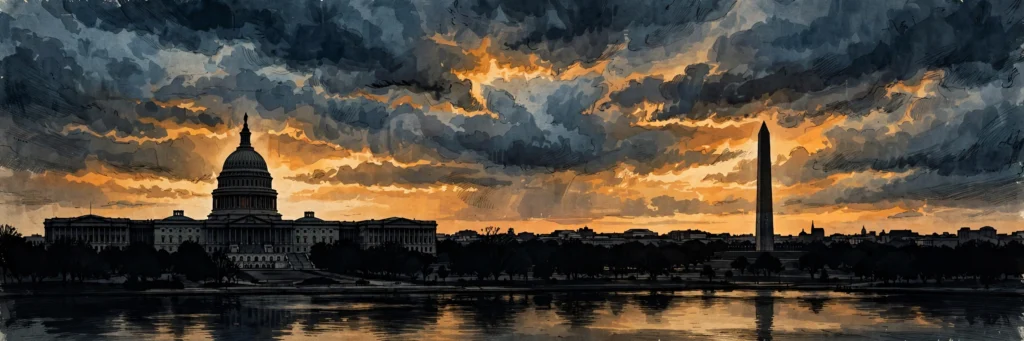
New iran war news from Washington has put the conflict with Iran back at the centre of American politics. United States intelligence agencies have picked up indications that Tehran is developing plans to strike senior officials in the Trump administration by detonating a dirty bomb or a chemical weapon in the nation's capital, according to seven American officials who spoke to CNN. The report, published on Monday, describes planning detailed enough to name specific locations and targets, and it has set off emergency contingency planning inside the government even though officials stress there is no sign an attack is imminent.
The White House moved quickly to calm the public reaction. Lauren Bis, a spokesperson for the White House, said the administration was watching every potential threat but that there were, in her words, no credible threats to the homeland at this time. That reassurance sits alongside a very different picture behind closed doors, where officials have held several meetings over the past week to work out how to counter the threat. One official familiar with the discussions described the planning as prudent.
The officials who described the intelligence were careful to draw a line between planning and intent. Sources familiar with the latest material characterised the Iranian effort as, for now, an attempt to give Tehran options rather than evidence that an attack is about to happen. But the plotting has been very specific, two of the sources said, and it has been read inside the government as a signal that Iran is willing to escalate a war that has already lasted nine months.
Iran War News: What the New Intelligence Says
The core of the report is straightforward. New intelligence indicates that Iran is developing plans to target senior Trump administration officials by detonating a so-called dirty bomb or a chemical weapon in Washington, DC. The planning is said to include specific locations and targets, and it has been specific enough to prompt a flurry of contingency planning across the national security establishment.
The officials also described a second, related stream of intelligence. United States intelligence has picked up Iranian chatter claiming that bomb-making materials have been stashed inside the United States. Officials are divided over how credible that claim is, but many broadly believe it would be very easy, and even likely, that Iran has already positioned nuclear materials or chemical agents inside the country that could be fitted to a conventional weapon. One source said that given how porous the border has been for the better part of ten years, it would have been extremely easy to get operatives inside the country who could acquire and place bomb components.
That assessment carries an important qualification. Iran's capability to launch this kind of attack has not grown, a second official said. What has changed is the incentive. Iran is under intense pressure from continuing American military strikes and a punishing economic blockade that senior administration officials have described as devastating the country. With conventional options narrowing, American officials believe Tehran is now actively planning for potential attacks inside American territory, even if there is no evidence it has decided to move forward yet.
The history matters here. Iranian plotting against current and former American officials, including a murder-for-hire plot against Trump himself in 2024, has been going on since the president's first administration. Until now, that plotting has largely concentrated on opportunities to kill American officials while they were travelling overseas. The new intelligence suggests a shift: planning for an attack on American soil, in the capital, against the people running the government.
Trump Administration Response: No Credible Threat, but Precautions Taken
The public face of the administration's response has been calm. Bis, the White House spokesperson, told CNN that the United States is monitoring any and all potential threats, but that at this time there are no credible threats to the homeland. She gave the same message to other outlets that followed up on the report, including the New York Post and The Times of London. The message is consistent: the government is aware, it is watching, and the public should not panic.
Behind that message, however, the precautions are already visible. Threats from Iran prompted the Secret Service to move Treasury Secretary Scott Bessent into military housing last week, according to the CNN report, a step confirmed by senior administration officials. Bessent, who has been central to the economic blockade of Iran, was moved from his home to a military base after Iranian threats against him. The move of a cabinet secretary into military housing is not a routine precaution.
The Defense Department, asked about the intelligence, referred questions to the Office of the Director of National Intelligence, which declined to comment. That silence is standard for intelligence matters, but it leaves the public record resting on the seven officials who spoke to CNN and on the outlets that have since confirmed elements of the story, including The Times of London, the New York Post and the Times of Israel. Iran has denied the allegations. A spokesperson for the Iranian Mission at the United Nations said Iran considers the use of chemical weapons under any circumstances to be wholly illegitimate, and categorically rejects and unequivocally refutes what it called the false and fabricated allegations.
Why a Dirty Bomb Is a Weapon of Terror, Not Precision
Part of what makes the report alarming is the nature of the weapon described. A dirty bomb is very different from a nuclear bomb, which relies on a nuclear fission reaction and would be exponentially more destructive. A dirty bomb packages radioactive material into a conventional explosive, scattering radiation across the area of the blast. Experts say the weapon can disperse dangerous airborne radiation for blocks or even miles, but that any casualties are likely to be caused by the explosion itself rather than the radiation. The hard part of building one is acquiring the radioactive material.
One of the sources familiar with the new intelligence described the weapon in stark terms, calling it a weapon of terror, not a weapon of precision, and comparing it to a suicide bombing. Such a device, the source said, can make people really sick and can render certain areas uninhabitable. That is the point of the weapon: not to destroy a building or kill a specific person with precision, but to spread fear and contamination across a wide area, and to force a city to shut down streets, evacuate buildings and spend months on cleanup.
Officials also cautioned that the United States is especially vulnerable to an attack with unconventional weapons. A dirty bomb would not necessarily require Iran to smuggle trained operatives into the country. It would merely need to convince a person already living inside the United States to carry out the attack. Representative Andre Carson, a member of the House Intelligence Committee, told CNN that if the attack did not come from the Iranian state itself, it could certainly come through those who are sympathetic to the calls, or even through people who had radicalised themselves. The report has also drawn scepticism, with critics noting that the account rests entirely on unnamed officials and drawing comparisons with the intelligence claims that preceded the invasion of Iraq.
Pentagon News: Troops in the Middle East Face a Parallel Threat
The intelligence about Washington is not the only warning American officials are working through. A separate stream of intelligence suggests Iran may use chemical weapons against American troops stationed in the Middle East, according to two of the officials who spoke to CNN. The New York Times first reported those concerns. Several officials stated flatly that American troops do not have adequate protective equipment or training to guard against such an attack, a gap that has prompted a parallel contingency planning effort focused on making sure diplomatic and intelligence personnel in the region have the equipment and training they need to protect themselves.
That effort is now running alongside the planning for the homeland threat, and together the two tracks describe a government preparing for escalation on two fronts at once. The concern about chemical weapons against troops overseas is the more immediate of the two, because American forces are already in range and already operating in a war zone. The concern about a dirty bomb in Washington is the more shocking, because it would bring the war home in a way Americans have not experienced.
The Wider War: Strikes, Blockade and Stalled Talks
To understand why Iran might be planning such an attack, it helps to understand the pressure it is under. The United States has been carrying out military strikes against Iran since February, and it has imposed an economic blockade that senior administration officials have said is devastating the country. The blockade has closed the Strait of Hormuz, the narrow waterway through which a large share of the world's oil passes, and the talks meant to end the blockade, reopen the strait and bring an end to the fighting have so far produced nothing. One regional source told CNN that both sides want to reach a deal, but that for now neither appears poised to make any meaningful concessions.
That stalemate is the backdrop to the new intelligence. American officials view the planning as a signal of an alarming willingness to escalate by Iran as it faces intense pressure. The next several weeks will be critical for reaching any sort of agreement, the regional source said, and during that window certain parties could look to play spoiler. Among those to watch are Iranian hardliners or rogue elements of the regime who have benefited from the war and could be incentivised to launch an attack to keep the conflict going. Vice President JD Vance has said the war in Iran will not last two years, a remark that reflects the administration's public confidence that the conflict is approaching its end. But the intelligence suggests a different timeline, one in which the war's most dangerous phase may still be ahead.
What Happens Next
The most immediate question is whether the planning described in the intelligence moves from preparation to action. Officials stress that there is no evidence Iran has decided to proceed, and that the planning may remain exactly what the sources described: an effort to give Tehran options. But the specificity of the planning, the meetings it has already prompted, and the precautions already taken around senior officials all suggest the government is treating the threat as real enough to act on.
The second question is what happens to the talks. The next several weeks are described by regional sources as critical for reaching an agreement to end the blockade and reopen the Strait of Hormuz, and the same sources warn that hardliners could try to spoil a deal. The third question is the one the officials themselves raised: whether Iran understands the risk it would bring upon itself. One American official emphasised that Iran understands the risk of retaliation if it moved to use either of these weapons, whether in the Middle East or in the United States. But the same official acknowledged the exception that makes the threat credible: if Iranian leaders come to view the survival of the regime as in question, they may consider it worth the risk. For now, the public message remains the one the White House gave on Monday: the government is monitoring every potential threat, and there are no credible threats to the homeland. The private message, visible in the meetings and the moved cabinet secretary, is different.
Source: CNN