Redistricting News: GOP Maps Backfired in Midterms
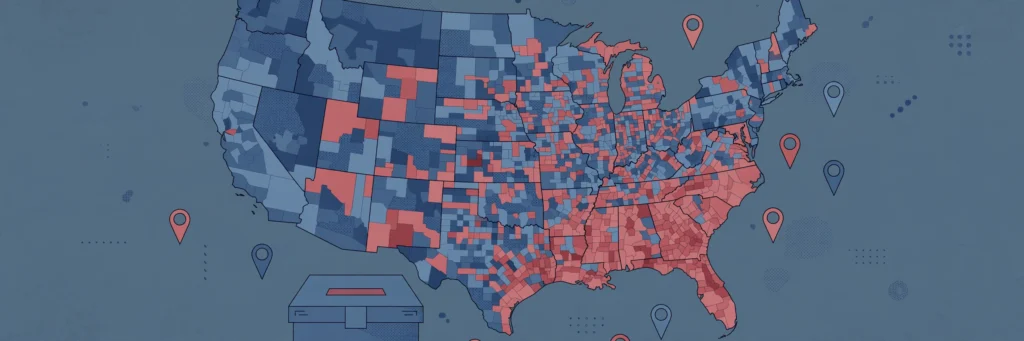
The redistricting news from the 2026 midterms now has a verdict, and it is the opposite of the one Republicans planned for. A year ago, President Donald Trump urged Republican-led states to redraw their congressional maps mid-decade, an extraordinary break with the usual once-a-decade rhythm, in the hope of adding seats and holding the House. Texas led the way, redrawing its map to net five more Republican seats, and other states followed. When the votes were counted on November 3, the plan had mostly failed. Democrats held 11 of the 15 seats Republicans redrew to flip, picked up seats the new maps were supposed to protect, and won control of the House — turning what was meant to be a gerrymander into what CBS News called a "dummymander," a map drawn to benefit one party that ends up helping the other instead.
The numbers tell the story plainly. According to ABC News, Republicans redrew 15 seats to try to flip them and were projected to lose more than two-thirds of them. Democrats held 11 of the 15, Republicans flipped only two — Tennessee's 9th District and Texas's 32nd — and two more, in Florida and Louisiana, had not been called as of the Thursday after the election. The final tallies have only sharpened the picture: across the states that redrew their maps, the net result was a Democratic gain of 14 seats, according to an analysis of the results as of November 14. What began as an attempt to lock in a Republican majority became one of the largest self-inflicted wounds of the cycle, and it has left the party arguing over whether the strategy was wrong from the start or merely overwhelmed by a wave no map could have contained.
Texas: the five-seat plan that produced one
The redistricting war began in Texas, and Texas is where it failed most visibly. Last year, Trump broke with the rhythm under which states normally adjust their congressional boundaries only after each ten-year census, and urged Texas Republicans to redraw their map in the hope of winning five more House seats. Governor Greg Abbott signed the new map in August 2025 and framed it as a victory for his party. "I'm about to sign the law that creates the One Big Beautiful Map that ensures fairer representation in the United States Congress for Texans," Abbott said at the time. "Texas is now more red in Congress." The map was drawn to exploit Trump's gains in South Texas, changing three heavily Latino districts in the Rio Grande Valley in an effort to defeat Democratic Representatives Henry Cuellar and Vicente Gonzalez.
On election night, the plan collapsed. Both Cuellar and Gonzalez were re-elected. Democrats also defeated Republican Representative Monica De La Cruz, and they flipped two more border-area seats, the 15th and 23rd Districts, that the old map had left in Republican hands. Republicans picked up a single seat in the Dallas-area 32nd District, where Jace Yarbrough won — but that gain was more than offset by the losses elsewhere. Going into Election Day, Republicans held 24 Texas seats and Democrats held 13, with one seat in a Republican-leaning district vacant. As of the Wednesday after the election, Republicans had won 24 seats and Democrats had won 14. A map designed to produce a 29-9 Republican delegation had instead produced a 24-14 split — and, by the measure CBS News applied, a dummymander.
Ohio, North Carolina and the map beyond Texas
Texas was not the only state where the new maps misfired. In Ohio, the map was drawn to net Republicans two seats. Heading into election night, Ohio Republicans controlled ten seats and Democrats controlled five. When the votes were counted, seven Democrats had won, including Representatives Marcy Kaptur and Greg Landsman, and CBS News estimated that another district was likely Democratic, while Republicans had won only seven. If the outstanding district goes Democratic, Ohio too will have produced a dummymander — a map that cost its authors seats instead of gaining them.
In North Carolina, Republicans controlled ten House seats going into Election Day and Democrats controlled four, including the district of Representative Don Davis, whom the new map had targeted. As of the Wednesday after the election, four Democrats had won and CBS News estimated that another five were likely Democratic. If Democrats ultimately win any of the undecided races, North Carolina will join the list of dummymanders. In Alabama, the map targeted two Black-majority districts held by Democrats; both incumbents won, and Republicans gained no seats beyond the five they already held. In Louisiana, Republicans went into Election Day with four seats and Democrats with two; as of the Wednesday after the vote, Republicans had won three districts and Democrats one, with one district rated a toss-up and the 5th District heading to a runoff. If Democrats win either of those, Louisiana will be a dummymander as well.
California's counter and the national tally
The Republican redistricting push did not happen in a vacuum. As Republican-led states redrew their maps, Democratic-led states began drawing their own, and California's counter-gerrymander proved the most consequential of all. California's new map was designed to net Democrats five seats, and it delivered: the state produced a Democratic gain of five seats, the single largest redistricting swing of the cycle. The result was a redistricting war in which both sides redrew maps, but only one side's maps worked as intended.
The national tally captures the scale of the failure. Across the nine states that entered 2026 with new maps in effect — Alabama, California, Florida, Louisiana, North Carolina, Ohio, Tennessee, Texas and Utah — the intended Republican gain was nine seats. The actual result, with eight seats still uncalled as of November 14, was a net Democratic gain of 14 seats. CBS News estimated after the election that Democrats could end up with between 251 and 268 House seats, a decisive majority built in part on districts the Republican maps were supposed to keep out of Democratic hands. The party that set out to gerrymander its way to safety had instead handed its opponents the seats it was trying to protect.
Why the maps failed: the wave underneath
The simplest explanation for the failure is that the maps were drawn for the wrong electorate. When Texas Republicans drew their lines in the summer of 2025, they were working from the 2024 results, in which Trump had carried the state by 14 percentage points, his widest margin yet, and had made striking gains among Hispanic voters in South Texas. The new districts were drawn on the assumption that those gains would hold. By election night, opinion had shifted. A voter poll found that roughly six in ten voters disapproved of the president's handling of his job, and districts drawn to favour Republicans on the basis of 2024 results were now voting like the competitive districts they had been designed to replace.
The same dynamic played out across the country. In state after state, districts drawn to give Trump more than 54 per cent of the 2024 vote ended up backing Democratic candidates, because the voters who had supported the president two years earlier had turned against his party. Political analysts have described the result as a classic dummymander: a map that spreads a party's voters too thinly in pursuit of more seats, and then loses seats it already held when the political tide turns. The Republican maps were aggressive by design, and aggression is precisely what makes a gerrymander fragile. A map that packs opponents into a few districts is safe; a map that cracks them across many districts in search of extra seats collapses when the wave comes.
Texas beyond the map: a state in play
The redistricting failure in Texas was part of a much larger reversal in the state, and it is the larger reversal that may matter more for the future. For decades, Texas Democrats had dreamed of turning the state blue, rallying around candidates who drew big crowds and big money but could not overcome the state's stubborn conservative majority. On November 3, their dream came true in dramatic fashion. Not only did Democrats win the high-profile Senate race, with James Talarico carrying most counties in predominantly Hispanic South Texas by convincing margins, but they also captured the governor's mansion, with Gina Hinojosa defeating Abbott in his bid for a fourth term, ending a 32-year losing streak in statewide elections.
The reversal has forced Republicans to confront a possibility they had long dismissed: that they can no longer count on Texas and its 40 electoral votes on the path to the White House. "If you don't have Texas as an anchor, then we are not going to be viable nationally going forward," Florida Governor Ron DeSantis told reporters the morning after the election. The scale of the defeat was all the more striking because Republicans had seemed on the march in the state only two years earlier, when Trump carried it by his widest margin yet. Then there was Elon Musk, the Texas-based billionaire who funnelled more than $200 million into keeping the Senate seat red — money that could not hold the state. The state party chairwoman, D'rinda Randall, said in a statement that the party would "reflect honestly, learn from our setbacks, and come back stronger."
What happens next: 2028 and the courts
The redistricting war is not over. Eight seats remain uncalled, and the final tallies could still move the national total by a seat or two in either direction. Louisiana's 5th District goes to a runoff, and several Florida races remain unresolved. But the broad verdict is settled, and the consequences are already taking shape. Democrats will take control of the House in January with a majority built in part on the seats the Republican maps were supposed to deny them, and they will hold that majority through the 2028 cycle unless the maps change again.
The next question is whether Republicans will try to redraw the maps once more. Mid-decade redistricting was rare before 2025 precisely because it invites retaliation, and the 2026 experience has shown how quickly retaliation can escalate: one side's maps produced a counter from the other, and the counter produced a bigger gain than the original. Some states are already considering further changes, and the courts will have a say in several of them — Louisiana's map, in particular, has been the subject of litigation that could reshape its districts before the next election. The legal fights that were paused for the midterms will resume, and the next round of map-drawing will take place in a political environment neither party can predict.
For now, the lesson of 2026 is written in the results. A party that tries to draw its way out of a difficult election can succeed only if it reads the electorate correctly, and the Republican maps of 2025 read an electorate that had already moved on. The dummymander has entered the political vocabulary as the cautionary tale of the cycle: a reminder that the lines on a map are only as strong as the votes behind them, and that when the voters change their minds, no map can hold them. The 2028 cycle will test whether the party that drew those maps has learned the lesson — or whether it will draw them again.
Source: CBS News