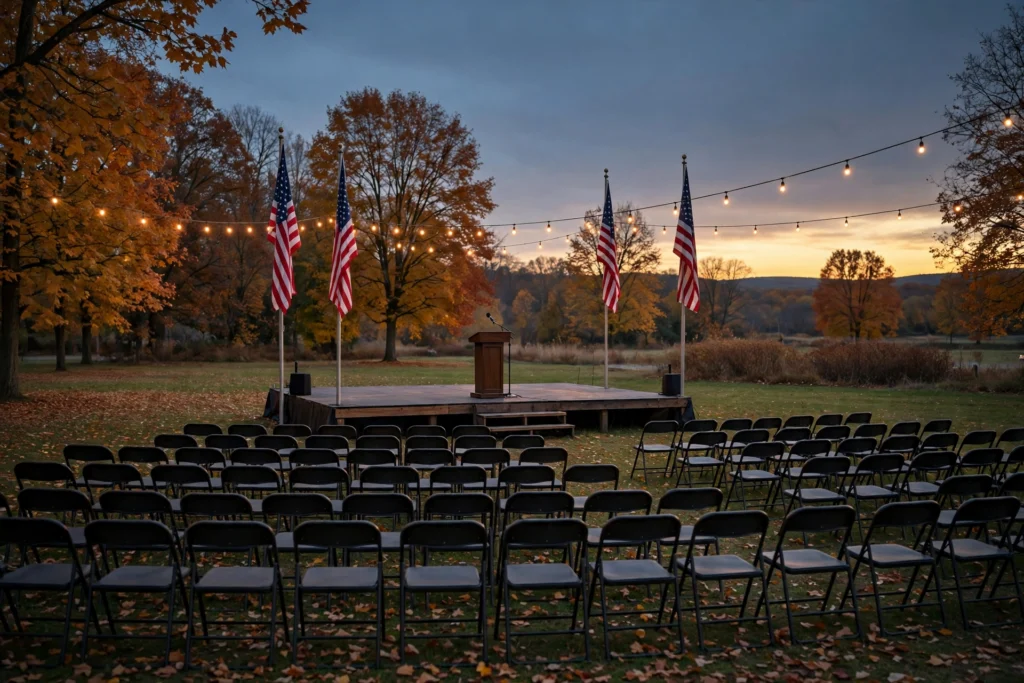
Trump Rally U-Turn: Kansas and Iowa Events Restored
President Donald Trump has reversed course on his final-weekend campaign schedule, restoring two rallies in Kansas and Iowa that his party cancelled only a day earlier, and insisting that Republicans still have a real chance in the midterm elections 2026. The about-turn, announced on Friday, October 30, came after the president spent the day telling reporters that his party could defy the usual midterm pattern, in which the party holding the White House loses ground. A trump rally has been the signature instrument of his campaigns for a decade, so the decision first to scrap two of them and then to put them back, within twenty-four hours, has become a story in its own right in the closing days before voters go to the polls on Tuesday, November 3. The reversal also answers, for the moment, the questions raised by the cancellations themselves: about the president’s health, about the state of two Senate races, and about whether a campaign that had switched to telephone rallies was retreating from the trail or simply reorganising it.
The president made his case in the Oval Office on Friday, during a meeting with Stephen Hubbard, an American detainee recently freed by Russia. Speaking to reporters there, he acknowledged the historical headwind facing any governing party at a midterm election, then pushed back against the idea that defeat was inevitable. Typically, he said, a president’s party loses midterm elections whether the president is good or bad, Republican or Democrat. Then he added the line that gave the day’s coverage its headline: he believes Republicans have a shot at doing well, maybe very well, but certainly pretty well. It was, by his standards, a measured assessment rather than a promise of victory, and that moderation itself was noted by commentators, who pointed out that it stopped well short of predicting that his party would hold both chambers of Congress.
Trump Rally: What Was Cancelled, Then Restored
To understand the reversal, it helps to retrace the forty-eight hours that preceded it. On Thursday, October 29, the Republican National Committee announced that two of the president’s weekend rallies would no longer be held in person. The president had been due to appear in Salina, Kansas, on Saturday and in Dubuque, Iowa, on Sunday. Both events were replaced, in the committee’s plan, by telephone and online rallies reaching voters in nearly twenty states, a format the committee described as a seventy-two-hour closing sprint. The committee’s chairman, Joe Gruters, said the telephone format would let the president reach more voters than a single arena event could hold, and framed the change as a choice about reach rather than a retreat.
Vice President JD Vance’s schedule changed on the same day. He had been due to visit St. Cloud, Minnesota, on Friday, and that visit was also cancelled. The reports available at the time did not attribute a separate, specific reason to the Minnesota change, and it should not be assumed that the same reasoning applied to both men’s schedules. What was clear was that, within a single day, the two most senior figures in the administration had both dropped planned in-person stops in the upper Midwest and the Plains, in states where Republicans are contesting competitive races.
The president’s own remarks on Thursday added to the attention the cancellations drew. Asked about the Kansas decision, he said he did not feel he had to go to Kansas. When a reporter asked whether the decision had anything to do with tiredness from travelling, he rejected the suggestion, saying he felt perfect, and criticised the reporter. He also said that the Republican senator in Kansas, Roger Marshall, was doing very well, implying that a presidential visit would add little in a race his party already expected to win. Those remarks sat uneasily, however, with the polling picture in Kansas, where public surveys have shown a close race, and the contrast between the president’s confidence and the published numbers became one of the threads of the following day’s coverage.
On Friday, the story changed again. The president told reporters in the Oval Office that Republicans in Iowa and Kansas had called him and asked him to come in person, arguing that a live visit would be better than a telephone rally. He said he tried to talk them out of it, suggesting the telephone format instead, but that they pressed him, and so he agreed to hold two rallies on Sunday. A source familiar with the planning gave a different, more logistical explanation, saying the rallies had been rearranged for scheduling reasons to accommodate dozens of additional telephone rallies recently added to the president’s schedule. What matters for voters in Kansas and Iowa is the outcome: the president will now appear in person in both states on Sunday, two days before the election.
Midterm Elections 2026: “We Have a Shot”
The reversal landed in a campaign whose central question is whether Republicans can hold their majorities against the usual midterm tide. Republicans are defending a fifty-three to forty-seven majority in the Senate, while Democrats are seeking to capture at least one chamber of Congress, which would sharply curb the president’s legislative agenda in the final two years of his term. The president has put himself at the centre of the Republican midterm strategy, hoping that his presence will fire up his core supporters, the movement known as MAGA, short for Make America Great Again. That strategy explains both the punishing pace of his October, during which he headlined twenty-five rallies in the month according to Associated Press data cited in Friday’s coverage, and the sensitivity of any change to it. When the candidate at the centre of a strategy cancels appearances, people notice, and when he restores them, people notice that too.
The president’s Friday remarks also need to be read against the health speculation that the cancellations had stirred. He had complained of losing his voice earlier in the week, and the sudden switch to telephone rallies, a format that demands less travel and less physical presence, inevitably raised questions about whether fatigue or illness played a part. The president has denied that, and the restoration of the rallies is, in itself, the campaign’s most direct answer to the speculation: a candidate too unwell to travel could hardly add back two in-person events in two states in a single weekend. Putting the events back was, in effect, the campaign’s fastest answer to that speculation.
Election Polls: Kansas and Iowa on a Knife Edge
The two states at the centre of the reversal are both more competitive than their recent history might suggest, which is why the president’s presence there carries weight. In Kansas, Republican Senator Roger Marshall is seeking re-election against Democrat Adam Hamilton. The polling average cited in Friday’s coverage put Hamilton slightly ahead of Marshall, a striking position for a Democrat in a state that voted comfortably for the president in 2024. In Iowa, the Senate contest pits Republican Representative Ashley Hinson against Democrat Josh Turek, and the polling average there was described as a dead heat. Both races will help decide the battle for the Senate, and both are close enough that a presidential visit in the final weekend could plausibly matter, whether by energising supporters, drawing local coverage, or simply signalling that the national party takes the race seriously.
Early Voting: Nearly 48 Million Ballots Already Cast
One reason the format of the final weekend may matter less than it would have in an earlier era is the sheer scale of early voting. Figures published on Friday showed that a record 47.9 million Americans had already voted in the midterm elections, with participation surging in key battleground states and registered Democrats outpacing Republicans in the early vote. That means that by the time the president stands on stage in Kansas and Iowa on Sunday, a very large share of the electorate in those states and across the country will already have cast a ballot. The audience for a closing rally is therefore, in part, an audience that has already made its choice, and the value of a rally lies as much in energising volunteers and dominating news coverage as in persuading voters who are still undecided.
The Florida event on Friday provided a vivid illustration of that bet. The president’s rally at the Ocean Center in Daytona Beach, a venue holding about nine thousand three hundred people, was packed, according to local reporting, and the president spoke for more than ninety minutes, weaving through subjects from the war in Iran to his old television career. Addressing the Republican gubernatorial candidate Byron Donalds, he said he had thought the Daytona event was going to be his last, and that he had thought he could relax, adding that twenty-eight days in a row of campaigning was a lot. The remark was revealing: it showed a candidate who believed his in-person campaign was essentially done, only to add two more stops within hours.
At Daytona, the president also repeated two of his closing messages. He told the crowd that the rallies were being held for one very simple reason, which he described as stopping what he called America-hating communists from taking over Congress, and he reiterated his promise to deliver five thousand dollars to every adult American citizen if Republicans keep control of both chambers. The five-thousand-dollar promise has been questioned by experts as unlikely. Those themes will compete with the rally story itself for voters’ attention in the final days, and they illustrate why the campaign’s closing message, whether delivered from a stage or by telephone, matters so much.
What Happens Next: Two Rallies on Sunday, Then Tele-Rallies
What happens next will unfold quickly. On Sunday, the president will hold the two restored rallies in Kansas and Iowa, the first test of whether the reversal quiets the speculation that the cancellations stirred. On Monday, the telephone rallies will take over, reaching voters in many states in the final hours before polling day. On Tuesday, November 3, voters will deliver the verdict that matters: whether Democrats’ polling advantage translates into control of one or both chambers, or whether the president’s closing sprint, part in-person and part by telephone, has held the line for his party.
For now, the facts are these. Two rallies, in Kansas and Iowa, were cancelled on Thursday and restored on Friday. At least nineteen telephone rallies remain on the schedule before Election Day. Nearly forty-eight million Americans have already voted. The president says his party has a shot at doing well. Everything else, for the moment, is interpretation, and voters will have the chance to deliver their own verdict on Tuesday.
Source: South China Morning Post