Trump Administration Methane Rollback: EPA Eases Rules
President Donald Trump is expected to announce a plan later today to relax the rules that limit methane leaks from oil and gas wells, using a campaign swing through Texas to unveil an Environmental Protection Agency proposal that would roll back Biden-era standards for the industry. The Trump administration is casting the move as a way to produce more energy and lower costs for Americans, and it arrives one week before the midterm elections, when gasoline prices have become a political liability for Republicans. The announcement is the latest in a string of pre-election steps by the president to address fuel prices, and it pairs an energy-policy change with rallies for his hand-picked Senate candidate in a state that produces more oil and gas than any other.
According to a White House official cited by Reuters, the EPA proposal would roll back rules that required companies to fix leaky equipment and regularly check wells for escaping methane, a potent greenhouse gas. The plan would give relief to small, low-output wells, end a program that used outside groups to report large methane leaks, and ease rules aimed at phasing out the routine burning off of gas at oil wells. The proposal has been in the works for weeks: EPA Administrator Lee Zeldin told an industry gathering in New Mexico on October 7 that the agency was “days not weeks away” from announcing it. The president’s decision to unveil it from the campaign trail in Texas, rather than from Washington, shows how directly the administration is tying energy policy to the midterm fight.
The move is the latest turn in a long-running argument over how much the federal government should police the invisible gas that escapes from wells, pipelines and storage tanks. Methane is the main component of natural gas, and it traps far more heat than carbon dioxide — about 80 times as much over 20 years, according to the Environmental Defense Fund, which attributes almost 30 percent of the global warming experienced so far to the gas. The 2024 standards the administration now wants to unwind were designed to cut those emissions sharply. The rollback would leave much of that work to the companies themselves, and to the states, at a moment when the administration says the priority is affordable energy.
Trump News: What the Rollback Would Change
The proposal takes aim at three parts of the 2024 methane standards. The first is the burden on marginal wells — the low-producing wells that make up a large share of the country’s well count but a small share of its output. The EPA plans to loosen requirements for leak inspections and equipment upgrades at those wells, a change first reported in a draft revision under White House review last month. The second is the Super Emitter Program, which the administration intends to eliminate outright. The third is the set of restrictions on flaring, the practice of burning off excess gas at oil wells, which the previous administration sought to phase out.
The Super Emitter Program was the most novel part of the 2024 rules. It allowed certified third parties, using approved remote-sensing technologies such as satellites and aircraft, to identify large methane releases and notify the facility operators. A release of at least 100 kilograms per hour could trigger a notification, and an operator receiving one had to investigate the suspected release, report its findings and make repairs where the standards required them. Ending the program removes the only federal mechanism that let outsiders flag a major leak.
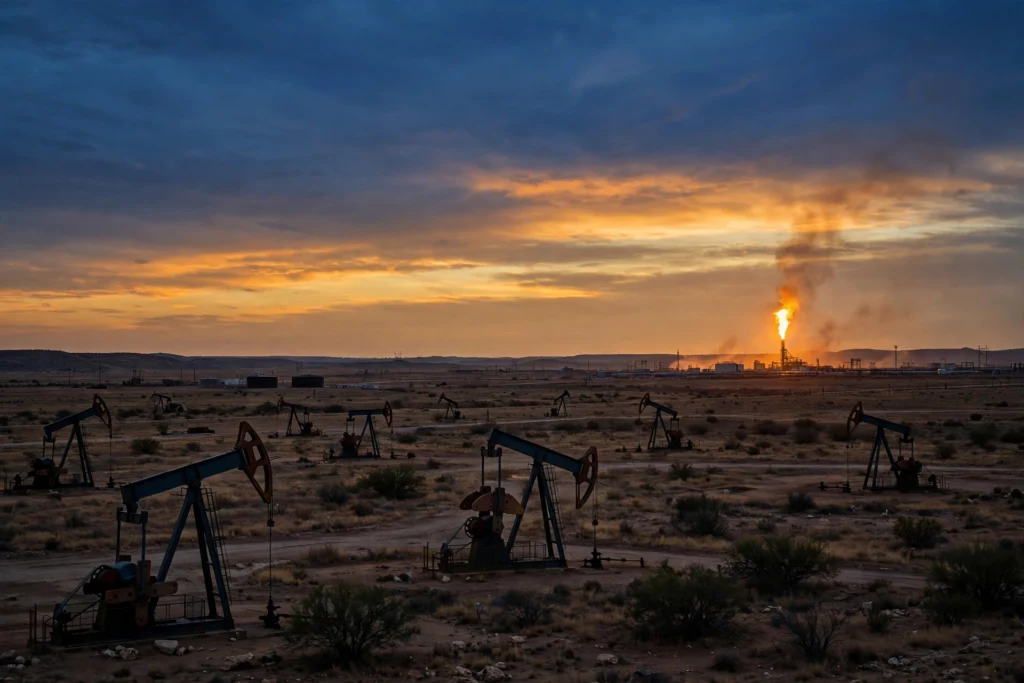
The flaring changes would ease the requirement that operators of new oil wells capture the gas that comes up with the oil instead of burning it off. The 2024 rule required capture after a phase-in period, a step its supporters described as ending a wasteful process that pollutes nearby communities. The administration’s revision would revisit those restrictions, though the precise replacement has not yet been published. Zeldin has framed the whole package as a correction to rules that weigh producers down. “Americans must be able to afford to heat their homes in the winter and fill up their car and drive to work,” he said in a written statement. “They can’t do that when the people producing the energy are weighed down by unnecessary burdens.”
The EPA estimates that the changes would save about $45 billion in regulatory costs, a figure the agency has repeated in its announcements and that industry groups have welcomed. The National Association of Manufacturers, which supports the rollback, says the changes would remove barriers to the production of affordable, abundant domestic energy. “The Trump EPA is committed to fixing this so the U.S. can reach its full energy potential,” Zeldin said. The proposal still has to go through the formal rulemaking process, including publication and a public comment period, before any of the changes take effect.
White House News: The 2024 Methane Rules Being Unwound
The standards now on the chopping block were finalised in 2024, when the Biden administration issued landmark methane rules for the oil and gas sector covering both new and existing equipment. The rules, known in regulatory shorthand as OOOOb and OOOOc, required operators to capture or use gas at oil wells rather than flare it, to conduct regular inspections to find and fix leaking equipment at well sites and compressor stations, and to use zero-emitting electric pumps and process controllers instead of gas-powered devices. The most leak-prone facilities faced quarterly leak detection and repair inspections, and the rules opened a pathway for advanced detection technologies.
The EPA estimated at the time that the standards would achieve reductions of 58 million tons of methane and 16 million tons of smog-forming volatile organic compounds between 2024 and 2038, along with nearly 600,000 tons of toxic air pollution. The methane reductions over that 15-year period were described as the equivalent of taking more than 21.8 million gasoline-powered cars off the road each year. Regulators expected the rules to cut the sector’s methane emissions by about 80 percent over 14 years.
The rules were built on practices the industry already knew how to use. Leak detection and repair, capturing gas instead of flaring it, and zero-emitting controllers are low-cost technologies that have been available to operators for years or even decades, according to the groups that defended the standards. That is why the rollback has drawn an unusual split in reaction: some of the largest oil and gas producers have gone on record in support of federal methane standards, and major producing states including Colorado, Wyoming, Pennsylvania and New Mexico have already been implementing them. Colorado fully adopted the EPA’s methane standards last month.
Midterm Elections 2026: Why Texas, Why Now
The timing and the setting are inseparable from the politics. Trump is using the Texas swing to campaign for Ken Paxton, his hand-picked Senate candidate, with rallies planned in Corpus Christi and Lubbock. Paxton is locked in a close race with Democrat James Talarico, and a loss next Tuesday would complicate the Republican Party’s path to retaining its slim Senate majority. The trip marks Trump’s third visit to Texas this month, and it is part of a broader push into Republican-leaning states that were expected to be safely in hand but have instead become midterm battlegrounds. His October campaign blitz has also taken him to Oklahoma, Alabama, Nebraska, Iowa, Ohio, South Carolina and Mississippi.
Fuel prices are the thread connecting the policy to the politics. Reuters reported that the move is the latest in a string of pre-election steps by Trump to address fuel prices, which have become a political liability for Republicans amid the war with Iran. By pairing the methane rollback with rallies for Paxton, Trump is trying to turn energy policy into votes in a longtime Republican stronghold. The message to voters in Texas is straightforward: the administration is cutting the rules that raise the cost of producing energy, and cheaper energy means cheaper gasoline.
The rallies themselves are the vehicle for the announcement. Trump is scheduled to deliver remarks at 2 p.m. Central time at the Port of Corpus Christi, then travel to Lubbock for a second rally at the Lubbock Memorial Civic Center at 6 p.m. One report said the president is expected to announce the proposal from the Lubbock rally.
Trump Administration: The Marginal-Wells Fight
The sharpest argument over the rollback concerns the marginal wells that would get the most relief. These are low-producing wells, often drilled decades ago, that yield only a small amount of oil or gas each day. They account for about 6 percent of American oil and gas production, according to ProPublica, yet they are responsible for roughly half of the sector’s methane emissions. The reason is simple: there are hundreds of thousands of them, many are old and poorly maintained, and each one can leak. Exempting them from regular leak inspections would leave the largest single source of the industry’s methane largely unchecked.
Environmental advocates argue that the exemption is aimed at the wrong target. Nearly half of the oil and gas sector’s methane emissions originate from low-producing wells, they say, and those wells are typically owned by large, profitable corporations rather than the small operators the administration says it is protecting. The standards, in their view, are achievable and cost-effective measures based on technologies already available to the industry. The counterargument from the administration and its industry supporters is that the compliance costs fall hardest on the smallest producers, for whom a single inspection or equipment upgrade can decide whether a well stays open — and that closing those wells would cut American production without cutting global demand for oil and gas.
The dispute also reaches into the states. Because several major producing states have already adopted their own methane standards, the federal rollback would not change the rules on the ground everywhere. Colorado’s full adoption of the EPA standards last month means the state’s operators will keep following them regardless of what Washington does. New Mexico, Pennsylvania and Wyoming have also been implementing the standards. The result is a patchwork: in some states the 2024 rules will survive through state law, while in others — including Texas, which has not adopted them — the federal rollback would leave the old rules effectively gone.
Trump News: The Long Road to the Announcement
Today’s announcement caps a process that began almost as soon as the administration took office. The Trump EPA moved in 2025 to delay implementation of the 2024 standards, first with an interim final rule and again in December 2025, despite community opposition and concerns about risks to human health. The Environmental Defense Fund challenged the delays in court, and oral argument in its lawsuit took place recently. The group says the failure to enforce the rules has wasted nearly $7 billion in lost energy since early 2025.
The formal rollback proposal was previewed on October 7, when Zeldin announced the plan in a closed-door meeting with the fossil fuel industry at the New Mexico Oil and Gas Association’s annual meeting in Santa Fe. A large coalition of groups, led by the Sierra Club’s Rio Grande chapter, protested outside. Zeldin told the gathering that the proposal would take on “many of the problems American producers and operators have raised with us,” naming the burden on marginal wells, the Super Emitter Program, associated gas and control device requirements. His remark that the agency was “days not weeks away” from announcing the proposal set the clock running, and today’s Texas announcement is the delivery of that promise.
The sequence matters because it shows how the administration has handled the methane rules in two stages: first delay, then repeal. The delays kept the standards from taking effect while the agency prepared the formal revision. The proposal expected today is the second stage — a permanent rewrite rather than a temporary pause. Once it is published, it will open a public comment period, and the final rule will almost certainly be challenged in court by environmental groups and the states that have adopted the standards. The 2024 rules themselves survived legal challenges from industry; the rollback is likely to face the mirror image.
White House News: Reactions and What Happens Next
Reaction to the planned rollback has split along familiar lines, with one notable exception. Industry groups have welcomed it. The National Association of Manufacturers said the changes could save approximately $45 billion while removing barriers to domestic energy production, and the EPA’s own announcement used the same figure. Environmental organisations have condemned it. The Sierra Club’s Rio Grande chapter helped organise the protest at the Santa Fe meeting where Zeldin previewed the plan, and the Clean Air Task Force and the Environmental Defense Fund have warned that allowing more methane to escape will worsen the climate crisis and harm the health of families living near oil and gas sites.
The more complicated reaction comes from inside the industry. Both large and independent producers have gone on record in support of federal methane standards, and some of the biggest companies have said they will keep following the existing rules regardless of what the EPA does. That split weakens the administration’s claim to speak for the whole sector.
What happens next will play out on two tracks. The first is regulatory: once the proposal is published in the Federal Register, there will be a public comment period, and the EPA will have to answer the comments before issuing a final rule. The second is legal and political. Environmental groups and allied states are expected to sue, arguing that the rollback abandons the EPA’s own findings about the harm methane causes and the feasibility of controlling it. Congress could also weigh in, as it did when it repealed other parts of the methane regime. And the election next Tuesday will decide whether the administration keeps the Senate majority it needs to confirm the officials who will carry the policy out. For now, the announcement in Texas is both a policy change and a campaign message — and the voters in Corpus Christi and Lubbock will hear it first.
Source: Reuters