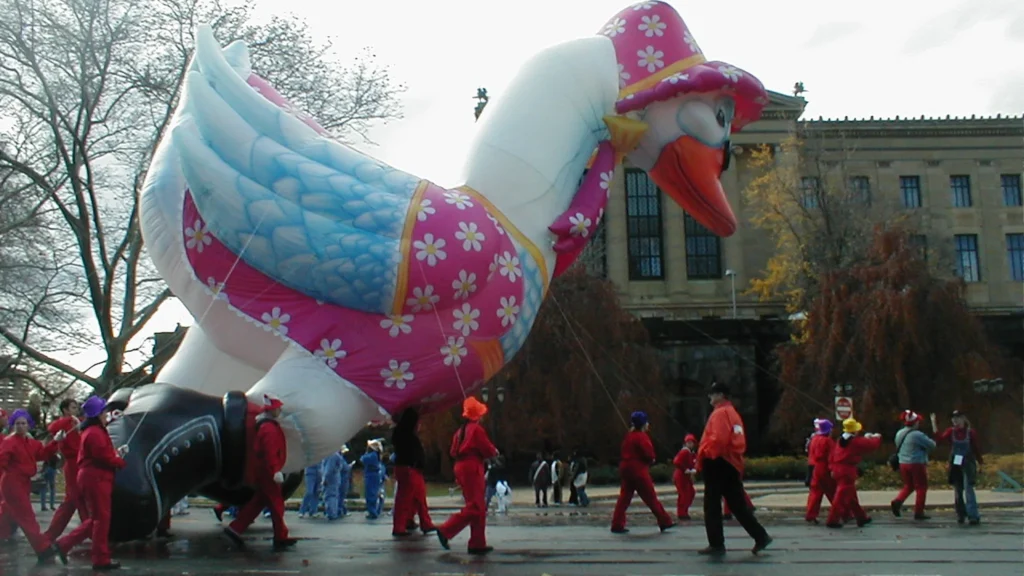
6abc Dunkin’ Thanksgiving Day Parade Canceled for Storm
The 6abc Dunkin' Thanksgiving Day Parade will not march through the streets of Philadelphia this year. The nation's oldest Thanksgiving Day parade has been canceled as a street parade because of a dangerous storm bearing down on the region, and the 107th edition of the Philadelphia tradition will instead be a live television-only celebration airing from 10 a.m. to noon on Thanksgiving Day, Thursday, November 26, 2026. The decision, announced on Wednesday evening, ended a day of mounting worry about whether the parade's giant balloons and thousands of marchers could safely take to the Benjamin Franklin Parkway in winds gusting to 60 miles per hour, and it leaves a holiday tradition that has run for more than a century to be celebrated from living rooms instead of curbsides.
The parade was supposed to wind through Center City and up the Benjamin Franklin Parkway on Thursday morning, from 20th Street and John F. Kennedy Boulevard to the Philadelphia Museum of Art. Instead, 6abc will broadcast a reimagined holiday special from its studios, with many of the planned performers and guests taking part. The station said the live television event will air from 10 a.m. to 12 p.m. on 6abc, and will also stream nationally on Disney+, Hulu and ABC News Live, as well as on 6abc.com and the station's apps. For the families who gather around the parade every Thanksgiving morning, the show will go on, just not on the street where it has marched for 107 years.
Weather News Today: The Storm That Canceled the Parkway
The storm behind the decision is a powerful nor'easter, the coastal storm system that forms along the East Coast and can bring heavy rain, high winds and coastal flooding to the most densely populated part of the country. Forecasters had been watching it for days, and by Wednesday the picture had become clear enough that the parade's fate was effectively sealed. Ahead of the storm, organisers of the 2026 parade said they would keep the signature giant balloons grounded for safety, as high wind warnings went into effect across the Delaware Valley. As the forecast worsened through Wednesday, with gusts of up to 60 miles per hour expected on Thursday along with heavy rain and significant flooding concerns, officials decided to call off the in-person gathering along John F. Kennedy Boulevard and the Benjamin Franklin Parkway entirely.
The decision comes as forecasters warn of potentially dangerous conditions across the Delaware Valley throughout the Thanksgiving holiday. Reports on the storm said it could bring heavy rain, damaging wind gusts and significant flooding, and the threats prompted parade organisers to prioritise public safety over continuing with the outdoor event. In comments reported by 6abc, John Morris, President and General Manager of 6abc, said the decision was made with the safety of spectators, participants and production crews in mind. While cancelling the street parade was not an easy choice, organisers felt it was the most responsible course of action given the forecast, and the station moved quickly to build a television celebration in its place.
How the Decision Unfolded: Balloons First, Then the Parade
The cancellation happened in two stages, and the first stage was the balloons. The giant helium balloons are the parade's most famous feature and its greatest weather vulnerability. They are essentially enormous sails, and in strong wind they become extremely difficult to control. Early on Wednesday, organisers announced that the balloons would stay on the ground, a call made after forecasters said Thursday's winds would exceed safe limits. The parade itself was still scheduled to go on at that point, with floats, performers, marching bands and Santa's arrival still part of the plan, and the station's coverage was set to begin with a pre-show at 8:30 a.m., followed by the parade from 9 a.m. to noon.
By Wednesday evening, that plan had changed. With the forecast worsening and high wind warnings in effect, 6abc called off the street parade and replaced it with a live Thanksgiving special. The sequence shows how quickly a parade decision can move once a storm forecast hardens: a morning spent debating the balloons became an evening spent cancelling the march itself, so that the thousands of people who would have lined the route, and the hundreds of performers and crew who would have marched it, were not left to discover at dawn that the event was off. The station announced the television alternative at the same time as the cancellation, giving viewers a clear plan for Thursday morning rather than simply a disappointment.
How to Watch the TV-Only Thanksgiving Celebration
The televised celebration keeps the parade's place on Thanksgiving morning, even though the march itself is gone. The live television event airs from 10 a.m. to noon on 6abc, WPVI Channel 6, the ABC-owned station that has broadcast the parade since 1966. For viewers outside the Philadelphia region, the broadcast streams nationally on Disney+, Hulu and ABC News Live, and it is also available on 6abc.com and the station's apps across mobile devices, Apple TV, Fire TV, Google TV and Roku. The national streaming options matter this year more than ever, because the parade's audience has long extended far beyond the Delaware Valley, and the television-only format means the whole country will be watching the same show.
The broadcast will be hosted by familiar faces from 6abc, including Rick Williams, Alicia Vitarelli, Karen Rogers, Adam Joseph and Maggie Kent. Vitarelli takes a leading role in this year's edition, and the hosting team will guide viewers through the performances and guests that were planned for the street parade. Organisers say viewers can still expect many of the planned performers and guests to be part of the televised celebration, although the format will necessarily be different from a march down the Parkway. Instead of floats rolling past the crowds, the show will bring the performances to the cameras, and the station has promised a celebration that keeps the spirit of the holiday even without the street.
For the people who would have been there in person, the change is a real loss. The parade draws thousands of spectators to Center City every year, families who claim their spots along the Parkway in the early morning, children waiting for the balloons and for Santa's arrival at the end of the march. This year those families will watch from home, and the hotels, restaurants and shops around the Parkway that depend on parade-day crowds will feel the difference. But the alternative, a parade in dangerous weather with winds that could turn a balloon into a hazard, would have been worse for everyone, and the decision to move the celebration indoors was made with the spectators as much as the participants in mind.
107 Years of Tradition: The Nation's Oldest Thanksgiving Parade
The parade that will not march this year is the oldest Thanksgiving Day parade in the United States, a title Philadelphia has held for more than a century. The 2026 edition is the 107th, which dates the first parade to 1920, and it has run through Depression, war and every kind of weather the Delaware Valley can produce. Visit Philadelphia describes it as the longest-running Thanksgiving Day parade in the country, and its history is woven into the city's identity in a way few civic events can match. Generations of Philadelphians have grown up with it, and the parade's route along the Benjamin Franklin Parkway, past Logan Square and up to the steps of the Philadelphia Museum of Art, is one of the most recognisable civic stages in America.
That long history includes exactly one precedent for what is happening this year. In 2020, during the COVID-19 pandemic, the parade was held as a television-only event, with modifications similar to those made by the Macy's and America's Thanksgiving parades that year. The parade returned to its traditional street format in 2021, and it has marched every year since. Now, in 2026, extreme winds and heavy rain have forced it back to a television-only format for the first time in six years, a reminder that the threats to a parade are not only disease but weather, and that a tradition can be interrupted by a storm as surely as by a pandemic.
The parade has also grown into a national broadcast over its long life. It has been shown on WPVI since 1966, and since 2024 it has been simulcast nationally on ABC News Live, Disney+ and Hulu, taking a Philadelphia institution to viewers across the country. That national reach is one reason the television-only format works as a fallback: the audience is already there, on the same platforms, and the station can stage a show for the cameras without the street. The parade's sponsors and broadcasters have built a television product over decades, and this year that product carries the whole event.
Macy's Postponed, Philadelphia Went to Television: Two Different Calls
Philadelphia was not the only parade facing the storm, and the contrast between the two great Thanksgiving parades shows the choices organisers had. In New York, the Macy's Thanksgiving Day Parade, celebrating its 100th march this year, was postponed outright, moved from Thursday to Saturday, November 28, the first postponement in the parade's century-long history. Macy's, New York City and NBC made the decision together late on Wednesday, judging that the centenary parade, with its giant balloons and its 2.5-mile route through Manhattan, could not safely march in gusts expected to reach 60 miles per hour. The network will now carry the 100th parade on Saturday morning instead, with the same balloons, floats and performers, two days late.
Philadelphia chose differently. Rather than move the date, the city's parade moved to television, keeping its Thanksgiving Day slot but giving up the street. The two decisions reflect the different shapes of the two events. Macy's is a once-in-a-century celebration whose scale and whose balloon fleet made postponement the only way to preserve it intact. Philadelphia's parade, a civic tradition rather than a centenary set piece, could be reimagined as a broadcast without losing its place on the holiday. Both cities faced the same storm, and both chose safety over spectacle. They simply chose different ways of keeping the celebration alive.
The storm that forced both decisions is the same nor'easter, and its effects stretch far beyond the parade routes. In New York, Governor Kathy Hochul warned that the city, Long Island and the lower Hudson Valley could be battered by heavy rain, coastal flooding and gusts of up to 60 miles per hour. In New Jersey, Governor Mikie Sherrill declared a statewide state of emergency ahead of the storm, warning of damaging winds, heavy rainfall, coastal flooding and potentially prolonged power outages, with the declaration taking effect at 6 p.m. on Wednesday. Forecasters said the East Coast could experience its highest water levels since Superstorm Sandy, while parts of Delaware and New Jersey faced a significant risk of power outages from the strong winds.
US News Today: Thanksgiving Travel Chaos as the Storm Hits
The storm is not only disrupting the parades. It is threatening travel chaos for as many as 80 million people hitting the road and flying around the Thursday holiday, one of the country's busiest travel seasons. The nor'easter is arriving at the worst possible moment, on the day when more Americans travel than on almost any other day of the year, and the same winds and rain that grounded the parade are now testing the airports, highways and railways that carry them home. Thanksgiving week is the busiest travel period in the United States, and the combination of record numbers of travellers and a major storm is exactly the scenario airlines and airports dread.
The weather has already raised concerns over air travel, with Southwest Airlines and United Airlines warning Thanksgiving Day passengers about possible disruptions in the Northeast. The warnings came as the storm gathered strength over the region, and they added to a travel week that was already under strain. The West Coast is facing its own weather emergency at the same time, with severe storms, coastal flooding and king tides battering the Pacific shore. Powerful waves have already caused part of a pier in Pacifica, south of San Francisco, to collapse, while high tides have broken water-level records around San Diego. The picture across the country is of a Thanksgiving defined by weather, and the parade's cancellation is the most visible casualty of the storm, but far from the only one.
For the Delaware Valley, the danger is specific and immediate. Heavy rain and wind gusts of up to 60 miles per hour are expected through Thursday, with flooding a serious concern in low-lying areas. The same conditions that made the parade unsafe make the roads unsafe, and officials have urged residents to stay home where possible and to avoid driving through flooded streets. The parade's move to television fits that advice: a holiday best celebrated indoors this year, with the storm outside and the show on the screen.
What Happens Next: A Parade That Will Be Back
What comes next for the Philadelphia parade is, for now, a television show and a wait. The live special airs from 10 a.m. to noon on Thursday, and the station will measure its success by whether it captures something of the parade it replaces. The performers, the hosts and the holiday spirit will all be there. What will be missing is the street itself: the crowds along the Parkway, the bands marching past Logan Square, the balloons floating above the museum steps, and the particular feeling of a city gathered in one place on a holiday morning.
If the 2020 precedent holds, the street parade will be back next year. When the pandemic forced the parade onto television in 2020, it returned to the Parkway in 2021, and there is no reason to think this storm will do more lasting damage than the pandemic did. The parade has survived a century of weather, and a single storm, however severe, is unlikely to end it. The 108th edition, a year from now, should once again wind from 20th Street and John F. Kennedy Boulevard to the Philadelphia Museum of Art, with the balloons overhead and the crowds lining the route.
For this year, though, Thanksgiving in Philadelphia will be different. The nation's oldest parade will not march, the Parkway will be quiet, and the celebration will happen on television instead. The storm will have passed by the weekend, the winds will have dropped, and the city will return to normal. But the 107th parade will be remembered as the year the weather won, the year the oldest Thanksgiving parade in America stayed home, and the year Philadelphia watched its parade the way the rest of the country has always watched it: on a screen, together, from the warmth of home.
Source: 6abc Philadelphia