Australia News: Sinner Out of Australian Open After Surgery
Jannik Sinner will miss the Australian Open in January after undergoing surgery on a persistent knee injury, tournament organisers confirmed on Thursday, November 26, ending the world No. 2's bid for a third consecutive title in Melbourne and extending an absence from the sport that has already lasted nearly six months. The 25-year-old Italian, who won the Australian Open in 2024 and 2025, has not played a match since winning Wimbledon in July, and the surgery, a minor operation on his right knee carried out on Tuesday, means he will not be fit in time for the first Grand Slam of 2027. The Australian Open, which starts in Melbourne on January 17, will be the first main draw since 2019 not to include Sinner, and his absence will reshape the tournament and the men's game at the start of the new season.
Tennis Australia chief executive Andrew Abdo confirmed the news in a statement to Reuters and the Associated Press. "We've been in regular touch with Jannik's team and they've confirmed he won't be joining us for the AO in January following his recent surgery," Abdo said. "Jannik loves competing here in Melbourne and is looking forward to returning for AO 2028." The statement was the formal confirmation of what had been expected since Sinner announced the surgery earlier in the week, and it closed the door on a comeback that the Italian had been targeting for months.
Tennis News: The Surgery and the Knee That Would Not Heal
Sinner announced on Tuesday that he had undergone a minor operation on his bothersome right knee because it had not responded well to other treatments. "Over the past few months, together with my team we've tried everything to treat my injury without surgery," Sinner said in a statement posted on social media. "After some very encouraging progress early on, my knee unfortunately didn't respond as we'd all hoped, that's why today I underwent a minor surgery to improve the condition of my iliotibial band." The iliotibial band is a thick band of fibrous connective tissue running down the outside of the thigh, and injuries associated with it are typically caused by overuse, according to the Mayo Clinic.
The operation was carried out by orthopaedic surgeon Professor Lasse Lempainen at a clinic in Turku, Finland, after Sinner consulted numerous doctors and specialists around Europe in search of a solution. The procedure requires an estimated three months of recovery, according to The Athletic, which would cause Sinner to miss the Australian Open and the hard-court tournaments in February, while the Italian sports daily Corriere dello Sport reported that he was facing up to four months out, extending his long absence from the tour. Experts have speculated that the absence could last three months, and the first reported timeframes for his return came in at around three to four months, although the exact timetable is not yet set in stone.
When Sinner shut down his 2026 season last month, a statement from his management team said the 25-year-old Italian "will follow a course of treatment for inflammation in his knee", and the hope at the time was that conservative rehabilitation would be enough. The iliotibial band, which runs from the outside of the hip to the outside of the knee, can become inflamed from being overworked, and the treatment for that inflammation is usually rest, physiotherapy and a gradual return to activity. Sinner tried that approach for months, and for a time it seemed to be working. But the knee did not respond as hoped, and surgery, which he had tried to avoid, became the only option.
Sinner also revealed that he had lost a significant amount of weight after having his tonsils removed, and that he was in the process of rebuilding muscle, a further complication in a recovery that has been longer and harder than anyone expected. When he spoke on November 10 about returning to action in Melbourne, he said: "The aim is to go to Australia." Two weeks later, the aim had changed, and the focus was on a full recovery rather than a rushed return. "I miss playing tennis. Right now, however, it is crucial that I take care of my body, because I want to keep playing for another 10 to 15 years," Sinner said, a statement that captures the long-term thinking behind the decision to have surgery rather than to risk further damage by playing through the injury.
A Brilliant Season Cut Short by Injury
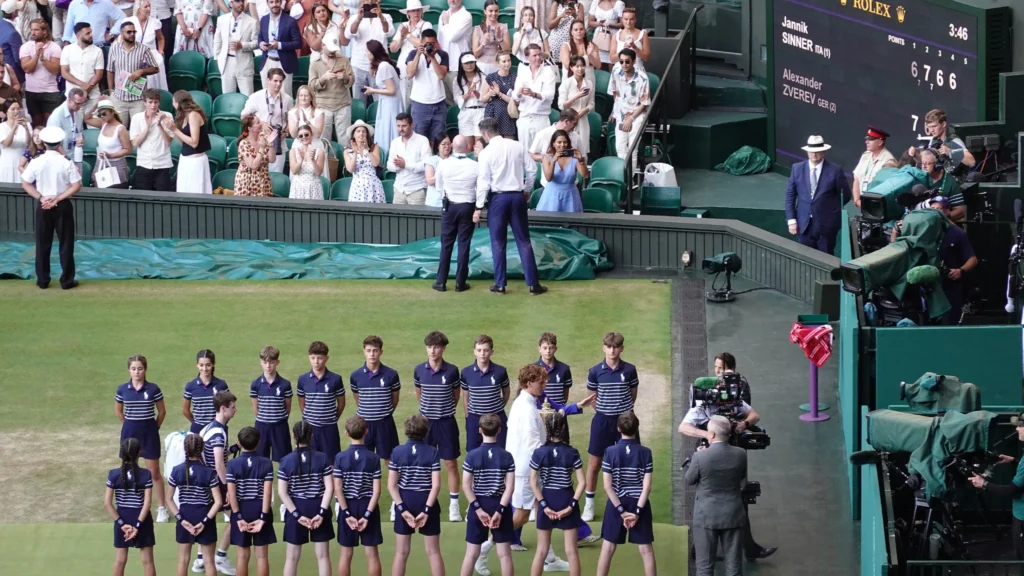
The tragedy of Sinner's injury is that it has interrupted one of the finest seasons in the history of men's tennis. Before his knee stopped him, Sinner was having a brilliant campaign, with five Masters 1000 titles alongside his triumph at Wimbledon, and a 94 percent win record in 2026 that was the best of his career. He won his fifth Grand Slam title at Wimbledon in July, defeating Alexander Zverev in the final on July 12, and he had been romping away from the rest of the ATP Tour, with Carlos Alcaraz out injured, when his knee intervened. There was no one remotely close to Sinner in the opening half of the 2026 campaign, and the season had promised to be a historic one.
The last match Sinner played was the Wimbledon final, a victory that completed a successful defence of the title he had first won the previous year, and that confirmed his status as the best player in the world. Since then, he has not appeared on the ATP Tour, and as the days and weeks went by, it became more and more clear how severe the injury was. During his absence, he lost his world No. 1 status to Alexander Zverev, the man he had beaten in the Wimbledon final, and the rankings, which had reflected his dominance in the first half of the year, began to reflect his absence instead.
The Australian Open had been the target for his comeback from the start. Sinner had targeted the tournament for his big-time return after nearly six months out with the right knee injury, and he had said a fortnight ago that the aim was to go to Australia. The tournament had even hinted at his absence through a social media post on Wednesday, wishing him a speedy recovery and saying he would be missed in Melbourne, a post that now reads as a farewell rather than a welcome. The confirmation on Thursday, that he will not be joining the field in January, was the inevitable conclusion of a story that had been building for weeks.
What Sinner's Absence Means for the Australian Open
The Australian Open without Sinner is a different tournament, and the organisers know it. Sinner won the title in 2024 and 2025, and he was the defending champion, the player the tournament had built its marketing around, and the favourite to win it again. His absence opens up the draw, and it gives the other contenders, above all Carlos Alcaraz and Alexander Zverev, a clearer path to the title. Zverev, who took the world No. 1 ranking from Sinner during his absence, will arrive in Melbourne as the top seed, and Alcaraz, who was out injured for part of 2026, will be looking to reassert himself at the start of the new season.
The tournament itself will feel the loss in other ways. Sinner is one of the most popular players in the sport, and his matches in Melbourne, played in front of packed crowds on Rod Laver Arena, have been among the highlights of the last two Australian Opens. The organisers will miss his presence, and the fans who bought tickets hoping to see him will be disappointed, but the tournament is bigger than any one player, and the draw remains strong. The Australian Open has a history of producing new champions when the favourites fall away, and the 2027 edition may be remembered as the year a new name joined the list of winners.
For Sinner, the focus is now on recovery, and on a return that is measured in months rather than weeks. The three-month estimate would have him back in time for the Sunshine Double, the hard-court tournaments in Indian Wells and Miami in March, but the four-month estimate would push his return to the clay season, and the risk of rushing back is one that he and his team are determined not to take. A return after the Sunshine Double, for what could be a very physical and demanding clay swing that could put the knee at more risk if it is not fully ready, could mean a full year before Sinner once again enters competition at his best, and the decision to take the time needed, rather than to chase a single tournament, is the right one for a player who hopes to compete for another decade or more.
The Road Back: Recovery, Rebuilding and the Long View
Sinner's recovery will be a slow process, and it will involve more than just healing the knee. The surgery on the iliotibial band is described as minor, but the rehabilitation that follows is not, and it will require months of physiotherapy, strength work and a gradual return to the court. The weight he lost after having his tonsils removed must be rebuilt, and the muscle he lost during six months away from the tour must be regained. The process is familiar to any athlete who has been through a long injury layoff, and it is as much mental as it is physical, a test of patience for a player who is used to winning and who now must learn to wait.
The long view is what matters. Sinner is 25 years old, and he has already won five Grand Slam titles, five Masters 1000 titles in a single season, and the world No. 1 ranking. He has time on his side, and the decision to have surgery, to take the months needed to recover fully, and to target a return when the knee is ready rather than when the calendar demands it, is the decision of a player thinking about the next ten to fifteen years rather than the next tournament. "I'm a tennis player, not a doctor, so my only option is to trust them," Sinner said of the specialists who treated him, a humility that is rare in a sport defined by self-belief, and a sign that he understands the seriousness of the injury.
The Australian Open will go on without him, and the men's game will go on without him, but the sport will be poorer for his absence, and the tournament in January will be a reminder of what might have been. Sinner's bid for a third consecutive title in Melbourne is over, and his season, which had promised so much, is over too. What remains is the recovery, the rebuilding, and the hope that when he returns, the knee that has cost him six months of his career will be strong enough to carry him through the decade that lies ahead. The Australian Open is looking forward to his return in 2028, and so is the sport.
The Rivalry on Hold: Sinner, Alcaraz and the Men's Game
Sinner's absence is felt most acutely in the rivalry that has defined men's tennis in recent years, the contest between Sinner and Carlos Alcaraz, which has produced some of the finest matches in the history of the sport. The two players, both in their early twenties, have divided the Grand Slams between them and have pushed each other to heights that neither might have reached alone. But the rivalry has been on hold for much of 2026, with Alcaraz out injured for part of the season and Sinner absent since July, and the Australian Open in January will be the latest tournament in which the two do not meet. The sport's two brightest stars, who should be contesting the biggest titles, have spent the year watching from the sidelines, and the men's game is poorer for it.
The beneficiary of their absence has been Alexander Zverev, who took the world No. 1 ranking from Sinner during the Italian's absence and who will arrive in Melbourne as the top seed. Zverev, who lost to Sinner in the Wimbledon final in July, has been the most consistent player in the second half of the season, and the Australian Open is his opportunity to win the Grand Slam title that has eluded him and to confirm his status as the best player in the world. But the ranking and the seeding will carry an asterisk, a reminder that the player who was beating everyone in the first half of the year was not there to be beaten in the second.
Source: Reuters