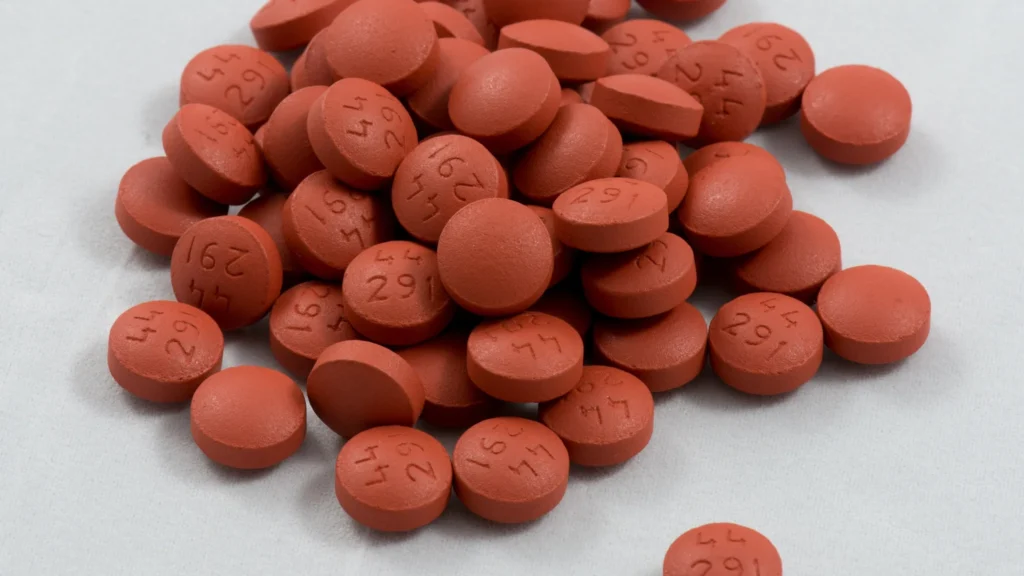
FDA Recalls: Ibuprofen Tablets Pulled Over Metal Particles
A nationwide recall is under way for prescription-strength ibuprofen tablets after aluminium particles were found on the surface of the pills, the Food and Drug Administration announced this week. Golden State Medical Supply, a pharmaceutical supplier based in Camarillo, California, initiated the voluntary recall of one lot of its 800-milligram ibuprofen tablets after discovering tiny aluminium particles on the surface of some of the pills, and the FDA posted the company's announcement on Tuesday, November 24. The recall, which affects a single lot of the painkiller sold to one of America's largest drug distributors, is the second nationwide ibuprofen recall posted by the FDA this year, and it is a reminder of how even the most familiar medicines can be pulled from the shelves when a manufacturing defect is found.
The recalled product is prescription-only ibuprofen, the 800-milligram strength that doctors prescribe for mild to moderate pain, menstrual cramps and the symptoms of rheumatoid arthritis and osteoarthritis. It is not the over-the-counter ibuprofen that millions of Americans buy in supermarkets and pharmacies, and it is not the children's liquid ibuprofen that was recalled earlier this year. But it is a widely used medicine, distributed through hospitals, clinics and pharmacies across the country, and the recall has prompted the FDA, the distributor and the manufacturer to urge patients to check their medicine cabinets and to stop taking tablets from the affected lot.
FDA Recalls: Which Ibuprofen Is Affected
The recall covers a single lot of Golden State Medical Supply's ibuprofen 800 mg tablets, and the details are specific enough for any patient or pharmacist to check. The product is described as Ibuprofen 800 mg Tablets, Rx only, in a 500-tablet bottle. The National Drug Code is 51407-841-05, the lot number is GS069303, and the expiration date is January 2030. The affected lot was sold to McKesson, the Texas-based health care services and pharmaceutical distribution company, which has been instructed to stop distribution immediately, quarantine any remaining inventory, notify its customers and return the product to Golden State Medical Supply.
The FDA's recall report describes the problem as potential aluminium particulate contamination localised on the surface of the tablets. The particles are tiny, and the FDA has warned of stomach irritation and abrasion from the recalled pills, but it has said the risk is low, given the small size of the aluminium particles. No adverse events have been reported to date, according to the company, and the FDA has not received any reports of patients being harmed by the tablets. The recall is precautionary, a response to a defect found in manufacturing rather than to injuries in the field, and it is being handled at the consumer level, which means patients who have the tablets at home are being told to act.
The distinction between the prescription and over-the-counter versions matters. The 800 mg ibuprofen tablet is only available by prescription, not over the counter, according to GoodRx, and it is prescribed at a strength four times higher than the standard 200 mg tablet sold in shops. Patients who take it are typically being treated for ongoing pain or inflammation, and they may have been taking the same prescription for months or years. For those patients, the recall is not just an inconvenience but a disruption to a treatment they rely on, and the advice to stop taking the tablets and consult a health professional is one they will need to act on promptly.
What Patients Should Do About the Ibuprofen Recall
The advice for patients who have the recalled ibuprofen is straightforward, and it begins with checking the lot number. Anyone with a bottle of ibuprofen 800 mg tablets should look for the National Drug Code 51407-841-05 and the lot number GS069303, and check the expiration date of January 2030. If the bottle matches, the tablets should not be taken. Patients are being told to stop taking tablets from the affected lot, to consult a health professional, and to return unused pills to their pharmacy. Adverse reactions can be reported to the FDA's MedWatch Adverse Event Reporting programme, online at the FDA's MedWatch reporting page or by calling 800-332-1088.
Consumers with questions can contact Golden State Medical Supply directly at 800-284-8633, extension 116, Monday through Friday between 7:30 a.m. and 4 p.m. Pacific time, or by email at recalls@gsms.us. The company has said it has not received any reports of adverse events linked to the lot, and it is cooperating with the FDA and with McKesson to ensure that the remaining stock is quarantined and returned. McKesson, which received the lot, has been instructed to stop distribution, quarantine the remaining inventory, notify customers and return the product, a chain of actions that is designed to get the tablets out of circulation as quickly as possible.
The recall is a consumer-level recall, which means it reaches all the way to patients who already have the medicine at home, rather than stopping at the wholesale or pharmacy level. That is the most serious kind of recall the FDA oversees, and it reflects the judgment that the tablets, even though the risk is described as low, should not be taken by anyone. The FDA's warning about stomach irritation and abrasion is a reminder that even tiny metal particles can damage the lining of the stomach and gut, and that the risk, while low for any single tablet, is not one the agency is willing to accept.
A Second Ibuprofen Recall in a Single Year
The Golden State Medical Supply recall is at least the second nationwide ibuprofen recall posted by the FDA this year, and the earlier one was a reminder that manufacturing defects in common painkillers are not rare. In March, Strides Pharma, an India-headquartered company, recalled 89,592 bottles of its 100-milligram children's ibuprofen oral suspension, manufactured for Taro Pharmaceuticals USA in 4-fluid-ounce bottles under lot numbers 7261973A and 7261974A, after complaints of a gel-like mass and black particles in the liquid. The FDA classified that recall as Class II, its second-highest urgency level, noting that any serious health consequences were remote, but the recall still took tens of thousands of bottles of children's medicine off the shelves.
The two recalls are different in their details, one involving aluminium particles on adult prescription tablets, the other involving a gel-like mass and black particles in a children's liquid, but they share a common cause: contamination during manufacturing. The FDA's recall system is designed to catch these defects, and the fact that two ibuprofen recalls have been posted in a single year says as much about the vigilance of the system as it does about the state of manufacturing. The agency posts dozens of recalls every year, for medicines, food and medical devices, and the ibuprofen recalls are part of a much larger pattern of oversight that most patients never see until a medicine they take is affected.
The March recall also illustrates how the system works. The complaints about the children's suspension came from patients and pharmacists who noticed something wrong with the medicine, and the FDA's investigation led to a recall that was classified by urgency and communicated to the public. The Golden State recall followed a similar path, with the company discovering the contamination itself and initiating the recall voluntarily, and the FDA posting the announcement to make sure the information reached patients and pharmacists. The voluntary nature of the recall does not make it any less serious, and the FDA's involvement ensures that the information is public and that the distributor is held to account.
How the FDA Recall System Works
The FDA's recall system is one of the most important, and least understood, parts of the American drug safety net. When a manufacturer discovers a defect in a medicine, or when the FDA's own inspections or adverse event reports reveal a problem, the agency can ask the manufacturer to recall the product, and in most cases the manufacturer does so voluntarily. The recall is then classified by urgency: Class I for products that could cause serious health consequences or death, Class II for products that could cause temporary or reversible health problems, and Class III for products that are unlikely to cause health problems. The Golden State ibuprofen recall, with its warning of stomach irritation and abrasion and its assessment that the risk is low, sits in the lower end of that scale, but it is still a recall, and it still requires action from everyone in the supply chain.
The system depends on the willingness of manufacturers to report defects, on the diligence of distributors like McKesson to quarantine and return stock, and on the ability of pharmacists and patients to check lot numbers and act on the information. The FDA's MedWatch programme, which collects reports of adverse reactions and quality problems from patients and health professionals, is a crucial part of that system, and the agency encourages anyone who experiences a problem with a medicine to report it. The Golden State recall is a case study in how the system is supposed to work: a defect was found, the manufacturer acted, the distributor was instructed to stop distribution, and the public was informed.
The recall also highlights the complexity of the modern drug supply chain. A single lot of ibuprofen, manufactured by a California supplier, sold to a Texas distributor, and distributed to pharmacies and hospitals across the country, can reach thousands of patients before a defect is found. The lot number, the National Drug Code and the expiration date are the tools that make it possible to trace that lot and pull it back, and the fact that the FDA's announcement includes all three is what makes the recall actionable. Without them, patients would have no way of knowing whether the tablets in their medicine cabinet were the ones affected.
What Happens Next for the Recalled Ibuprofen
The next steps for the recall are practical and immediate. McKesson will quarantine the remaining stock and return it to Golden State Medical Supply, and the pharmacies and hospitals that received the lot will be notified and asked to return their stock. Patients who have the tablets at home will need to check their bottles, stop taking the affected lot, and talk to their doctor or pharmacist about an alternative. The 800 mg strength is widely available from other manufacturers, and a pharmacist should be able to supply a replacement from a different lot or a different supplier without interrupting a patient's treatment.
The longer-term question is what the recall says about the manufacturing of one of the world's most widely used medicines. Ibuprofen is taken by millions of people every day, for everything from headaches to arthritis, and it is one of the safest and most effective painkillers ever developed. The fact that it can still be recalled for contamination is a reminder that no medicine is immune to manufacturing defects, and that the safety net that catches those defects, the FDA, the manufacturers, the distributors and the patients who report problems, is as important as the medicine itself. The Golden State recall is a small story in the scale of American health care, but it is a story that matters to every patient who takes the tablets, and to everyone who depends on the system that keeps them safe.
Ibuprofen: One of the World's Most Used Medicines
Ibuprofen is one of the most widely used medicines in the world, and its history is a reminder of how a single drug can change the way pain is treated. The drug was discovered in the 1960s by a team led by Stewart Adams at Boots, the British pharmaceutical company, who was looking for a safer alternative to aspirin for the treatment of rheumatoid arthritis. Adams tested the compound on himself, taking it for a hangover before a speech, and the drug was launched in the UK in 1969 as Brufen, before becoming available over the counter in the 1980s. It is now on the World Health Organisation's list of essential medicines, and it is taken by millions of people every day for everything from headaches and period pain to arthritis and sports injuries.
The drug belongs to a class of medicines called non-steroidal anti-inflammatory drugs, or NSAIDs, which work by blocking the enzymes that produce prostaglandins, the chemicals that cause pain, fever and inflammation. At the 200 mg strength sold over the counter, it is one of the safest painkillers available, and it is recommended by doctors around the world as a first-line treatment for mild to moderate pain. At the 800 mg prescription strength, the dose affected by this recall, it is used for more severe pain and inflammation, and it is prescribed for conditions where a higher dose is needed to control symptoms.
Like all NSAIDs, ibuprofen carries risks, and the official guidance reflects them. The drug can irritate the stomach lining, and it can increase the risk of stomach ulcers and bleeding, particularly in older patients and in those who take it for a long time or at high doses. It can also affect the kidneys and raise blood pressure, and it is not recommended for people with certain heart conditions. The aluminium particles found on the recalled tablets add a new risk to that list, the risk of stomach irritation and abrasion from tiny metal fragments, and it is that risk, even though the FDA has said it is low, that has prompted the recall. For a drug as widely used as ibuprofen, even a small risk, multiplied across thousands of patients, is one the regulator is not willing to accept.
Source: USA Today