Ukraine War News: Boehly Deal for Lukoil Assets
The ukraine war news this week is not only about the fighting. On Wednesday, November 25, an American-led consortium headed by billionaire Todd Boehly announced that it had signed a deal to acquire the international energy assets of Lukoil, the Russian oil giant under United States sanctions. If the Treasury Department approves it, one of the largest portfolios of oil fields, refineries and petrol stations ever assembled outside Russia would move into American and allied hands — with a major Trump donor at the centre of the deal.
The deal arrives on the 1,736th day of the full-scale war in Ukraine, at a moment when Washington's efforts to end the fighting have produced no settlement and when the administration's pressure campaign against Moscow's oil revenues has become its sharpest economic weapon. The consortium says no cash will change hands. Instead, Lukoil securities worth 10 billion dollars will be swapped for the overseas business, with the shares held in escrow and out of Moscow's immediate reach. The United States government itself, through its development finance arm, will take a stake in the new company and a share of its future profits. Supporters call it sanctions working as intended; critics warn Washington is both bidder and referee.
What the Boehly Consortium Agreed to Buy
The consortium is led by Eldridge, the investment firm run by Boehly, and brings together four partners: Eldridge, the United States International Development Finance Corporation (DFC), the United Arab Emirates investment firm Catena Investment Holding, and the American investment bank Xtellus Partners. The group announced a definitive agreement to acquire Lukoil International GmbH, the Austrian-registered holder of Lukoil's foreign business, and said the portfolio would be completely severed from the sanctioned Russian parent once the deal closes, with the venture renamed.
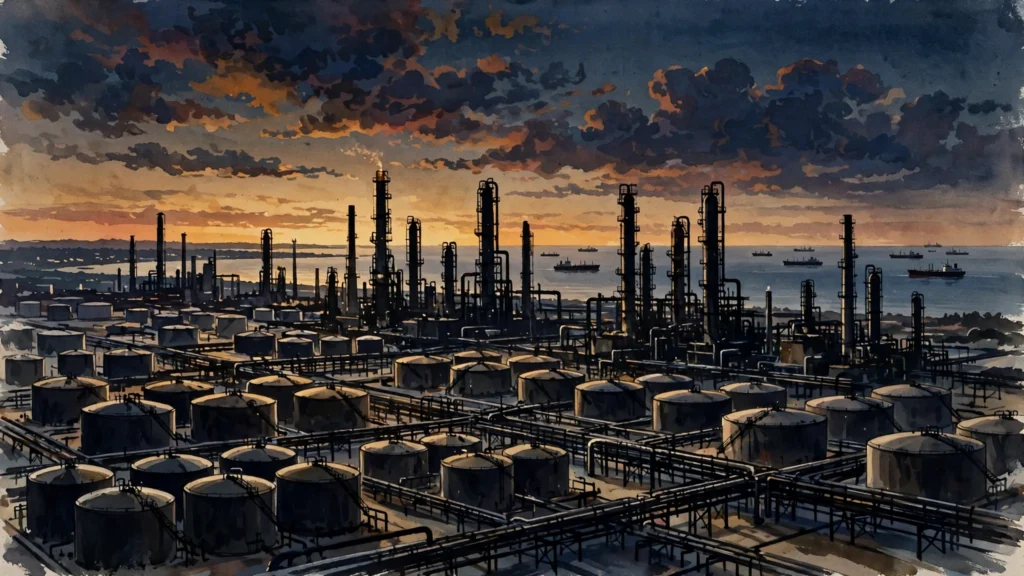
The scale is enormous. The portfolio spans oil and gas fields in 11 countries producing around 350,000 barrels of oil equivalent a day, including major fields in Azerbaijan and Kazakhstan. It includes three European refineries — Burgas in Bulgaria, the largest refinery in the Balkans; Zeeland in the Netherlands; and Petrotel in Romania — with combined capacity of about 350,000 barrels a day, plus roughly 2,000 petrol stations across 16 countries and trading operations reaching from Western Europe to the Middle East, Central Asia and Africa. Two people familiar with the terms put the value at about 16 billion dollars, with a Washington analysis putting it closer to 20 billion. It is one of the biggest disposals of Russian-owned energy infrastructure since the invasion of February 2022, and Lukoil's filling stations also operate in the United States, including in Pennsylvania, New Jersey and New York.
The $10 Billion Share Swap: No Cash for Moscow
The most unusual feature of the deal is how Lukoil will be paid — or, more precisely, how it will not be paid. Under the terms, the consortium will exchange restricted Russian shares of Lukoil and other Russian companies for 100 per cent of the equity in Lukoil International. No money will be sent to Russia. The shares were bought from American and British funds and banks that held them for retail investors, and many were frozen after the 2022 invasion.
The swapped shares will not go straight to Lukoil. They will be placed in a restricted custodial account in the United Arab Emirates, outside the scope of American jurisdiction, and held for five years or until sanctions are lifted. The DFC, acting on behalf of the United States, will receive an ownership interest at no upfront cost to the American taxpayer, and Washington will take a share of future profits once the private investors have recouped their capital and an agreed rate of return, with a role on the company's governing board. Boehly has declined to detail the partners' equity stakes, and has said closing could take up to a year. The consortium also holds a 60-day exclusivity period to finalise the transaction, and an earlier version of the same share-swap idea was initially rejected by the Treasury before winning support from the State Department.
Trump Administration: Why Washington Backed the Deal
For the trump administration, the agreement is being presented as a foreign policy win, and the government's own participation is the clearest sign of how much it matters to the White House. The DFC is the government's international investment arm, created under a 2018 law, and its mandate is to mobilise private capital for projects that advance American foreign policy. Its presence in the buying group turns what could have been a purely commercial takeover into an instrument of statecraft.
A DFC official told reporters that moving strategic energy infrastructure into American or allied hands is a key policy priority of the administration, and that Washington expects the deal, if approved, to help curb Moscow's ability to fund its war in Ukraine while replacing Russian influence with American influence in strategic markets. The logic runs through the economics of the war: oil and gas revenues have been the Kremlin's most important source of hard currency since the invasion, and the administration argues that squeezing those revenues is the fastest way to force President Vladimir Putin toward a settlement. Sanctioning Lukoil and its larger rival Rosneft was designed to cut off that income at the source, and the sale extends the pressure by removing the refineries and filling stations that turned Russian crude into cash abroad. The deal also hands Washington a board seat and a profit share, fitting the White House argument that energy dominance means controlling infrastructure abroad as well as pumping oil at home.
How US Sanctions Forced Lukoil to Sell
The road to this week's announcement was paved by sanctions. On October 22, 2025, the Treasury Department sanctioned Lukoil and Rosneft, Russia's two largest oil companies, to cut off funding for the war. Announcing the measures, Treasury Secretary Scott Bessent said that given President Putin's refusal to end what he called a senseless war, the Treasury was sanctioning the two companies that fund the Kremlin's war machine. General licences issued alongside the sanctions kept essential operations running, but the message was unmistakable: the international business could not survive in its existing form.
Lukoil had been quietly looking for buyers as early as 2023, but the sanctions accelerated the process. In November 2025, the Treasury's sanctions office issued General Licence 131, allowing the company to negotiate a sale to an unsanctioned buyer. Its guidance set three conditions: the deal must completely sever the overseas unit's ties with Lukoil, block any funds owed to Lukoil until sanctions are lifted, and not provide a windfall to the Russian parent. The licence has been extended 12 times and expires on December 19, 2026. The sale process that followed was troubled: the Swiss trader Gunvor, now Centalion, made an offer that collapsed without Treasury approval after the administration called the firm a puppet for the Kremlin, an allegation it denied, and the Treasury publicly killed the deal on November 6. Then in January 2026 the private equity firm Carlyle reached a provisional agreement to buy the assets, excluding those in Kazakhstan — but the Treasury never approved it, the agreement lapsed in July, and Carlyle walked away in October.
Donald Trump Latest News: The Donor Question
The identity of the deal's leading investor has drawn as much attention as the assets themselves. Boehly is a part-owner of the Los Angeles Dodgers and the chairman and chief executive of Eldridge, an asset management and insurance holding company with about 75 billion dollars under management and more than 15,000 employees. He is also a donor to pro-Trump causes, having contributed 1 million dollars in 2025 to MAGA Inc, the political committee supporting the president, and 2 million dollars to pro-Trump causes overall, according to figures cited in Washington analysis of the deal.
That record has raised questions about whether a major Republican donor is benefiting from an administration he helped to fund, and whether the government's dual role can be kept clean. The concerns sharpened because of who else was in the consortium at various points: September reporting described a group including Sheikh Tahnoon bin Zayed al-Nahyan, the United Arab Emirates' national security adviser and brother of its president, and the Syrian-Qatari Al-Khayyat brothers, who are developing a multibillion-dollar luxury resort with Jared Kushner in Albania. Sheikh Tahnoon is also an investor in World Liberty Financial, the company co-founded by the Trump family and the family of the president's envoy Steve Witkoff. The Al-Khayyat brothers and the Abu Dhabi-based International Holding Company left the consortium last week. Analysts at the Center for Strategic and International Studies warned that the structure creates a conflict the Treasury review must confront: the United States government is both a bidder and the authority that must decide whether the deal can proceed, and the shares in the Emirates escrow will be accessible to Lukoil after five years whether or not sanctions have been lifted. None of that amounts to a finding of wrongdoing, and the consortium says the deal meets every condition the sanctions office set — but the questions will follow the transaction through every stage of approval.
NATO News: What the Deal Means for Europe, and What Happens Next
For Europe, the practical consequences are likely to matter more than the politics in Washington. The three refineries sit in NATO member states — Bulgaria, the Netherlands and Romania — and their ownership has been a source of anxiety since the sanctions were imposed. Governments in Sofia, The Hague and Bucharest have needed the plants to keep running to protect fuel supplies and jobs, while also needing them out of Russian hands to satisfy sanctions rules. A transfer to an American-led group with government backing offers both at once. Petras Katinas of the Royal United Services Institute argued the deal shows sanctions working: Lukoil is being forced to give up assets built over decades, and moving refineries and fuel stations to non-Russian owners will cut Moscow's trade influence and a source of future earnings.
The deal now faces the test that defeated every previous bidder: conditional approval from the Treasury Department's Office of Foreign Assets Control, which must be satisfied the transaction safeguards American national security and meets its own conditions — complete severance from Lukoil, blocked funds, and no windfall. A source familiar with the process has said a full review could take some time given the breadth of the assets, and no timetable has been given beyond the consortium's 60-day exclusivity period. That clock runs against a second deadline: General Licence 131 expires on December 19, 2026, unless extended a 13th time. Closing could take up to a year, so the assets are unlikely to change hands until late 2027. If the Treasury approves, the precedent will be set for the rest of Russia's stranded overseas assets. If it stalls or rejects the deal, as it did with Gunvor and Carlyle, the assets will remain in limbo and the search for a buyer will begin again.
What the Fine Print Reveals: Board Control and Oversight
The headline numbers tell only part of the story. The detail that has drawn the closest scrutiny in Washington is how much control the American side would hold once the deal closes. The New York Times reported that Boehly and the government together would control a majority of the board of the new company, which means the United States would not be a silent partner. It would have a direct hand in how the refineries, the trading arm and the petrol station network are run. For supporters, that is the point: ownership without control would leave the same risks in place. For critics, it sharpens the conflict at the heart of the deal, because the government that must approve the sale would also sit on the board of the buyer.
The size of the government's stake is striking too. The Center for Strategic and International Studies reported that the DFC would take a roughly 15 per cent equity stake in Lukoil's international assets without investing any capital up front, which appears to be a first for the agency. The DFC was set up to back private investment abroad, not to take free equity in a seized portfolio, and the arrangement has no obvious precedent in its history. Washington's share of future profits would only begin once the private investors have recouped their capital and an agreed rate of return, so the taxpayer upside is real but distant.
The structure also changes who gets to ask questions about it. The same CSIS analysis noted that the transaction structure will make it harder for Congress to exercise any oversight, because the deal runs through a commercial transaction and a sanctions licensing process rather than a government purchase that would invite hearings and votes. That gap matters because the portfolio is so wide: Reuters put Lukoil's international operations at about 40 countries, and the consortium's own announcement confirmed the trading business LITASCO sits inside the deal, alongside the fields, refineries and more than 2,000 retail stations. Citi is the lead financial adviser to the consortium. The group framed the deal as a way to stabilise the assets, strengthen energy security and return billions to American taxpayers. Whether those promises survive the review is now the question, and the fine print gives both supporters and sceptics plenty to argue over before any signature becomes a sale.
Source: Reuters