Trump News Today: Trump to Meet El-Sayed on Trumpcare
In the latest trump news today from Washington, President Donald Trump says he plans to sit down with Michigan Senator-elect Abdul El-Sayed to talk about the Democrat's plan for universal health care, a proposal El-Sayed has pitched under a name designed to catch the president's eye: "Trumpcare." The announcement came during a 45-minute interview with the New York Post in the Oval Office on Tuesday, and it marks a striking turn in a relationship that spent the midterm campaign defined by bitter personal attacks. Trump praised the pitch, called El-Sayed a smart man, and said the two could find common ground.
"I know I'll be meeting with him," Trump said. "Maybe there's some place in the middle that we could go."
The president's comments were first reported by the New York Post and confirmed in CNN's account of the interview. They arrive at a moment of unusual political flux in Washington. Democrats won control of both the House and the Senate in the midterm elections, which means Trump will spend the final two years of his presidency negotiating with a Congress run by the opposition party. Against that backdrop, the president sounded open to dealmaking, telling the Post that he and the newly elected Democratic majorities could do "great things together," even as he warned that the early going could be confrontational.
The Gold Card That Started It All
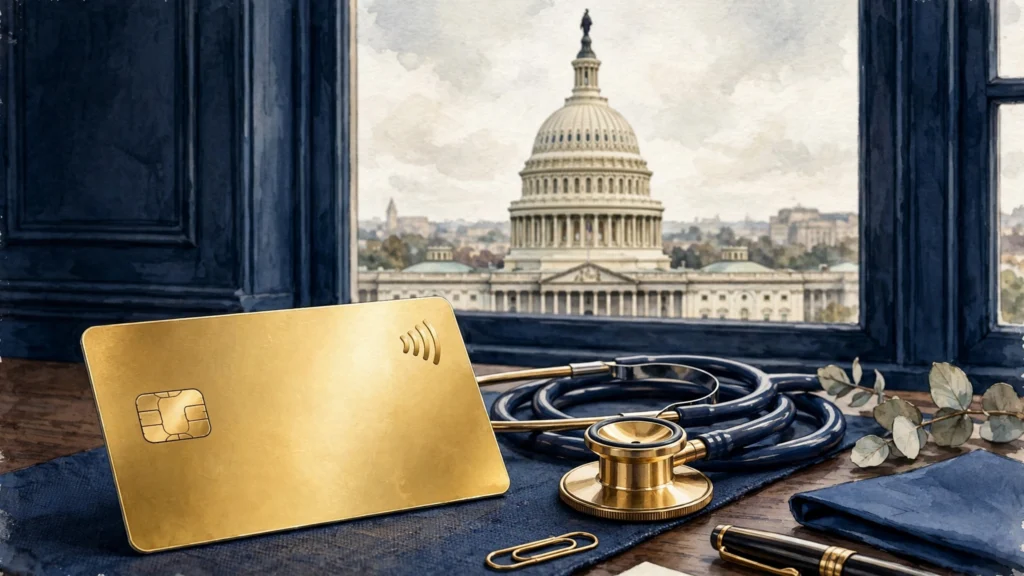
The story began on November 12, when El-Sayed posted an image on social media of a mock-up gold insurance card. The card was designed to look like a piece of presidential memorabilia: Trump's name and signature appear in the bottom right-hand corner, a presidential-style seal sits alongside them, and the tagline reads "Great Health Care for Every American." Above the image, El-Sayed wrote a direct message to the president: "Donald, this is on the table. Guarantee healthcare for every American, from cradle to grave."
The idea was simple, and it was aimed squarely at what El-Sayed and his allies see as the president's habits. Trump has shown a well-known fondness for gold and for putting his name on things. The administration has already rolled out the "Trump Gold Card" visa program, a prescription drug website called "TrumpRx," and "Trump Accounts."
El-Sayed has been blunt about the calculation. He has said repeatedly that he does not care what the plan is called, as long as it passes. "Put his name on it," he told NPR earlier in November. "He'll probably pass it. I'm not above doing that. I don't care what it's called." He made the same point on ABC's "This Week," where he said he had never met the president but was ready to meet anyone who could advance the goals he campaigned on: getting money out of politics, putting money in people's pockets, and passing Medicare for All.
The pitch worked, at least as an attention-getter. On Saturday, Trump reposted a screenshot of El-Sayed's card on his own social network, Truth Social, without adding a comment of his own. The repost set off a round of speculation about whether the president was genuinely interested or simply amused, and it drew a quick response from El-Sayed: "Let's get to work. Ready when you are."
Then came the next step. Vice President JD Vance's office reached out to El-Sayed's team to begin setting up a meeting, according to NBC News. The outreach was the first concrete sign that the administration was treating the proposal as something more than a social media stunt.
El-Sayed took his case to television the following day. Appearing on NBC's "Meet the Press" on Sunday, November 22, he told host Kristen Welker that the president had "signaled openness to the opportunity" and called the plan "the ultimate Trump card." He argued that the branding could bring Republicans along. "If the president says that he wants Trumpcare for all and that he's open to signing it if gets on his desk, I think you're gonna find a lot of Republicans open to vote for it," he said.
From Campaign Feud to Oval Office Meeting
The warmth of Tuesday's interview stands in sharp contrast to the campaign that preceded it. Trump and El-Sayed spent the midterm race trading bitter political and personal attacks, and the president's language was among the harshest he used against any candidate in the cycle.
At a rally in October, Trump referred to El-Sayed, who will be the country's first Muslim senator, as "Mohammed" and falsely declared that the former public health official is a "jihadist." Days before the election, Trump urged voters at a Florida rally to "send him back to where he came from," even though El-Sayed was born and raised in Michigan. At another campaign stop, Trump warned that an El-Sayed victory would be "a devastating blow for our country."
El-Sayed, for his part, was a frequent critic of the Trump administration on the trail, railing against the president and Vice President JD Vance. In the closing days of the race, he addressed the attacks directly. "They can keep saying my name," he said. "They can keep pointing to my faith. My name and my faith are not the reason you can't afford your groceries."
The feud did not stop El-Sayed from winning. He defeated Republican Mike Rogers in the race for Michigan's open Senate seat, running on a slogan that summed up his platform in a single line: "money out of politics, money in your pocket and Medicare for All." Universal health care was central to his pitch from the start, and the "Trumpcare" card was an extension of that campaign, not a break from it.
Trump's tone on Tuesday was a world away from the rally stage. "He's a smart guy," the president told the New York Post, chuckling as the subject came up. "He did a good job. He actually did a very good job." He called the pitch to attach his name to the universal health care proposal "very smart."
The shift fits a broader pattern in the president's post-election remarks. In the same interview, Trump said he expected to work with the new Democratic majorities in Congress, even while warning that the process would start with confrontation. "I'm just going to veto everything there is, and then at some point I think they're going to want to negotiate. I will, and we can do health care. We can do a lot of great things together," he said.
Health Insurance News: What Medicare for All Would Actually Do
At the heart of the discussion is a policy that has been a fixture of the Democratic left for years. The Medicare for All Act, introduced in 2025, would create a single national health insurance system covering all Americans from birth to death for all necessary care, including hospital services, prescription drugs, and mental health and substance abuse treatment. It would replace the current patchwork of private insurance and public programs with one government-run system.
Today, the Medicare program covers adults aged 65 and older and some people with disabilities. El-Sayed's proposal would extend that kind of coverage to everyone, from the moment they are born to the moment they pass away. That is the promise behind the gold card: a single card, carried for life, that guarantees health care.
El-Sayed has tried to soften the idea's edges for skeptics. When pressed on "Meet the Press" about whether he favored eliminating private health insurance, he compared the system to public schools. Every family has the option to send children to public schools, he said, but some choose to pay for private schools. "Everybody's entitled to it, that's how I'm thinking of public health insurance under Medicare for All," he said. "I don't think it's about what it takes away. I think it's about the guarantee and the security that it offers."
The proposal has long been one of the most debated ideas in American health insurance news. Supporters say a single system would simplify a fragmented market and guarantee care to people who now go without it. Critics say it would cost far too much and put the government in charge of decisions now made by patients and doctors.
White House News: The Administration Pushes Back
Not everyone in the administration shares the president's enthusiasm. The White House had previously rejected the idea of El-Sayed's Medicare for All plan, telling Fox News Digital that it would destroy access to health care. When asked on November 23 whether that position still held, the White House provided a list of reasons why a Medicare for All plan would be too costly, without answering questions about whether the president's repost of the gold card indicated genuine backing for the idea.
The split between the president's public comments and his administration's stated position is a reminder of how far any deal would have to travel. A meeting is not a negotiation, and a negotiation is not a bill. Even if Trump and El-Sayed find common ground in the Oval Office, any proposal would need to survive the White House's own policy staff, the Republican caucus in Congress, and a Democratic Party that has its own disagreements about how far and how fast to push on health care.
There is also the question of timing. El-Sayed does not take his seat until the new Congress begins in January, and Trump has said the early weeks will be defined by vetoes, not deals.
What Happens Next: A Meeting Without a Date
No date has been announced for the meeting between Trump and El-Sayed, and neither side has said what form it will take. Vance's office has begun the outreach, and the president has said the meeting will happen, but the details are still being worked out. CNN has reached out to El-Sayed for comment on the president's remarks.
When the two men do sit down, the agenda is clear enough. El-Sayed wants the president to commit to guaranteeing health care for every American, and he is willing to let the program carry Trump's name to get there. Trump wants a deal he can call his own, and he has signaled that he is open to finding "some place in the middle." What that middle looks like, and whether it exists at all, is the question that will decide whether "Trumpcare" becomes a real proposal or remains a gold card on social media.
For now, the story is a reminder of how quickly American politics can turn. Two men who spent the autumn trading some of the harshest attacks of the campaign are now preparing to meet as president and senator. Whether that meeting produces anything more than a photograph will be one of the first stories of the new Congress, and one of the first tests of the president's promise that he and the Democrats can do "great things together."
The "Habibi" Video and the White House's "Medicare for None"
The gold card was not El-Sayed's first attempt at the pitch. The idea first surfaced on November 6, in an interview with Zeteo editor-in-chief Mehdi Hasan, where El-Sayed said that if Trump wanted to pass Trumpcare for all, he was fine with it. "He seems to like to put his name on things," he said. Asked on cable news whether he was serious about offering Trump naming rights, he replied: "I'm absolutely serious."
Then came the video. On Tuesday, November 17, El-Sayed posted a 16-second clip addressing the president as "habibi," an Arabic term of affection. "Trumpcare for all. It's really popular. People really want healthcare," he said. "You can put your name all over it." The video also featured an AI-generated image depicting Trump as Jesus Christ. It was a striking tone from a man who, less than two weeks earlier at a live podcast taping, had called Trump an "unserious fool."
The White House was not receptive at first. Spokesperson Allison Schuster called the proposal "Medicare for none" and described it as a socialist government takeover of health care. She pointed instead to Trump's efforts to lower prescription drug prices, which she said had already saved Americans well over $1 billion, a White House figure that has not been independently verified. The contrast between Schuster's dismissal and the president's praise a week later is the clearest sign of the split inside the administration.
What "the Middle" Could Look Like
Trump's own words leave the shape of a deal deliberately vague. "Maybe there's some place in the middle that we could go," he said, adding that "Obamacare hasn't worked." He has not said what the middle would contain, and El-Sayed has not said what he would give up. The senator-elect's position is that the guarantee matters more than the details: cradle-to-grave coverage without a co-pay, premium or deductible. "That would be a win," he said.
The politics are as tangled as the policy. Trump has told Fox News he plans to "veto, veto, veto" Democratic bills, while predicting the Democrats will eventually call him hoping to do a deal. In the Post interview he congratulated the Democrats on their victory and said he looked forward to working with them "for the good of our country." El-Sayed has said he will meet with anyone who can advance the goals he ran on, and his pitch is built on the idea that a president who likes his name on buildings might like it on a health care card too.
Whether the middle exists will be tested in January, when El-Sayed takes his seat and the new Congress begins. Until then, the story is a test of two theories about this president: that he will sign anything with his name on it, and that his administration will stop him.
Source: CNN