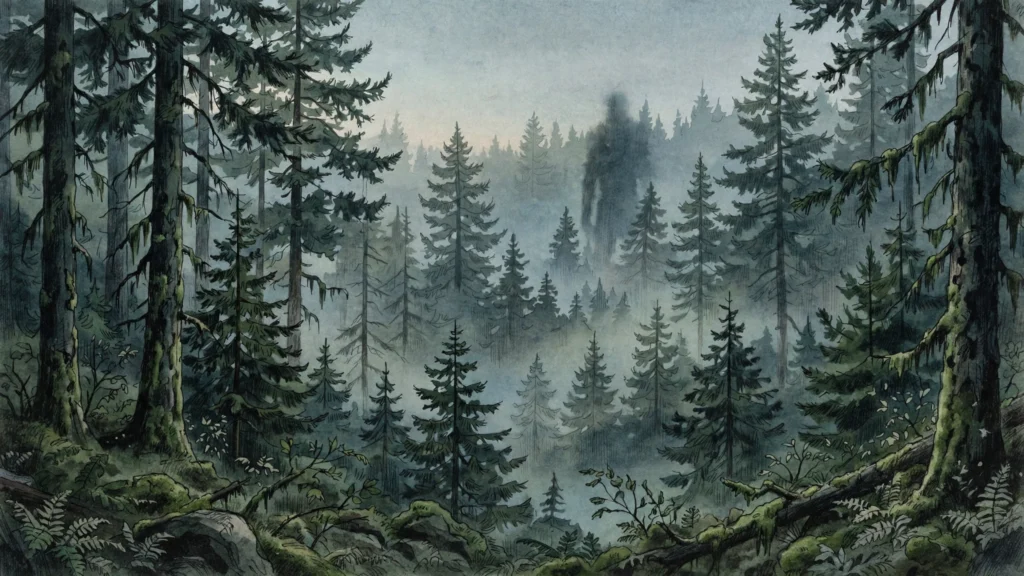
Trump Administration Releases Bigfoot Files
The trump administration has quietly released government documents about one of the biggest and most enduring mysteries in American folklore: Bigfoot. The United States Forest Service posted three files online on October 15 under the title "Bigfoot/Sasquatch Records," and the release went largely unnoticed for more than a month before it was spotted and reported, first by The Washington Post and then by newspapers and broadcasters across the country. The documents detail, in part, an expedition mounted by the government in 1982 to examine dozens of footprints found in the woods of Washington state, and they show federal officials taking the reports seriously enough to send a wildlife biologist into the forest with plaster, cameras and a mandate to find out what had made the tracks.
The release is the latest in a series of disclosures from an administration that has made a habit of publishing old government files, from the assassination of President John F. Kennedy to hundreds of files on UFO sightings. This time the subject is the hirsute cryptid believed to roam the forests of North America, a creature that has fascinated Americans for generations without ever being proven to exist. The files do not settle the question of whether Bigfoot is real. What they do show is how the federal government handled reports of unexplained phenomena in remote American wilderness areas, and how a decades-old investigation ended with a conclusion that the tracks were faked.
What the Bigfoot Files Contain
The three files in the release cover three separate episodes, spread across four decades and two states. The first and most detailed is the 1982 investigation in the Umatilla National Forest, where a government biologist examined large footprints at several muddy sites and wrote a six-page memo about what he found. The second is a letter from a man named Leo Kinney, who recalled stumbling on what he claimed were Bigfoot tracks while on a hunting trip in Montana in the 1940s, a document written in 1980 that recounts an experience from decades earlier. The third is a news clipping from the Clark Fork Valley Press, a newspaper in Montana, about purported Sasquatch tracks found in the state in 2003. Together, the three files are the complete contents of the Forest Service's Bigfoot file, the agency's own paper trail on a legend it never expected to have to answer for.
The files were made available through the Forest Service's public records reading room, without a major announcement. A Forest Service spokesman said the federal government had released the records to comply with freedom-of-information laws, which require documents to be published if they have been requested three times, but said the federal government also has latitude to release documents that have only been requested once if the United States Department of Agriculture believes a record is likely to be of broad public interest. The Bigfoot files qualified on both counts. They had been requested, and there was no doubt that the public would be interested.
The 1982 Investigation: Tracks in the Umatilla Forest
The heart of the release is the 1982 investigation, and it reads like a field report from a different era of government science. In June of that year, the United States Department of Agriculture tasked wildlife biologist Rodney L. Johnson with investigating a reported find of Bigfoot tracks in the Mill Creek Watershed of the Umatilla National Forest in Washington state. Johnson traveled to three separate muddy sites in the watershed where the tracks had been found, and he documented what he saw in detail. The tracks were described as being approximately 15 inches long and 7 inches wide, far larger than a human footprint, and they appeared at all three locations. Investigators took color photographs, made plaster casts to preserve the impressions, and recorded notes on the stride of the tracks.
Johnson's six-page memo, dated June 18, 1982, is the most detailed document in the release, and it is more cautious than the legend might suggest. He admitted in the memo that if the tracks were faked, someone had gone to a great deal of trouble and detail to do it. But he still concluded that the tracks were made by something other than a 300-pound plus two-footed being, and in his final assessment he wrote that the tracks were man made by using some type of soft plaster or rubber coated foot. In other words, the government biologist sent to investigate Bigfoot tracks came back convinced that a person had made them, with a fake foot, and had done a careful job of it. A separate Border Patrol memo was blunter, calling it a very clever attempt to penetrate a hoax in order to lend authenticity to the general public.
The Montana Files: A Hunter's Letter and a 2003 Sighting
The other two files in the release are older and stranger, and they show how long Bigfoot reports have been landing on government desks. The Kinney letter, written in 1980, recounts a hunting trip in Montana in the 1940s, when Kinney and three other hunters came across a large set of tracks leading away from the mutilated carcass of an elk near Petty Creek. The exact year is unclear, given as 1941 or perhaps 1949. Kinney wrote that the hunters were not particularly anxious to catch up to whatever had made the tracks, and that in later conversations they found they had all had a very uneasy feeling and could feel chills running up and down their backs. The letter sat in government files for decades before it was published.
The third file is a newspaper clipping from the Clark Fork Valley Press about purported Sasquatch tracks found in Montana in 2003. The paper interviewed a man called Jim Rohweder, then 87 years old, after he saw tracks in the snow in Sanders County that looked more human than animal. The clipping is the most recent of the three files, a local report preserved in a federal file. The three files together span 60 years of reports, from a hunter's letter about the 1940s to a newspaper story from 2003, and none of them contains a photograph of a creature, a hair sample, or any physical evidence beyond footprints in mud and snow.
Viral News Stories: How the Release Spread Online
Once the release was spotted, it spread fast. The New York Post reported the story under the headline about the administration quietly releasing the government's Bigfoot files, and Fox News followed with its own report on the USDA's decades of Bigfoot files. The Times of London covered the release as part of the administration's broader transparency push, and the story quickly went viral, with conservative influencers hyping the Bigfoot files as a major revelation. Benny Johnson, a conservative influencer, shared the news on social media, writing that the United States government had just released its Bigfoot files, and the post was shared widely by accounts that treat every government disclosure as a potential bombshell. The reaction mixed excitement with comedy.
The viral spread followed a pattern that has become familiar in the administration's disclosure strategy. A set of old files is posted quietly to a government reading room, with no press release and no announcement. A reporter or an enthusiast finds it, a newspaper reports it, and social media does the rest. The Bigfoot files were posted on October 15, and it took more than a month for the story to break, but once it did, it moved quickly from the Washington Post to the New York Post, Fox News, The Times and dozens of smaller outlets, and from there to millions of social media feeds. Coverage noted, with some amusement, that the 1982 investigation had concluded the footprints were faked, which did not stop the legend from growing.
Trump News Today: Transparency, UFOs and Federal Land
The Bigfoot release sits inside a larger pattern of disclosures that has defined the administration's approach to government records. The Pentagon earlier this year published hundreds of files on UFO sightings, even building a website to handle the release, and the administration has continued with the declassification of several federal documents on sightings of unexplained phenomena. The JFK assassination files, released earlier in the administration, set the precedent, and the Bigfoot files follow the same logic: if the government has records on a subject the public is curious about, publish them and let people draw their own conclusions. The approach has won the administration praise from transparency advocates and ridicule from critics who say it treats serious disclosure and folklore as the same thing.
At the same time as releasing files about Bigfoot, the administration is facing criticism from wildlife enthusiasts over plans to sell off federal lands. Buried within the Department of the Interior's five-year strategic plan, the administration announced earlier this month its intention to decrease the size of the federal estate, a plan that has alarmed conservationists and people who care about public lands.
What Happens Next: A Legend Without Proof
The release does not settle the folklore, and it was never going to. The Forest Service documents provide an unusual glimpse into how federal officials handled reports of unexplained phenomena, but they do not establish that the legendary creature exists. The biologist concluded the tracks were faked, the hunter never saw the creature, and the 2003 clipping describes footprints, not a sighting. The files prove that the government investigated Bigfoot reports, and they prove that the government kept the paperwork, but they prove nothing about Bigfoot itself. That is the honest limit of the disclosure, and it is why the story is best read as a curiosity rather than a revelation.
For the public, the files are now available to read in full, and the legend will continue regardless of what they say. A six-page memo from 1982 is unlikely to change that. The creature remains a fixture of American folklore, a story told around campfires and on television, and the government's own files have now joined the story. The next step is nothing more dramatic than the files sitting in the public reading room, where anyone can read them, and the next Bigfoot report, whenever it comes, joining a file that now has a public audience. The trump administration's latest release has given the legend its strangest official document yet, and the legend, as always, will outlast the paperwork.
Source: The Washington Post