Iran War News: Athlete Swims Strait of Hormuz
The iran war news from the Strait of Hormuz this weekend is a story about a swimmer, a war zone and a stretch of water the whole world depends on. British endurance swimmer Lewis Pugh, 56, has completed a three-day swim through the Strait of Hormuz, covering about 15 kilometres in around six and a half hours of swimming, while oil tankers were attacked and blown up nearby. Pugh, who serves as a United Nations Patron of the Oceans, undertook the swim to draw attention to the damage the war with Iran is doing to the marine environment, warning that oil and chemical pollution from damaged vessels could threaten wildlife, coastlines, coral reefs and mangrove forests for decades.
Pugh wore only swimming trunks, goggles and a cap bearing the United Nations logo. He started from the Musandam peninsula, on the southern tip of the strait, and finished by rounding the Cape of Hormuz. He is believed to be the first person to attempt a long-distance swim in the strait since the war began. Minutes after he entered the water on Monday, he heard two loud explosions that shook the sea, and he looked up to see an oil tanker about four kilometres away that had been hit. He stopped and returned to land, then resumed in stages, passing another vessel that erupted in fireballs after being attacked. He finished safely and returned to London, where he told the Associated Press and The Sunday Times what he had seen. His message was simple: war causes immense human suffering, and it also causes suffering to nature that receives far too little attention.
Iran War News: Three Days in the Strait
The swim began on Monday, in conditions no endurance athlete would normally accept. Pugh waded into the sea off the Omani coast with little more than his trunks, goggles and the United Nations cap, aiming to swim sections of the waterway over three days, with a support boat nearby, rather than attempting the crossing in a single push. Within the first half hour, the plan was tested. An attack on an oil tanker nearby sent explosions rolling across the water, and fighter jets appeared overhead. Pugh said the blasts literally rocked the sea around him, and he stopped swimming at once and went back to land. He did not give up. Over the next two days, he returned to the water and completed the challenge in stages, covering nine miles in around six and a half hours of swimming. Along the way, he witnessed a second attack at close quarters, passing a vessel that had been hit and watching it erupt in flames, with flames shooting 200 metres into the sky.
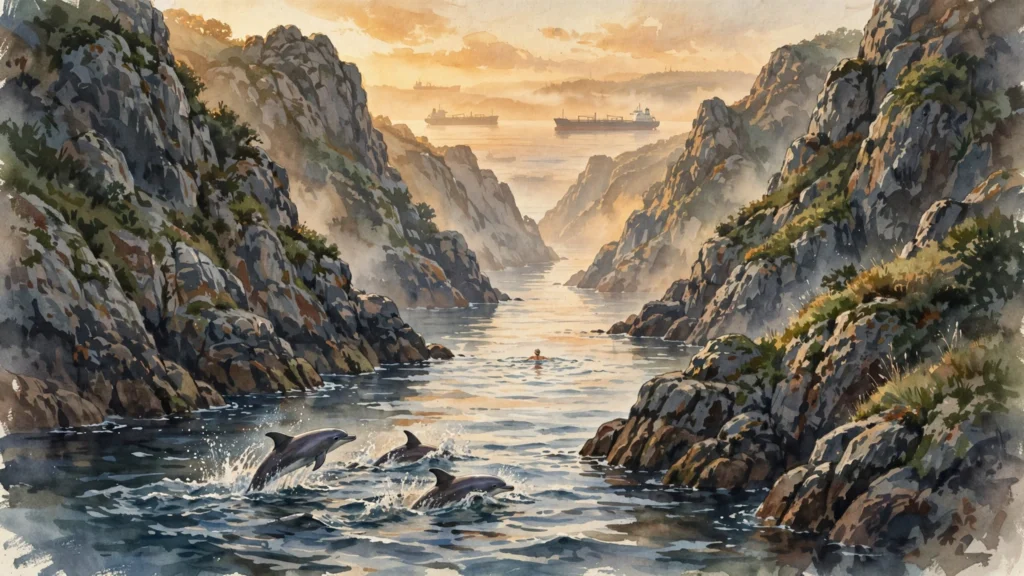
Pugh swam with tankers heading out of the strait on one side, and with the wildlife of the strait on the other. Breathing on his right side as he swam, he could see the ships. On his left, he said, were ospreys, green turtles and dolphins. He described large numbers of dolphins following his boat as he sailed in, and recalled the hundreds of turtles he had seen during a swim along the Omani coast before the war. People think of the strait as a shipping lane, he said, but it is one of the most beautiful places he has seen in his life, home to whale sharks, dugongs and beautiful coral reefs. In a statement posted on social media on November 21, he wrote that he had completed a three-day swim through the strait to draw attention to the devastating environmental consequences of war. War causes immense human suffering, he wrote: lives are lost, families are torn apart, and homes are destroyed. But there is another casualty that receives far too little attention, and that casualty is nature itself.
The Tanker Attacks Pugh Swam Past
To understand what Pugh swam through, it helps to understand what has been happening to shipping in the strait. Iran has in recent weeks increased attacks on vessels that it said travelled along unauthorised routes in the strait, as it seeks to impose its control on the crucial waterway. The attacks have targeted oil tankers, gas carriers and other merchant ships, and dozens of tankers have been damaged since February. Pugh said he passed one vessel that sent fireballs into the sky after it was attacked, and he saw another tanker hit about four kilometres away within minutes of entering the water. He also described the smell of chemicals in the air as the stricken vessels burned.
The danger was not only from the attacks themselves. The strait is one of the most heavily trafficked waterways in the world, and a swimmer in open water there faces fast-moving ships, strong currents and, in wartime, the risk of sea mines beneath the surface. Pugh has faced extreme temperatures and predators, including great white sharks, in his earlier swims, but swimming in a conflict zone presented entirely new dangers. The threat this time, he told The Sunday Times, was not sharks, freezing water or nature. It was war.
Politics News: A War That Started in February
The war Pugh was protesting began on February 28, when the United States and Israel launched their war against Iran. Since then, the conflict has reshaped the politics of the Middle East and the security of the world's most important oil waterway. Iran has responded by stepping up attacks on shipping in the strait, seeking to assert control over the route and to put pressure on the United States and its allies. The result is a waterway in which commercial vessels sail under the threat of attack, and in which the environmental consequences of each strike accumulate with every damaged hull.
The Strait of Hormuz is a narrow passage between Iran on one side and Oman and the United Arab Emirates on the other, connecting the Persian Gulf to the open sea. At its narrowest, it is only about 33 kilometres wide, and the shipping lanes in each direction are just a few kilometres across. Before the war, about a fifth of the world's traded oil passed through it, along with large volumes of liquefied natural gas. The strait is also a place of extraordinary natural richness, with coral reefs, mangrove forests, seagrass beds and waters that support dolphins, sea turtles, dugongs, whale sharks and ospreys. That combination, a global energy chokepoint and a fragile marine ecosystem in the same narrow stretch of water, is what makes the war's environmental toll so serious.
The Wildlife at Stake: Dolphins, Reefs and Mangroves
The wildlife Pugh described is not an abstraction. As he swam, he saw it at close quarters, and his accounts of it give the clearest picture of what the war puts at risk. He described large numbers of dolphins following his boat as he sailed into the strait, and he saw turtles and ospreys along the route. He marvelled at the hundreds of turtles he had seen during a swim along the Omani coast before the war, and he spoke of whale sharks and dugongs, the gentle sea mammals that graze the seagrass beds of the region. The strait's coral reefs and mangrove forests, he said, are part of a natural wonder that towers over the water in the form of steep mountains and fjords.
Each of those species and habitats is vulnerable to oil and chemical pollution in a different way. Dolphins and other marine mammals can be harmed by oil on the surface and by the toxic compounds that dissolve into the water. Sea turtles, which come to the surface to breathe and nest on the region's beaches, are exposed to oil slicks and debris from damaged vessels. Coral reefs, which grow slowly and support a huge variety of marine life, can be smothered by oil and killed by chemical runoff. Mangrove forests, which serve as nurseries for fish, trap oil in their root systems, where it can persist for years. Pugh warned that oil leaking from the dozens of tankers damaged since February could create lasting problems for the region's animals, coastlines, coral reefs and mangrove forests.
Lewis Pugh: A Career of Extreme Swims
Pugh is no stranger to swimming in places where most people would not dare to enter the water. He has swum in the North Pole and in Antarctica to draw attention to environmental causes, braving freezing waters and extreme conditions. He has faced great white sharks and jellyfish, and he has swum in water so cold that it would kill an unprepared swimmer in minutes. In 2022, he became the first person to swim across the Red Sea from Saudi Arabia to Egypt, a crossing undertaken to highlight the threat of climate change to coral reefs before a COP climate conference. He has also swum the entire 315-mile length of New York's Hudson River, a river once notorious for its pollution, and lived to tell the tale.
Those swims share a pattern. Each one takes a place under environmental threat, and uses the swimmer's body to draw the world's attention to it. The Red Sea swim was about coral reefs threatened by warming waters. The polar swims were about ice and the changing climate. The Hudson swim was about a river recovering from industrial pollution. The Hormuz swim follows the same logic, but with a difference Pugh himself underlined: the threat this time was not sharks, freezing water or nature. It was war. Pugh, 56, from Plymouth in England, is the son of a Royal Navy doctor, and his role as a United Nations Patron of the Oceans gives his swims an official weight. His campaigning has been called Speedo diplomacy, an unconventional approach to international relations that involves plunging into places most diplomats would prefer to observe from a safe distance.
What Happens Next
The immediate question after Pugh's swim is whether his warning changes anything. The war in the strait continues, and the attacks on shipping that he witnessed have not stopped. Pugh himself said the war must stop so that the pollution can be cleaned up, linking the environmental damage directly to the fighting. For as long as tankers are being attacked, more oil and chemicals will enter the sea, and the task of cleaning it up will grow. His hope is that by showing the world what the strait looks like from the water, he can make the environmental cost of the war harder to ignore. Marine scientists will be watching for signs of damage to the reefs, mangroves and turtle nesting beaches, and for the effects on the dolphins, dugongs and whale sharks that Pugh saw. The full extent of the pollution is not yet known, and it may not be known until researchers can safely survey the area.
Source: CBS News