Palisades Fire: Arsonist Guilty in Deadly Blaze Retrial
In us politics and California wildfire news, a federal jury in Los Angeles has delivered a verdict that closes one of the most closely watched chapters in the story of the Palisades Fire. The jury convicted Jonathan Rinderknecht, 30, on Friday Nov 20, 2026 of starting the fire that became one of the most destructive wildfires in California history. He was found guilty on two federal counts: destruction of property by means of fire, and arson affecting property used in interstate commerce. The conviction came at the end of a retrial, after a first trial earlier in the year had ended without a verdict. For the thousands of people who lost homes, and for the families of the 12 people who were killed, the verdict answers the central question of how the fire began, and who was responsible for lighting it.
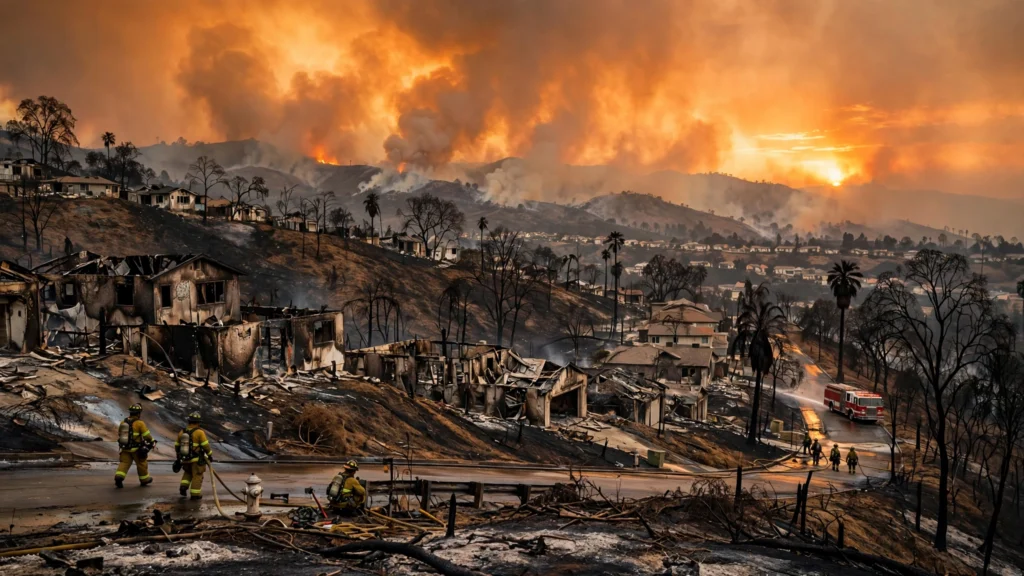
The fire Rinderknecht was convicted of starting began in the early hours of New Year's Day, Jan 1, 2025. He lit the Lachman Fire with a lighter in the Santa Monica Mountains, and the fire burned undetected deep in root systems, then flared back up on Jan 7, 2025 amid powerful Santa Ana winds, becoming the Palisades Fire. The fire then burned for 24 days, scorched 23,448 acres across Pacific Palisades, Topanga and Malibu, destroyed thousands of structures, forced 30,000 people to flee, and caused more than $200 billion in economic losses, according to CalFire.
The Verdict in Los Angeles
A federal jury in Los Angeles convicted Jonathan Rinderknecht, 30, on Friday Nov 20, 2026 of starting the Palisades Fire. He was found guilty on two federal counts: destruction of property by means of fire, and arson affecting property used in interstate commerce. Together, they frame the lighting of the Lachman Fire not only as an act that destroyed property, but as an act that affected property connected to interstate commerce, which is the basis for the federal charges. Rinderknecht, a 30-year-old former Uber driver from Los Angeles, had pleaded not guilty, and the verdict means the jury rejected that plea after hearing the evidence in the retrial.
The retrial began Nov 2, 2026 and lasted 14 days, and the jury deliberated two days before reaching its verdict. The verdict arrived on a Friday, Nov 20, 2026, and it brought to an end a process that had already been through one full trial, a mistrial, and a second trial. The conviction on both counts means the jury found the prosecution had proved each of the two federal charges, and it sets the stage for sentencing, which is set for March 17, 2027.
How the Fire Started: The Lachman Fire and the Santa Ana Winds
Rinderknecht lit the Lachman Fire in the early hours of New Year's Day, Jan 1, 2025, with a lighter in the Santa Monica Mountains. The fire that began there did not at first become a major blaze. It burned undetected deep in root systems, which explains how a fire can continue to burn out of sight, in the roots beneath the surface, even when it is not visible above ground. That underground burning is the link between the fire lit on Jan 1 and the fire that flared back up on Jan 7.
On Jan 7, 2025, the fire flared back up amid powerful Santa Ana winds, becoming the Palisades Fire. The six days between Jan 1 and Jan 7 are the period in which the fire burned undetected, and the flare-up on Jan 7 is the moment when it became the Palisades Fire, one of the most destructive wildfires in California history. Prosecutors in the retrial focused on expert testimony, Rinderknecht's state of mind in the hours leading up to the fire, and digital forensic evidence, relying less on his alleged resentment of the rich. That focus shows how the second trial was built: on expert evidence about the fire itself, on evidence about what Rinderknecht was thinking and doing in the hours before he lit it, and on digital evidence, rather than on a single motive.
The Toll: 12 Killed, Nearly 6,900 Structures Destroyed
The toll of the Palisades Fire is measured in lives, in land, in homes, and in money. Twelve people were killed. That figure is the most serious part of the toll, and it is the figure that Attorney General Todd Blanche returned to in his statement after the verdict, when he said: "Twelve people lost their lives and thousands lost their homes because of Jonathan Rinderknecht's malicious conduct." The statement connects the deaths and the loss of homes directly to Rinderknecht's conduct, and it frames the conviction as a response to the harm caused by the fire he was found to have started.
The fire scorched 23,448 acres across Pacific Palisades, Topanga and Malibu. It destroyed 6,837 to 6,845 structures and damaged 975 more. About 30,000 people were forced to flee. The fire burned for 24 days, and it caused more than $200 billion in economic losses, according to CalFire. That economic figure places the Palisades Fire among the costliest wildfires in terms of economic loss, and it reflects the value of the homes, businesses and infrastructure destroyed across the three communities, as well as the wider costs of a fire that burned for more than three weeks and displaced 30,000 people.
A First Trial That Ended in Mistrial, Then a Retrial
Rinderknecht's first trial in June 2026 ended in a mistrial after jurors deadlocked 10-2 in favor of acquittal following a two-week trial. That first trial lasted two weeks, the same length as the retrial, but it ended without a verdict because the jury could not agree. A mistrial in those circumstances does not mean the defendant was found not guilty. It means the trial ended without a decision, and the prosecution was free to bring the case again. The 10-2 split in favour of acquittal also shows how close the first trial came to an acquittal, and how different the outcome of the second trial was, when the jury convicted on both counts after two days of deliberation.
The retrial began Nov 2, 2026 and lasted 14 days, and the jury deliberated two days. Prosecutors in the retrial focused on expert testimony, Rinderknecht's state of mind in the hours leading up to the fire, and digital forensic evidence, relying less on his alleged resentment of the rich. That shift in focus is the clearest difference between the two trials. The change in approach, combined with a new jury, produced a conviction where the first jury had deadlocked 10-2 in favour of acquittal.
A Fire That Spread Across Three Communities
The Palisades Fire scorched 23,448 acres across Pacific Palisades, Topanga and Malibu, and it burned for 24 days. Those two figures — the area scorched and the length of time the fire burned — help explain why the toll was so large. A fire that burns for 24 days has time to move across a wide area, and a fire that covers 23,448 acres across three communities affects a large number of homes, businesses and residents. The 30,000 people forced to flee were spread across those communities, and the 6,837 to 6,845 structures destroyed, together with the 975 damaged, were spread across the same area. The economic losses of more than $200 billion, according to CalFire, reflect the scale of that destruction across Pacific Palisades, Topanga and Malibu, and the length of time the fire burned. The fire began as the Lachman Fire in the Santa Monica Mountains, lit with a lighter in the early hours of Jan 1, 2025, and it became the Palisades Fire when it flared back up on Jan 7, 2025 amid powerful Santa Ana winds. The path from a single lighting in the mountains to a fire that burned for 24 days across three communities is the story the retrial told, through expert testimony, evidence about Rinderknecht's state of mind in the hours leading up to the fire, and digital forensic evidence. The jury that heard that evidence in the retrial, which began Nov 2, 2026 and lasted 14 days, deliberated for two days before convicting Rinderknecht on both federal counts.
Sentencing, the Attorney General's Statement, and What Happens Next
Sentencing is set for March 17, 2027. Rinderknecht faces a mandatory minimum of five years and up to 40 years in federal prison, according to prosecutors. The range is wide: a mandatory minimum of five years means the sentence cannot be less than five years, and the maximum of 40 years means it cannot be more than 40 years, with the actual sentence to be decided at the sentencing hearing in March 2027. The period between the verdict on Nov 20, 2026 and the sentencing date on March 17, 2027 gives the court time to prepare for sentencing, and it gives both sides time to present their arguments about what sentence should be imposed within that range. The mandatory minimum and the maximum together frame the stakes of the sentencing decision, and they show that the conviction carries a substantial prison term, even at the lowest end of the range.
Attorney General Todd Blanche said in a statement: "Twelve people lost their lives and thousands lost their homes because of Jonathan Rinderknecht's malicious conduct." The statement, issued after the verdict, places the deaths and the loss of homes at the centre of the government's response to the conviction. In politics news and political news today, a statement from the Attorney General after a federal jury verdict carries weight, because it represents the position of the Department of Justice on a case that has been closely watched.
What happens next is sentencing on March 17, 2027, when the court will decide the prison term within the range of five to 40 years. Until then, the conviction stands as the jury's finding that Rinderknecht, a 30-year-old former Uber driver from Los Angeles who had pleaded not guilty, started the Palisades Fire by lighting the Lachman Fire with a lighter in the Santa Monica Mountains in the early hours of Jan 1, 2025, and that the fire burned undetected in root systems before flaring back up on Jan 7 amid powerful Santa Ana winds. The fire that followed killed 12 people, scorched 23,448 acres, destroyed 6,837 to 6,845 structures, damaged 975 more, forced 30,000 people to flee, burned for 24 days, and caused more than $200 billion in economic losses, according to CalFire. The first trial ended in a mistrial after a 10-2 deadlock in favour of acquittal, the retrial lasted 14 days and ended in a conviction on both federal counts after two days of deliberation, and the case now moves to sentencing, where the court will set the term Rinderknecht must serve.
Source: AP