Trump News: Xi Takes Center Stage at APEC Summit
In the latest trump news, the first-ever meeting of the leaders of the United States, China and Russia ended on Thursday with a short joint declaration and a set of photographs that told their own story. In every frame that mattered, Xi Jinping, the Chinese leader and the host, sat in the middle with the flags of the three countries arrayed behind him, facing the cameras while the American and Russian presidents appeared in profile. The summit, held on the sidelines of the Asia-Pacific Economic Cooperation gathering in Shenzhen, was billed as a step toward peace. But the pictures and the outcome pointed to the same conclusion: this was Xi's moment.
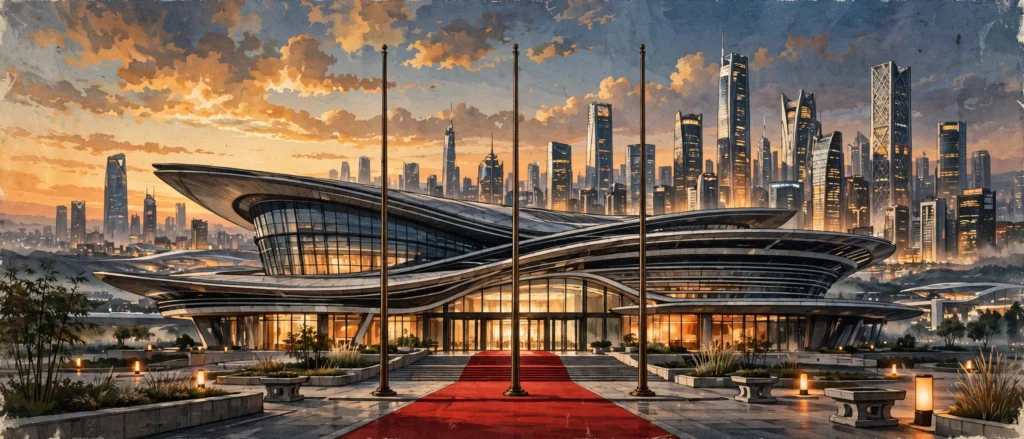
The meeting brought together the leaders of the world's three largest nuclear powers in this format for the first time, at a state-owned lakeside resort known as Kylin Villa. The three men sat at a massive ring-shaped table for a session that ran for more than an hour, with Xi in the chair in every sense: it was Xi who faced the cluster of cameras, Xi who called on Putin and Trump to speak in turn, and Xi who played choreographer and convener, presenting China as a source of stability beside powers embroiled in conflict. Trump opened the gathering by declaring that the three leaders were really making history, and Putin later called the discussions relaxed and very intimate.
The staging was not an accident, and the message it carried was aimed at audiences far beyond the meeting room. "Beijing is giving the world a powerful picture of the China-centered international order it would like others to see," said Julian Gewirtz, who was a China director on the National Security Council during the Biden administration. "Trump may imagine that he's the focus of attention, but these images are designed to depict the Chinese leader convening and presiding over the gathering." For a leadership that has spent years arguing the world is moving toward a multipolar order, the sight of the American and Russian presidents sitting at a table Xi controlled was worth more than the meeting produced.
Nearly every element of the week appeared designed to show Xi in control. When Trump arrived in Shenzhen, Xi greeted him at the airport in person, an embrace on a red carpet with a military band playing and dancers chanting "warm welcome" in Mandarin, while hundreds of cheering schoolchildren looked on and a squadron of fighter jets flew overhead. By contrast, Japanese Prime Minister Sanae Takaichi, who takes a hawkish approach to China, received little by way of welcome in Shenzhen, an apparent snub other delegations noticed.
Shenzhen: A Showcase City for China's Rise
The choice of Shenzhen was itself part of the message. The sprawling metropolis of 18 million people is home to a who's who of Chinese technology companies: hardware giant Huawei, drone maker DJI and the electric vehicle seller BYD, all companies that have thrived despite American import bans or blacklists. Humanoid robots prepared coffee at the summit media center, and the city was presented as a living demonstration of China's transformation into a high-tech powerhouse, resilient against American technology and trade restrictions.
It was also a deliberate contrast with 2014, the last time the summit gathered in China, when President Barack Obama dominated the headlines by brokering a historic climate change agreement and insisting that Xi answer questions at a news conference in his own country. Twelve years later, the tone had shifted completely. Xi refused to cede ground substantially on nuclear nonproliferation, the American president's stated goal for the trilateral summit, and Chinese officials blocked a Bloomberg News journalist from covering the three-way meeting.
Speaking to business leaders in his opening address at the summit on Wednesday, Xi framed China as a defender of globalized trade, calling for countries to reject unilateralism and protectionism and to keep supply chains open. He also called for deeper cooperation on artificial intelligence, pitching China as the leader of a global AI order built around treating the technology as a public good. Many of the group's nearly two dozen economies have been buffeted by American tariffs and by fuel price shocks driven by Trump administration policies, including the war with Iran.
The Trump Administration's Tariff Climbdown
The confidence on display in Shenzhen was backed by economic and military muscle built up over Xi's 14-year-long tenure, during which China has become indispensable to both the United States and Russia. Beijing exploited a key area in which Washington depends on it, the American need for rare earth minerals sourced from China, using it as a choke point that pushed the Trump administration to back down on tariffs. At the same time, Xi offered a hand to Russia as the Kremlin found itself mired in its war with Ukraine and bogged down by Western sanctions, and Moscow, in turn, has rebalanced its economy to depend heavily on Beijing. The Shenzhen summit put that leverage on public display.
The meeting was the fourth encounter between the Chinese and American leaders in a single year, following a summit in South Korea and reciprocal visits to Beijing and Washington, and Trump will become the first American president to travel to China twice in one year. Those regular meetings have allowed Beijing to prevent Trump from overturning the negotiating table again, as he did during the trade war in the spring of 2025. Xi is expected to attend the G20 summit in Florida a month later, where further meetings for 2027 are expected to be scheduled.
Ukraine War News: The Declaration That Said Little
For all the pageantry, the meeting itself produced strikingly little. The three leaders released a joint four-point agreement, a document that pledged dialogue on nuclear risks, reform of the United Nations, higher production of refined fuel and a defence of the immunity of state officials. It was the first written statement the three leaders have ever produced together, though American officials had cautioned that no agreement was expected at all. But the document settled no war, capped no warhead and fixed no fuel price. What it left out was as striking as what it contained: the word Ukraine did not appear in it, and neither did Iran, the two wars that have dominated American foreign policy for the past year.
Headed into the three-way meeting, Putin sought a path toward ending the Ukraine war, and Trump sought talk of nuclear arms reduction. After the meeting, the joint declaration did not much advance either topic, and it was Xi who emerged with the clearest win: a successful showcasing of China as a pivotal player in international negotiations. "The Chinese side is probably feeling pretty good about their agreement to host in Shenzhen," said Zack Cooper, a senior fellow at the American Enterprise Institute. The summit was less a negotiation than a demonstration, and the demonstration worked.
Putin used his time in Shenzhen to make clear the war would continue on his terms, vowing revenge for Ukraine's recent attacks on the multibillion-dollar bridge linking Russia with occupied Crimea, a massive steel arch of which collapsed into the Kerch Strait on Tuesday morning, halting road traffic. "Our response will be far more painful than Kyiv's attack on the bridge," he said after the meeting with Trump and Xi. Within hours, that threat was carried out, as Russia launched a massive overnight missile and drone attack on Ukraine that killed at least five people and damaged bridges and power infrastructure across Kyiv.
NATO News: Europe Calls the Summit a Photo Op
European leaders, who were excluded from the Shenzhen talks, reacted with open dismissal. In Berlin, members of the coalition of the willing, the countries supporting Ukraine, held a separate meeting of more than 30 European heads of state and government. German Chancellor Friedrich Merz, the host, called the Shenzhen gathering a "photo op" and presented every other leader with a piece of the Berlin Wall. Trump called in to tell the Europeans they would not need to spend so much on Ukraine's defences if they worked harder to end the conflict quickly. "He was telling the Europeans, 'Enough already, you're spending so much money on the war and you need to be spending it on your own countries,'" one official told The Times.
The message from Washington was that the war was lose-lose for everybody. "Nobody is winning this war, including Russia," Trump told the Europeans, according to officials present, pointing to significant casualties on the Russian side. Ukraine's foreign minister, Andriy Sybiha, had urged the American and Chinese leaders before the summit to use their decisive influence on Russia to press Putin toward a peace deal. That pressure never materialised: the declaration instead called for United Nations reform and curbs on the International Criminal Court, and both Putin and Xi described the United States, Russia and China as the three main victors of the Second World War, replacing Britain with China.
White House News: What Happens Next
The hours after the summit underlined how little the declaration changed on the ground: Russia's overnight attack on Kyiv lasted more than six hours, killed at least five people, and damaged three bridges over the Dnipro river as well as power supplies across several districts. For the White House, the question now is whether the engagement produced anything that can be built on, or whether the declaration will stand as a piece of paper while the war it ignored continues to escalate.
Xi faces a different calculation at home, where China struggles with a years-long real estate bust, high youth unemployment and demographic headwinds. In the short term, Xi's performance with Trump and Putin at the Asia-Pacific Economic Cooperation summit "may distract the public," said Victor Shih, a professor of political science at the University of California at San Diego who studies Chinese politics. "But if the economy continues to underperform, the effect of diplomatic successes would dissipate."
What was on display in Shenzhen, in the end, was a China that no longer hides its ambitions. Xi's approach is an about-face from China's long-standing preference for an unassertive foreign policy, described by Deng Xiaoping, paramount leader of China through the 1980s, as "hide your strength, bide your time." "The bide-and-hide strategy is dead, and it's been dead since shortly after Xi Jinping took office," Cooper said. "What's been on display at APEC this time is a China that feels like it's moving to the center of global dynamics." The G20 meeting in Florida next month will test whether that center holds. For now, the clearest winner of the week is the man who hosted it.
Source: The Washington Post