Ukraine War News: Russia Hits Kyiv After Trump Talks
In the latest ukraine war news, Russia launched a massive and deadly missile and drone attack on Ukraine overnight into Friday, hours after Russian President Vladimir Putin sat down with United States President Donald Trump and Chinese President Xi Jinping for historic trilateral talks in which the three powers presented themselves as a force for peace in the world. The barrage, which lasted for more than six hours, killed at least five people and damaged key infrastructure across the Ukrainian capital, according to Ukrainian officials, in a stark contrast between the language of the summit and the reality on the ground.
Three people were killed in Kyiv and two more in Lviv, according to the city's mayor and local authorities, and fifteen people were reported injured in the capital as emergency crews worked through the night. A fire broke out in a three-story building in the northern part of the city as it was pounded by multiple waves of missiles. "All emergency services have done and will continue to do everything possible to mitigate the consequences of the attack as quickly as possible," Kyiv's mayor, Vitali Klitschko, said. The casualty figures were still being updated as rescue teams searched damaged buildings, and officials warned that the numbers could rise. It was the second night in a row that Kyiv came under heavy fire, and the scale of the assault, its duration and its choice of targets all pointed to a deliberate message: the summit may have spoken of peace, but the war, for now, goes on exactly as before.
Russia's defence ministry said in a post on Telegram that it had launched a "massive strike using high-precision weapons from land, sea, and air," as well as drones, targeting Ukrainian military and energy facilities, port infrastructure in the Odesa region and transport infrastructure in Kyiv. Explosions began rocking Kyiv at around 1:25 a.m. local time, according to journalists on the ground, minutes after Ukraine's air force warned that Russian ballistic missiles were flying towards the city. Monitoring channels reported that Russia had launched strategic bombers from an air base in the country's far east, and the waves of missiles and drones kept coming until well after dawn. People spent the night sheltering in Kyiv's metro stations, as they have done so many times before in this war.
NATO News: Bridges Hit as Kyiv's Power Grid Falters
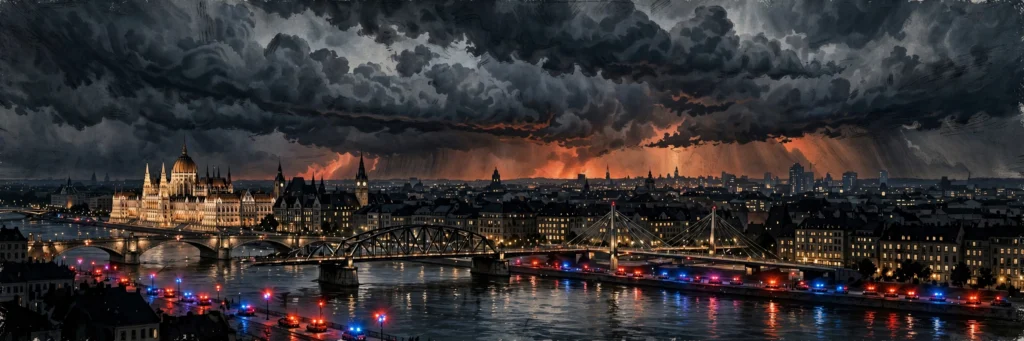
The overnight strikes also targeted one of Kyiv's most vulnerable points: the bridges that carry traffic across the Dnipro river, which flows through the capital and divides it into two halves. Three bridges on the river were damaged in the strikes, according to Klitschko, in the latest attempt by Russia to sever the transport links connecting the two sides of the city. It was the largest attack on Kyiv's bridges since the start of the war, and it struck at the routes that civilians, emergency vehicles and military supplies all depend on to move between the left and right banks of the capital.
The energy system took a heavy blow as well. Several districts in Kyiv were left without power as a result of the attack, according to the energy company DTEK, and emergency power outages were put in place in the Lviv, Zakarpattia and Ivano-Frankivsk regions, according to Ukrenergo, the country's state-owned electricity operator, which described the situation in the power grid as "extremely critical."
The attack on the energy grid was part of a sustained campaign. The overnight barrage followed a day of strikes on Thursday that had already killed one person in Kyiv and damaged the Austrian and Dutch embassies as well as St. Volodymyr's Cathedral, one of the most beloved churches in the capital. On Thursday alone, two people were killed and at least 23 wounded as Russian strikes caused damage across twelve regions. The European Union's foreign policy chief, Kaja Kallas, said the bloc would summon Russia's representative in Brussels after the embassy damage, a diplomatic protest that underlined how the strikes are hitting targets far beyond the battlefield.
Pentagon News: A Winter Campaign Against the Grid
For the Pentagon and the White House, the attack is a reminder of how little has changed on the ground despite the diplomacy of the past week. American military planners have tracked Russia's campaign against Ukrainian energy infrastructure throughout the war, and the timing of this assault, hours after a summit billed as a step towards peace, will be read in Washington as a measure of how far Moscow is willing to go to keep pressure on Kyiv while talking to its leaders. The war itself is now in its fifth year, and the pattern of the past few months has been one of grinding attrition: Russia's larger army hopes to exhaust Ukraine on the front line through sheer weight of numbers, while its long-range strikes aim to break the country's power grid before winter sets in.
Trump News: The Shenzhen Summit That Preceded the Strikes
The summit that preceded the attack was, by any measure, an extraordinary event. For the first time, the leaders of the United States, China and Russia sat down together for a three-way meeting, at a state-owned resort in the southern Chinese city of Shenzhen, on the sidelines of the Asia-Pacific Economic Cooperation summit. Trump opened the gathering by declaring that the three leaders were "really making history," and Putin later hailed the talks as historic, telling reporters that the discussions had taken place in a "relaxed and very intimate atmosphere." In his opening remarks, Putin said Russia, China and the United States have "shared interests" in settling the Ukraine war.
The meeting lasted about an hour and a half, and when it ended the three leaders released what they called a peace declaration, the first written statement they have ever produced together. It had four points: reforming the United Nations, producing more oil and gas, protecting leaders from international courts, and avoiding nuclear war. But what the declaration left out was as striking as what it contained. The word Ukraine did not appear in it, and neither did Iran, the two wars that have dominated American foreign policy for the past year. The talks produced no breakthrough on Moscow's war in Ukraine and no progress on the confrontation with Iran, and they announced no plans for the arms control talks that Trump has long sought. The leaders appeared content to gloss over their major differences, with Xi able to present himself as the host of a great-power gathering and Putin able to present Russia, a comparatively small economy, as standing on equal terms with the world's two most powerful leaders, without making any major concessions.
The reason for the overnight attack was given by Putin himself before he left China. Speaking from Shenzhen, he vowed revenge for Ukraine's recent attacks on the multibillion-dollar bridge linking Russia with occupied Crimea, which Ukrainian forces have now struck three times in a single week. "There will be no negotiations," he said. "I believe our response, as I have just said, will be far more painful than what the Kyiv regime did to the bridge." Within hours, that response was under way, and the assault on Kyiv's bridges and power grid followed the threat almost to the letter.
White House News: No Breakthrough on Ukraine or Iran
The White House had framed the Shenzhen meeting modestly in advance, presenting it as the start of a conversation rather than a negotiation, and American officials briefing reporters before the trip had cautioned that no agreement was expected from the encounter. On that measure, the summit delivered what was promised: a conversation, a photograph and a short declaration, but no settlement of a single war and no cap on a single warhead. Trump went into the meeting seeking to reassert himself internationally after his party's losses in this month's midterm elections weakened him at home.
Critics in Washington and in Europe read the outcome differently. Analysts who watched the summit said it exposed the limits of Trump's personalised diplomacy, the style of leader-to-leader engagement that has defined his foreign policy since he returned to office. The three leaders agreed on a symbolic declaration reaffirming that nuclear war should never be fought, but they showed no signs of advancing on Ukraine, Iran, Taiwan, trade or artificial intelligence. European leaders, who were excluded from the Shenzhen talks, warned that the warm reception given to Putin would only embolden the Kremlin to escalate its campaign against Ukraine. Their warning was answered within hours. For the trump administration, the question now is whether the engagement produced anything that can be built on, or whether the declaration will stand as a piece of paper while the war it ignored continues to escalate.
Iran War News: A Second War Left Out of the Declaration
The declaration's silence was not limited to Ukraine. The iran war news front was equally absent from the text, even though the confrontation with Iran has been one of the defining foreign policy crises of Trump's second term and a central reason his approval ratings have fallen. The summit produced no breakthrough on Iran, and the four-point declaration made no mention of the standoff, the strikes, or the negotiations that have run alongside it all year. Trump went into the meeting locked in a tense stalemate with Tehran, and he came out of it with nothing new to show for the engagement.
That omission matters because the two wars are linked in the diplomacy, even when they are not linked in the declaration. The same leaders who signed a statement about nuclear risks left the question of Iran's programme untouched. For the administration, the silence leaves both fronts exactly where they were before the leaders sat down: Ukraine under bombardment, and Iran in a stalemate with no settlement in sight.
Ukraine War News: Zelenskyy in Berlin as Allies Rally
While Putin met Trump and Xi in Shenzhen, Ukraine's President Volodymyr Zelenskyy flew to Berlin, where he met more than forty of Ukraine's partners in the Coalition of the Willing, the group of allied governments working on postwar security arrangements for Kyiv. The leaders discussed a package of 45 billion euros in European support, stronger air defences and a special package of interceptors to stop ballistic missiles, the weapons that have caused some of the worst damage in the recent strikes. Following the meeting, Zelenskyy and the European leaders issued a joint statement calling on Russia to accept a ceasefire on energy infrastructure and Black Sea shipping corridors, the two areas where the war has done the most damage to civilians and to the world's food supply. Putin's answer, delivered in Shenzhen, was that he would not negotiate any ceasefires on energy or maritime trade, and that there would be no negotiations at all after Ukraine's attacks on the Crimean Bridge.
Zelenskyy has said plainly that what happens to Ukraine has to be decided with Ukraine, and he has described Trump's one-on-one engagement with Putin as a mistake. His position reflects a fear shared across European capitals: that a deal struck between the great powers over Ukraine's head could trade Ukrainian territory for a peace that does not last. The Berlin meeting was designed to prevent exactly that outcome, by keeping Ukraine and its European allies at the centre of any settlement.
What Happens Next
For now, there is no deal, only a direction, and the overnight attack has made that direction harder to read. The casualty figures from Kyiv and Lviv are still being updated, and the damage to the city's bridges and power grid will take days to assess. Repair crews will work to restore electricity to the districts left dark, and emergency outages in the west of the country may continue while the grid is stabilised.
What to watch in the coming days is whether the momentum from Berlin holds. Negotiators will keep working on the details of the security guarantee and the postwar prosperity plan discussed in the German capital, and European governments will weigh whether the American promise is solid enough to build a postwar order on. Moscow's next public statements, or its silence, will be read for signs of whether the overnight attack was a one-off retaliation for the Crimean Bridge or the start of a wider winter campaign against Ukraine's cities. And in Washington, the question will be whether a president who has made ending the war a central promise of his second term will put the full weight of the United States behind a settlement, or whether the Shenzhen declaration will be remembered as the moment the leaders of the world's three largest nuclear powers talked about peace while the war went on without them. The war has run for nearly five years, and the night of November 20 showed, in the starkest possible terms, how far apart the language of summits and the reality of war still are.
Source: CNN