White House News: Trump Flies Qatar Jet to China
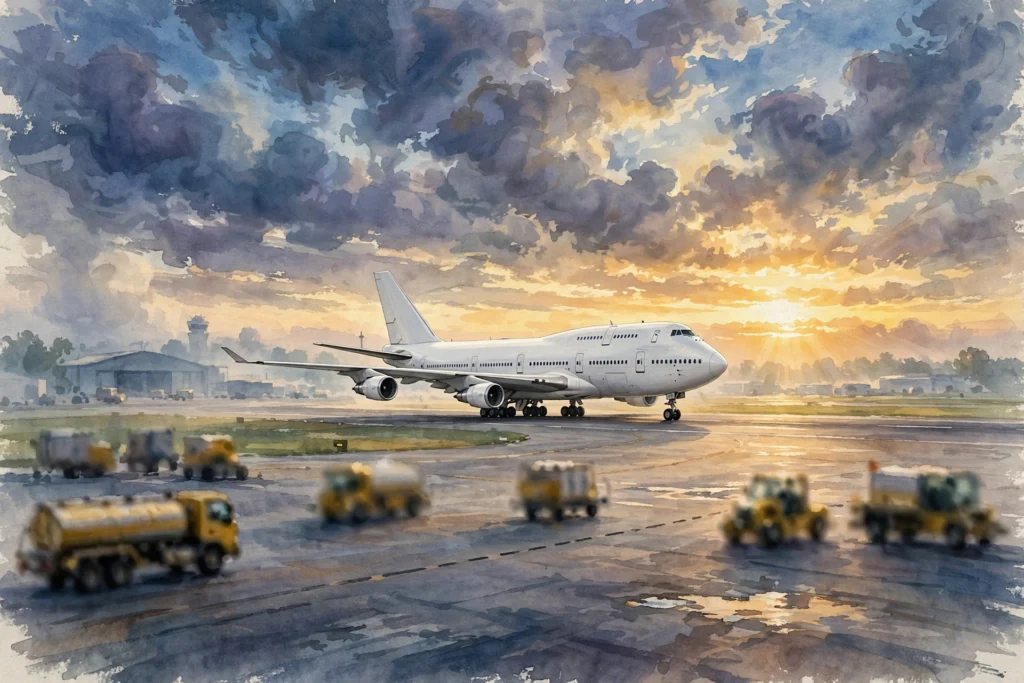
President Donald Trump left Washington on Monday aboard the new Air Force One gifted to him by Qatar, a luxury Boeing 747 that lacks some of the defensive capabilities of the older jet it is replacing, according to the Washington Post. The white house news is the latest chapter in a long-running argument about the plane, which has shadowed the president since the Gulf state presented it to him last year. Trump is flying it to the Philippines and China for high-profile summits, and he is doing so despite doubts, raised again this week, over whether it has received the security upgrades he promised it would get.
The doubts come from two American officials cited by NBC News, who said that while the plane has received some improvements and periodic maintenance, as well as cosmetic adjustments to its interior, it is not clear that the jet has been maxed out with the necessary improvements. That phrase matters, because it is the president's own. Trump has said repeatedly that the plane would be sent away to be maxed out, meaning fitted with the full range of defensive systems that would allow it to go into any territory. The officials' account suggests that work has not been completed, and the White House has declined to say otherwise.
The White House insists the plane is safe. A senior administration official said the administration does not comment on specific upgrades or modifications to Air Force One, adding that it maintains a consistent posture that ensures a safe, secure and reliable capability for the president, and that it routinely evolves that capability as required. The official called it the greatest presidential plane ever built. White House Communications Director Steven Cheung has previously insisted the jet is state-of-the-art and has been fitted with high-level security protocols that ensure the safety of the president and his staff. The disagreement, then, is not about whether the plane can fly. It is about whether it can protect the president as fully as the aircraft it replaced.
The Jet and the Doubts
The aircraft at the centre of the argument is a Boeing 747-8 that Qatar gave to the United States, valued at around 400 million dollars. It was delivered last year and then retrofitted to Air Force One standards at a cost of about 1 billion dollars, in work carried out by L3Harris, a Florida-based defence contractor. The jet was intended as a bridge aircraft, filling the gap until Boeing delivers two new presidential planes in 2028, to replace the two ageing 747s that have carried presidents since 1990. Those replacements were supposed to be ready by 2024 but have been delayed by Boeing until at least next year.
The retrofit was extensive, but the plane still had to be taken out of commission earlier this summer for further enhancements, and questions about its readiness have followed it ever since. The two officials cited by NBC said the work done so far amounts to some improvements and periodic maintenance, with cosmetic changes to the interior. That is a long way from the full security upgrade that the president described, and it is the reason the plane's use for a trip to Asia, with stops in Manila and Shenzhen, has drawn fresh scrutiny. The older Air Force One jets carry defensive systems built up over decades. The Qatari plane, whatever its luxury fittings, started life as a civilian aircraft, and turning it into a presidential transport is a different kind of job from building one from scratch.
The administration has said the jet will eventually be transferred to Trump's presidential library in Florida once he leaves office in January 2029. That plan has itself been a source of controversy, since the aircraft was a gift from a foreign government, and critics have argued that accepting it created a conflict of interest. Qatar has said the gift was unconditional. The White House has treated the plane as a practical solution to a real problem: the existing presidential aircraft are more than 35 years old, and their replacements are years late.
There is also an awkward coincidence in the story. L3Harris, the company that carried out the retrofit of the Qatari jet, was identified at the weekend as the company responsible for an air-traffic-control facility that failed in Arkansas, leading to a full ground stop of all flights on Friday. That failure is the reason Trump is now pressing Congress for 50 billion dollars to rebuild America's ageing air traffic control system. The company, known for its executive communications systems and services, delivers secure and resilient communications for the presidential aircraft. The two stories are separate, but they share a contractor, and they share a theme: the machinery that keeps the president and the country's planes safe is older and more fragile than it looks.
The July Scare in Turkey
The reason the doubts about the plane carry weight is that they have already been tested once, and the test went badly. In July, Trump travelled to Turkey for a two-day NATO summit, and while he was there the Secret Service informed him that a threat had been made against his life by Iran. The agents advised against his using the Qatari aircraft to return home. What followed was an elaborate piece of theatre, designed to hide from everyone, including most of the president's own staff, which plane he was actually on.
Trump appeared to join his team aboard the old Air Force One, and then, out of sight, he was ferried inside a catering truck, with only his closest aides for company, to an Air Force C-32A military plane standing nearby. The C-32A was then flown alongside Air Force One to RAF Mildenhall in southern England, at which point the president left that plane and rejoined his staff for the final leg of the trip back to Washington. Journalists and even White House staffers aboard the former Air Force One believed they were still on the same flight as the president, despite the jet having been deemed unsafe for him to fly on.
Trump had originally said the switch back to the old plane was just for old time's sake. When the story of the secret plane swap was revealed by the Washington Post, he spoke about the Qatari jet's condition in terms that now read as a promise. It has a lot of capability, he said, but as I understand it, in about a month or so, they are going to send it to have it be maxed out. He estimated at the time that it would take about a month to complete the work. That was July. Four months later, the officials cited by NBC say it is still not clear the work has been done.
The July episode matters for a second reason. It showed that the Secret Service, the agency responsible for the president's safety, was willing to overrule the normal arrangements and to move the president in secret rather than put him on the Qatari plane. That is not a judgment the agency makes lightly, and it is the background against which every later statement about the plane's safety has to be read. The White House can insist the jet is state-of-the-art. The record shows that, on at least one occasion, the people charged with keeping the president alive did not think it was safe enough.
"Maxed Out": What Trump Promised
The president's own words about the plane have shifted over time, and the shifting is part of the story. In July, he said the work would take about a month. In early September, asked about its condition just before a trip to Ireland, he said the plane was, interior-wise, the best, and its engines the best, and that it had a lot of stuff. But to max it out, he said, meaning you can go into any territory, it will take about 60 days, and it is being sent in October to be maximum. The plane flew to Ireland on September 12 without any known issue, and Trump used it on multiple occasions domestically in October, flying to midterm rallies across the country.
The problem is the calendar. The plane has not been out of service for more than a couple of weeks since September, and the president was using it throughout October for his rally schedule. A 60-day refit cannot have happened in that time, and the officials cited by NBC say it is not clear that the jet has been maxed out with the necessary improvements. Whether the work done so far has allowed sufficient time for the upgrades to be completed ahead of the president's departure for Manila is not clear, and the White House has been reluctant to discuss specifics on security grounds, while also being angered by earlier reporting about the plane's supposed vulnerabilities.
Trump himself made light of the danger on Monday, when he was asked if he was worried about being targeted as he left the White House to begin his travel to the Philippines. No, he said, I am worried about you, because if they get me you are gone too. Look, if Trump is about, be careful, he added, smiling. It was a characteristic piece of bravado, and it did nothing to answer the question. The president's confidence in the plane is not in doubt. The question is whether that confidence is shared by the officials and the agencies who are responsible for his safety, and the evidence from July and from this week suggests it is not shared by all of them.
A Bumpy Start to the Asia Trip
The trip itself got off to a bumpy start before the president had even left American airspace. On Monday, the new Air Force One was diverted while en route to Asia, touching down at Fairbanks International Airport in Alaska rather than making the typical refuelling stop in Anchorage. The White House said the change in refuelling location was due to weather, and the White House press pool account reported that the president and other senior officials were not seen leaving or re-entering the plane during the stop. The older 747 used as Air Force One was parked on the tarmac at Fairbanks as a support plane, carrying staff and equipment.
The diversion might have passed without much notice, but the White House's response turned it into a story of its own. The Rapid Response account on X fired off a furious post after the unexpected refuelling switch was reported, calling the coverage fear-mongering slop. The account insisted that Air Force One had refuelled in Fairbanks due to inclement weather in Anchorage, and that the old Air Force One on its tail was a support plane. The White House press pool later reported that the plane was wheels up at 5:56 pm for Manila, and that the president remained on the Qatar-gifted jet. The episode was minor in itself, but it showed how sensitive the administration has become to any suggestion that something is wrong with the plane.
The sensitivity is understandable. The trip is a major undertaking, and it comes at a difficult moment for the president. The Republican Party suffered sweeping losses in the midterm elections on November 3, losing both the Senate and the House, and the Asia trip is an opportunity to change the narrative and to put foreign policy at the centre of the agenda. Trump will attend the Association of Southeast Asian Nations summit in Manila, then travel to Shenzhen for the APEC summit, where he is scheduled to hold bilateral talks with Xi Jinping and to take part in a historic three-way meeting with Xi and Russian President Vladimir Putin. The plane that carries him there is part of the story, whether the White House wants it to be or not.
What Happens Next
The questions about the plane will not go away when the trip ends, and they will sharpen if anything goes wrong. The two new presidential aircraft that Boeing is building are not expected until 2028 at the earliest, which means the Qatari jet will remain in service as a bridge for at least another year, and probably longer. Every foreign trip the president takes on it will bring the same questions back: has the plane been fully upgraded, and who is willing to say so on the record? So far, the answer on the record has come only from the White House, and it has been a general assurance rather than a specific one.
There is also the question of what happens to the plane when Trump leaves office. The administration has said it will be transferred to his presidential library in Florida in January 2029, a plan that will revive the argument about whether a gift from a foreign government should have been accepted in the first place. That argument is for the future. The present question is simpler, and it is the one the officials cited by NBC raised this week: whether the aircraft carrying the president of the United States to Asia has the defensive capabilities it needs. The White House says it does. The Secret Service's actions in July, and the officials' account this week, suggest that not everyone is so sure.
Source: The Washington Post