Apple News: Siri AI Smart Glasses Coming in 2027
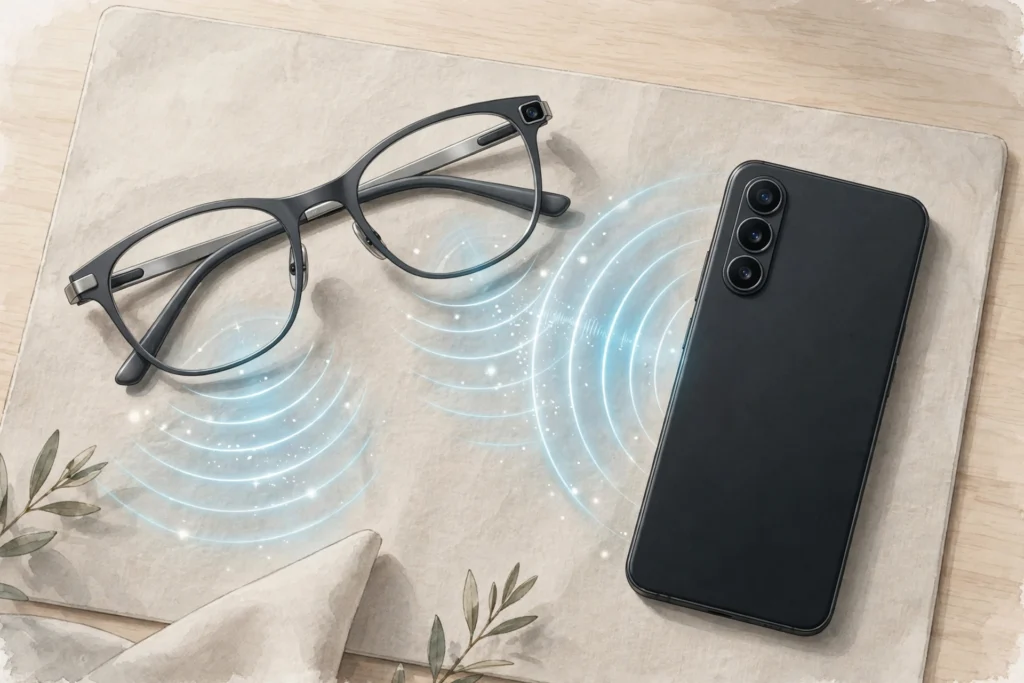
In the latest apple news, the company's long-rumoured smart glasses are finally taking a clear shape, and the centrepiece is not a screen. According to a report from Bloomberg's Mark Gurman, published in his Power On newsletter on Sunday, November 15, Apple plans to unveil its first pair of smart glasses at its Worldwide Developers Conference in June 2027 and begin shipping them before the end of that year. The device, developed inside the company under the codename N50, will have no display in its lenses at all. Instead, it will lean on Siri, on cameras built into the frames, and on the iPhone in the wearer's pocket, a design that puts Apple's rebuilt voice assistant at the heart of its next big hardware bet.
The report lands at a moment when the smart glasses market is no longer a curiosity. Meta's Ray-Ban glasses, made with eyewear group EssilorLuxottica, have become the category's clear leader, and Google is preparing its own entry. Apple has been working on glasses since the early 2020s, and Gurman reports that much of the hardware is now largely settled. The open question is the software. The artificial intelligence work behind the device is running behind schedule, and Gurman is explicit that the delay could still push both the June unveiling and the year-end shipping date back. Apple has not announced the product itself, so every date and feature in the report is reporting based on people familiar with the work, not a product on sale. But the shape of the plan is now unusually detailed, and it reveals a company that has decided to fight the glasses war with Siri rather than with screens.
What makes the report striking is how deliberately Apple is avoiding the approach the industry spent a decade pitching. There will be no augmented reality overlay, no digital images floating in the wearer's field of view, and no App Store on the glasses themselves. The first model is a voice-first device, built around the idea that the wearer talks to Siri, Siri looks through the cameras, and the iPhone does the rest. It is a gamble that the most useful pair of glasses is the one that disappears, and that the assistant, not the display, is the product.
Apple News: What the N50 Glasses Will (and Won't) Do
The most important detail in the report is what the glasses will not do. The first model will show no augmented reality images in the lenses. There is no display at all, which means the wearer will never see a notification, a map, or a photo through the glass. Everything the glasses do will happen through sound and through the phone. Cameras set into the frames will watch the world, and Siri will answer questions about it: identifying a building, translating a sign, giving directions, or describing what is in front of the wearer. The glasses will also deliver iPhone notifications and support calendars and reminders, according to the reporting, and they will be able to handle everyday tasks such as booking a ride, ordering food, or buying movie tickets, all by voice.
The industrial design is described as deliberately understated. Internal prototypes are slightly thinner than Meta's second-generation Ray-Ban glasses, with the cameras set flush into the frames so the device looks as close as possible to ordinary eyewear. That is a meaningful choice. The history of smart glasses is littered with devices that announced themselves too loudly, and Apple appears to have concluded that the winning design is the one nobody notices. Engineers working on the project are said to describe the audio quality as industry-leading, a detail that matters for a device whose entire interface is spoken. If the wearer cannot hear Siri clearly on a busy street, the product fails, and Apple seems to know it.
There are limits the report is careful to spell out. The glasses will require a recent iPhone, and they will not work with Android phones at all. They will still have Wi-Fi, so some functions can work when an iPhone is not nearby, but in practice the device is an iPhone accessory, not a standalone computer. Apple has not announced a price, a final product name, or battery specifications, and none of those details appear in the reporting. The glasses will run a pared-down version of visionOS, the operating system originally developed for the Vision Pro headset, on a processor derived from Apple's older smartwatch chips, and they will lean on a nearby iPhone for most of what they do. The message is consistent: the glasses are a sensor and a speaker, and the phone is the brain.
Siri AI and iPhone Apps: The Software Plan
The deeper story in Gurman's report is not the hardware at all. It is the software plan, and it explains why Apple is asking developers to do something unusual. The glasses themselves will run no apps. Instead, Apple wants developers to make specific functions inside their existing iPhone apps accessible through Siri, so the wearer can call on them by voice. Rather than writing a separate application for the eyewear, a developer would add Siri AI integrations, known as App Intents, to the iPhone app they already ship, and the glasses would reach those functions through the phone. It is the same architecture Meta and Google have settled on for their own camera glasses: the app lives on the phone, and the glasses are the way in.
That plan depends on a capability Apple only just began rolling out. In the first beta of iOS 27.3, released this month, Apple introduced a way for Siri to precisely control apps and their individual features through voice commands and its chatbot interface. The feature was originally promised in 2024 and demonstrated two and a half years ago, but it has since been rebuilt on new underlying AI models. On November 3, Apple opened the Siri AI developer preview to all developers in the iOS 27.3 betas, letting any app build the integrations. Apple plans to introduce precise controls for its own apps with the iOS 27.3 release in December 2026, while third-party developer support is expected to arrive next year, in time for the glasses. By the time the eyewear reaches customers at the end of 2027, there should be a wide range of third-party integrations to use, if developers do the work.
The strategy has an obvious logic and an obvious risk. The logic is that Apple already has millions of apps, and asking developers to expose a few functions to Siri is far cheaper than asking them to build for a brand-new platform with no users. The risk is that developers may not bother, or that the integrations arrive late, leaving the glasses with little to do on day one. Apple is trying to solve that by giving developers a full year of lead time and by making the same Siri integrations useful on the iPhone itself, so the work pays off even for people who never buy glasses. Whether that is enough will be one of the main things to watch through 2027.
There is also a geographic catch. Siri AI is currently unavailable in iOS in the European Union, and Apple does not sell the relevant features there. Glasses whose entire app story runs through Siri AI on the iPhone would inherit that gap unless it closes before late 2027, which would leave one of the world's largest markets with a device that cannot do its headline trick. Apple has not said how it plans to handle that, and it is the kind of detail that could shape the launch as much as any hardware decision.
The 2027 Timeline and the Delay Risk
The calendar is the least certain part of the story. Apple originally aimed to reveal the glasses in late 2026 and ship them in early 2027, according to earlier Bloomberg reporting, before the target shifted to a June 2027 unveiling at WWDC. Gurman's latest report says that schedule remains in place as of now, but it is not certain, because the software and artificial intelligence work is running behind. The hardware is said to be largely settled. The software still has to catch up. That gap is the reason the dates could move again, and it is worth remembering that this is a product whose timeline has already slipped once.
The timing is tied to something bigger than the glasses themselves. The launch is planned as part of an ambitious 2027 lineup to help celebrate the twentieth anniversary of the iPhone, and the glasses are meant to show that Apple still has a new category to offer two decades after the phone that remade the company. That makes the stakes higher than a single accessory. A delay would not just push back a product; it would take a centrepiece out of an anniversary year Apple has been building toward. At the same time, the market context is favourable. Apple shares posted their best week in four months around the time of the report, and investors have been rewarding the company's AI push. A credible glasses story, even one that is a year away, fits the mood.
The history of Apple's wearables argues for patience. The Apple Watch arrived after years of rumours and became a slow-burning success rather than an overnight one. The Vision Pro, by contrast, arrived with enormous expectations and has remained a niche product. The glasses sit somewhere between the two: cheaper and more familiar than a headset, more ambitious than a watch. The report suggests Apple knows the difference, and has chosen a design that asks the wearer to change almost nothing about how they look, while asking Siri to change a great deal about what it can do.
Meta, Google and the Race for Your Face
Apple is not entering an empty market. Meta's Ray-Ban glasses, built with EssilorLuxottica, have dominated the category, and the second-generation model is the benchmark Apple's prototypes are being measured against. Meta settled on the same architecture Apple is now adopting: the glasses carry cameras and speakers, the phone runs the apps, and the assistant does the talking. Google is moving in the same direction with its own smart glasses efforts, and Samsung is part of that ecosystem. The race, in other words, is no longer about who can put a screen in a lens. It is about whose assistant is most useful when the wearer is walking down the street, and whose developers build the most integrations first.
That is a contest Apple is well placed to fight, and also one it could lose. Its advantages are the iPhone's installed base, the App Store's developer relationships, and a chip and audio pipeline that the report suggests is already strong. Its disadvantages are that it is arriving later than Meta, that Siri has spent years as the weakest of the major voice assistants, and that the AI rebuild at the heart of the plan is the very thing running behind schedule. The glasses will be judged not against other glasses but against the phone in the wearer's pocket. If asking Siri through the glasses is slower or less reliable than pulling out the iPhone, people will pull out the iPhone.
The competitive picture also explains why the report frames the glasses as an iPhone story rather than a standalone one. Apple is not trying to replace the phone. It is trying to extend it onto the face, in the same way the Watch extended it onto the wrist. The Watch took years to find its purpose, moving from notifications to health. The glasses may follow a similar path, starting with simple voice tasks and growing as developers and users work out what the device is actually for. The first version does not need to do everything. It needs to do a few things well enough that people keep wearing it.
What Happens Next
The next milestone is December 2026, when iOS 27.3 is expected to bring precise Siri control to Apple's own apps. That release will be the first public test of the rebuilt assistant, and developers and reviewers will be watching closely for whether Siri can reliably control apps by voice, because the entire glasses plan rests on it. The developer preview that opened on November 3 gives app makers the tools now; the question is how many of them use the months before WWDC to build integrations, and whether the integrations they build feel natural or forced.
After that, the calendar points to WWDC in June 2027. If the schedule holds, that is when Apple will show the glasses to the world, name a price, and set a shipping date before the end of the year. If the software slips further, the unveiling could move, and the anniversary-year lineup would lose a piece. Either way, the reporting will continue, and the details that matter most, price, battery life, and the real state of Siri, will only become clear when Apple itself speaks. Until then, the story is a plan, not a product, and the honest summary is the one Gurman himself gives: the hardware is largely ready, the software is running behind, and 2027 is the target, not a promise.
Source: Bloomberg