World News: Pope Leo Returns to Peru as ‘Homeland’
World news from South America carried an emotional homecoming on Wednesday, as Pope Leo XIV arrived in Peru — the country where he spent two decades as a missionary and bishop — to crowds estimated at three million people and a welcome his hosts described as a national celebration. The Chicago-born pontiff, the first pope to hold both United States and Peruvian citizenship, called Peru his homeland in his first address in Lima, a declaration that drew cheers from a country that has claimed him as its own since his election last year. The six-day visit is the final and most personal leg of a three-nation, 12-day tour of South America, and it will take the pope back to the northern city of Chiclayo, where he served as bishop for eight years, and to the Amazon, where he will honor the Indigenous peoples of Peru.
The pope's charter plane touched down at the Callao Naval Air Base on the outskirts of Lima, where children holding flowers sang as he emerged smiling into the Peruvian sun. President Keiko Fujimori greeted him on the tarmac, while crowds pressed against iron fencing around the runway, squeezing their arms through the barriers to take photographs with their phones. From the airport, Leo toured the capital in an open-air popemobile, waving energetically as supporters lined the streets with balloons and flags, chanting his name. The Vatican said an estimated three million people turned out along his motorcade route into the city — the largest crowd of his papacy so far.
A Hero's Welcome in Lima
The scale of the welcome reflected how deeply Peruvians feel they know this pope. Long before he was Leo XIV, Robert Prevost was "Padre Robert" to the people of northern Peru — a missionary who rode on horseback to visit the most isolated Andean communities, who distributed food during the Covid-19 pandemic, and who wore rubber boots to wade through floodwater alongside the families he served. Those memories, of a priest in the trenches during Peru's hardest moments, were at the front of many minds as the crowds gathered. For a country of 34 million people that has endured political turmoil, violent crime and deep inequality, the return of a pope it considers its own felt like a moment of national pride.
The welcome was also a measure of the tour that preceded it. Leo's South American journey, the most intense overseas trip by a pope in decades, began in Uruguay and continued in Argentina, where crowds of six million people turned out over three days, including a record two million at the final event. Peru is the last stop, and by every account the most emotional one: the place where the pope spent the formative decades of his ministry, and the place he credits with teaching him how to be a pastor. His arrival in Lima closed the travel portion of the tour and opened six days of Masses, meetings and reunions with old friends.
"I Am Also Returning to My Homeland"
In his first public address in Peru, delivered to Fujimori and the country's political leaders at Lima's Gran Teatro Nacional, Leo spoke of a return that held a very special meaning for him. He recalled the people who opened their homes to him across two decades, sharing meals — including, he said with a smile, some good ceviche — and making him feel like one of their own. He spoke of the Peruvian citizenship he received in 2015, describing it as the symbol of a bond that the Peruvian people had been weaving into his life long before any document confirmed it. Then came the line that brought applause: "Today I understand how much of this land remains with me and how much of my own story also belongs to you. That is why I can tell you, with deep gratitude, that I am also returning to my homeland."
The words carried weight beyond sentiment. Leo is the first Peruvian citizen to lead the Catholic Church, and the first pope from the United States as well — a dual identity that mirrors the two countries that shaped him. During the visit he will receive a new Peruvian identity card listing Chiclayo as his address, a small administrative act with large symbolic meaning: the pope's official home, on paper, will be the northern Peruvian city where he served as bishop. For Peruvians, the gesture confirms what they have said since his election — that the man from Chicago belongs to them too.
His address also carried a message for the country's leadership. Leo urged Fujimori to build confidence among her people after a narrow election victory earlier in 2026, and he alluded to the contested legacy of her father, the late former President Alberto Fujimori, who governed from 1990 to 2000. Fujimori took over the presidency this year after an election marred by fraud accusations and vote-counting delays, and the pope's appeal for trust and reconciliation was read by observers as a careful intervention in a divided political moment. It was, in the words of one report, a test of how directly the pope is willing to wade into the politics of his adopted nation — and his first answer suggested he would not avoid it.
The Making of a Peruvian Pope
To understand why Peru claims this pope, it helps to retrace the path that brought a young Augustinian missionary from Chicago to the far north of Peru. Prevost first arrived in the South American country in 1985, and he stayed, with interruptions, for most of the next four decades. He worked in some of the poorest and most remote communities in the region, learning Spanish and the rhythms of a church that serves people scattered across mountains, desert and jungle. Colleagues from those years remember a priest who preferred to be present rather than distant — on horseback, in flooded streets, at food distributions — and who built his authority on proximity rather than rank.
That long apprenticeship shaped the bishop he became. Prevost served as Bishop of Chiclayo, a city in the Lambayeque region of northwestern Peru, from September 2015 to 2023, and it was there that his reputation as a pastor was cemented. He knew the diocese in depth, its parishes and its people, and he kept returning to the places that had formed him — including the sanctuary of St. Turibius of Mogrovejo in Zaña, a city that is a hub of Afro-Peruvian culture and home to the saint of his devotion. When he was elected pope last year, Peruvians celebrated as if one of their own had been chosen, because in the ways that mattered to them, one of their own had been.
The dual citizenship that followed him to the papacy is more than a biographical curiosity. It makes Leo a bridge between two worlds — the American church where he was born and formed, and the Peruvian church where he learned his craft — and it gives his pontificate a distinctive accent. He speaks of Peru not as a posting he once held but as a homeland, and he speaks of its people not as a flock he once served but as the community that taught him how to lead one. That is why his return is being treated as a national event rather than a state visit, and why the crowds that greeted him were not merely curious but celebratory.
A Tour 12 Days in the Making
The Peru visit is the final chapter of a journey that has already set records. The three-nation tour — Uruguay, Argentina and Peru — spans 12 days and has drawn some of the largest crowds of any papal trip in recent memory. In Argentina, six million people attended events over three days, and the final gathering drew two million, a figure that underscored the enthusiasm the first Latin American-born pope in modern memory commands on his home continent. Peru, where the pope's ties run deepest, was always expected to be the emotional climax, and the three-million-strong welcome in Lima confirmed it.
The schedule in Peru is demanding: 22 events across six days, taking the pope from the capital to the north and into the Amazon. He will spend three days in Chiclayo, the city where he was bishop, in what are expected to be the most poignant scenes of the visit — reunions with old friends, Masses in the churches he once led, and a return to the streets he walked for years. He will also travel to Cusco, the ancient Inca capital in the Andes, and to Pucallpa, in Peru's Amazon region, where he will celebrate Mass and honor the country's Indigenous peoples. Each stop is a return to a place that shaped him, and each is being watched for what the pope chooses to say there.
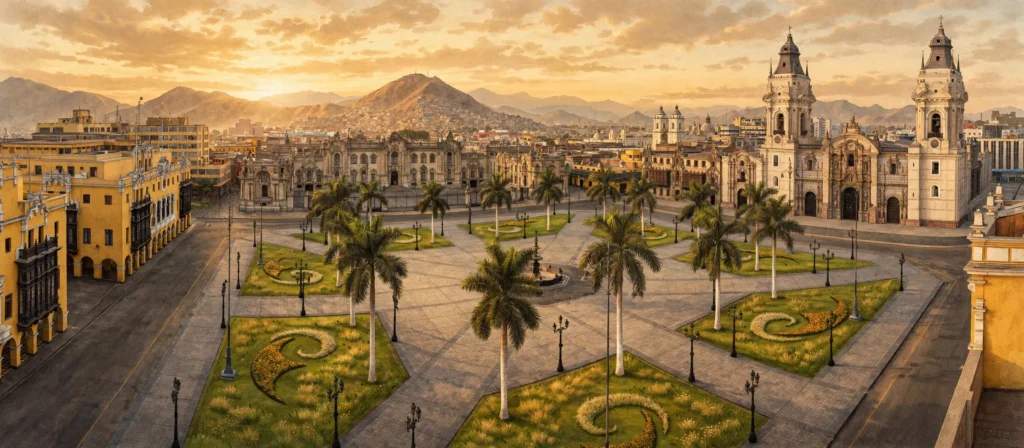
One speech in particular is being closely followed. On Thursday, Leo will speak from the square in front of Lima's cathedral on the challenges and hopes for the future of the Peruvian people — an address his aides have framed as the set piece of the visit. Given that he knows the country as well as any pope has ever known a host nation, his words will be weighed for guidance on the issues Peruvians live with every day: the cost of living, the reach of organized crime, and the stability of institutions that have been tested by years of political crisis.
A Visit With a Political Edge
The visit arrives at a difficult moment for Peru. The country of 34 million people is overwhelmed by challenges, among them the looming arrival of the El Niño weather pattern, violent crime and deep income inequality. In 2025, 25.7 percent of the Peruvian population was living in monetary poverty — a figure that captures how far the country's growth has failed to reach its poorest citizens. Peru has also received more than 1.6 million Venezuelans through November 2025, adding pressure to cities and services already stretched thin.
Against that backdrop, the pope's presence is both a comfort and a challenge to the country's leaders. His call for Fujimori to build confidence after a contested election, and his allusion to her father's legacy, put the question of trust at the center of the visit. Alberto Fujimori's decade in power remains one of the most divisive chapters in Peruvian history, and his daughter's narrow victory — in an election shadowed by accusations of fraud and delays in counting — left the country split. A pope who is himself a Peruvian citizen, speaking about reconciliation and everyday peace, carries a moral authority in that debate that no outside visitor could match.
The Vatican has framed the visit around what Leo called the "everyday peace" of the Peruvian people — the ordinary security of families, neighborhoods and communities that the country's crises have eroded. In his first address, he spoke of protecting that peace as a shared national task, one that belongs to leaders and citizens alike. It was a message that managed to be both pastoral and political: a call to the country's authorities to govern in a way that earns trust, and a reminder to Peruvians that the pope who returned to them knows their lives from the inside.
What Happens Next
The days ahead will be the heart of the visit. After the formal welcome in Lima, Leo's itinerary takes him to the places that made him — Chiclayo above all, where three days of events will bring him back to the diocese he led for eight years, and to the sanctuary at Zaña, where he often went to pray. The Amazon stop in Pucallpa will put the focus on Indigenous communities whose lands and livelihoods are under pressure, and the Cusco visit will bring him to the high Andes and the communities he once reached on horseback.
Each event will be watched for the pope's message, and for the crowds. The three million who greeted him in Lima set a bar that Chiclayo, a far smaller city, will answer in its own way — with the intimacy of a homecoming rather than the scale of a capital. The Thursday address at Lima's cathedral, on the challenges and hopes of the Peruvian people, is the moment when the visit's themes will come together: a pope who learned his ministry in Peru, speaking to the country that taught him, about the future it faces.
For Peru, the visit is already a landmark — the return of a native son who became the leader of the world's 1.4 billion Catholics, greeted by the largest crowds of his papacy. For Leo, it is a return to the place that made him, and a test of what a pope who belongs to two countries can say to one of them in its hour of need. The six days ahead will show how much of that promise the visit can keep.
Source: Associated Press