Trump Rally Costs: Montana Towns Won’t Bill Trump
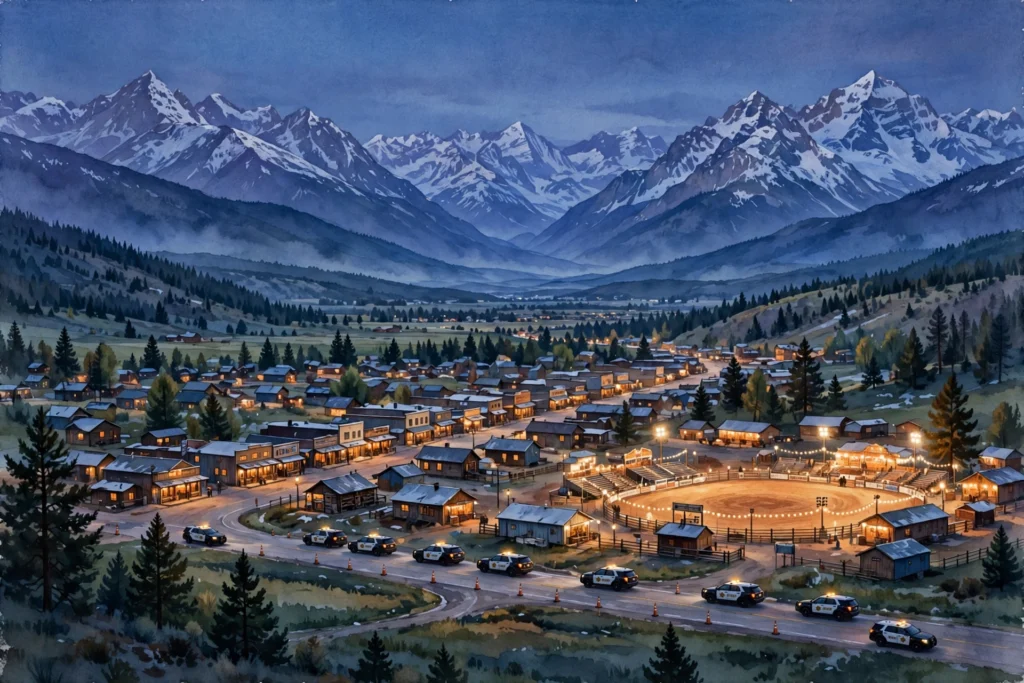
The latest trump rally news from Montana is a bill nobody wants to send. Two small towns in the Flathead Valley have decided they will not ask Donald Trump or his campaign to pay for the police overtime and emergency services that surrounded his campaign rally in Kalispell last month, according to a new report from the Daily Inter Lake. Columbia Falls and Whitefish both provided officers and support for the October 14 event, and both have now made clear that local taxpayers will absorb the cost. The decision leaves the towns, the county and the city of Kalispell holding a security tab of more than $107,000 for a single evening of campaigning.
The rally, held at the Majestic Valley Arena in Kalispell, was one of the final campaign stops of the midterm season, with the president stumping for Republican candidates in Montana’s federal elections. It drew a large crowd and a security operation to match, with around 200 local personnel assigned to protect the event and manage traffic across the valley. Weeks later, the accounting is in, and the pattern it reveals is one that has followed Trump’s rallies for years: the costs land on local government, the campaign rarely pays, and the towns are left to decide whether chasing the money is worth the fight. In the Flathead Valley, two of the three communities involved have decided it is not.
The $107,000 Security Bill for One Trump Rally
The numbers behind the visit were first laid out by the Daily Montanan in late October, and they show how quickly a presidential campaign stop can strain a small community’s budget. Flathead County identified approximately $58,000 in costs from supporting security operations during Trump’s visit, with the expenses consisting primarily of overtime wages for members of the Sheriff’s Office. The City of Kalispell reported a bill of $45,781 for the mobilization of city personnel. Smaller contributions came from neighboring towns: Whitefish spent about $3,755 in police overtime. Together, the county and the municipalities spent more than $107,000 on emergency services personnel for a single rally, and the state-level costs have not even been counted, because the Montana Highway Patrol did not respond to a request for any costs it incurred.
Flathead County Sheriff Brian Heino told the television station KPAX that around 200 local personnel helped with security operations and traffic control during the visit. In a statement, he praised the scale of the effort. “Securing an event of this size requires an extraordinary team effort, and our Sheriff’s Office personnel and partner agencies rose to the occasion with complete professionalism,” Heino said. “Whenever a high-profile leader visits the Flathead Valley, our duty is clear: Provide maximum security, and protect everyone involved. I could not be prouder of how our entire team performed.”
The county, for its part, has already decided it will not pursue the money. In a press release, county officials said they would not seek reimbursement from the federal government for the expenses, describing the decision as “consistent with precedent” established during visits by former vice presidents to the area. Flathead County Commission Chairman Brad Abell framed the cost as part of the job of hosting a president. “We have a duty to assist with security efforts during any presidential visit of this scale,” Abell said. “It was also an honor for Flathead County to host a sitting president of the United States.”
Midterm Elections 2026: Why Trump Was in Kalispell
The rally itself was a classic late-campaign stop in a state where Republicans were defending federal seats. Trump appeared at the Majestic Valley Arena on October 14, 2026, to campaign for Republican candidates in Montana’s federal elections, part of a final push before voters went to the polls on November 3 in the midterm elections 2026. The visit was a campaign event rather than an official presidential trip, a distinction that matters enormously when the bills arrive, because campaign events are paid for by the campaign, not by the federal government, while the security that surrounds a sitting president is provided by the Secret Service and local law enforcement working alongside it.
Vice President JD Vance followed Trump into the state later in the same week, making his own stop in Belgrade, which added further security demands on Montana agencies. The Montana Highway Patrol did not respond to requests for information about what its own costs were for the two visits, so the full public price of the week’s campaigning is still unknown.
Whitefish and Columbia Falls: Why the Towns Won’t Bill Trump
The freshest part of the story, reported by the Daily Inter Lake, is the decision by the two smaller towns to let the matter drop. In Whitefish, five police officers provided support to the Sheriff’s Office during the visit, incurring approximately $3,755 in overtime. The city council has not directed staff to seek reimbursement, and there is no sign that it intends to. The amount is small by the standards of the overall bill, but the principle is the same one the county invoked: the town helped because the Sheriff’s Office asked, and it does not plan to send an invoice for it.
Columbia Falls reached the same conclusion by a slightly different route. The city is not seeking reimbursement for its costs with the event, which also primarily included overtime. The city manager told the Daily Montanan that operational schedules were adjusted to minimize the impact to the city, meaning the town absorbed the rally’s demands largely by rearranging shifts rather than by piling up extra hours. The adjustment kept the cost down, and the town has decided that what cost remains is not worth pursuing.
Neither town has published a formal statement explaining its decision in the way the county did. But the logic is visible in the numbers: for Whitefish the sum is a few thousand dollars, and for Columbia Falls the cost was contained by rescheduling. In both cases, the expense of pursuing reimbursement would plausibly exceed the amount recovered, so the towns have chosen to treat the rally as a cost of being a neighbor to a presidential visit, and to move on.
Kalispell Wants Its Money Back
The City of Kalispell, which bore the largest municipal share of the bill, has taken the opposite view. The city reported $45,781 in costs for the mobilization of city personnel, and Mayor Ryan Hunter has said he would like to seek reimbursement. Speaking at a council work session after the president’s visit, Hunter was frank about the scale of the expense and about the odds of getting it back. “The kind of security that goes around with the president — quite, quite expensive as people can imagine,” he said. “And it was a campaign event, not necessarily like an official federal government event, which makes it kind of unique as well. So certainly, hopefully we can find some grants to pay for some of our time and effort into that as a city.”
Hunter added that other cities have billed the president for expenses, and he would like to see that happen in Kalispell’s case, though he admitted he was “not super hopeful” that the city would be reimbursed. The Kalispell City Council was expected to discuss the issue at its meeting on November 2, and the mayor’s hope of finding grants to cover the cost suggests the city is already preparing for the possibility that no reimbursement will come. The difference between Kalispell and its neighbors is largely one of scale: $45,781 is a sum a city of Kalispell’s size cannot easily write off. And there is no settled rule for who pays when a presidential campaign comes to town — the county says precedent means it should not ask, Kalispell says the campaign should pay but doubts that it will, and the two smaller towns simply will not send a bill. None of that changes the underlying fact: the money has already been spent, and the taxpayers of the Flathead Valley are the ones who spent it.
Trump News: A Familiar Pattern of Unpaid Rally Bills
The Flathead Valley is not the first place to discover that a Trump rally can be expensive and that getting the campaign to pay is difficult. The Daily Montanan reported that the president did not fully pay for the costs of his visits to Missoula and Billings in 2018, and that in 2024 he held a campaign stop in Bozeman where Gallatin County footed a bill of more than $62,000. The pattern stretches back further and wider than Montana. In St. Cloud, Minnesota, the city sent a bill of $208,935.17 for costs related to a July 27 rally at the Herb Brooks National Hockey Center at St. Cloud State University, an event Trump held with his running mate JD Vance. The invoice, sent on September 10 to a Virginia post office box associated with Donald J. Trump for President 2024 Inc., carried a due date of October 10. The campaign missed it.
The campaign told St. Cloud LIVE that the Secret Service was responsible for local law enforcement costs, but Secret Service spokesman Nate Herring said there was no mechanism to reimburse state and local governments for their support during protective events. NBC News reported that the Trump campaign owed more than $750,000 to five jurisdictions, with some of those bills dating back to 2016. A visit by Trump to Port Huron, Michigan, on October 25 — the first time a sitting president had ever visited the city — cost the municipality $97,728.55, according to a breakdown released by City Manager James Freed on November 9: $43,499.79 for public works, $35,986.01 for police and $18,242.75 for fire department employees. Some of the cost was offset by rental expenses paid by the Republican Party to use McMorran Arena, and the Secret Service paid for temporary security infrastructure such as barricades.
The recurring theme in all of these cases is the gap between who benefits from a rally and who pays for it. The campaign gets the crowd, the television coverage and the political momentum. The city gets the overtime bill, the road closures and the diverted police officers. The Secret Service, which is responsible for the president’s safety, coordinates the security but does not reimburse the local agencies that provide it. And the campaign, when presented with a bill, has repeatedly pointed to the Secret Service, which points back to the absence of any mechanism to pay. The result is a loop in which nobody pays, and the taxpayer does.
What Happens Next
For the Flathead Valley, the immediate next step belongs to Kalispell. The city council’s discussion of the $45,781 bill will show whether the city formally pursues reimbursement, seeks grant funding, or quietly absorbs the cost as the county and the neighboring towns have done.
The state-level costs remain an open question. The Montana Highway Patrol has not said what it spent during Trump’s visit and Vice President Vance’s subsequent stop in Belgrade, so the true total for the week of campaigning may be higher than the $107,000 counted so far.
The broader question is whether any of this will change. Cities have been billing presidential campaigns for rally security for a decade, and campaigns have been declining to pay for almost as long. The amounts involved are small in the context of a national campaign’s budget — $45,781 here, $3,755 there — but they are large in the context of a small town’s budget, where a few thousand dollars of police overtime is a line item that has to come from somewhere. Until there is a formal mechanism for reimbursing local governments, or a campaign that decides to pay its bills as a matter of policy, the pattern is likely to repeat: a rally arrives, the police turn out, the bill goes unpaid, and the towns decide, one by one, whether to chase the money or let it go. In the Flathead Valley, two towns have already made their choice, and the answer is to let it go.
*Source: Daily Inter Lake*