Trump News Today: Epstein Heckler Ejected at Ohio Rally
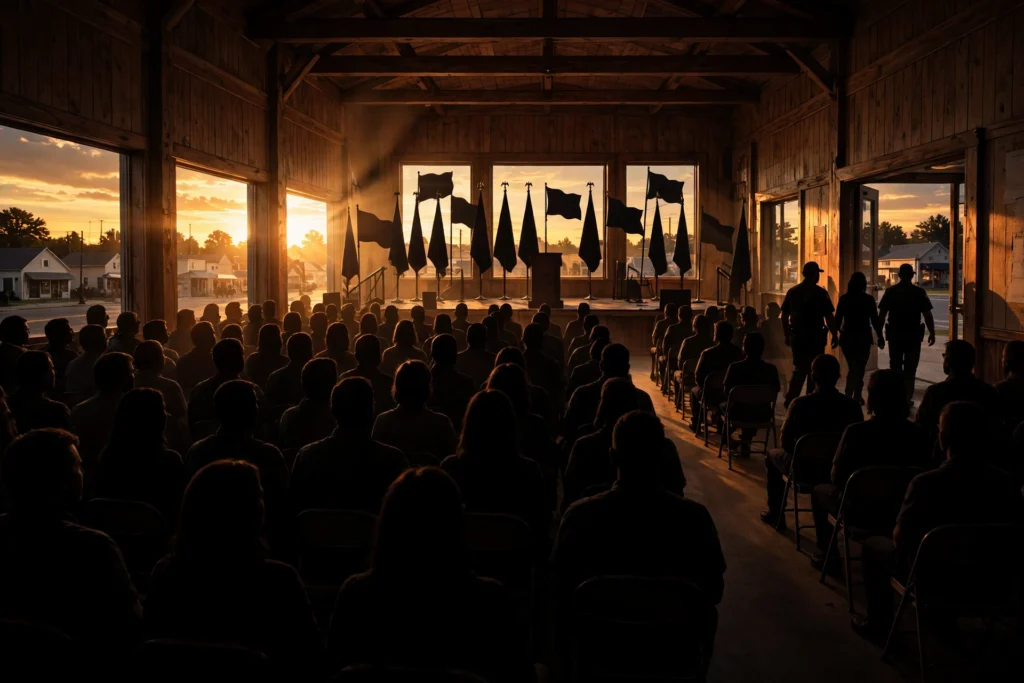
A trump news today moment from the final week of the campaign came not from a policy announcement or a poll, but from a few noisy minutes inside a rally hall in Ohio. During President Donald Trump’s campaign stop in Chillicothe on Wednesday, October 28, a protester in the stands began singing a song about Jeffrey Epstein, the late financier and convicted sex offender, and shouting accusations about the president’s past travel on Epstein’s private aircraft. The crowd answered with boos, security staff moved in, and the man was escorted out of the venue while still recording the episode on his phone. Trump, who had paused his speech, then addressed the interruption directly, returning to a claim he has made before: that he had thrown Epstein out of his Florida club years earlier because he regarded him as a deeply unpleasant character, and that he had been cleared of any wrongdoing in connection with Epstein.
The episode was brief, but it travelled far beyond the hall. Clips of the removal spread quickly online, the protester posted his own footage, and several news outlets picked up the story the following day. It also fitted a pattern that has marked the closing days of this campaign: presidential rallies that are meant to be tightly controlled displays of support have repeatedly produced unscripted interruptions, and each interruption has become a story in its own right. In Chillicothe, the interruption forced back into public view a subject the president’s campaign would plainly prefer to leave behind — his past social association with Epstein — at a moment when the campaign is trying to keep attention on the midterm elections of November 3 and on the Republican candidates Trump is travelling the country to support.
Trump Rally in Chillicothe: What Happened Inside the Hall
The rally took place at the Shoemaker Center on the Chillicothe campus of Ohio University, where Trump was campaigning for Republican candidates in Ohio, including Senator Jon Husted, who is defending a Senate seat against former Democratic Senator Sherrod Brown. According to reports of the event, the protester stood up in the stands during Trump’s speech and began singing a repeated line accusing the president of having travelled on Epstein’s aircraft. He added insulting nicknames for the president as he sang. The audience around him responded with loud booing, and a chant of support for the United States went up from parts of the crowd.
Security personnel and police officers then moved toward the protester. Footage posted by the protester himself, lasting about one minute and seventeen seconds, shows officers escorting him out of the hall as he continues to speak to his phone camera, protesting that he is only singing songs and asking why he is being removed. At one point his phone appears to drop to the floor before he picks it up again, still talking as he is walked out. Other audience members can be heard booing throughout, and a bystander appears to help security staff guide him from the stands. No report reviewed for this article specified whether the protester faced any charge arising from the removal, and this article does not assume that he did; what the footage and the reporting establish is that he was removed from the venue.
The protester later identified himself online as Robby Roadsteamer, the performance name of activist and musical comedian Rob Potylo. In his own social media post sharing the footage, he described the clip as the uncut video of his removal and said he had sung his song about the Epstein aircraft to Trump at the rally. Coverage of Potylo has described him as a self-styled absurdist activist and vocal critic of the president, and has noted previous encounters with law enforcement at protests, including a detention by immigration officers at an anti-immigration-enforcement demonstration in Minneapolis in January 2026 and an arrest at a demonstration in Portland in October 2025. Those earlier episodes are part of the public record about the protester, but they are not the reason for the Chillicothe removal, which was the interruption of the rally itself.
White House News: Trump’s Response on Stage
Trump’s on-stage response to the Epstein heckler was, in substance, a repetition of an account he has given many times before. He said he had thrown Epstein out of his club about twenty to twenty-five years ago, using a dismissive term for the financier, and described that decision as a good thing he had done. He added that he had been totally cleared in connection with Epstein, a claim also put forward on his behalf by a White House spokesperson in coverage of the rally. He dismissed the protester as a political opponent following the approach of the radical left, and he argued that Epstein had associated with Democrats rather than with him.
None of that should be read, on its own, as a settled factual account of the Trump-Epstein relationship, and this article does not present it as one. What is established is narrower, and it is worth stating plainly. Epstein was a wealthy financier who was arrested in 2019 on federal sex trafficking charges and who died in custody that year. Trump has not been charged with a crime in connection with Epstein’s sex trafficking activities, and the appearance of a person’s name in Epstein-related records does not, by itself, establish criminal wrongdoing. At the same time, reporting has documented that Trump and Epstein moved in overlapping social circles in New York and Florida during the 1990s, and flight records cited in coverage have listed Trump as a passenger on Epstein’s aircraft on several occasions in the mid-1990s. Those two sets of facts — no charge against Trump in the Epstein matter, and a documented past social acquaintance — can both be true, and both belong in any fair account of why a heckler’s song about the Epstein aircraft drew a response from the stage.
The renewed attention to Epstein comes at a politically sensitive time for the administration, because the release of Epstein-related files has been the subject of a bipartisan push in Congress and sustained public debate. The president’s supporters argue that he cut ties with Epstein long ago and that the continued focus on the association is a partisan distraction. His critics argue that the questions about the relationship have never been fully answered and that the administration’s handling of the files deserves scrutiny. The Chillicothe heckler did not advance either argument with evidence; he advanced it with a song and a slogan. But by forcing Trump to answer on stage, in front of cameras and a livestream audience, the interruption ensured that the Epstein subject, rather than the Ohio candidates Trump had come to support, led much of the next day’s coverage of the rally.
Midterm Elections 2026: Why Ohio Matters in the Final Week
The reason Trump was in Chillicothe at all was the midterm elections 2026, and Ohio’s place within them. Election Day falls on Tuesday, November 3, with early voting already under way in many states, and control of Congress is at stake: voters will decide whether Republicans keep their narrow majorities in the Senate and the House of Representatives. Ohio, long a state Republicans have carried in recent presidential elections, has nevertheless produced two closely watched races this cycle. Husted is defending the Senate seat he was appointed to after JD Vance became vice president, against Brown, who is attempting a comeback two years after losing re-election. The governor’s race, between Republican Vivek Ramaswamy and Democrat Amy Acton, has also tightened, in part because of a controversial Ramaswamy campaign advertisement that divided Ohio Republicans and drew condemnation from senior figures in the state party.
Chillicothe itself was a deliberate choice of venue. It is the county seat of Ross County, a county Trump has carried three times, and a rally there is designed to energise the voters a party most needs to turn out in a midterm election, when voter turnout itself often decides close races. A presidential visit to a friendly county is not primarily about persuading undecided voters in the hall; it is about giving local volunteers a focal event, generating local news coverage, and signalling to supporters across the state that the national party is invested in their races. That is also why an interruption matters more than it might at an ordinary speech: it breaks the intended picture of a united, enthusiastic crowd and replaces it, at least for a news cycle, with images of security staff removing protesters while the president argues with the stands.
Early Voting, Voter Turnout and What Happens Next
For all the noise about the heckler, the underlying electoral question in Ohio is the same one facing both parties everywhere in the final week: voter turnout. Midterm elections are usually decided less by large numbers of voters changing sides than by which side’s supporters actually cast a ballot, and that is why both parties have spent the closing days deploying their biggest names to the places where turnout could tip a close race. Early voting means that many ballots are already cast before the final rallies take place, which makes the last events as much about reinforcing supporters who have already voted and energising those who have not as about persuasion. A rally that ends up dominated by a heckler still reaches its intended audience, but it reaches them with a different message from the one the campaign planned.
What happens next in the narrow sense is straightforward: the campaign moves on to its final events, and voters decide on November 3. Trump has a rally in Florida scheduled for Friday, October 30, now described as his last in-person rally before the election, after which his campaign appearances are expected to move to telephone events covering many states. Whether the Chillicothe heckler faces any further consequence is not something the reporting reviewed here establishes, and no outcome should be assumed. The protester’s video will continue to circulate, as such clips do, and it may inspire imitation at later events, just as earlier heckles have been echoed by others in the days since. In the wider sense, the episode is likely to be remembered less for what the protester sang than for what it revealed about the final week of this campaign: presidential rallies are livestreamed, clipped, and recirculated within minutes, and a single protester with a phone can set the terms of the next day’s coverage. For the candidates Trump travelled to Ohio to support, the test is whether voters remember the rally for the heckler or for the closing argument the campaign intended to make. That question, like the races themselves, will only be answered when the votes are counted.
Source: WIO News