Iran War News: Vance Letter to Rezaei, Trump Disputes Aim
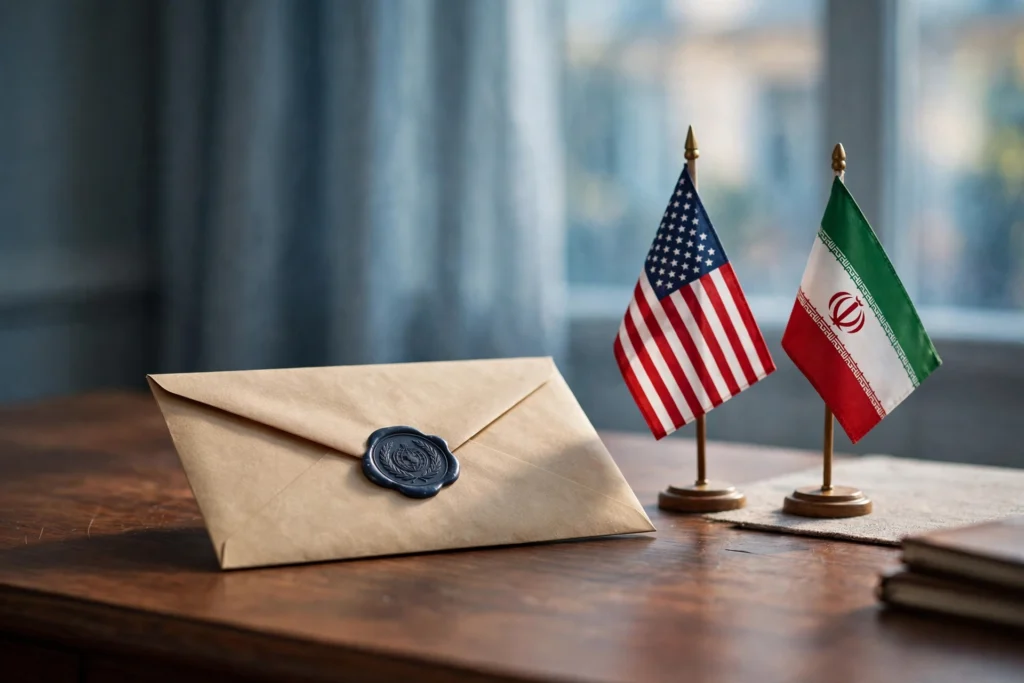
In the latest iran war news, a single letter has produced two very different descriptions of what the United States is doing about Iran. According to reporting first published by The Wall Street Journal, Vice President JD Vance wrote to Mohsen Rezaei, the secretary of Iran’s Supreme National Security Council, to test whether Washington and Tehran could agree on a framework for renewed negotiations. President Donald Trump, asked about the report, gave a different account. He said he had not directed Vance to reopen peace talks and described the contact as an effort concerning medical supplies for people in Iran who are unwell.
The gap between those accounts is the story. It is not a dispute about whether contact happened: Trump acknowledged that he approved Vance’s outreach. It is a dispute about what the contact was for, a diplomatic opening or a humanitarian gesture.
The timing sharpens every question. The United States has warned allies to be ready for possible renewed military action against Iran after the elections, while Iran has signalled that an agreement could be put into effect quickly.
JD Vance News: What the Letter Reportedly Said
In jd vance news terms, the reported letter is notable first for who sent it and who received it. Axios, citing an American official, described the contact as the most senior-level outreach from Washington to Tehran in several months. That matters because direct channels between the two governments have been narrow throughout a conflict that began in late February, when Trump launched the military operation known as Operation Epic Fury.
According to the Journal’s reporting, Vance’s letter did not present a detailed peace proposal. Instead, it sought to establish whether enough common ground existed for negotiations to restart, by setting out a possible framework for talks. A framework is a shape for a negotiation, not a deal. It tests whether the two sides can agree on what they would even talk about before the hard bargaining begins. People familiar with the matter told the Journal that Vance acted at Trump’s direction and that the president was kept informed of the initiative.
Axios added a further detail, again citing an American official: Vance’s message stressed that any negotiations aimed at heading off further American strikes would have to include discussion of the nuclear issue. One American official was also reported to have said that Trump was enthusiastic about the letter, a characterisation that sits uneasily alongside the president’s later public description of the contact.
What is not known is also part of the picture. The exact date the letter was sent has not been disclosed, and initial reporting did not cite a public confirmation from Tehran. The vice president’s office declined to discuss the matter with the Journal after the White House referred a request for comment to Vance’s team.
White House News: Trump’s Medical-Supplies Account
The white house news side of the story arrived when Trump spoke to reporters at Joint Base Andrews on Wednesday. Asked directly whether he had told Vance to open talks with Iran to start peace negotiations, Trump answered with a single word: “No.” He then offered his own description of the contact. “Iran needs help with medical supplies,” he said. “Basically, it’s getting supplies in to help people that are not well.”
Trump expanded on that account in a second remark reported the same day. He said Vance had asked for his view before proceeding, and that he had told the vice president it was acceptable to go ahead. “They need help with medical supplies and various things,” Trump said. “He asked me what I thought. I said, ‘if you want to do that, that’s OK.'” In that telling, the president’s role was permission, not direction: Vance proposed a humanitarian contact, Trump approved it, and the subject was supplies for civilians rather than the terms of a peace.
The distinction between directing and approving is the hinge on which the two accounts turn. The Journal’s version has Vance acting on Trump’s direction, with the president informed throughout. Trump’s version has Vance seeking approval for a medical-supplies contact, which Trump granted.
Trump’s account also fits his recent public handling of Iran. A week before the letter was reported, he had said publicly that he was not negotiating with Tehran, adding that the United States would “have something one way or another.”
Trump Administration: Two Accounts, One Contact
For the trump administration, the episode exposes a familiar tension between public messaging and private diplomacy. Governments in wartime often talk tough in public while testing openings in private, and the two tracks can look contradictory when the private track leaks. A letter that tests a negotiating framework is, by its nature, exploratory. It commits its sender to very little.
That uncertainty has consequences beyond Washington. Allies in the Gulf and elsewhere, who have been briefed to prepare for possible renewed military action and Iranian retaliation after November 3, need to know whether the United States is genuinely seeking a negotiated way out or simply keeping a channel warm while it prepares for strikes. Tehran, likewise, needs to decide whether Vance’s letter represents a real opening or a message it can safely ignore.
Iran War News: The Man at the Other End of the Letter
Understanding the letter requires understanding its recipient. Mohsen Rezaei is the secretary of Iran’s Supreme National Security Council, the country’s top security body, and a former commander of the Islamic Revolutionary Guard Corps who held that command longer than anyone else. He is widely described as a hard-liner with a direct line to Iran’s Supreme Leader, Ayatollah Mojtaba Khamenei.
Rezaei’s own public position has been uncompromising. Last week, he said Iran would not negotiate with Washington until its core demands were met, with economic relief after decades of sanctions at the front of Tehran’s list.
Recent reporting adds another layer. Rezaei met senior security officials from Saudi Arabia, Pakistan and Turkiye in Tehran on October 26, meetings of a kind usually led by diplomats rather than security chiefs. The Journal’s analysis, as reported by other outlets, suggested that this unusual prominence could signal an expanding role for Rezaei, and that if he becomes the lead Iranian contact, the roles of officials who have handled negotiations so far, including Parliament Speaker Mohammad Bagher Ghalibaf and Foreign Minister Abbas Araghchi, could change.
Araghchi, for his part, has continued to speak the language of mediated diplomacy. He said Iran would maintain close contact with mediators to explore ideas that could implement a proposed seven-day plan, even in a shorter period, while stressing that Iran’s armed forces remained prepared to defend the country. Talks mediated by Qatar and Pakistan have so far failed to break the deadlock, and a memorandum of understanding reached in June fell apart within two weeks amid disagreement over restoring shipping through the Strait of Hormuz.
Midterm Elections 2026: Timing and the Threat of Renewed Strikes
The midterm elections 2026 calendar hangs over every element of this story. The elections fall on November 3, and American officials have told Gulf and other regional allies to prepare for possible new military action after that date, along with the risk of Iranian retaliation. Trump has repeatedly raised the prospect of renewed strikes if Tehran refuses a deal, and American military reinforcements have continued to move toward the Persian Gulf, including a third aircraft carrier group, according to recent reporting.
The domestic politics are equally stark. The president’s party faces an election in which control of Congress is at stake, and foreign wars rarely help an incumbent party when voters are focused on the cost of living. A diplomatic opening, if it could be presented as progress toward ending a war, would be valuable. A failed opening, or an opening that looks like weakness, would be costly.
For Tehran, the electoral calendar cuts the other way. Iranian leaders have reason to wait and see how the elections turn out before committing to anything, since the president’s freedom of action may look different on November 4 than it does today. At the same time, waiting carries its own risk: if the United States has genuinely decided that strikes will follow a failed diplomatic track, delay could be read in Washington as rejection.
What Happens Next: Framework, Nuclear Issue, or Strikes
What happens next will be determined, in the first instance, by whether Rezaei replies, and in what terms. A reply that engages with the idea of a framework, even cautiously, would suggest the channel has life. A reply that restates Iran’s core demands without movement would suggest the letter changed little. Silence, which is also possible, would leave Washington to decide whether to press the channel further or to let the military track take over after the elections. The public will likely learn about any of these outcomes indirectly, through further reporting, through statements by mediators, or through the absence of strikes that were warned about.
The nuclear issue will be the test of seriousness on both sides. If, as Axios reported, Vance’s letter insisted that any talks to prevent further strikes must address the nuclear programme, then Tehran’s response on that point will matter more than its response on any other subject. Iran has treated economic relief as its first demand, and the gap between those two starting positions, nuclear concessions on one side and sanctions relief on the other, is the same gap that has defeated every previous round. A framework that does not bridge it is a framework in name only.
The medical-supplies question should not be dismissed: if the contact leads to supplies reaching people in Iran who need them, that is a real outcome regardless of what else the letter contained.
For readers following this story, the developments to watch are concrete. Watch for any statement from Tehran that acknowledges or responds to the reported letter, for further reporting on whether Vance and Rezaei have exchanged more than one message, and for what mediators in Qatar and Pakistan say about their efforts. And watch, after November 3, for whether the warned-about strikes materialise or whether the diplomatic track, in whatever form, holds them off.
Source: The Wall Street Journal