Ukraine War News: Nordic Leaders Call Putin in Rare Push
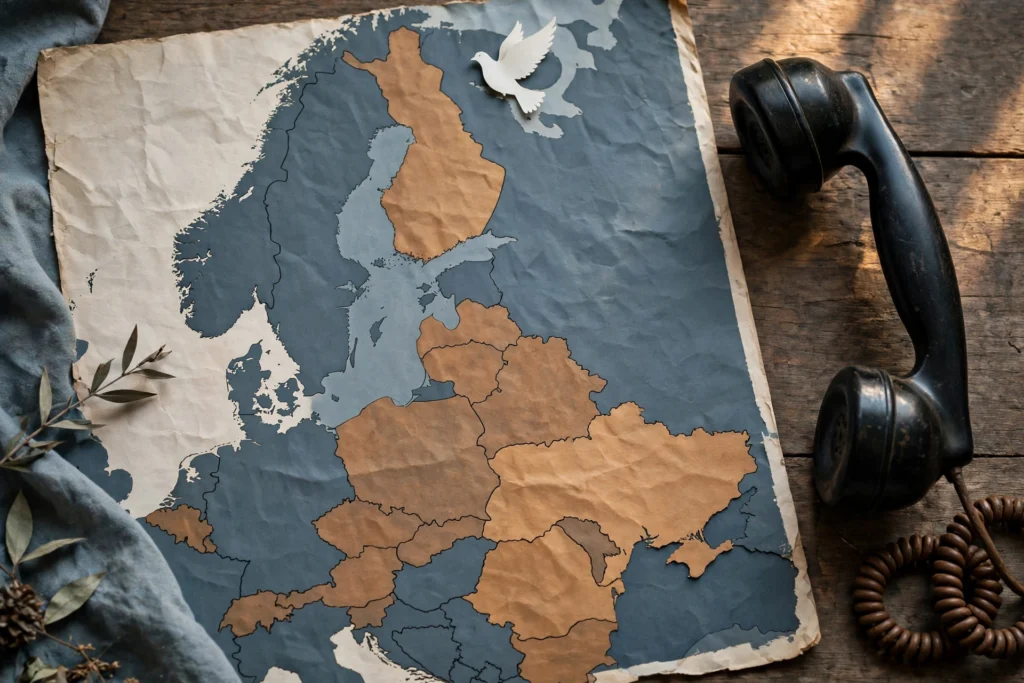
The leaders of Finland and Norway phoned Russian President Vladimir Putin on Tuesday to urge him to end the war in Ukraine, breaking with a longstanding practice among Western European leaders of shunning direct contact with the Kremlin. The ukraine war news marks a rare moment of direct engagement between a European government and Moscow since Russia’s full-scale invasion began in February 2022, and it comes as the diplomatic effort to end the war enters a new and uncertain phase.
Finnish President Alexander Stubb and Norwegian Prime Minister Jonas Gahr Støre spoke to Putin for about 90 minutes, Støre said, and then called Ukrainian President Volodymyr Zelenskyy to brief him on the conversation. In a joint statement, the two Nordic leaders linked their initiative to planned peace discussions between Russian, Ukrainian and United States officials in Abu Dhabi next month, the first such talks since February. The call was an attempt to influence a diplomatic process that has stalled for months, even as the fighting on the ground has grown more destructive.
The conversation was described as frank and substantive, and both leaders stressed that they had pressed Putin on the need for de-escalation. They also made clear that their countries’ support for Ukraine would continue. But the Kremlin’s own account of the call gave no sign that Putin had softened his position, and the gap between Moscow and Kyiv over how to end the war remains as wide as ever. The call, then, was less a breakthrough than a test: a test of whether direct contact, after years of isolation, can move a war that neither side is winning decisively toward a settlement.
A 90-Minute Call That Broke a Long Silence
The phone call by Stubb and Støre was a bid to influence the diplomatic process at a time when President Donald Trump has shifted his position in favour of Russia and United States ties with Ukraine have hit their lowest point in 18 months. For more than four years, the leaders of Western Europe have largely refused to speak directly to Putin, treating contact with the Kremlin as something to be avoided while the war continued. The Nordic call broke that pattern in public, and it did so deliberately, with a joint statement issued to explain why the two leaders had decided to pick up the phone.
“The discussion (with Putin) was frank and substantive. We are neighbouring countries to Russia. The outcome of this war will have a direct impact on our and the broader European security. Ending the war requires direct discussions,” Stubb said in the joint statement with Støre. The Norwegian leader added that the two had pressed the importance of de-escalation in the conversation. “The war comes with enormous human and material costs. The suffering and destruction will impact generations. In the call we stressed the importance of de-escalation,” Støre said.
Both leaders stressed their strong support for Ukraine, which they said would continue. That point mattered, because the decision to call Putin could easily have been read in Kyiv as a softening of European resolve. The two leaders moved quickly to close off that reading, speaking to Zelenskyy immediately after the Putin call and making public that their support for Ukraine was unchanged. According to a Zelenskyy aide, the Nordic leaders spoke by phone to Putin and afterwards to the Ukrainian president, and Zelenskyy later thanked them publicly for the briefing.
“I am grateful for the detailed briefing and for their active support for our diplomacy and the peace efforts we are pursuing together with all our partners,” Zelenskyy said in a post on X. He added that Stubb and Støre had made clear to Putin that real de-escalatory steps are needed regarding Ukraine’s energy and infrastructure, a reference to the long-range strikes on power plants and civilian infrastructure that have defined the war’s recent phase.
Why Stubb and Støre Picked Up the Phone
The call did not come out of nowhere. It was the follow-up to a meeting in Oslo on October 20, where Stubb and Støre hosted Zelenskyy and the United States envoy Steve Witkoff. Witkoff travelled to Moscow the following day for talks with Putin, and the Nordic leaders’ call to the Russian president was presented as part of the same sequence, an effort to keep the diplomatic channels open ahead of the planned talks in Abu Dhabi.
The timing also reflected a shift in the wider politics of the war. Trump has shifted his position in favour of Russia, and United States ties with Ukraine have fallen to their lowest point in 18 months, leaving European leaders to weigh how much of the diplomatic effort they must now carry themselves. The Nordic call was, in that sense, a European initiative, taken by two leaders whose countries share borders with Russia and whose security is directly affected by the war’s outcome.
Finland and Norway both share borders with Russia, and both have been among Ukraine’s strongest supporters since the invasion began. Finland, which joined the NATO alliance in 2023 after decades of military non-alignment, shares one of Europe’s longest borders with Russia. Norway, a founding member of NATO, shares a shorter Arctic border with Russia and has become one of Europe’s largest suppliers of natural gas since Russian pipeline supplies were cut off. For both countries, the war is not a distant conflict but a direct question of national security, and that proximity was the argument Stubb offered for why direct discussion was necessary.
What the Kremlin Said Back
If the Nordic leaders hoped their call would produce a sign of flexibility from Moscow, the Kremlin’s account of the conversation gave them little to work with. The Kremlin’s readout of the call did not suggest that Putin had signalled any compromise from previously stated positions, and its language was, if anything, a restatement of the terms Russia has demanded throughout the war.
“It was emphasised that achieving a just and long-term peace is possible only if the legitimate interests of the Russian Federation are fully and unconditionally taken into account,” the Kremlin said in its readout. “At the same time, attention was drawn to the confrontational policies of EU and NATO countries, which are contributing to the prolongation of the hostilities.” The reference to NATO was pointed, given that Finland is now a member of the alliance and Norway has been one since its founding, and it suggested that Moscow sees the Nordic call not as a neutral gesture but as part of a Western effort it regards with suspicion.
That outcome was not unexpected. Moscow and Kyiv remain far apart on how to end the war that began with Russia’s invasion in February 2022, and long-range airstrikes by both sides have increased this year while battle lines have remained largely static. Russia has continued to demand recognition of its territorial claims and guarantees that Ukraine will not join NATO, while Ukraine has insisted on the restoration of its territory and on security guarantees that would prevent a future attack. Neither side has shown a willingness to move from those positions, and a single phone call was never going to change that.
The Abu Dhabi Talks on the Horizon
The most concrete thing to come out of the Nordic call was its link to the planned talks in Abu Dhabi next month. The joint statement by Stubb and Støre said the discussion was related to the upcoming meetings in the Emirati capital, where Russian, Ukrainian and United States officials are expected to hold peace discussions, their first since February. Stubb’s office confirmed that the call was connected to those meetings, and the framing suggested that the Nordic leaders saw their role as helping to prepare the ground.
The Abu Dhabi talks matter because they would be the first trilateral meeting of the three parties in months, and because they come at a moment when the war’s diplomatic track has been largely dormant. The February talks produced little, and the months since have been dominated by fighting rather than negotiation. A new round of talks would not, on its own, end the war, but it would at least restore a channel of communication between the parties, and the Nordic call can be read as an attempt to make sure that channel is used well.
The United States will be a central participant in Abu Dhabi, and the state of American policy toward the war will shape what the talks can achieve. Trump’s shift in favour of Russia has alarmed Kyiv and its European supporters, who worry that Washington may press Ukraine to accept terms it would otherwise reject. The Nordic leaders’ call to Putin can be seen, in that light, as an effort by European governments to make their own views heard in a process that might otherwise be dominated by Washington and Moscow.
Why the War’s Front Lines Make Diplomacy Hard
For Ukraine, the strikes on energy infrastructure have become a central concern, and Zelenskyy’s emphasis on the need for real de-escalatory steps regarding energy and infrastructure reflects the damage those strikes have done. For Russia, the strikes on its own territory have become a political issue as well, and the Kremlin’s insistence on its “legitimate interests” is, in part, a response to a domestic audience that has been told the war is a defensive necessity.
The static front lines also matter for the diplomacy. When neither side is advancing, the temptation is to wait, to hope that time will favour one’s own position. Russia has bet that time is on its side, given its larger population and economy. Ukraine has bet that Western support will continue and that Russia’s costs will eventually force a change of course. Both bets depend on assumptions about the future that neither side can verify, and the result is a war that continues because neither side sees a reason to stop.
The Nordic leaders’ argument, that ending the war requires direct discussions, is a response to that stalemate. If the war cannot be won on the battlefield, then it must be ended at the negotiating table, and the table requires people to sit at it. The call to Putin was, in that sense, a modest but deliberate step toward the table, even if the Kremlin’s response suggested that Moscow is not yet ready to sit down in earnest.
What Happens Next
The next test of the diplomacy will be the Abu Dhabi talks next month, where Russian, Ukrainian and United States officials are due to meet for the first time since February. The Nordic call will not determine what happens there, but it has set a marker: European leaders are willing to engage directly with Moscow, and they expect to be heard in the process. Whether that engagement continues will depend on what the Abu Dhabi talks produce, and on whether the parties show any willingness to move from the positions they have held for years.
In the meantime, the war will continue, and the human cost that Støre cited will continue to grow. The suffering and destruction will, as he said, impact generations, and the longer the war runs, the harder it will be to repair. The call by Stubb and Støre did not end the war, and it did not produce a breakthrough. But it broke a silence that had lasted for years, and in a war that has been defined by isolation and escalation, that break matters. The question now is whether others will follow, and whether the direct discussions the Nordic leaders called for will lead anywhere at all.
Source: Reuters