Trump Administration Cuts Leave US Exposed to El Niño
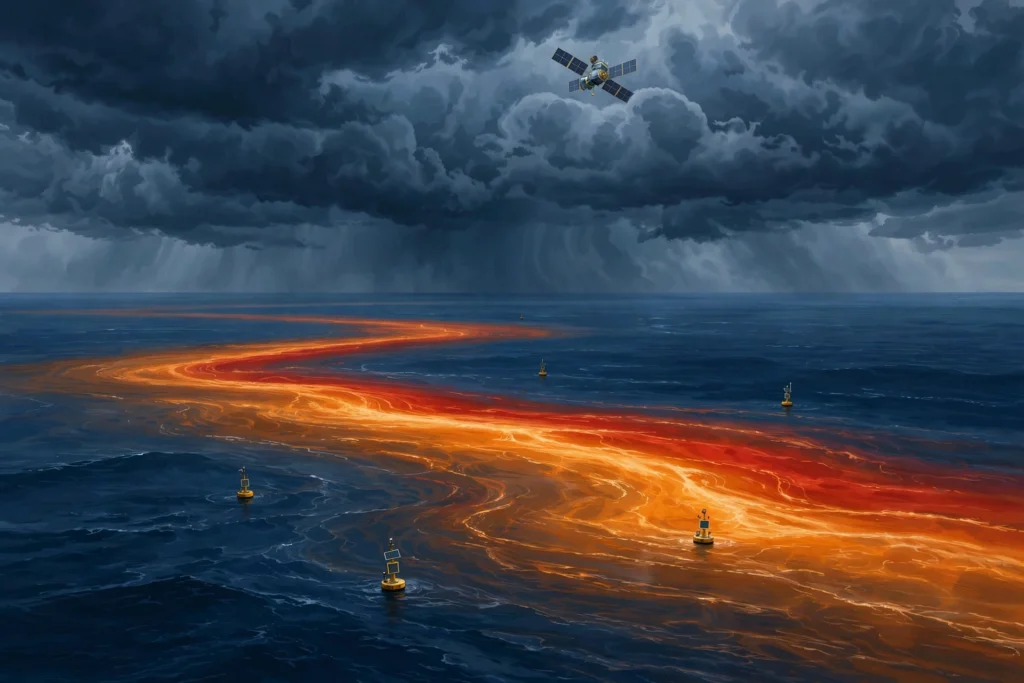
The trump administration’s cuts to America’s weather and ocean monitoring have left the country less prepared for a powerful El Niño now gathering strength in the Pacific, scientists and weather experts have warned. The warning, reported by The Guardian, comes as the World Meteorological Organization says the developing event could be unprecedented in strength, with sea surface temperatures in the tropical Pacific possibly rising 3.8 degrees Celsius above average between November and January.
The timing could hardly be worse. The National Oceanic and Atmospheric Administration, the agency that tracks the phenomenon and warns Americans about the weather it brings, has lost roughly 15 percent of its National Weather Service workforce to cuts by the Department of Government Efficiency, halted the database that tracks billion-dollar disasters, and watched the National Science Foundation begin dismantling the ocean observation network that feeds its forecasts.
Doge News: The Workforce Cuts at NOAA
The cuts began early in the year, when the Department of Government Efficiency moved through the federal workforce and NOAA was among the agencies hit hardest. Around 700 employees out of a workforce of about 12,000 were fired in the first round, and the total including resignations and deferred-resignation buyouts could reach 20 percent of the agency’s staff, according to The New York Times. Many of those dismissed were probationary workers, a category that included people with years of experience as contractors who had only recently become full-time employees.
One of them was Tom Di Liberto, a climate scientist who had dreamed of working at NOAA since college and had spent more than a decade there as a contractor before finally securing a full-time post. He worked on the El Niño–La Niña cycle, the very phenomenon now threatening the country, and was fired days short of his two-year anniversary, the milestone that would have protected him from the first round of probationary cuts. “This is the dream job — everything I want to do with my life,” he told Agence France-Presse after his dismissal.
The losses were not limited to climate researchers. Half of one satellite forecasting team was laid off, according to an agency engineer who spoke to AFP on condition of anonymity, meaning that malfunctioning satellites will not be restored as quickly. “People won’t be evacuated on time from natural disasters,” the engineer said. The National Weather Service lost roughly 15 percent of its workforce last year, including hundreds of experienced forecasters, and delays in rehiring have disrupted the collection of critical weather data.
At the same time, NOAA halted its Billion-Dollar Weather and Climate Disasters database, the official record of the frequency and economic cost of extreme weather in the United States. The database had documented more than 400 disasters in which damages reached or exceeded one billion dollars between 1980 and 2024, and in 2024 alone the cost of such disasters amounted to 177 billion dollars. The agency said the database was being discontinued because of evolving priorities.
Weather News Today: A Super El Niño Takes Shape
The event now forming in the Pacific is not a routine El Niño. NOAA has confirmed its formation and issued an official advisory, with forecasters expecting it to strengthen through the winter of 2026–27 and a 63 percent chance that it will reach the “very strong” threshold, placing it among the strongest events in the modern record dating back to 1950. A letter from Democratic members of Congress to NOAA Administrator Neil Jacobs on September 24 put the odds even higher, citing the agency’s own warning of a greater than 90 percent chance of a very strong event.
The World Meteorological Organization, the United Nations weather agency, went further on October 21, describing the growing Pacific pattern as a “behemoth” and a “wrecking ball” and warning that it could be unprecedented in strength. The agency said sea surface temperatures in the tropical Pacific may rise to 3.8 degrees Celsius above average during November 2026 to January 2027, against a threshold of just 0.5 degrees for declaring an El Niño at all. “This is literally off the monitoring charts that we have used for the past four decades,” the agency’s secretary-general, Celeste Saulo, said.
A very strong El Niño disrupts normal temperature and rainfall patterns across many regions, and the WMO warned that extreme weather already under way is expected to multiply and cascade as the pattern intensifies, with lasting effects on agriculture, infrastructure and supply chains. The agency’s warning was blunt about the human cost: a United Nations official, Tom Fletcher, said the event “will tear through Latin America, Eastern and Southern Africa, Asia and the Pacific with extreme heat, droughts and flood.”
One analysis, from the Climate Impact Lab, projected that the resulting heat could be linked to as many as 451,000 deaths worldwide by February 2027, with experts warning that the real figure could climb higher once indirect deaths are counted. The most recent El Niño, which hit in 2023–24, was one of the five strongest on record and contributed to 2024’s record-breaking increase in global temperature.
Trump News: The Ocean Sensors Going Dark
The most consequential cut, scientists say, is not to people but to the machines that watch the ocean. Earlier this year, the National Science Foundation began “descoping” the Ocean Observatories Initiative, a network delivering real-time ocean data from more than 900 sensors that cost 386 million dollars to build over a decade. All equipment is being removed from four of the programme’s five sites, stretching from the Gulf of Alaska to the Irminger Sea between Greenland and Iceland and down to the waters off North Carolina.
The decision alarmed the scientists who depend on the network. Research published in the journal Nature Climate Change found that removing American observations alone would produce a 163 percent increase in error for annual ocean heating rates, the figures that underpin weather prediction, El Niño forecasting and fisheries management. The study found that losing United States-funded platforms would be worse than randomly losing 80 percent of all ocean data worldwide, because American infrastructure spans every ocean basin.
Sabrina Speich, an expert in global ocean monitoring at the École Normale Supérieure in Paris and chair of the ocean expert panel of the Global Climate Observing System, was a co-author of the research and has warned that the consequences would not stop at science. “Ocean heat content is the most robust indicator of climate change we have,” she said. “Lose them, and you lose your ability to track not just ocean warming but the climate system as a whole.” Forecasts, she added, would continue but would degrade, “sometimes dangerously so,” with economic costs felt across the United States, from agriculture to insurance to disaster response.
The practical stakes are concrete. Farmers in the United States and across South America use El Niño forecasts to decide what to plant and when, and whether to expect drought or flooding shapes every agricultural decision months in advance. John P. Abraham, a professor of engineering at the University of St. Thomas in Minnesota and a co-author of the research, called the move to dismantle the 386 million dollar system “penny-wise, pound foolish.”
US Politics: The Warnings From Congress and the UN
The alarm has not come only from scientists. On September 24, Democratic members of the House of Representatives wrote to NOAA Administrator Neil Jacobs warning that the agency may lack the capacity to predict, inform the public about, and respond to the extreme weather caused by a super El Niño, citing the 15 percent cut to the National Weather Service workforce, delays in rehiring, and the halted disasters database. “With droughts, hurricanes, storms, crop failures, business closures, and other serious events, a future Super El Niño event could wreak havoc,” the letter said.
The same members have also warned about the administration’s cuts to weather satellites. The administration has proposed slashing the weather satellite budget by 6.6 billion dollars, a reduction that would reshape the GeoXO programme, the next generation of American weather satellites. Lofgren and Amo wrote that the next generation of America’s weather satellites “could very well be worse than the current ones.” Steve Volz, who previously ran NOAA’s satellite division, warned that the United States risks falling behind rival programmes in Europe, Japan and China. NOAA has defended the reshaped programme, saying the updated orbiters still provide reliable information.
Other countries have responded to the American retreat by stepping up. The European Union said it would boost its own monitoring of the world’s oceans by investing 107 million dollars in an initiative called OceanEye, more than half of which will go to the Global Ocean Observing System. The announcement was long-planned rather than a direct response to the American move, but it underlined the gap that is opening up.
The warnings extend well beyond the United States. In India, where a powerful El Niño typically weakens the monsoon and increases the risk of drought, heatwaves and crop stress, Anjal Prakash, a professor of public policy at FLAME University in Pune and an author of a United Nations climate report, said the WMO warning was deeply concerning and that India must prepare for volatile weather well beyond this winter.
White House News: What Happens Next
For now, the administration has given no sign of reversing the cuts. President Trump has previously mocked global warming warnings on Truth Social, and the White House has presented the reductions at NOAA and the National Science Foundation as part of a broader drive to shrink the federal government. The former deputy administrator of NOAA, Terry Garcia, has warned that dismantling key ocean monitoring systems could lead to catastrophic consequences.
What happens next will be measured in the Pacific itself. The WMO expects the event to peak towards the end of 2026, with sea surface temperatures running far above normal through January, and its impacts will be felt long after the peak has passed. In California, officials have already braced under emergency orders as the state prepares for the storms and flooding a strong El Niño can bring.
The question the Guardian’s report poses is whether the United States will see the event coming clearly enough to act in time. The forecasts will continue, because the models still run and the satellites still fly. But the data feeding them is thinner than it was, the workforce interpreting them is smaller than it was, and the official record of what the damage costs has been switched off.
Source: The Guardian