Iran War News: US Strike Plans Ready Within 96 Hours
United States forces in the Middle East are prepared to launch new, potentially major military operations against Iran within 96 hours of receiving an order from President Donald Trump, according to two American officials who spoke to CNN. The disclosure, reported on Monday, is the clearest sign yet that Washington has moved from warning Tehran to assembling the means for a large new round of fighting — and that the decision now rests almost entirely with the president.
The officials said enough forces are already in place to carry out the attacks. What is being prepared would go well beyond the limited strikes of recent months, when American aircraft hit radars, launchers and other Iranian assets that could be quickly rebuilt — operations one official described with the phrase “mow the lawn.” Those strikes continued after Trump halted full combat operations earlier this year. “It will be a big effort,” one of the officials told CNN. Several current and former officials familiar with the planning said the question is now when, rather than whether, Trump will give the order — most likely after the midterm elections on November 3, and at any point before the end of the year.
Iran War News: A 96-Hour Clock and a Bigger Target List
The planning described to CNN is wide-ranging. Leaders at US Central Command and the Pentagon have been developing a target list that reaches far beyond the air-defence and missile sites hit in recent months. It includes Iranian energy infrastructure, military sites and nuclear facilities — a list that would amount to a sustained campaign rather than a single night of bombing. The officials were candid about the difficulties: Iranian forces have spent months studying American tactics, and it would be harder now to destroy every intended target than it was when the conflict began. That is one reason the buildup has been so large.
For all the preparation, the decision has not been made. Officials said Trump has not settled what he will do after the midterms, though he appears to be leaning toward major action. They added a caution that has followed this president through the crisis: he has appeared ready to act before and then pulled back at the last moment. The White House declined to comment. A senior Pentagon official, asked about the planning, said only: “The Department is a planning organization, and its job is to develop and execute military options ordered by the President.”
Pentagon News: Carriers, Munitions and a Drawdown
The military movements behind the reporting have been visible for weeks. The Wall Street Journal reported that Central Command has moved some aircraft away from bases in the region to reduce losses if fighting resumes, and that the carrier USS George Washington is being rearmed in the Arabian Sea with standoff land-attack missiles and bunker-buster bombs. A Journal reporter who visited the carrier saw large stacks of ammunition boxes on deck, and American officials confirmed the military was positioning itself for a fresh wave of strikes.
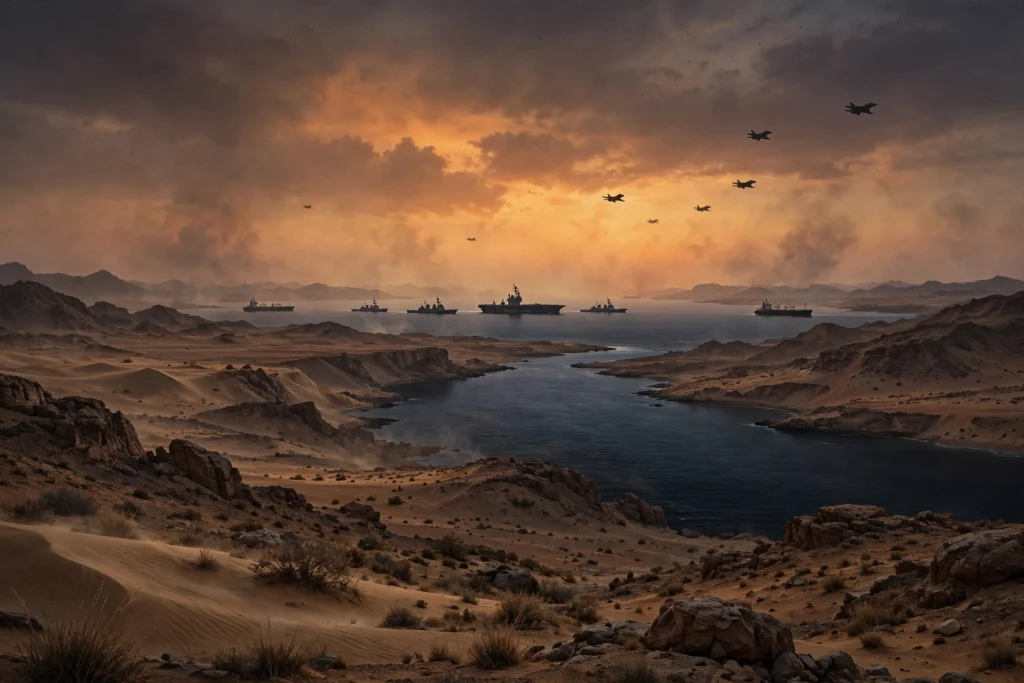
Two carrier strike groups are already in the region — the USS George H.W. Bush and the USS George Washington. A third, the USS Theodore Roosevelt, departed San Diego with its strike group carrying between 9,000 and 10,000 sailors and Marines, and is expected to arrive by the end of November. The Makin Island Marine Expeditionary Force, carrying more than 2,000 Marines, followed a day later, along with the 13th Marine Expeditionary Unit. By the end of November, three carrier strike groups and two amphibious landing groups are expected to be positioned around Iran, alongside F-35 fighter jets and hundreds of other aircraft, adding to roughly 50,000 American service members already in the region.
At the same time, the United States has been thinning out the people most exposed if fighting resumes. NBC News reported that American troops had been quietly withdrawn from bases in Jordan, Qatar and Kuwait, leaving a limited presence built around air defence and security personnel. Nonessential military personnel due to deploy in the next troop rotation have been told they are no longer being sent. Only the American embassy in Riyadh is formally under an ordered departure, but one source told CNN that other embassies are expected to receive similar directives in the coming days, with the rest scaled down under a personnel cap.
US Politics: The Midterm Calendar and an Undecided President
In Washington, the politics of the decision are inseparable from the election calendar. Trump has repeatedly hinted that his forces would resume strikes on Iran after the midterm elections on November 3. He has told reporters the conflict would conclude “very soon, one way or the other,” describing the choice as one to “blow them up or make a deal.”
The war is now in its ninth month. The strikes that opened it began on February 28, and Trump said at the time that it would be over in a matter of weeks. Instead it has dragged on through the summer and into the autumn, claiming American lives and straining the forces deployed to fight it. Diplomacy, meanwhile, has narrowed to a thread: Secretary of State Marco Rubio ordered the Iranian foreign minister, Abbas Araghchi, and his mission to leave New York, and Araghchi relocated to Doha, where Qatari envoys continue mediation. The Treasury Department imposed fresh sanctions this week on Iranian rail and automotive conglomerates, aimed at cutting off remaining revenue for Tehran.
The Threat Picture: Warnings of Retaliation
The intelligence picture is what makes the decision so fraught. Recent American assessments indicate that Iran and the Houthi rebels in Yemen are taking the possibility of renewed attacks by the United States and potentially Israel very seriously. If the United States and Israel do launch new operations, Tehran and the Houthis would be likely to retaliate immediately against American personnel and facilities around the region — and potentially beyond, according to sources familiar with the assessments.
The warning is specific. An unclassified memo dated October 23 from the Director of National Intelligence, Jay Clayton, to Secretary of State Marco Rubio said American intelligence had found that “Iran has substantially increased efforts to target US personnel” and that plotting efforts “have reached advanced stages in both the Middle East and certain other countries.” The memo prompted the sudden evacuation of diplomats and military personnel from embassies and bases, and it is the document behind the drawdown now under way. American intelligence officials believe Iran and the Houthis are unlikely to carry out preemptive attacks at this point, but would not hesitate to respond if Iran is targeted first.
Tehran has made the same point in public. Iran’s president, Masoud Pezeshkian, said on Saturday that his country had been in negotiations and that the Americans had ruined them, while adding that efforts to reach an agreement should continue. Iran has also announced a shift to what it describes as an “offensive” military doctrine. A spokesman for the Islamic Revolutionary Guard Corps, Hossein Mohebi, said the country’s doctrine had previously been defensive — responding if attacked — and now called for responding and launching an offensive. Iranian officials have warned that countries hosting bases used in American attacks could become targets.
Strait of Hormuz: Blockade, Mines and Oil
The Strait of Hormuz, the narrow waterway through which a large share of the world’s seaborne oil passes, sits at the centre of the standoff. Admiral Brad Cooper, the commander of Central Command, visited the strait on Sunday as the American military maintains its blockade on Iranian ports and assists shipping through the waterway. Cooper flew over the strait in a helicopter, met service members who had cleared it of Iranian mines, and said in a news release: “We continue to stand shoulder to shoulder with our Gulf partners and the shipping industry,” adding that the visit underscored a strong commitment to continued freedom of navigation.
Despite an increase in tankers transiting the strait, oil prices remain high, in part because of the threat of possible Iranian attacks. Brent crude traded above 100 dollars a barrel earlier this month, and one American official acknowledged that the status quo around the strait is “untenable” over the long term. That assessment — that the present arrangement cannot hold — is, the official said, one reason Trump may turn to military action if there is no last-minute diplomatic breakthrough.
Israel’s Push and What Happens Next
Israel is pressing for action, and its role may determine the timing as much as Washington’s. Prime Minister Benjamin Netanyahu has been pushing to carry out new attacks against Iran, but American officials have asked him to delay until the Trump administration is ready to conduct joint operations, according to two American officials and an Israeli security source. “Netanyahu really wanted and tried to convince Trump for a joint attack in Iran before the elections, and Trump did not give a green light,” the Israeli security source told CNN. One reason Trump declined is that the chief of staff of the Israel Defense Forces, Eyal Zamir, told the chairman of the Joint Chiefs of Staff, General Dan Caine, that an attack before the vote would harm the elections in Israel and could lead to their postponement.
Israel has been preparing for the possibility of launching additional attacks in the last week or so and has been lobbying American officials to support and complement new strikes, but senior American officials — including Trump — told Israel to hold off, signalling that the two countries would launch joint operations soon. Israel appears to have delayed its plans in the immediate term but is building up for potential joint operations, likely after the American midterms. It agreed in part because it needs American missile-defence support, its defensive munitions strained during the war. But American intelligence assessments also indicate that Netanyahu and his allies still lack a clear strategic objective beyond demonstrating some sort of “progress” and continuing to degrade the Iranian regime. Netanyahu said this week, at an IDF graduation ceremony, that his directive to the IDF, the Mossad and other security branches is to topple the regime in Iran. “The plans are ready, waiting for Trump’s approval, could be after the midterms,” one source told CNN.
What happens next will be decided in the days after November 3. If Trump gives the order, the operation would be the largest American action against Iran since the conflict began, aimed at energy infrastructure, military sites and nuclear facilities, and it would almost certainly draw retaliation against American personnel and allies across the region. If he holds off, the buildup will stand as an expensive warning, and the question will remain open: not whether the United States is ready, but when the president decides to use it. Defence Secretary Pete Hegseth, who made an unannounced stop in Israel last week to meet Netanyahu, has said American forces are “ready to go” if Trump orders further strikes. The forces are in place. The order is not.
Source: CNN